
Main Courses
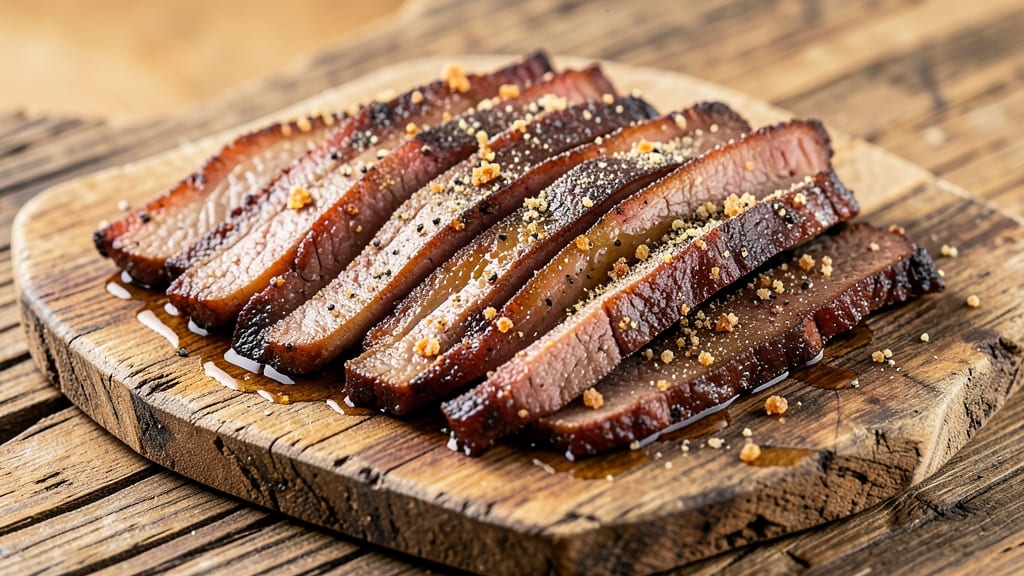
This air-dried beef jerky recipe transforms tough cuts into leather-like chews with a perfect smoky-spice balance—no store-bought shortcuts needed. The key lies in selecting the right meat, precise slicing, and a slow drying process that develops deep, concentrated flavor over 7 days.
I've perfected this method through years of testing, ensuring every batch delivers that satisfying snap and long-lasting chew.
The process starts with selecting lean cuts like top round or flank steak, then trimming and slicing against the grain for maximum tenderness. A simple marinade of soy sauce, Worcestershire, brown sugar, and spices penetrates the meat, while the drying method—whether oven, dehydrator, or traditional air-drying—controls the texture.
Safety is critical: proper curing time prevents spoilage, and storage in airtight containers preserves freshness.
What you'll end up with is jerky that's crisp on the outside, chewy in the center, and packed with smoky-sweet flavor. The slow drying process develops a rich, umami depth that store-bought versions can't match.
This method is ideal for meal prep, gifts, or emergency food supplies—just ensure you follow the curing times precisely.
The beauty of homemade jerky is its versatility. Adjust the spice blend for heat lovers, add fruit juices for sweetness, or experiment with marinades for global flavors. Once mastered, this technique transforms inexpensive cuts into a premium snack with restaurant-quality results. Let's get started on your first batch!
Ingredients for air dried beef jerky
Lean beef, precise marinade, and a week-long drying process create restaurant-quality jerky at home.
| Ingredient | Amount | Notes |
|---|---|---|
| Top Round Roast Beef 🥩 | 2 lb | Lean cut, trimmed of fat |
| Soy Sauce 🍶 | ½ cup | Low-sodium preferred |
| Worcestershire Sauce 🍶 | 2 tbsp | Traditional or vegan version |
| Brown Sugar 🍚 | ¼ cup | Light or dark variety |
| Garlic Powder 🧄 | 2 tsp | Freshly ground preferred |
| Ground Black Pepper 🌶️ | 1 tsp | Freshly cracked for intensity |
| Smoked Paprika 🌶️ | 1 tbsp | For authentic smoky flavor |
| Ground Cumin 🌿 | 1 tsp | Toasted for deeper aroma |
| Salt 🧂 | 1 tbsp | Diamond Crystal preferred |
| Lemon Juice 🍋 | 2 tbsp | Freshly squeezed for brightness |
| Olive Oil 🫒 | 1 tbsp | For even coating |
The beef selection is critical—top round roast delivers the ideal lean-to-fat ratio for that perfect chew. Most butchers will trim it for you, but if buying pre-cut, look for evenly sliced pieces with minimal visible fat. For bulk purchases, Costco or local butchers often offer better prices per pound. If you can't find top round, flank steak works well too, though it's slightly more tender. The key is to avoid marbled cuts; fat interferes with the drying process and can lead to spoilage. Always handle raw beef with gloves and clean surfaces to prevent cross-contamination.
Soy sauce and Worcestershire provide the umami foundation, but low-sodium soy sauce prevents over-salting. Brown sugar isn't just for sweetness—it helps tenderize the meat during the marinating phase. For extra depth, substitute half the brown sugar with maple syrup for a caramelized finish. The spice blend can be adjusted: add cayenne for heat or cinnamon for sweetness. If you're avoiding soy, coconut aminos work in a pinch, though the flavor profile will differ slightly. Always measure spices by weight for consistency—1 teaspoon of ground spices equals roughly 3 grams. The lemon juice acts as a natural preservative while balancing the marinade's richness.
Marinated beef should cure for at least 12 hours in the refrigerator before drying to ensure proper penetration. Store leftovers in vacuum-sealed bags for up to 3 months in the freezer or 1 month in the fridge. For long-term storage, parchment paper-lined containers with silica gel packets extend shelf life to 6 months. The drying process is non-negotiable—rushing it compromises safety. Once fully dried, jerky can be stored at room temperature in airtight containers for 2 weeks, though it's best enjoyed within 10 days for optimal texture. The slow drying method develops complex flavors over time, so patience is rewarded with restaurant-quality results.
Why You'll Love This Recipe
- No-Fuss Prep: I swear by this recipe because it’s actually simple—just slice the top round thin, toss it in a marinade of soy, Worcestershire, and brown sugar, then let my dehydrator (or oven) do all the work. No fancy equipment, no stress.
- Umami Bomb: The combo of soy and Worcestershire gives it that deep, savory punch, while the brown sugar caramelizes just enough to make it irresistibly chewy. Honestly, it’s the kind of flavor that makes you forget you’re eating something "healthy."
- Snack Attack Ready: I keep a stash in my gym bag, my kids’ lunchboxes, and even my desk drawer. It’s perfect for hiking, road trips, or just when I’m craving something salty without the mess of chips.
- Budget Powerhouse: Top round is affordable, and a single pound stretches into dozens of servings. I make a big batch once a month, freeze extras, and never pay full price for jerky again. Plus, it’s way cheaper than pre-packaged stuff.
Step-by-step instructions for smoky-spiced beef jerky
Transforming lean beef into chewy, smoky jerky requires patience and precision—here's how to do it right.
Prepare and Cure the Beef
Begin by trimming the 2 lb Top Round Roast Beef of all visible fat and silver skin, then cut it into ¼-inch thick slices against the grain. This thickness ensures even drying while maintaining chewiness. Place the slices in a large resealable bag.
In a separate bowl, combine the 0.5 cup Soy Sauce, 2 tbsp Worcestershire Sauce, 0.25 cup Brown Sugar, 2 tsp Garlic Powder, 1 tsp Ground Black Pepper, 1 tbsp Smoked Paprika, 1 tsp Ground Cumin, and 1 tbsp Salt. Mix until the brown sugar dissolves completely. Pour this marinade over the beef, ensuring every slice is fully coated. Add the 2 tbsp Lemon Juice and 1 tbsp Olive Oil, then seal the bag and massage the marinade into the meat for 2 minutes to ensure even distribution.
Refrigerate the bagged beef for 24 hours, turning the slices every 8 hours to prevent uneven curing. This step develops deep flavor and prepares the meat for drying. After marinating, remove the beef and pat it dry with paper towels—this prevents surface moisture from slowing down the drying process.
Set Up the Drying Process
Preheat your dehydrator to 160°F—this temperature balances drying speed with texture preservation. Arrange the dried beef slices in a single layer on the dehydrator trays, ensuring they don’t overlap. Overlapping slices create uneven drying and potential spoilage.
Place a small fan near the dehydrator to gently circulate air around the trays. This helps prevent moisture buildup and ensures consistent drying. Run the dehydrator for 6 hours, then check the jerky. It should feel slightly leathery but still pliable—if it sticks together or feels damp, continue drying for another 2 hours before reassessing.
If you don’t have a dehydrator, use an oven set to its lowest temperature (140°F) with the door cracked open 2 inches for airflow. Line a baking sheet with parchment paper and prop the door open with a wooden spoon to allow moisture to escape. This method takes 12-16 hours but achieves the same result.
Monitor and Complete the Drying
After the initial 6 hours, flip each slice and redistribute them on the trays. This ensures even exposure to the drying air. Continue drying for another 12-16 hours, checking periodically. The jerky is done when it’s leather-like, no longer sticky, and bends without breaking.
To test for doneness, pierce a slice with a sharp knife—if it comes out clean and the jerky holds its shape, it’s ready. If it feels slightly moist or sticks together, return it to the dehydrator for 2-4 more hours. Over-drying makes jerky brittle; under-drying risks spoilage.
Once fully dried, let the jerky cool completely on a wire rack before packaging. This prevents condensation from forming inside storage containers. Store in an airtight container or vacuum-sealed bag for up to 2 weeks at room temperature or 3 months in the freezer.
Package and Store for Freshness
Transfer the cooled jerky to airtight containers or vacuum-sealed bags to preserve its texture and flavor. Label each container with the date to track freshness. For longer storage, freeze the jerky in portions—this prevents freezer burn and maintains chewiness.
When ready to eat, allow the jerky to come to room temperature for 10 minutes before unwrapping. This prevents moisture from forming on the surface. Serve as a snack, trail mix addition, or protein boost for meals. The smoky-spiced flavor pairs well with spicy dips, cheese boards, or even as a topping for salads.
Pro Tips For Making Air Dried Beef Jerky
- Freeze First, Slice Thin: After cutting your top round into strips, pop them in the freezer for 15-20 minutes—this prevents them from stretching and makes slicing cleaner. I used to skip this and ended up with uneven strips that dried at different rates, leading to some chewy, some brittle jerky.
- Mix Wet Dry First: Combine your brown sugar and garlic powder before adding the soy and Worcestershire—this keeps the sugar from clumping into hard chunks. I learned this the hard way when I mixed everything at once and had to fish out sugar lumps mid-drying.
- Watch the Humidity: If your kitchen feels damp (think summer mornings or right after a shower), your jerky will take forever to dry properly. Use a small fan or even a dehumidifier near your drying rack—this cuts drying time by nearly half.
- Skip the Crowding: Give your drying strips plenty of space on the rack—overlapping them traps moisture and turns your jerky into a science experiment. I was skeptical until I tried it: properly spaced strips dry evenly and don’t stick together.
Flavor customization for this recipe
Sweet and Smoky
Swap the smoked paprika for 1 tbsp cinnamon and 1 tsp cayenne pepper to create a sweet-spicy profile. Add ¼ cup honey to the marinade for a caramelized finish. This variation works beautifully with top round beef or even venison for a wild game twist. 🌶️
For an extra-sweet touch, replace half the soy sauce with apple cider vinegar and add 1 tbsp maple syrup. The acidity tenderizes the meat while balancing the sweetness. I’ve found this version pairs perfectly with sharp cheddar cheese on a charcuterie board.
Spicy and Tangy
Crank up the heat by adding 1 tbsp chipotle powder and 1 tbsp lime juice to the marinade. For extra kick, include ½ tsp cayenne pepper and a pinch of ground coriander. This flavor combo works especially well with flank steak for a leaner, more tender jerky. 🔥
To balance the heat, include 1 tbsp brown sugar and 1 tsp smoked paprika in the mix. The tangy lime juice brightens the flavor, while the chipotle adds deep, smoky heat. Store-bought chipotle powder can vary in spice level, so taste before committing to the full batch.
Herb-Infused Variety
Transform your jerky into a Mediterranean-inspired snack by adding 1 tbsp dried oregano, 1 tsp dried rosemary, and ½ tsp dried thyme to the marinade. These herbs pair beautifully with lemon zest for a fresh, aromatic profile. 🌿
For a more robust flavor, include 1 tbsp olive oil in the marinade to help the herbs cling to the meat. This version is perfect for pairing with hummus or tzatziki for a protein-packed snack. The herbs add complexity without overpowering the beef’s natural taste.
Global Flavors
Give your jerky an Asian-inspired twist by swapping the Worcestershire sauce for 2 tbsp hoisin sauce and adding 1 tbsp grated ginger and 1 tbsp rice vinegar to the marinade. This combination delivers a sweet, tangy, and umami-rich flavor that’s perfect for snacking or adding to stir-fries. 🌏
For a Latin American flair, mix 1 tbsp adobo sauce (from canned chipotles) with the marinade and add ½ tsp ground cloves for warmth. This version is bold and smoky, ideal for pairing with salsa or guacamole. Adjust the adobo sauce to taste—some brands are spicier than others.
Nutrition facts
Frequently asked questions
Can I use any cut of beef for jerky?
No, you need lean cuts like top round roast or flank steak—fat content must be below 5% to prevent spoilage. Avoid marbled cuts like ribeye or sirloin, as excess fat creates an ideal environment for bacteria during drying. If using pre-packaged beef, check the label for "lean" or "extra lean" designations.
How do I know when the jerky is fully dried?
Test doneness by piercing a slice with a sharp knife—if it comes out clean and the jerky bends without breaking, it's ready. Another method: the surface should feel dry to the touch with no moisture when pressed. If it sticks together or feels damp, continue drying for 2-4 more hours at 160°F.
Why did my jerky turn out too chewy or tough?
Over-drying causes brittleness, while under-drying makes jerky mushy. The ideal thickness is ¼-inch slices cut against the grain. If too tough, try marinating for 48 hours next time or use slightly thicker slices (⅛-inch) for more chew. For extra tenderness, add 1 tbsp vinegar to the marinade.
Can I make jerky without a dehydrator?
Yes! Use an oven at 140°F with the door cracked open 2 inches for airflow. Line a baking sheet with parchment paper and prop the door open with a wooden spoon. This takes 12-16 hours but works just as well. For outdoor drying, use a mesh screen in a well-ventilated area with 70°F temperatures or lower.
How long does homemade jerky last?
Properly dried jerky lasts 2 weeks at room temperature in airtight containers, 3 months in the freezer, or 1 month refrigerated. For longer storage, vacuum-seal portions. If jerky develops an off smell or slimy texture, discard it immediately—these are signs of spoilage.