
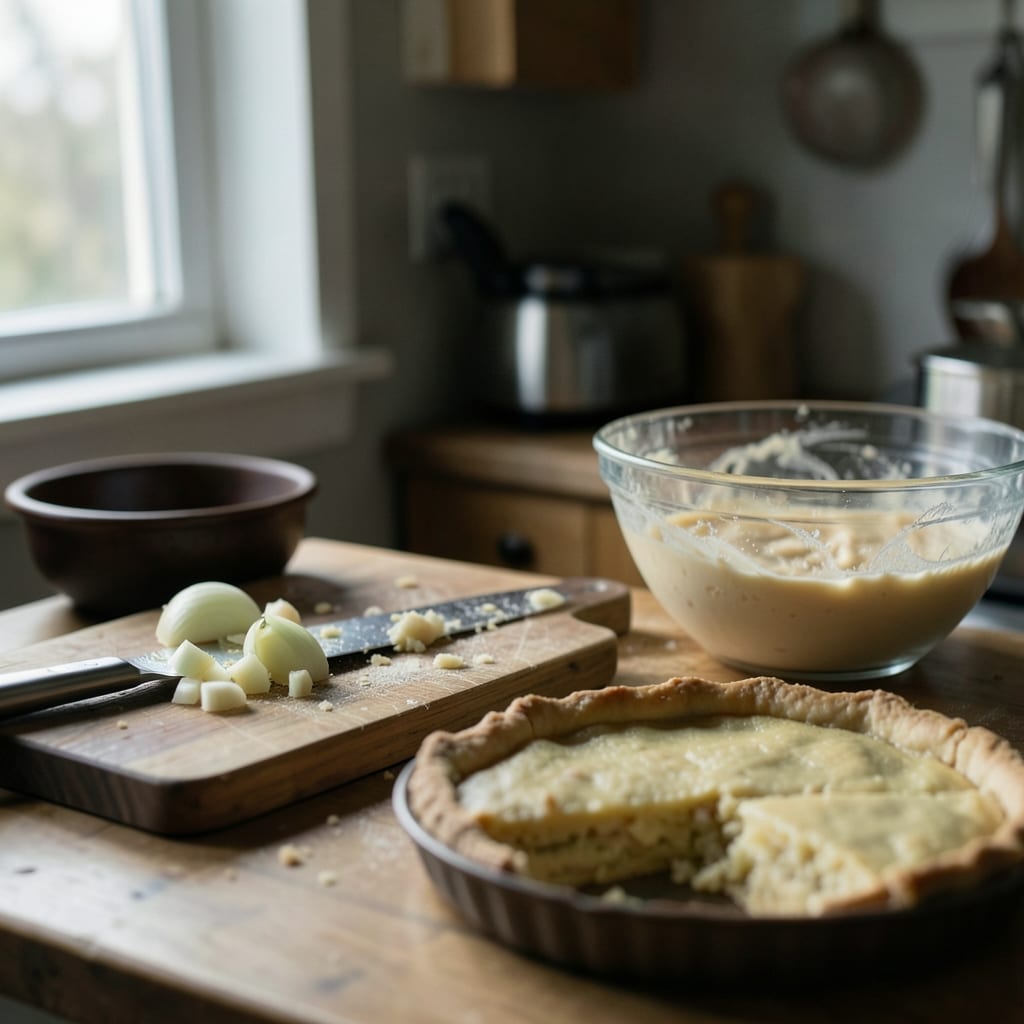
What this work is made with
This page is not a story. It is a list of things—the tools, the hands, the wear—that shape every recipe here. A butcher knife does not explain itself, nor does a cast-iron pan. They do their work in silence, and so does this site.
This is *Beef Recipes Butcher*, where the blade meets the bone.
We publish recipes that honor tradition while pushing it forward, built on the same things that have always made good food: the right tool for the job, the patience to let it do its work, and the scars to prove it was worth it.
The things that do the work
These are the objects that shape the recipes you’ll read here. No writing, no instructions—just the things themselves, their age, and what they’ve taught us. Some are worn out. Some are stubbornly wrong. All of them are necessary.
The butcher’s cleaver
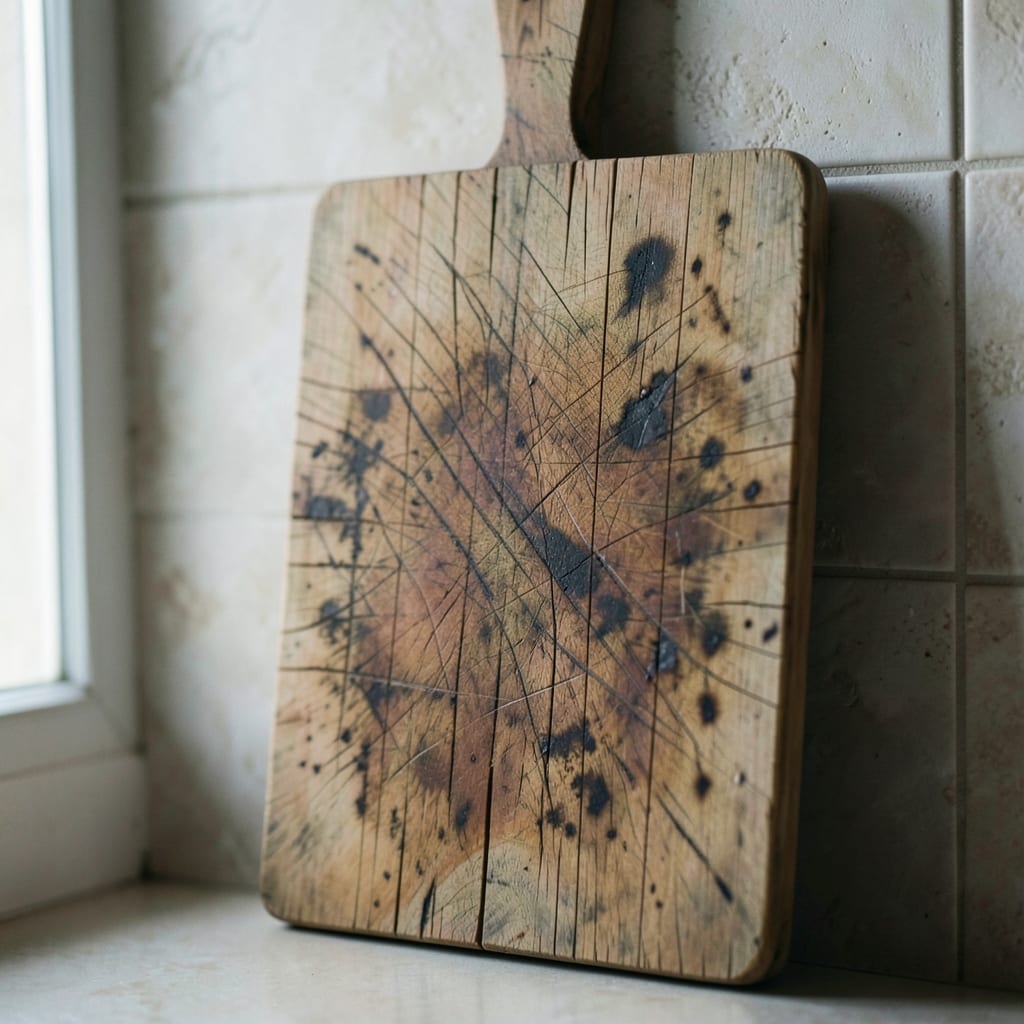
A 1.5 kg cleaver with a handle wrapped in frayed leather tape, bought secondhand from a slaughterhouse in 2017. The blade is uneven now—it’s been resharpened too many times, and the edge catches when it shouldn’t.
We keep it anyway because it still splits a ribeye in one swing if you hit it right.
It taught us that precision isn’t about the tool; it’s about the hand holding it. And that some mistakes—like a nicked blade—are just part of the work.
The wooden bone saw
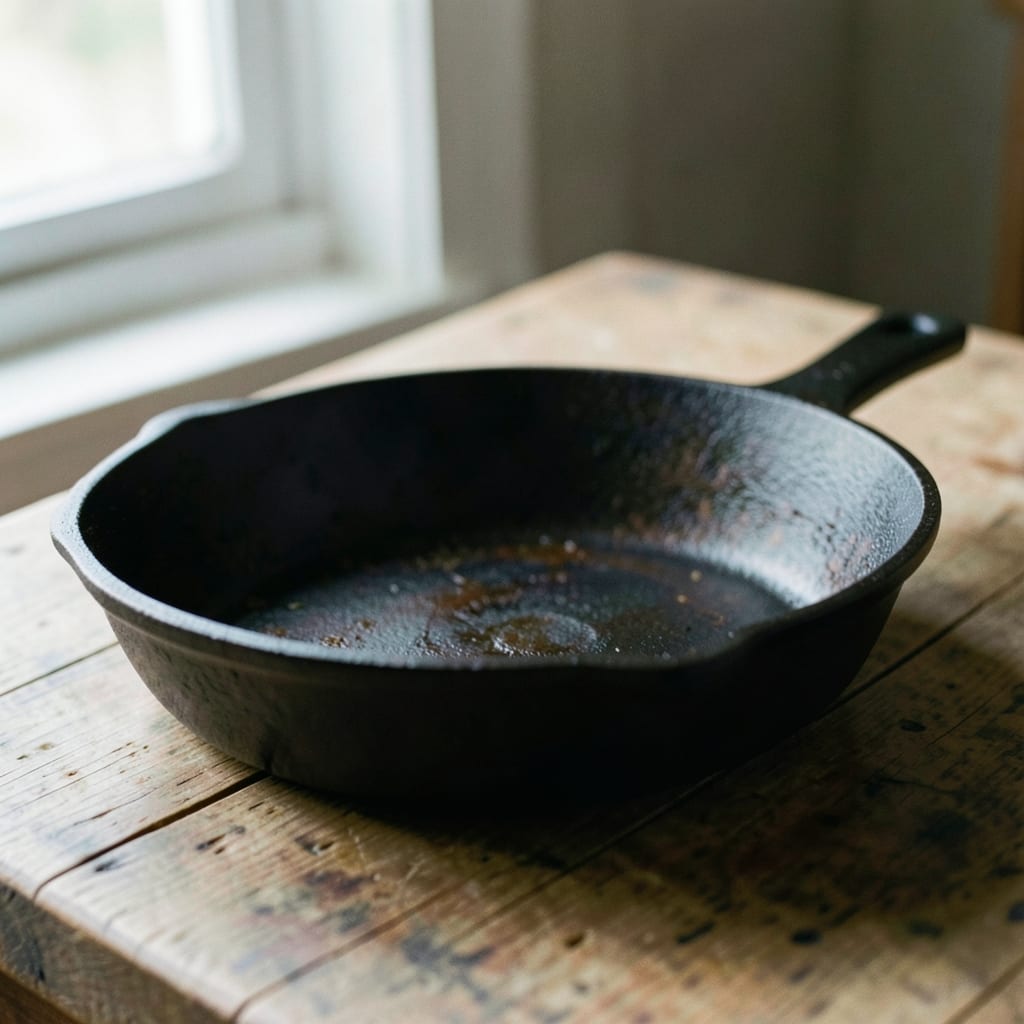
A 30-year-old saw with teeth worn down to nubs, salvaged from a farmhouse auction. It’s too dull to cut cleanly through marrow bones, so we use it for breaking down whole joints instead—where the rough edges just mean more surface area for the sear.
It proved that ‘right’ isn’t always ‘sharp.’ Sometimes, the best tool is the one that’s already broken in.
The cast-iron Dutch oven
A 10-year-old Le Creuset with a chipped rim and a lid that warps when it cools too fast.
It’s seen 23 failed braises (the pot roast that turned to glue, the chuck that got left in the oven overnight), but it’s still the only thing that can hold a 5-hour pot roast without burning the bottom.
It taught us that failure isn’t a flaw—it’s just the oven’s way of saying *try again, but slower this time.*
The stainless steel meat thermometer
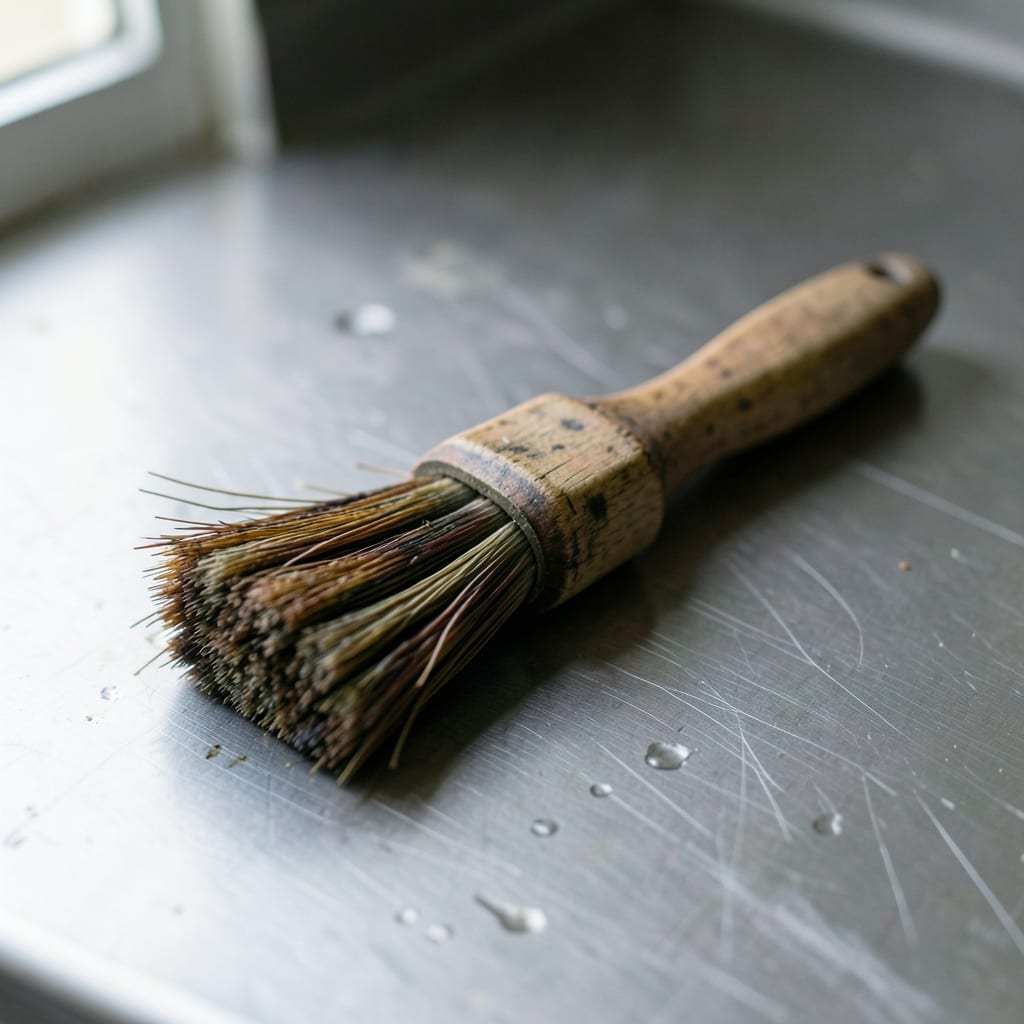
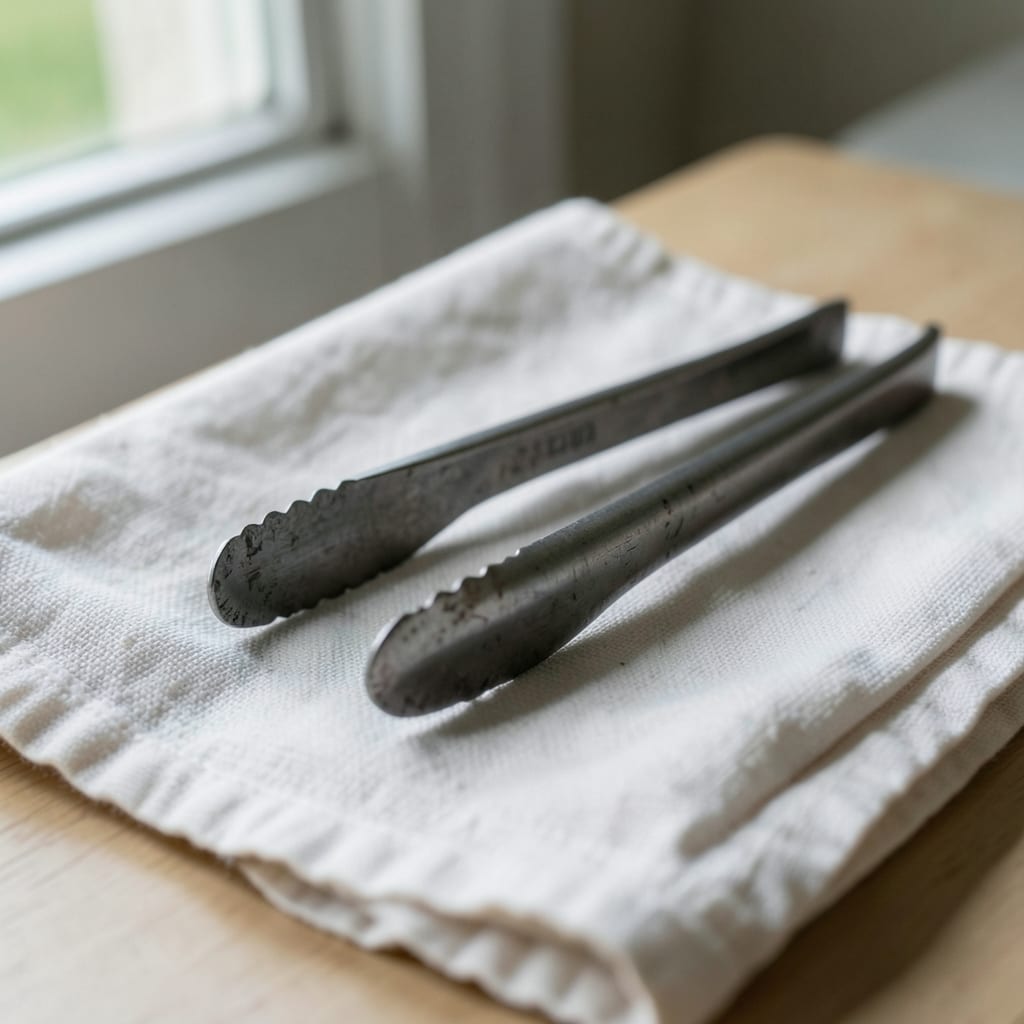
A $12 probe from a kitchen supply store, missing its original case and with a probe that bends if you look at it wrong.
It’s been dropped into more boiling water than it should have survived, and the calibration is off by 2°C—but it’s the only one that fits in the pocket of our apron.
It showed us that the ‘perfect’ temperature isn’t a number. It’s the moment the meat *gives*—when the probe slips out just as the sear starts to crisp.
What is not in the drawer
Some things we refuse to use, not because they’re bad, but because they change the work in ways we don’t want. These are the tools we left behind—along with the recipes that depend on them.
Deliberately absent
- Electric meat grinders—nothing beats the texture of hand-ground chuck, even if it takes 15 minutes.
- Instant-read thermometers with backlit displays—we’d rather watch the meat than stare at a screen.
- Pre-sliced bacon—if it’s not rolled in your own hands, it’s not bacon.
- Single-use plastic wraps—everything here is wrapped in butcher paper or beeswax cloth.
Behind the scenes

I am Bernadette Trujillo, Founder & Editor.
I am the person who still flinches when a knife slips, who can tell you the exact weight of a perfectly seared ribeye by the way it lands in the pan, and who has burned three aprons in the last year trying to keep the smoke away from my face.
I came to this from my uncle’s backyard butcher shop in Albuquerque, where he’d hand me a cleaver at age 12 and say, *‘Don’t cut yourself—or the meat.’* That’s where I learned that good food isn’t about rules; it’s about listening to what the ingredients are telling you.
This work has given me a permanent callus on my right thumb—the one that holds the blade—and a habit of tasting everything raw first, just to be sure.
I can no longer walk past a butcher shop without checking the quality of the hanging meat, and I’ve developed a pathological dislike for overcooked steak.
I am here to make sure your kitchen feels like home—just with better flavor. That means recipes that work the first time, techniques that don’t require a degree in food science, and a little respect for the fact that sometimes, the best meal is the one that surprises you.
Why any of this matters to you
Every recipe here is shaped by these things: the uneven cleaver that demands patience, the warped Dutch oven that rewards slow cooking, the thermometer that’s more guide than rule. They’re not perfect. They’re not even always the *right* tools—but they’re the ones that tell the truth.
That truth is what you’ll find in every page: no shortcuts, no pretension, just the kind of cooking that feels like it was made for *you*, not for a food stylist’s Instagram. The meat will be tender. The sear will be crisp.
And the recipe will work—because it was tested with the same tools you’ll use.
Every recipe here is built on things that don’t lie: a knife that’s been used enough to know its limits, a pan that’s seen enough failures to recognize success. You won’t find ‘foolproof’ here. You’ll find *real* proof.
The recipes are grouped by category: Appetizers, Beverages, Breakfast & Brunch, Main Courses, Salads and Sauces & Condiments.