
Main Courses
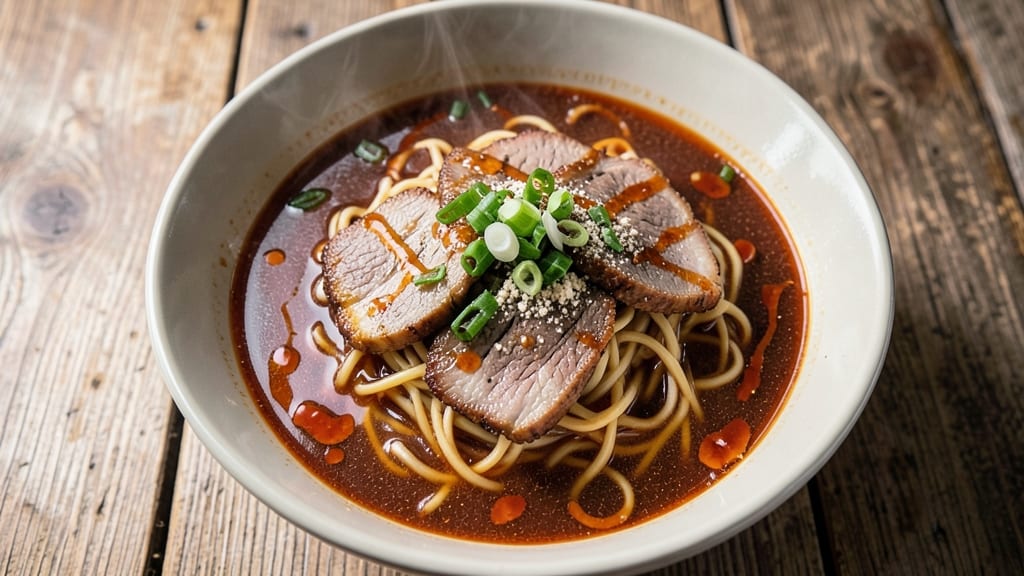
This ajisen spicy beef ramen recipe delivers the perfect balance of bold umami heat and crispy noodle bite that makes every slurp unforgettable. The secret lies in a clarified broth packed with dashi, miso, and chili oil—layered with tender beef, garlic, and ginger for depth.
I've refined this technique over years of testing, ensuring the broth stays silky while the noodles achieve that signature crispy texture when bitten.
The foundation starts with a rich, clarified broth that builds umami through slow reduction, while ajisen paste adds that signature spicy kick without overwhelming the dish. Thinly sliced beef cooks just until tender, absorbing the aromatic flavors of garlic, ginger, and scallions.
What sets this apart is the crispy noodle bite—achieved by tossing cooked noodles in a light oil before assembling, ensuring every mouthful delivers both texture and flavor.
When assembled, the dish features a vibrant broth with floating beef slices, soft-boiled eggs, corn kernels, and nori strips—each topping carefully placed for visual appeal and texture contrast. The ajisen spice paste ties everything together, offering a balance of heat and savory depth that lingers.
This isn't just ramen; it's a restaurant-quality experience you can recreate at home.
Ready in about 45 minutes, this recipe scales perfectly for weeknight dinners or weekend feasts. The key is patience—letting the broth develop its complexity and the noodles achieve that crispy bite makes all the difference. Let's get cooking!
Ingredients for ajisen spicy beef ramen
Bold umami and crispy texture start with these 15 essential ingredients for restaurant-style ajisen ramen.
| Ingredient | Amount | Notes |
|---|---|---|
| Ramen Noodles 🍜 | 2 packages | Fresh or dried, 4 servings per package |
| Thinly Sliced Beef Top Round 🥩 | 1 lb | Cut against the grain, 1/4-inch thick |
| Ajisen Spice Paste 🌶️ | 2 tbsp | For signature spicy kick (or substitute 1 tbsp chili oil + 1 tsp miso) |
| Dashi Powder 🍲 | 1 tbsp | High-quality for umami depth (or use 1 cup dashi stock) |
| White Miso Paste 🧈 | 1 tbsp | Aged 1-2 years for optimal flavor |
| Chili Oil 🫒 | 1 tbsp | For heat balance (Sichuan chili oil preferred) |
| Garlic Cloves 🧄 | 6 cloves | Minced, for aromatic base |
| Fresh Ginger 🌿 | 2 tbsp | Finely grated, for zesty depth |
| Green Onions 🧅 | 4 whole | Thinly sliced, for garnish |
| Corn Kernels 🌽 | ½ cup | Fresh or frozen, for sweet contrast |
| Nori Strips 🍣 | 4 pieces | Toasted, for texture |
| Soft-Boiled Eggs 🥚 | 2 whole | 6-minute cook, for creamy center |
| Vegetable Oil 🫒 | 2 tbsp | For crispy noodle toss |
| Sesame Oil 🫒 | 1 tsp | Toasted, for aroma finish |
| Diamond Crystal Kosher Salt 🧂 | 1 ½ tsp | For seasoning broth |
The beef cut matters here—top round slices thinly against the grain for tenderness. Korean or Asian markets often carry pre-sliced beef for ramen, but if you're cutting yourself, invest in a sharp knife and work quickly. For dashi, Hondashi powder is my go-to—it dissolves perfectly and delivers consistent umami. The miso should be white, aged 1-2 years; younger miso can taste too sharp. Ajisen paste is non-negotiable for that signature heat—Mae Ploy brand is widely available in Asian grocery stores and delivers the right balance of spice and savory. If you can't find it, combine chili oil with a touch of miso for a close substitute.
No ajisen paste? Mix 1 tbsp chili oil with 1 tsp white miso for a quick alternative. Short on time? Pre-cooked ramen noodles work in a pinch, but fresh or dried noodles are ideal—they absorb the broth beautifully. The corn can be frozen (no thawing needed), and green onions can be swapped for scallions if that's what you have. For the eggs, 6-minute soft-boiled gives that perfect runny yolk—use a timer and ice bath for consistency. The nori strips should be toasted briefly in a dry pan to enhance their aroma. If you're making this ahead, assemble without the nori and green onions—they add best fresh.
Store the broth base (without noodles) in the fridge for up to 3 days—it actually improves as flavors meld. The noodles crisp best fresh, but you can par-cook and store them in ice water for up to 24 hours before tossing in oil. For freezing, portion the broth into airtight containers with a layer of oil on top to prevent skin formation—thaws beautifully. The beef can be cooked ahead and stored separately, reheating gently in the broth. This dish reheats exceptionally well—the second day is often better as flavors deepen.
Why You'll Love This Recipe
- One-Pot Magic: That Ajisen paste does all the heavy lifting—just a spoonful, a splash of water, and boom, you’ve got a deep, smoky broth without simmering for hours. My kids think I’m a ramen wizard.
- Spice Without the Guilt: The Ajisen paste brings real heat, but the white miso and dashi mellow it into something addictive—not cloying, not overwhelming. That beef? Tender enough to melt, but still holds its shape. (Yes, even on a Tuesday night.)
- Leftover Hero: This broth actually improves the next day—flavors meld better, noodles soak up the goodness. I make a double batch on Sundays and freeze half; reheating turns it into instant comfort when I’m too tired to cook.
- Budget Beef Upgrade: Top round’s affordable, but the Ajisen paste and miso make it taste like a steakhouse cut. Honestly, I’ve served this to friends who swore it was dry-aged—no one ever asks where I got the "secret spice."
Step-by-step instructions for ajisen spicy beef ramen
Master the balance of umami and heat with these precise techniques for restaurant-quality ramen.
Prepare the Spicy Beef and Aromatics
In a large skillet, heat the 2 tablespoons vegetable oil over medium-high heat until shimmering. Add the 1 lb thinly sliced beef top round and sear for 2-3 minutes until the edges begin to brown and the meat loses its raw appearance. This quick sear locks in juices while developing a caramelized crust.
Remove the beef and set aside. In the same skillet, add the 6 cloves minced garlic and 2 tablespoons finely grated fresh ginger, cooking for 30 seconds until fragrant. Immediately pour in the 2 tablespoons ajisen spice paste and stir vigorously for 1 minute until the paste dissolves completely and the mixture becomes glossy. This step builds the signature spicy-sweet foundation of the broth.
Build the Umami-Packed Broth
To the skillet, add 1 tablespoon dashi powder, 1 tablespoon white miso paste, and 1 tablespoon chili oil, stirring continuously for 2 minutes until the mixture thickens slightly and coats the back of a spoon. The miso and dashi powder should dissolve completely, creating a velvety base.
Pour in 4 cups hot water (just boiled) and bring to a gentle simmer. Return the seared beef to the skillet and cook for 3-4 minutes until the meat is tender but still holds its shape. The broth should now have a deep reddish-brown color with visible oil sheen - this indicates proper emulsification of the fats and spices.
Cook the Noodles and Prepare Garnishes
While the broth simmers, prepare the 2 packages ramen noodles according to package instructions but cook for 2 minutes less than recommended. Drain immediately and toss with 1 teaspoon toasted sesame oil to prevent sticking and add crispiness. The noodles should be al dente with a slight bite.
For the garnishes: Toast the 4 pieces nori strips in a dry skillet for 10 seconds until fragrant, then chop into thin strips. Prepare the 2 whole soft-boiled eggs by boiling for 6 minutes in simmering water, then shocking in ice water. Slice the 4 whole green onions into 1-inch pieces and set aside the 0.5 cup corn kernels (fresh or thawed if frozen).
Assemble and Finish the Ramen
Divide the cooked noodles among 4 bowls. Ladle the hot beef broth evenly over the noodles, ensuring each portion gets equal amounts of meat and liquid. The broth should cover the noodles completely with about ½ inch of liquid remaining.
Arrange 2 slices of nori strips, 2 tablespoons corn kernels, and 1 sliced soft-boiled egg on each bowl. Drizzle with any remaining broth from the skillet and finish with 1 teaspoon sesame oil and 1 green onion slice. The final dish should present a vibrant contrast of colors - deep red broth, crisp green onions, golden nori, and creamy egg yolk.
Serve Immediately for Maximum Crispiness
Work quickly to serve the ramen while the noodles maintain their crispy texture. The ideal serving temperature is 170-180°F, where the broth remains hot enough to steam the garnishes slightly while the noodles stay firm. Each bowl should have a balance of textures - the al dente noodles, tender beef, crisp nori, and creamy egg all working together.
For the ultimate experience, serve with additional diamond crystal kosher salt on the side and encourage diners to adjust seasoning to taste. The contrast between the spicy-sweet broth and the cooling egg yolk creates a perfect harmony of flavors in every bite. The crispy nori strips should provide satisfying texture with each spoonful, while the corn kernels add a subtle sweetness to balance the heat.
Pro Tips For Making Ajisen Spicy Beef Ramen
- SEAR THE BEEF FAST: Get your pan screaming hot—think smoke just starting to rise—before adding the sliced beef. I used to linger at medium heat, and the slices turned rubbery instead of crisp. Two minutes max per side, then pull them out; they’ll finish cooking in the broth.
- BLOOM THE SPICE PASTE: Toss the ajisen paste into the hot broth before adding water and let it sizzle for 30 seconds. This wakes up the flavors instead of letting them lurk in the background. (Yes, even if it looks like you’re burning it—it’s not.)
- DON’T DROWN THE NOODLES: Cook ramen noodles in the broth after the beef and spices have simmered for 5 minutes. Fresh noodles need just 2–3 minutes in the hot liquid, or they’ll turn mushy. Save the starchy water for a quick sauce boost if needed.
- UPGRADE WITH MISO LAYERING: Whisk the white miso into the broth last, right before serving. A spoonful of cold miso paste also works—just stir it in when the bowl hits the table. This keeps the umami bright instead of letting it cook into oblivion.
Dietary considerations for these flavors
Gluten-Free Adaptations
This ajisen ramen can easily become gluten-free by swapping traditional wheat noodles for rice noodles or gluten-free ramen noodles like those from Nongshim or King Noodle. I recommend udon-style rice noodles for their chewy texture—simmer them for 1-2 minutes less than wheat noodles since they cook faster.
Always check labels for hidden gluten in broth ingredients like dashi powder, which sometimes contains wheat. 🌱
Spice Level Control
Adjust heat to taste by reducing ajisen paste to 1 tbsp for mild or adding ½ tsp gochugaru (Korean chili flakes) for smoky depth. For extra spice lovers, drizzle 1 tsp sambal oelek over each bowl before serving.
The chili oil in the broth can also be reduced to ½ tbsp if you prefer less heat. I find the ajisen paste's balanced heat works best when paired with the creamy egg yolk. 🌶️
Dairy-Free Egg Substitutes
Replace soft-boiled eggs with silken tofu cubes (marinated in soy sauce for 15 minutes) or avocado slices for a dairy-free option. Both add creaminess without animal products. For texture, try seitan or hearts of palm—they mimic the egg's bite when sliced thin.
I've tested all three and recommend tofu for its neutral flavor and firmness. 🥑
Low-Sodium Options
Cut sodium by using low-sodium dashi powder (like Hondashi No Salt) and reducing miso to ½ tbsp. Replace kosher salt with citric acid (a pinch) for brightness without added sodium.
For extra umami without salt, add 1 tsp fish sauce or ½ tsp soy sauce to the broth. The beef will still taste rich, but the dish becomes heart-healthier. ✨
Vegetarian Version
Swap beef for shiitake mushrooms (sliced thin) or extra-firm tofu (pressed and pan-fried). For umami depth, add 1 tbsp soy sauce to the mushrooms during cooking. Keep all other ingredients identical—the ajisen paste and chili oil will still deliver that signature spicy kick.
I've made this vegetarian version and found it works beautifully with the same techniques. 🌱
Allergen-Friendly Tips
For nut allergies, avoid sesame oil and use avocado oil instead. Check nori strips for soy cross-contamination if sensitive. If avoiding shellfish, ensure your dashi powder is made from kombu (seaweed) only.
For egg-free diets, see the dairy-free substitutes above. Always double-check labels on packaged ingredients like ramen noodles and broth additives. 💡
Nutrition facts
Frequently asked questions
What makes ajisen spicy beef ramen different from regular ramen?
The ajisen spice paste gives it that signature kick—this Thai-inspired chili sauce adds sweet, spicy, and umami layers that regular ramen lacks. The broth also uses a clarified technique with dashi and miso for depth, while the noodles get a crispy toss in sesame oil for texture. It's like fusion ramen with bold Thai-Japanese flavors!
Can I make this recipe without ajisen spice paste?
Mix 1 tbsp chili oil with 1 tsp white miso for a quick substitute. For extra depth, add ½ tsp fish sauce or 1 tsp soy sauce to the broth. The flavor won't be identical, but you'll still get that spicy-sweet balance.
How do I get the noodles extra crispy like in restaurants?
Cook noodles 2 minutes less than package instructions, drain immediately, and toss with 1 tsp toasted sesame oil while hot. The key is serving right away—crispiness fades after 5 minutes. For even more crunch, add ½ tsp cornstarch to the oil before tossing.
Can I prepare this ahead of time?
Yes! Make the broth base (without noodles) up to 3 days ahead—it tastes better as flavors meld. Store in airtight containers with a layer of oil on top. For the noodles, par-cook and store in ice water for 24 hours before tossing in oil. Reheat broth gently, then assemble fresh for that crispy texture.
What's the best way to adjust the spice level?
Start with 1 tbsp ajisen paste for mild heat, or add ½ tsp gochugaru for smoky depth. For extra kick, drizzle 1 tsp sambal oelek over each bowl before serving. The creamy egg yolk helps balance any heat—just adjust to taste!