
Main Courses
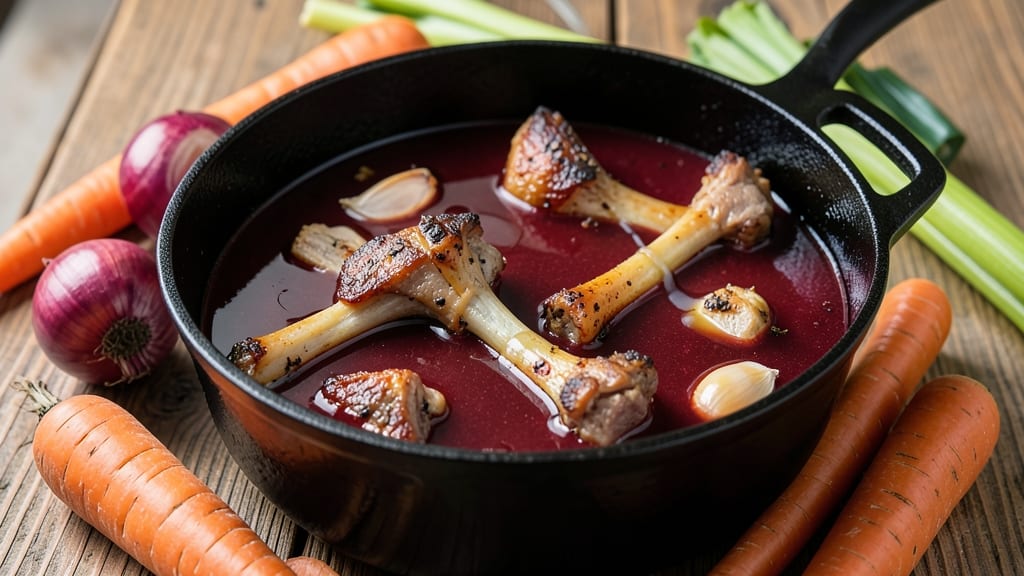
Alton Brown's beef stock recipe transforms ordinary bones into a golden, deeply flavorful liquid foundation for soups, stews, and sauces. The secret lies in deep-roasting the bones to unlock maximum richness, a technique that caramelizes natural sugars and deepens umami.
This isn't just stock—it's the difference between good cooking and extraordinary results, built on science and precision.
What sets this method apart is the two-stage roasting process, where bones develop a dark, crusty exterior that dissolves into the simmering liquid. Aromatics like onions, carrots, and celery form a flavor base, while a splash of vinegar kickstarts collagen extraction for unparalleled depth.
The result? A velvety, intensely savory stock that elevates every dish it touches.
Perfect for meal prep or restaurant-quality cooking, this stock keeps beautifully in the freezer for months. Whether you're braising short ribs, making risotto, or enriching sauces, you'll reach for this foolproof foundation time and again. The process is straightforward but yields professional results—no shortcuts, just pure flavor development.
For those short on time, a pressure cooker adaptation cuts simmering time by half without sacrificing quality. The key is patience: slow extraction builds layers of complexity that rushed methods can't match. This is how you build a culinary toolkit that delivers restaurant-quality results at home.
Ingredients for alton brown beef stock
Twelve ingredients to unlock restaurant-quality depth from humble bones and aromatics.
| Ingredient | Amount | Notes |
|---|---|---|
| Beef Bones 🦴 | 4 lb | Knuckle or marrow bones preferred |
| Yellow Onions 🧅 | 2 whole | Cut into 1-inch chunks |
| Carrots 🥕 | 4 whole | Cut into 2-inch pieces |
| Celery Stalks 🧄 | 4 whole | Cut into 2-inch pieces |
| Garlic Cloves 🧄 | 6 cloves | Smashed for deeper flavor |
| White Wine Vinegar 🍷 | ½ cup | For collagen extraction |
| Cold Water 💧 | 16 cups | Filtered preferred |
| Kosher Salt 🧂 | 2 tbsp | Diamond Crystal preferred |
| Black Peppercorns 🌶️ | 1 tbsp | Crushed for depth |
| Fresh Parsley Stems 🌿 | 4 whole | For brightness |
| Bay Leaves 🍃 | 4 whole | Standard dried leaves |
| Olive Oil 🫒 | ¼ cup | For roasting bones |
The bones are non-negotiable—knuckle or marrow bones yield the richest stock due to their marrow content and collagen. Most butchers will save these for you if asked, though Costco's bulk beef bone packs are a convenient shortcut. Look for bones with a deep red color and visible marrow channels; these indicate optimal fat content. The two-stage roasting process (first at 425°F, then 350°F) creates that signature caramelized crust, which dissolves into the simmering liquid for unparalleled depth. If you're short on time, a pressure cooker adaptation preserves quality while cutting simmering time by half.
No white wine vinegar? Apple cider vinegar or lemon juice work equally well to kickstart collagen extraction. The aromatics—onions, carrots, and celery—should be roughly chopped to ensure even cooking and maximum surface area for flavor infusion. Fresh parsley stems add brightness without overpowering; dried parsley at one-third the amount is acceptable in a pinch. For the olive oil, extra-virgin with a peppery finish enhances the roasting process, though any high-quality oil suffices. The kosher salt should be Diamond Crystal if possible—its coarser grains dissolve more cleanly than table salt.
This stock freezes beautifully—portion into ice cube trays for easy single-use servings. In the fridge, it keeps for 5-6 days in an airtight container, though flavor peaks after 3 days of refrigeration. For long-term storage, use freezer-safe bags and press out excess air to prevent freezer burn. The pressure cooker method reduces active time to 90 minutes total, but traditional stovetop simmering yields the most complex flavor profile. Always strain through a fine-mesh sieve to remove all sediment for a silky texture.
Why You'll Love This Recipe
- No Fuss, Big Payoff: I swear by this method—just roast the bones and veggies until they’re caramelized, then simmer. The prep takes less time than waiting for takeout, and the slow cooker does all the work while you’re watching TV.
- Umami Bomb: That deep, savory punch comes from the beef bones and garlic, but here’s the secret: the soffrito (onions, carrots, celery) roasted first? It’s the flavor multiplier—like a slow-cooked hug for your soup or sauce.
- Weeknight Magic: Freeze half the stock for future soups, stews, or even risotto. Honestly, I make a big batch on Sundays, and by Wednesday, I’m grateful I didn’t have to chop anything fresh.
- Budget Booster: Beef bones are cheaper than steaks, and this recipe stretches them into gallons of liquid gold. I’ve used it for everything from braising to gravy—never wasted a drop, and my wallet thanks me.
Step-by-step instructions for deep-roasted beef stock
Transform humble bones into a velvety, restaurant-quality stock through precise technique and patience.
Roast the Beef Bones for Maximum Flavor
Preheat your oven to 425°F and position a rack in the center. Arrange the 4 lb beef bones on a rimmed baking sheet in a single layer, ensuring they don't overlap. Drizzle evenly with the 0.25 cup olive oil and toss gently to coat all surfaces.
Roast for 45-50 minutes, turning the bones occasionally, until they develop a deep mahogany color and the surrounding baking sheet has a thick, flavorful residue. This caramelization creates the foundational depth of flavor for your stock. The bones should be blistering hot when removed from the oven—this ensures maximum extraction when we add the liquid. Let them cool slightly before proceeding, about 5 minutes.
Build the Aromatic Base
In a large Dutch oven or stockpot, combine the roasted bones with the 2 whole yellow onions (cut into 1-inch chunks), 4 whole carrots (2-inch pieces), 4 whole celery stalks (2-inch pieces), and the 6 smashed garlic cloves. This combination forms the classic "mirepoix" base that provides sweetness, earthiness, and complexity to the stock.
Add the 0.5 cup white wine vinegar and stir gently to deglaze the pot, scraping up all the browned bits from the bottom. This acidic component helps break down collagen and extract maximum flavor from the bones. Pour in the 16 cups cold water and bring to a rolling boil over high heat. Once boiling vigorously, reduce heat to maintain a gentle simmer.
Simmer for Maximum Extraction
Cover the pot and maintain a gentle simmer for 4 hours. The liquid should bubble softly with occasional tiny bubbles breaking the surface—this indicates proper simmering without boiling, which would cloud the stock. Check the liquid level occasionally and add hot water as needed to maintain coverage of the bones.
After 4 hours, remove the lid and increase heat to medium-high to bring to a boil again. Add the 2 tbsp kosher salt and 1 tbsp crushed black peppercorns, then return to a simmer for another 2 hours. This second simmering phase allows the seasoning to fully infuse while maintaining clarity in the stock. The bones should be completely tender and falling apart when tested with a spoon.
Strain and Finish the Stock
Line a large colander or fine-mesh strainer with cheesecloth or multiple layers of dampened coffee filters. Carefully ladle the stock through the strainer into a large bowl or clean pot, pressing gently on the solids to extract maximum liquid without introducing sediment. Discard the strained solids—they've given everything they can.
Return the strained stock to the pot and add the 4 whole fresh parsley stems and 4 whole bay leaves. Simmer gently for 10-15 minutes to infuse fresh, bright flavors. Remove from heat and let cool to room temperature. Once cooled, skim off any remaining fat that rises to the surface. The finished stock should be clear with a rich, golden hue and carry the deep, complex flavors of roasted bones and aromatic vegetables.
Pro Tips For Making Alton Brown Beef Stock
- ROAST THE BONES FIRST: I learned this the hard way—skipping the roast step means your stock will taste more like boiled bones than rich, caramelized flavor. Toss those beef bones with oil, salt, and pepper, then roast at 450°F for 20-30 minutes until deeply browned. That crust packs serious flavor into your stock.
- CHOP VEGETABLES UNIFORM: No one likes gnawing on a celery stalk in their stock. Cut the onions, carrots, and celery into roughly 1-inch chunks—big enough to stay intact but small enough to infuse flavor evenly. Garlic? Smash those cloves with the flat side of your knife first; they’ll release aroma faster and prevent burning.
- SKIP THE BOIL: The moment you see bubbles, turn the heat down to a gentle simmer. Boiling scours the pot, makes the stock cloudy, and wastes valuable collagen. You want tiny, consistent bubbles breaking the surface—like a lazy Sunday morning, not a pressure cooker.
- USE COLD WATER: I know, it’s tempting to throw everything in and crank the heat. But starting with cold water (about 12 cups for a standard batch) lets the bones and veggies heat up gradually, preventing a murky broth. Plus, cold water extracts cleaner, brighter flavors—no one wants a stock that tastes like it’s been through a war.
Serving suggestions for alton brown beef stock
Soup Elevation
Use this beef stock as the base for creamy potato leek soup or classic French onion soup. For the latter, caramelize 2 large onions in butter for 30 minutes until deep amber, then deglaze with ½ cup dry sherry.
Add 1 cup shredded Gruyère cheese and top with toasted baguette slices. The stock’s depth transforms ordinary soup into something extraordinary. 🥘
Braise Perfection
Slow-braised dishes like beef short ribs or osso buco become legendary with this stock. For short ribs, sear 2 lbs bone-in short ribs in a Dutch oven, then add 2 cups stock, 1 cup red wine, and 1 sprig rosemary.
Braise at 325°F for 3 hours until fork-tender. The stock’s richness amplifies the meat’s natural flavors without overpowering. 🍖
Sauce Foundation
Reduce this stock by half to create a velvety pan sauce for steak or roasted chicken. Deglaze the pan with 2 tbsp brandy, add 1 cup stock, and simmer until reduced by 75%.
Finish with 1 tbsp butter and 1 tsp Worcestershire sauce. The result is a luxurious, umami-packed sauce that clings beautifully to proteins. 🍷
Risotto Luxe
Transform arborio rice risotto by using this stock instead of water. Toast 1 cup arborio rice in olive oil, then add 4 cups stock gradually while stirring.
Finish with ½ cup grated Parmigiano-Reggiano and 1 tbsp white truffle oil. The stock’s depth makes every bite rich and satisfying. 🍚
Gravy Game-Changer
Make gravy from scratch by whisking 2 tbsp cornstarch with 1 cup stock, then slowly adding it to 2 cups pan drippings from roasted chicken. Simmer until thickened to coat the back of a spoon. The stock’s complexity turns ordinary gravy into a restaurant-worthy sauce. 🍗
Storage & Reuse
Store stock in freezer-safe bags or glass jars for up to 6 months. Portion into ice cube trays for easy single-use servings in sauces or soups. Thaw overnight in the fridge—never microwave to preserve clarity. The stock’s versatility makes it a pantry essential for weeknight cooking. ❄️
Nutrition facts
Frequently asked questions
Can I use chicken or veal bones instead of beef?
While you can make stock with chicken or veal bones, the flavor profile will differ significantly. Beef bones provide a deeper, richer umami quality due to their higher collagen and fat content. Chicken bones yield a lighter stock better suited for poultry dishes, while veal bones create a delicate but less robust flavor. For Alton Brown's signature depth, beef bones are ideal—but chicken stock works beautifully for chicken-based recipes.
How do I know when the bones are properly roasted?
The bones are ready when they develop a deep mahogany color and the baking sheet has a thick, sticky residue. Turn them occasionally to ensure even browning. The bones should be blistering hot when removed from the oven—this indicates maximum flavor extraction. If they're still pale after 50 minutes, continue roasting until properly caramelized.
Can I make this stock in a slow cooker or Instant Pot?
Yes! For a slow cooker, roast the bones as directed, then transfer everything to the cooker with 16 cups water. Cook on low for 8-10 hours. For an Instant Pot, roast the bones, then add all ingredients and pressure cook for 90 minutes on high pressure. The pressure cooker method cuts time significantly while preserving flavor. Always release pressure naturally for best results.
Why does my stock turn cloudy?
Cloudiness usually means the stock boiled too vigorously, breaking down proteins and fats. To prevent this, maintain a gentle simmer—small bubbles should barely break the surface. If it's already cloudy, strain through a coffee filter lined with cheesecloth for a clearer result. The flavor won't be compromised, but the texture will be smoother.
How much stock will this recipe yield?
This recipe typically yields about 8-10 cups of finished stock, depending on bone size and simmering efficiency. The exact amount varies, but you'll get enough for multiple recipes. For larger batches, double the ingredients while maintaining the same bone-to-water ratio. Store extras in freezer-safe containers for future use.