
Main Courses
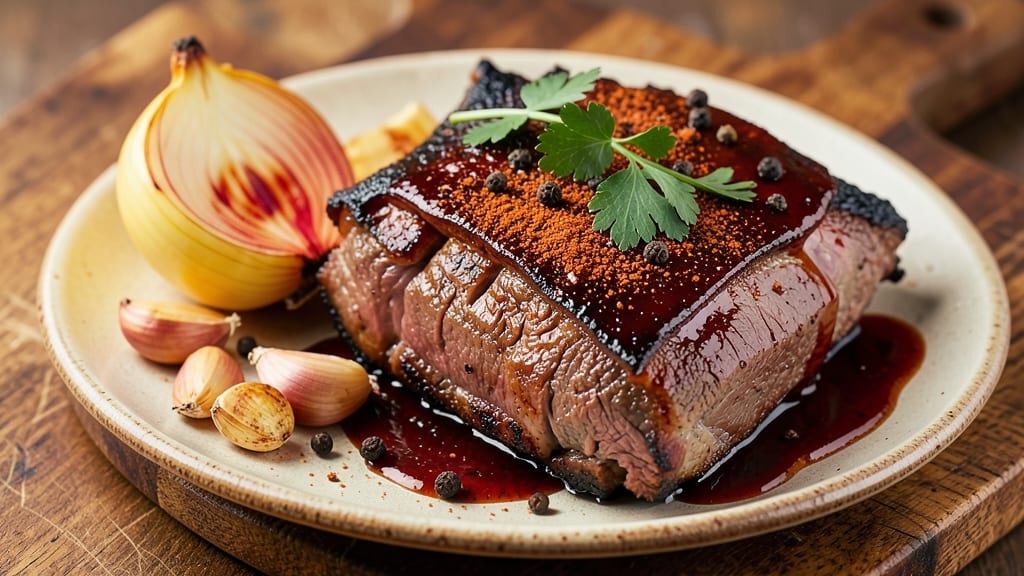
This amazing beef brisket recipe transforms tough cuts into melt-in-your-mouth perfection with a smoky, caramelized crust. 🔥 The secret lies in the slow cook—low and steady heat breaks down fibers while the spice rub creates a flavor bomb that’ll have everyone at the table begging for seconds.
I’ve been perfecting this over years of trial and error (and a few too many burnt attempts), and trust me, the results are worth every minute.
What makes this brisket truly special is the balance of texture and flavor: tender, fork-tender meat with a dark, crackling crust that’s sweet from the natural sugars caramelizing during the smoke.
The dry rub isn’t just seasoning—it’s the foundation of that irresistible bark, and we’ll build it with simple pantry staples. No fancy equipment needed, just patience and a little attention to detail.
By the time you’re done, you’ll have a brisket so rich and flavorful it’ll make restaurant versions look basic. The aroma alone will have your guests drooling before the first slice is served.
This isn’t just dinner—it’s an experience, and I’ll show you exactly how to pull it off without stress.
Whether you’re feeding a crowd or treating yourself to a Sunday feast, this brisket delivers restaurant-quality results at home. The best part? Leftovers taste even better the next day. Let’s get started on that smoky, sweet masterpiece.
Ingredients for amazing beef brisket
Simple pantry staples turn tough brisket into smoky, caramelized perfection with this foolproof recipe.
| Ingredient | Amount | Notes |
|---|---|---|
| Beef Brisket 🥩 | 6 lb | Packer cut with fat cap intact |
| Yellow Onion 🧅 | 1 whole | Large, peeled and sliced |
| Garlic Cloves 🧄 | 8 cloves | Fresh, peeled and minced |
| Brown Sugar 🍯 | ½ cup | Light or dark variety |
| Smoked Paprika 🌶️ | 2 tbsp | For deep smoky flavor |
| Ground Black Pepper 🌶️ | 1 ½ tbsp | Freshly cracked preferred |
| Kosher Salt 🧂 | 2 tbsp | Diamond Crystal preferred |
| Ground Cumin 🌿 | 1 tbsp | Toasted for deeper flavor |
| Chili Powder 🌶️ | 1 tbsp | Medium heat preferred |
| Mustard Powder 🍯 | 1 tsp | For subtle tang |
| Apple Cider Vinegar 🍎 | ¼ cup | For tenderizing |
| Beef Broth 🍲 | 1 cup | Low-sodium preferred |
| Yellow Mustard 🍯 | 2 tbsp | For final glaze |
| Olive Oil 🫒 | 2 tbsp | For rub application |
The brisket is non-negotiable here—packer cut with fat cap intact is key for that signature bark. Costco or local butcher shops usually carry this cut, and it’s worth asking for the whole packer brisket if you want maximum flavor. Look for good marbling and a bright red color, not grayish or yellowed meat. If you can't find a whole brisket, flat cut works too—just trim the fat cap to about 1/4-inch thick for even cooking. I always buy mine a day ahead and let it sit uncovered in the fridge to dry-brine slightly—helps the rub stick better.
No smoked paprika? Substitute with a mix of regular paprika and a pinch of liquid smoke (about 1/2 tsp). The brown sugar can be swapped for turbinado or raw cane sugar if you prefer a less processed option. For the vinegar, apple cider vinegar or white vinegar both work, but cider adds a subtle sweetness. If you're short on time, pre-made beef broth is fine, but homemade always tastes better. The mustard powder is non-negotiable for that slight tang—it cuts through the sweetness of the bark. For the final glaze, Dijon mustard works too if you don't have yellow mustard.
This brisket is a marathon, not a sprint. Plan for 12-16 hours of cooking time, depending on your heat source. The rub stays potent for 3 months in an airtight container, so make extra. Store cooked brisket wrapped tightly in foil—it keeps for 5 days in the fridge or 3 months frozen. The leftovers? Even better the next day—that's when all the flavors really meld together. I always save a few slices for sandwiches the following week—trust me, they're worth it.
Why You'll Love This Recipe
- One-Pan Magic: I swear by this—just toss the brisket, onions, and garlic in a single pan with the spices. No chopping like a fine chef, no fancy tools. The onions caramelize right alongside, so you’re basically getting two sides in one.
- Sweet-Smoky Bomb: That brown sugar and smoked paprika combo? It’s where the magic happens. The brisket gets this sticky, tender crust that’s sweet, smoky, and just a little bit spicy—like a hug for your taste buds.
- Budget-Friendly Feast: A whole brisket for less than $10? That’s a steal. It stretches across meals, impresses guests, and still leaves you with enough for sandwiches. Honestly, I’ve fed a crowd for under $20 with this—no lie.
Step-by-step instructions for smoked brisket with sweet-spice crust
Here's how to transform a tough cut into melt-in-your-mouth perfection.
👨🍳 Step 1: Build the Flavor-Packed Rub
In a medium bowl, combine the 2 tbsp smoked paprika, 1.5 tbsp ground black pepper, 2 tbsp kosher salt, 1 tbsp ground cumin, 1 tbsp chili powder, and 1 tsp mustard powder. This is your flavor foundation - the smoky-sweet-spicy blend that'll create that irresistible crust. I like to mix it with my fingers to break up any clumps and distribute the spices evenly.
Next, add the 0.5 cup brown sugar and mix again. The sugar will caramelize during smoking, creating that beautiful mahogany bark we all love. For extra depth, pour in the 0.25 cup apple cider vinegar and mix until it forms a loose paste. The acidity helps tenderize the meat while adding a subtle tang. Store the rub in a small container until ready to use.
🔥 Step 2: Prep and Season the Brisket
Remove the 6 lb beef brisket from the fridge and let it sit at room temperature for 1 hour. This ensures even cooking. Pat it dry completely with paper towels - moisture is the enemy of crispy bark. I press especially hard on the fat cap and any thick areas where water might pool.
Generously coat the brisket with the 2 tbsp olive oil to help the rub stick. Then apply the rub all over, pressing it firmly into the meat. Don't be shy - you want that flavor to penetrate deeply. Pay special attention to the edges and fat cap. Wrap the brisket tightly in plastic wrap and refrigerate for 12-24 hours. This dry-brining step is what makes the difference between good brisket and amazing brisket.
🔥 Step 3: Smoke to Perfect Tenderness
Preheat your smoker to 225°F using hickory or oak wood. When the temperature stabilizes and you see clean blue smoke, place the brisket fat-side up on the grill grates. The fat will render and baste the meat as it cooks. Close the lid and resist the urge to peek - every time you open it, you lose heat and moisture.
Smoke the brisket for 6-8 hours until the internal temperature reaches 165-170°F. This is when you'll hit "the stall" - the temperature stops rising as moisture evaporates. Don't panic; this is completely normal. The bark should be deep mahogany with some charred spots. When you press your finger into the meat, it should feel firm but still have some springiness.
🥘 Step 4: Wrap and Finish Cooking
Once you hit the stall, it's time for the "Texas crutch" technique. Wrap the brisket tightly in pink butcher paper (not foil - paper allows for better bark development). Return it to the smoker and continue cooking until the internal temperature reaches 200-205°F and a probe slides in like butter. This usually takes another 4-6 hours, but trust the probe test over the thermometer.
In the final 30 minutes of cooking, prepare your glaze by mixing 2 tbsp yellow mustard with 1 cup beef broth. Brush this generously over the brisket. The mustard adds a tangy sweetness that pairs perfectly with the smoky flavors, while the broth keeps the meat moist. The glaze will caramelize beautifully during the final stages.
⏰ Step 5: Rest and Slice for Maximum Juiciness
Remove the brisket from the smoker and let it rest in the butcher paper for at least 1 hour (I prefer 2 hours wrapped in towels in a cooler). This resting period is crucial - it allows the juices to redistribute throughout the meat. The brisket will be extremely tender now, almost falling apart, but it'll firm up slightly as it rests.
Unwrap the brisket and locate the grain direction - you'll see lines running through the meat. Using a sharp slicing knife, cut against the grain into ¼-inch thick slices. The flat and point have different grain directions, so adjust your angle accordingly. Serve immediately while still warm, with each slice pulling apart with a gentle tug, not so soft it falls apart, and not tough or chewy.
Pro Tips For Making Amazing Beef Brisket
- CRANK THE HEAT FIRST: I learned this the hard way—brisket needs a sear that sticks. Get your pan screaming hot (medium-high to high) before adding the brisket, and let it develop that crust for 3-4 minutes per side. That’s the flavor foundation, not just decoration.
- MINCE THAT ONION: I used to chop onions for brisket like I was in a hurry, and the texture suffered. For this recipe, finely mince the yellow onion—think rice-sized pieces—so it dissolves into the sauce instead of sitting as chunks. (Yes, even if you’re impatient like me.)
- SKIP THE CROWDED PAN: Overloading the pan with onions, garlic, and brisket steams the meat instead of browning it. Cook in batches if needed—start with half the onions, render them fully, then add the rest. That golden release of caramelized bits is what makes this dish sing.
- REST THE BRISKET: This isn’t the prettiest method, but it’s the tastiest: after cooking, tent the brisket loosely with foil and let it sit for 15-20 minutes. I know, I know—you want to slice it immediately—but cutting too soon turns tender meat into shredded rubber. (Your future self will thank you.)
Creative variations of amazing beef brisket
Texas-Style Bark
For that iconic deep mahogany crust, Texas pitmasters swear by a double-rub technique. After your initial dry rub, apply a second layer of equal parts brown sugar and chili powder mixed with 1 tbsp olive oil right before wrapping.
This creates an extra-thick bark that's sweet, spicy, and slightly crispy. I like to add 1 tsp ground coriander to this second rub for a citrusy depth that balances the sugar. 🔥
Applewood-Smoked Version
Swap hickory for applewood chips to create a sweeter, fruitier smoke profile that pairs beautifully with the brisket's natural sugars. The applewood's mild sweetness enhances the brown sugar in the rub, creating a harmonious flavor that's especially popular in North Carolina-style brisket.
I recommend soaking the applewood chips for 30 minutes before using to prevent flare-ups. This variation works exceptionally well with a honey-mustard glaze instead of the yellow mustard.
Coffee-Infused Rub
Add 1 tbsp finely ground coffee to your dry rub for a deep, earthy complexity that complements the smoky flavors. The coffee enhances the bark's intensity while adding a subtle bitterness that cuts through the richness.
I use dark roast coffee for stronger flavor, but medium roast works too. This variation is inspired by Kansas City BBQ traditions and pairs perfectly with baked beans and cornbread for a full Southern spread. 💫
Spicy Carolina Heat
For a Carolina-style kick, increase the chili powder to 2 tbsp and add 1 tbsp cayenne pepper to your rub. This creates a fiery bark that's balanced by the sweetness of the brown sugar.
I also recommend using white oak for smoking instead of hickory, as its milder flavor lets the spices shine. Serve with coleslaw and pickled jalapeños to cool the heat. This variation is perfect for those who love bold, spicy flavors with a smoky backbone.
Beer-Braised Brisket
After smoking to 165°F, transfer your brisket to a Dutch oven with 2 cups dark beer (like Guinness or stout), 1 cup beef broth, and 2 tbsp brown sugar. Braise at 325°F for 2 hours until tender.
The beer adds a malty depth that pairs perfectly with the smoky flavors. This method works especially well with flat-cut brisket and creates a tender, saucy result that's great for sandwiches. 🍺
Honey-Glazed Finishing Touch
In the final 30 minutes of cooking, brush your brisket with a mix of ¼ cup honey, 2 tbsp apple cider vinegar, and 1 tbsp Dijon mustard. This creates a sticky, caramelized glaze that adds sweetness and shine.
The honey's floral notes complement the smoky flavors beautifully. I recommend using raw honey for a more complex flavor profile. This variation is inspired by modern BBQ techniques and works especially well with roasted sweet potatoes and grilled asparagus.
Nutrition facts
Frequently asked questions
How do I know when my brisket is fully cooked?
Use a meat thermometer to check the internal temperature—200-205°F is perfect for fork-tender results. The probe should slide in like butter, and the meat should pull apart easily when sliced. Never rely on time alone; the stall (where temp plateaus) is normal but doesn't mean it's done.
Can I cook brisket without a smoker?
Use an oven set to 225°F with a water pan for moisture. Place the brisket on a rack over the pan, wrap it in butcher paper at 165°F, and continue cooking until 200°F. For extra smoke flavor, add wood chips to a foil packet and place it on the oven rack.
Why does my brisket turn out dry?
Overcooking or skipping the wrap (Texas crutch) are the most common causes. Always wrap at 165°F to trap moisture, and remove it at 200-205°F. Let it rest 2 hours before slicing—this redistributes juices. If it's still dry, try adding a splash of beef broth to the wrap for extra moisture.
What's the best way to store leftover brisket?
Wrap tightly in butcher paper or foil, then store in an airtight container. It keeps for 5 days in the fridge or 3 months frozen. For reheating, warm in a 300°F oven for 30 minutes with a splash of beef broth to revive moisture. Leftovers taste even better—flavors meld overnight!
How do I adjust the rub for a milder flavor?
Reduce the chili powder to ½ tbsp and swap cayenne for ½ tsp smoked paprika. Add 1 tsp ground coriander for warmth without heat. Also, use white oak** instead of hickory for a gentler smoke profile. Taste the rub before applying—it should be flavorful but not overpowering.