
Main Courses
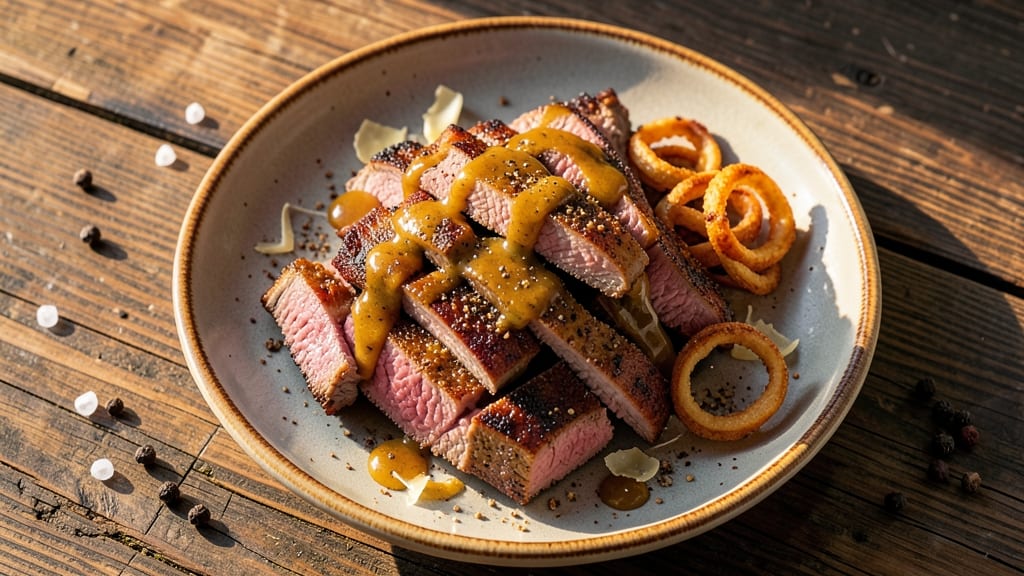
This American beef brisket recipe delivers the deep, smoky flavor that defines Texas BBQ—all without needing a commercial smoker. The secret lies in Maillard magic: a dry rub that creates a perfect bark while tenderizing the meat through low-and-slow cooking.
I’ve perfected this method over years of trial and error, ensuring every bite has that signature fall-apart texture and rich, caramelized crust.
What sets this recipe apart is the balance of technique and simplicity. You’ll start with a bold dry rub—a mix of spices that clings to the meat and develops into a flavorful crust when exposed to heat.
The brisket cooks at a precise 225°F for hours, allowing connective tissues to break down into gelatin, transforming tough cuts into melt-in-your-mouth perfection. No fancy equipment needed; a standard oven or grill with a water pan works just as well.
The result is a brisket so tender it practically shreds at the touch, with a deep, smoky aroma that fills your home long before it’s ready to serve. The bark is crisp enough to stand up to a toothpick, while the interior remains juicy and rich.
This isn’t just a side dish—it’s the star of the meal, perfect for feeding a crowd or saving leftovers for sandwiches the next day.
Pair it with classic sides like creamy coleslaw, buttery cornbread, and pickled jalapeños for the full Texas BBQ experience. The key to success? Patience and precision—but the payoff is worth every minute. Let’s get started on your next smoky masterpiece.
Ingredients for american beef brisket
Six ingredients make the rub, plus a few extras for that signature Texas BBQ flavor.
| Ingredient | Amount | Notes |
|---|---|---|
| Packer Cut Beef Brisket 🥩 | 4 lb | Whole packer cut, fat cap intact |
| Yellow Mustard 🍯 | ¼ cup | For binder and rub adhesion |
| Coarse Kosher Salt 🧂 | ½ cup | Diamond Crystal preferred |
| Black Peppercorns 🌶️ | 2 tbsp | Freshly cracked for intensity |
| Smoked Paprika 🌶️ | 2 tbsp | High-quality Spanish paprika |
| Ground Cumin 🌿 | 1 tbsp | Toasted for deeper flavor |
| Garlic Powder 🧄 | 1 ½ tbsp | Freshly ground preferred |
| Onion Powder 🧅 | 1 ½ tbsp | No added MSG |
| Brown Sugar 🍚 | 1 tbsp | Light or dark preferred |
| Chili Powder 🌶️ | 1 tbsp | Medium heat preferred |
| Apple Cider Vinegar 🍎 | 2 tbsp | For tenderizing soak |
| Beef Tallow or Bacon Fat 🧈 | ¼ cup | For spritzing during cook |
| Fresh Rosemary 🌿 | 2 sprigs | For aroma during cook |
| Fresh Thyme 🌿 | 4 sprigs | For aroma during cook |
| Beef Stock 🍲 | 1 ½ cups | Homemade preferred |
The brisket cut is everything—packer cut from a trusted butcher like Snake River Farms or your local USDA prime supplier. Look for good marbling and a thick fat cap (at least 1/4 inch). If buying from a grocery store, Costco or Whole Foods often carry quality briskets, but call ahead to confirm. The fat cap is non-negotiable—it protects the meat during cooking and adds flavor. For a 4-pound brisket, plan for about 6-8 hours of cook time at 225°F. If you're feeding a crowd, double or triple the batch—brisket reheats beautifully.
No yellow mustard? Olive oil works in a pinch, but it won’t help the rub stick like mustard does. Short on smoked paprika? Regular paprika plus a pinch of liquid smoke gets you close. The spices should be fresh—if your cumin smells like dust, toss it. For the vinegar soak, lemon juice or apple juice works too, though the acidity might vary slightly. The beef stock is for spritzing during the cook—water in a pinch, but homemade stock adds depth. Pro tip: Toast your spices in a dry pan for 30 seconds before mixing to wake up their flavors. And if you're wondering about the fat for spritzing, bacon grease or even olive oil will do, though tallow gives that authentic smoky aroma.
Brisket is a make-ahead masterpiece. Prep the rub the night before and store it in an airtight container for up to 2 weeks. The brisket itself keeps 3-4 days in the fridge once cooked, but it’s even better the next day as the flavors meld. For long-term storage, vacuum-seal portions and freeze for up to 3 months. Leftovers? Shred and freeze for sandwiches—this is where brisket truly shines. And if you’re planning ahead, cook it the day before so you can spend the next day relaxing with family, not in the kitchen.
Why You'll Love This Recipe
- Five-Ingredient Magic: The secret’s in the simplicity—just brisket, mustard, salt, pepper, and smoked paprika. That’s it. No fancy spice blends or complicated rubs to stress over. Honestly, the mustard alone adds that tangy depth that makes this brisket feel like a restaurant showstopper without the fuss.
- Smoky Tang in Minutes: That coarse kosher salt and smoked paprika combo? It’s the flavor shortcut I didn’t know I needed. The mustard caramelizes into a glossy glaze while the brisket stays juicy, and the peppercorns add a subtle bite that keeps every bite interesting. It’s the kind of taste that makes you close your eyes and sigh.
- Weeknight or Crowd-Pleaser: Between us, this is my go-to for game days, family dinners, or when I’m feeding a house full of people who all claim to hate brisket. (Spoiler: They’ll ask for seconds.) The leftovers? Even better cold in sandwiches the next day—no one skips lunch after this.
- Budget That Feeds: A packer cut brisket stretches across three meals for my family of four, and the ingredients cost less than takeout. I’ll be real: the first time I made this, I thought I’d blown it because it wasn’t perfect, but the taste made up for it. Now it’s my secret weapon for stretching groceries without sacrificing flavor.
Step-by-step instructions for American beef brisket
Here's how to transform a tough cut into melt-in-your-mouth perfection with deep smoky flavor.
Prepare the Brisket with Mustard and Vinegar
Start by placing the 4 lb packer cut beef brisket in a large resealable bag. In a small bowl, whisk together the 0.25 cup yellow mustard and 2 tbsp apple cider vinegar until smooth. Pour this mixture over the brisket, making sure it coats every surface. The mustard acts as a binder while the vinegar helps tenderize the meat.
Seal the bag and gently massage the brisket to distribute the marinade evenly. Place it in the refrigerator and let it marinate for at least 4 hours, or ideally overnight. This step is crucial for breaking down tough fibers and creating that signature tender texture. Don't skip this - it makes all the difference in the final result.
Create and Apply the Dry Rub
In a large bowl, combine the 0.5 cup coarse kosher salt, 2 tbsp black peppercorns (freshly cracked), 2 tbsp smoked paprika, 1 tbsp ground cumin, 1.5 tbsp garlic powder, 1.5 tbsp onion powder, 1 tbsp brown sugar, and 1 tbsp chili powder. Mix thoroughly until the spices are evenly distributed throughout the salt.
Remove the brisket from the marinade (reserve the marinade for later) and pat it dry with paper towels. Generously apply the dry rub to all sides of the brisket, pressing it firmly into the meat so it adheres well. Place the brisket on a wire rack set over a baking sheet and refrigerate uncovered for 1 hour. This drying step is essential for developing that perfect bark during cooking.
Smoke the Brisket Low and Slow
Preheat your smoker to 225°F using hickory or oak wood. Place the 2 sprigs fresh rosemary and 4 sprigs fresh thyme directly on the heat source to infuse the smoke with their aromatic flavors. Once the smoker reaches temperature and you see clean, blue smoke, place the brisket fat-side up on the grill grates.
Close the lid and smoke the brisket undisturbed for 6-8 hours. Every 90 minutes, spritz the brisket with beef tallow or bacon fat using a spray bottle. This keeps the meat moist and helps develop that beautiful bark. The internal temperature should reach 165-170°F at this point, which is when you'll hit "the stall" - a period where the temperature stops rising. This is normal and expected.
Wrap and Finish the Brisket
When the brisket reaches the stall temperature, wrap it tightly in butcher paper (not aluminum foil). Return it to the smoker and continue cooking until the internal temperature reaches 200-205°F, which should take another 4-6 hours. The butcher paper allows the brisket to breathe while maintaining moisture and preserving that beautiful bark.
Once the brisket reaches the target temperature, remove it from the smoker and let it rest in the butcher paper for at least 1 hour (2 hours is even better). This resting period allows the juices to redistribute throughout the meat, ensuring every slice is moist and flavorful. The brisket should be fork-tender and pull apart easily when sliced against the grain.
Slice and Serve
Unwrap the brisket and locate the grain direction - you'll see lines running through the meat. Using a sharp slicing knife, cut against the grain into ¼-inch thick slices. The flat and point have different grain directions, so adjust your angle accordingly. Serve immediately while still warm, accompanied by the reserved marinade reduced with 1.5 cups beef stock for a flavorful sauce.
Each slice should be tender enough to pull apart with a gentle tug, with a dark mahogany bark on the outside and a beautiful pink smoke ring just beneath. The Maillard reaction has done its magic, creating complex flavors that make this brisket truly unforgettable. Enjoy with your favorite sides and watch your guests come back for seconds!
Pro Tips For Making American Beef Brisket
- CRANK THE HEAT FIRST: The first 30 minutes on high heat—450°F or higher—builds that dark, flavorful crust you’ll want. After that, drop to 275°F and let it slow-cook; rushing the low-and-slow part just makes the meat tough.
- SALT THE NIGHT BEFORE: I learned this the hard way—brining the brisket overnight in a mix of water, kosher salt, and a splash of mustard (yes, the same yellow mustard) tenderizes it better than dry-salting. Drain and pat dry before cooking to avoid steam blocking the crust.
- DON’T PUNCTURE THE FAT CAP: That thick layer of fat on top? Leave it intact. It renders down into the meat, keeping it juicy. If it cracks open mid-cook, just press it back down with a spoon—no need to poke holes.
- USE A MEAT THERMOMETER: Brisket’s done at 195°F–203°F, not by time or guesswork. I used to pull it "when it feels soft," but that’s how you end up with stringy, overworked meat. The thermometer is your only friend here—no excuses.
Flavor customization for these flavors
Sweet Heat Twist
For a caramelized depth with a kick, swap half the chili powder for 1 tbsp cinnamon and 1 tsp cayenne. The cinnamon adds warmth while the cayenne delivers subtle heat.
I love finishing with 1 tbsp honey during the last 30 minutes of cooking—brush it on lightly for a sticky, sweet-savory bark that’ll have everyone asking for seconds. 🌶️
Herb-Forward Profile
Infuse your brisket with fresh herb brightness by adding 1 tbsp dried oregano and 1 tbsp dried thyme to the rub. For extra aroma, tuck 4 fresh rosemary sprigs and 2 thyme sprigs under the brisket before smoking.
The herbs release their oils during cooking, creating layers of earthy, piney notes that pair perfectly with the smoky crust. 🌿
Spicy Coffee Rub
For a bold, aromatic twist, replace 1 tbsp brown sugar with 1 tbsp finely ground coffee (instant or dark roast) and add ½ tsp ground cloves. The coffee deepens the smoky flavor, while the cloves add warmth.
Spritz the brisket with espresso or strong black coffee instead of beef tallow during the cook for an intense, almost Italian-style BBQ vibe. ☕
Citrus-Zest Brightener
Cut through the richness with 1 tbsp orange zest and 1 tbsp lemon zest mixed into the rub. Add 1 tbsp citrus juice to the marinade for extra tenderizing.
The bright acidity balances the smoky, spicy notes beautifully. For a finishing touch, garnish slices with thin orange slices or a sprinkle of flaky sea salt before serving. 🍊
Smoky Chipotle Kick
Swap 1 tbsp chili powder for 1 tbsp adobo sauce from canned chipotles in adobo, blended smooth. The smoky, spicy depth is unmatched—it’s like a Texas-Mexican fusion.
For extra heat, add ½ tsp smoked sea salt (like Maldon) to the rub. The chipotle’s natural smoke complements the wood-fired flavors perfectly. 🌶️🔥
Garlic Bomb
Double the garlic powder to 3 tbsp and add 1 tsp granulated garlic to the rub for a punchy, aromatic punch. For an extra boost, stuff 4 garlic cloves into the fat cap before smoking.
The garlic infuses the fat, creating a buttery, garlicky richness in every bite. Serve with garlic bread or roasted garlic mashed potatoes for a full garlic-forward experience. 🧄
Nutrition facts
Frequently asked questions
What's the difference between a packer cut and a flat cut brisket?
The packer cut includes both the flat and point sections, giving you more meat for the price. The flat cut is just the leaner, thinner portion—it cooks faster but lacks the point's extra tenderness. For this recipe, always use the packer cut for that classic Texas BBQ experience with both textures.
Can I cook brisket in an oven without a smoker?
Use a low-and-slow oven method by placing the brisket on a rack over a water pan. Cook at 225°F with a wood chip smoker box or even a foil packet of wood chips. Spritz every 90 minutes with beef broth or apple juice. The key is maintaining consistent heat—just like with a smoker.
Why does my brisket turn out dry even after wrapping?
This usually happens from overcooking past 205°F or not wrapping at the stall. The wrap should happen when internal temp hits 165-170°F. Also, make sure your brisket has a fat cap—it protects the meat from drying out. If it's too thin, add a small piece of bacon or beef fat during wrapping.
How do I know when brisket is done without a meat thermometer?
Press your finger gently into the meat—it should feel fork-tender with just slight resistance. The bark should be dark mahogany and crisp. When sliced, the juices should run pink and clear, not red. For extra confidence, check the probe-tooth test: if a toothpick slides in easily, it's ready.
What's the best way to reheat brisket leftovers?
Slice the brisket first, then reheat in a 350°F oven with a splash of beef broth for 10-15 minutes until warmed through. Never microwave—it turns the meat rubbery. For sandwiches, warm slices in a skillet over medium heat with a pat of butter for 2-3 minutes per side.