
Soups & Stews
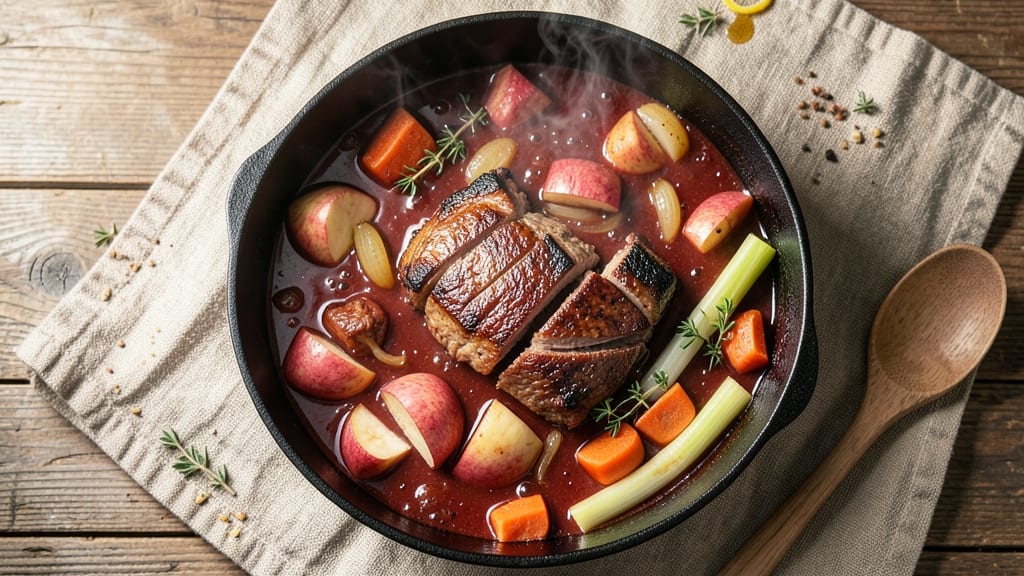
This apple beef stew recipe transforms humble ingredients into a heartwarming dish where tender beef and sweet-tart apples harmonize in a rich, spiced broth. The secret lies in slow-cooking the beef until fork-tender while caramelizing the apples to deepen their natural sweetness.
I developed this recipe after years of experimenting with fruit-infused stews, and it's become a fall favorite that brings warmth to any table.
The process begins with searing beef chuck in batches to build deep flavor, then simmering it low and slow with onions, garlic, and aromatic spices. Apples add a subtle sweetness that balances the savory beef and earthy broth, while herbs like thyme and bay leaf create layers of complexity.
This method ensures the beef becomes melt-in-your-mouth tender while the apples develop a caramelized edge that enhances every spoonful.
What you'll end up with is a stew that's rich, comforting, and packed with flavor—perfect for chilly evenings or family gatherings. The aroma alone will fill your home with warmth, and each bite delivers a perfect balance of sweet, savory, and spiced notes.
It's the kind of dish that tastes even better the next day, making it ideal for meal prep or leftovers.
Serve with crusty bread to soak up every drop of that flavorful broth, or pair it with roasted potatoes for a complete meal. This recipe delivers restaurant-quality results with minimal effort, proving that slow cooking can be both rewarding and foolproof. Let's get started!
Ingredients for apple beef stew
Sweet-tart apples and rich beef chuck create a comforting stew with layers of spiced depth.
| Ingredient | Amount | Notes |
|---|---|---|
| Beef Chuck Roast 🥩 | 2 lb | Cut into 1.5-inch cubes |
| Yellow Onions 🧅 | 1 whole | Chopped, medium dice |
| Garlic Cloves 🧄 | 4 cloves | Minced, fresh preferred |
| Apples 🍎 | 3 medium | Honeycrisp or Fuji, peeled, cored, sliced |
| Carrots 🥕 | 4 medium | Peeled, cut into chunks |
| Celery Stalks 🥬 | 3 whole | Chopped, medium dice |
| Beef Broth 💧 | 4 cups | Low-sodium preferred |
| Red Wine 🍷 | 1 cup | Dry, like Cabernet Sauvignon |
| Tomato Paste 🍅 | 2 tbsp | Smooth, no sugar added |
| Fresh Thyme 🌿 | 2 tbsp | Leaves only, chopped |
| Bay Leaves 🌿 | 2 whole | Dried, standard size |
| Allspice Berries 🌶️ | 4 whole | Crushed lightly |
| Salt 🧂 | 1 ½ tsp | Kosher or sea salt |
| Black Peppercorns 🌶️ | 1 tsp | Freshly cracked |
| Olive Oil 🫒 | 2 tbsp | Extra-virgin for searing |
The beef chuck is non-negotiable here—look for good marbling at Whole Foods or your local butcher shop. Pre-cut cubes save time, but if buying a whole roast, ask for it to be trimmed of fat and cut into even 1.5-inch pieces. Apples should be firm with a slight crunch—Honeycrisp or Fuji hold up best during slow cooking. For the broth, low-sodium options prevent over-salting, though you can always adjust later. Fresh thyme is ideal, but dried works at half the amount if you're in a pinch. The allspice berries add warmth without overpowering—crush them lightly with the flat side of a knife to release their aroma.
No red wine? Substitute with extra beef broth and 1 tbsp balsamic vinegar for depth. Running short on apples? Pear slices work equally well, though they'll soften faster. The tomato paste can be swapped for 1/4 cup crushed tomatoes if you prefer a chunkier texture. For a deeper spice profile, add 1/2 tsp cinnamon or a pinch of nutmeg. If using pre-chopped vegetables, pat them dry first to prevent excess moisture in the stew. The celery adds subtle earthiness—don't skip it, even if you're not a fan of its flavor alone.
This stew tastes even better the next day as flavors meld. Store in an airtight container in the fridge for up to 5 days, or freeze portions for 3 months. For meal prep, double the recipe and freeze half—just thaw overnight in the fridge before reheating. The apples will soften further upon reheating, so if you prefer them slightly firmer, add them during the last 20 minutes of cooking when reheating. Serve with crusty bread to soak up every last drop of that rich, spiced broth.
Why You'll Love This Recipe
- One-Pot Magic: I swear by this recipe when I’m too tired to wash pots. Just toss the beef, onions, garlic, and apples into a slow cooker—no chopping like a fine chef, just rough dice—and let it do the work. The apples soften perfectly while the beef melts, and honestly? The cleanup is just wiping one bowl.
- Sweet-Savory Balance: That first bite where the tender beef meets the caramelized apples? It’s like autumn in a bowl. The onions and garlic build depth, then the apples add a bright, almost honeyed sweetness that cuts through the richness. My picky-eating husband actually finishes his portion—no small feat.
- Leftovers That Beg for More: Between us, this stew only gets better the next day. The flavors meld into something deeper, and reheating it is just a matter of warming through. I freeze half the batch because my kids ask for it at school—yes, really—and it thaws beautifully. (Pro tip: Add a splash of broth when reheating.)
- Budget-Friendly Crowd-Pleaser: A beef chuck roast is cheap per pound, and apples and carrots stretch it further than you’d think. I’ve fed eight people with one recipe, and everyone leaves happy. It’s the kind of dish that makes you look like a hero without breaking the bank—or spending hours in the kitchen.
Step-by-step instructions for apple beef stew
This method delivers tender beef and perfectly balanced sweet-tart flavors through precise timing and layering.
Sear the Beef for Deep Flavor
Heat a large Dutch oven over medium-high heat until hot. Add the 2 tablespoons olive oil and swirl to coat the bottom. Working in batches, add the 2 lb beef chuck roast cut into 1.5-inch cubes, leaving space between pieces. Let them sear undisturbed for 2-3 minutes until deeply browned on one side before turning.
This searing step creates a flavorful crust that forms the base of your stew. Don't crowd the pan—if needed, work in two batches. Once all pieces are browned, transfer them to a plate and set aside. The browned bits left in the pot will dissolve into the sauce, adding rich depth.
Build the Flavor Base
In the same Dutch oven, add the chopped 1 whole yellow onion, 4 medium carrots, and 3 whole celery stalks. Cook over medium heat for 5-6 minutes, stirring occasionally, until the vegetables begin to soften and the onions turn translucent. Add the 4 cloves minced garlic and cook for another 30 seconds until fragrant.
Next, stir in the 2 tablespoons tomato paste and cook for 1 minute to deepen its flavor. Sprinkle in the 1.5 teaspoons salt, 1 teaspoon freshly cracked black peppercorns, and 2 tablespoons chopped fresh thyme. This aromatic base will infuse the entire stew with complex flavors.
Deglaze and Simmer the Stew
Pour in the 1 cup red wine and scrape up all the browned bits from the bottom of the pot with a wooden spoon. This deglazing step captures all the flavor you've built so far. Let the wine simmer for 2-3 minutes until reduced by half. Add the 4 cups beef broth, 3 medium sliced apples, 2 whole bay leaves, and 4 whole lightly crushed allspice berries.
Return the beef to the pot, making sure it's submerged. Bring the stew to a gentle boil, then reduce heat to low and cover. Let it simmer for 2 hours, stirring occasionally, until the beef is fork-tender and easily pulls apart. The apples should soften but still hold their shape, releasing their sweet-tart juices into the stew.
Adjust and Serve
Once the beef is tender, taste the stew and adjust seasoning if needed. The apples should provide natural sweetness, but you might want to add a pinch more salt or a splash of red wine to balance the flavors. Remove and discard the bay leaves and allspice berries before serving.
Ladle the stew into bowls, making sure each serving gets a generous portion of beef and vegetables. The stew should have a rich, velvety texture with tender beef that practically melts in your mouth. Serve immediately with crusty bread to soak up every last drop of that flavorful broth.
Pro Tips For Making Apple Beef Stew
- Sear the Chuck First: The beef won’t caramelize properly if you rush this—get your pan screaming hot (medium-high heat) and let those edges turn deep brown before touching anything. I used to skip this, and the stew just tasted like slow-cooked beef instead of something rich and layered.
- Peel and Core Apples Last: Acidic apples (like Granny Smith) soften faster than you’d think—hold off on chopping them until the stew’s been simmering for at least 45 minutes. Toss them in whole first, then slice them in at the end for texture that’s still pleasant, not mushy.
- Don’t Crowd the Pot: If you dump everything in at once, the carrots and onions will steam instead of caramelize. Brown the onions and garlic separately in batches, then layer the ingredients loosely—this builds flavor that’s way more complex than just tossing everything together.
- Use a Meat Thermometer: Pull the chuck at 195°F (not 160°F)—it’ll keep shredding easily and stay tender even after resting. I learned this the hard way after serving tough, stringy beef that fell apart when sliced. Trust the thermometer, not the "feel" of the meat.
Perfect pairings for apple beef stew
Bread Pairings
Crusty sourdough bread is my go-to pairing—its tangy crumb and chewy crust soak up the rich broth beautifully. Look for an artisanal loaf from your local bakery or a Whole Foods Market selection. For extra indulgence, toast thick slices and rub with a garlic clove before serving. 🥖
If you prefer something lighter, brioche rolls add a buttery contrast that balances the stew's hearty flavors. Warm them slightly before serving to enhance their aroma. For a rustic touch, try rustic country bread with a crisp exterior and soft interior—it's perfect for dipping and adds texture variety.
Wine Pairings
A medium-bodied Cabernet Sauvignon from Napa Valley complements the stew's sweet-tart profile beautifully. The wine's dark fruit notes and subtle tannins harmonize with the beef and apples. I recommend Robert Mondavi Private Reserve for its balance of richness and acidity. 🍷
For white wine lovers, a Chardonnay with noticeable oak (like Kendall-Jackson Vintner's Reserve) adds a creamy contrast. The wine's buttery notes soften the stew's spices while its acidity cuts through the richness. Avoid overly oaky or high-alcohol wines that might overpower the dish.
Beer Pairings
An amber ale with malty sweetness and caramel undertones is ideal—think Samuel Adams Noble Experiment. The beer's roasted notes echo the stew's allspice, while its maltiness complements the apples. Serve slightly chilled to enhance its refreshing qualities. 🍺
For a darker option, try a brown ale like Newcastle Brown Ale. Its nutty, toasty profile pairs wonderfully with the beef and caramelized apples. The beer's moderate alcohol content won't overpower the stew's delicate flavors, making it a perfect match.
Seasonal Garnishes
Freshly chopped parsley adds a bright, herbaceous note that cuts through the richness. Sprinkle it over individual servings just before eating to preserve its vibrant color and fresh flavor. A pinch of smoked paprika on top adds warmth and visual appeal. 🌿
For a pop of color, add thinly sliced scallions or a dollop of crème fraîche to each bowl. The crème fraîche adds a creamy contrast that balances the stew's hearty flavors. If you're feeling adventurous, top with crispy fried shallots for extra crunch and depth.
Nutrition facts
Frequently asked questions
Can I use a slow cooker for this apple beef stew?
Transfer all ingredients to your slow cooker after searing the beef, then cook on low for 7-8 hours or high for 4-5 hours. The slow cooker's gentle heat will keep the beef tender and apples perfectly soft. Just avoid lifting the lid while cooking to maintain steady heat.
What's the best way to store leftovers?
Store in an airtight container in the fridge for up to 5 days. The flavors actually improve overnight as the beef and apples meld further. For freezing, portion into individual containers and freeze for up to 3 months. Thaw overnight in the fridge before reheating.
Can I substitute the beef chuck with a leaner cut?
While beef chuck is ideal for its marbling, you can use chuck roast or stew meat—both have enough fat for tender results. Avoid lean cuts like sirloin or flank steak, as they'll dry out during the long simmer. If using a leaner cut, add 1 tablespoon olive oil to the pot to compensate.
How do I know when the beef is fully tender?
The beef should easily pull apart with a fork and feel soft to the touch. For extra assurance, cut into a small piece—if it's fork-tender with no resistance, it's ready. The stew will also thicken slightly as it cools, which is a good sign of proper cooking.
What if my stew tastes too sweet?
Balance the sweetness by adding 1-2 tablespoons red wine vinegar or 1/2 teaspoon mustard to cut through the apples' natural sugars. You can also add a pinch of smoked paprika or black pepper to enhance the savory notes. Taste as you go—small adjustments make all the difference!