
Main Courses
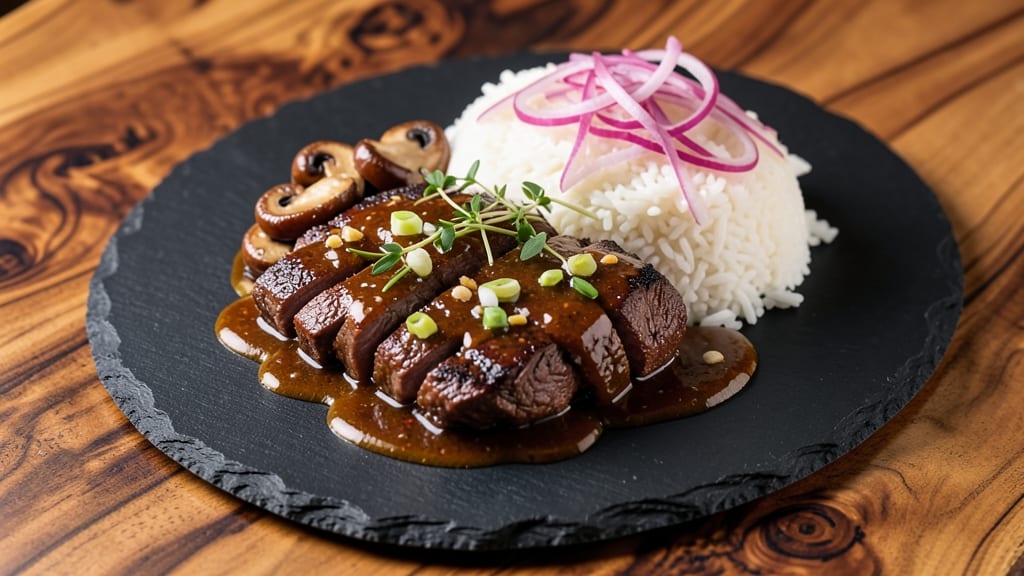
The Asian gravy beef recipe transforms tender beef into a restaurant-worthy dish with a velvety soy-ginger sauce that clings to every bite. 🔥 This technique combines wok-searing for depth with slow simmering to develop rich, caramelized flavors—no pressure cooker required.
The result? Beef so tender it practically melts, bathed in a glossy sauce that balances sweet, salty, and umami perfectly.
What sets this recipe apart is the two-stage cooking process: first, searing the beef in a hot wok creates that coveted "wok hei" smokiness, while the sauce simmers until thick and luxurious.
We use a simple blend of soy sauce, ginger, garlic, and a touch of honey to build complexity, then finish with cornstarch for that signature silky texture. The beauty? It's approachable enough for weeknights but impressive enough for dinner guests.
By the final plate, you'll have beef that's fork-tender with just a hint of char, served over steamed rice and topped with fresh green onions. The sauce coats every bite, delivering layers of flavor with each tender pull.
This dish proves you don't need fancy equipment to create restaurant-quality Asian comfort food at home.
The best part? Leftovers reheat beautifully, making it perfect for meal prep. Whether you're feeding a family or treating yourself to a special night in, this recipe delivers satisfaction with minimal effort. Let's get cooking—your taste buds will thank you.
Ingredients for asian gravy beef
Nine ingredients transform simple beef into restaurant-style Asian gravy beef.
| Ingredient | Amount | Notes |
|---|---|---|
| Flank Steak 🥩 | 1 ½ lb | Thinly sliced against grain |
| Kosher Salt 🧂 | 1 ½ tsp | Diamond Crystal preferred |
| Black Pepper 🌶️ | 1 tsp | Freshly ground for best flavor |
| Vegetable Oil 🫒 | 2 tbsp | High smoke point for searing |
| Fresh Ginger 🌿 | 2 tbsp | Finely grated, peeled |
| Garlic Cloves 🧄 | 6 cloves | Minced, fresh preferred |
| Light Soy Sauce 🥄 | ½ cup | Kikkoman or La Choy |
| Dark Soy Sauce 🥄 | 1 tbsp | For deeper color |
| Honey 🍯 | 2 tbsp | Wildflower preferred |
| Cornstarch 🌾 | 1 tbsp | For sauce thickening |
| Water 💧 | ¼ cup | Room temperature |
| Green Onions 🧅 | 4 whole | Sliced, for garnish |
| Sesame Oil 🫒 | 1 tsp | Toasted, for aroma |
| White Rice 🍚 | 1 ½ cups | Uncooked, long grain |
The beef is everything here. Flank steak delivers that perfect balance of tenderness and chew—ribeye or sirloin work too, but stay away from tough cuts. Slice it thinly against the grain for fork-tender results. I grab mine from Costco when it's on sale, but any quality butcher will have it. Fresh ginger and garlic? Don't skip the fresh—dried just won't cut it. For the soy sauces, Kikkoman light and La Choy dark are my go-tos, but any good brand works. The honey adds that perfect sweetness without overpowering.
No flank steak? Sirloin or ribeye are solid swaps—just slice it thinner. Fresh ginger too expensive? Powdered ginger at half the amount works in a pinch, though it lacks that bright zing. Out of dark soy sauce? Add a splash of molasses or a pinch of caramel color for depth. The cornstarch is non-negotiable for that silky sauce—arrowroot powder works too if you're avoiding gluten. For the rice, jasmine rice has a nicer texture, but long-grain white is fine. Pro tip: toast the sesame oil in the wok before adding beef for maximum aroma.
This sauce gets better with time—make extra and store it for up to 5 days in the fridge. The beef reheats beautifully, so double the batch for leftovers. For meal prep, portion the beef and sauce separately—reheat the sauce first to keep it glossy. The rice? Cook it fresh or reheat with a splash of water to keep it fluffy. Garnish with green onions right before serving—they wilt fast if added too early.
Why You'll Love This Recipe
- Steak in 15 Minutes: I swear, the flank steak slices itself after a quick sear—no fancy knife skills needed. Just a hot pan, a few minutes of attention, and you’re left with tender strips that practically melt.
- Ginger-Glazed Magic: That fresh ginger isn’t just for show—it caramelizes into a sticky, aromatic sauce that clings to every bite. Honestly, the first time I tasted it, I nearly burned the kitchen waiting for my next forkful.
- Lunchbox Hero: Between us, this is my go-to for meal prep. The gravy keeps the steak juicy even after days in the fridge, and I pack it in rice bowls or wraps without a second thought. (Yes, even on a Tuesday.)
- Budget Stretch: Flank steak’s affordable, and a single pound feeds four—no wasted leftovers here. I’ve turned it into stir-fries, noodle bowls, and even breakfast hash, so it never feels like a one-trick dish.
Step-by-step instructions for wok-seared Asian gravy beef
Here's how to transform simple ingredients into restaurant-quality beef with a silky, aromatic sauce.
🔥 Step 1: Sear the Flank Steak to Perfection
Heat a wok or large skillet over high heat until it's smoking hot. Add the 2 tablespoons vegetable oil and swirl to coat. Working in batches if needed, add the 1.5 lb flank steak sliced against the grain, spreading them out in a single layer.
Sear for 1-2 minutes per side until the beef develops a deep golden-brown crust. You'll see those gorgeous caramelized edges—this is where all the flavor starts. Remove the beef and set aside on a plate, leaving the wok to render out all that delicious beef fat.
Here's the thing—don't overcrowd the pan. If you add too much at once, you'll steam the meat instead of searing it. The fat should sizzle vigorously when you add the beef. If it doesn't, let the wok get hotter before proceeding.
👨🍳 Step 2: Build the Flavor-Packed Sauce Base
In the same wok (don't wipe it clean—those browned bits are pure flavor), add the 2 tablespoons finely grated fresh ginger and 6 cloves minced garlic. Stir constantly for 30 seconds until fragrant and lightly golden. You'll smell that amazing aromatic punch—this is the foundation of your sauce.
Pour in the 0.5 cup light soy sauce and 1 tablespoon dark soy sauce. The dark soy adds that beautiful mahogany color while keeping all the umami flavor. Add the 2 tablespoons honey and let the mixture simmer for 1-2 minutes until slightly reduced.
I always taste at this stage. The sauce should be salty-sweet with a bright ginger-garlic punch. If it needs more depth, add another splash of light soy sauce. This is where you can adjust the flavor balance before committing to the thickening step.
🥘 Step 3: Thicken the Sauce to Velvety Perfection
In a small bowl, whisk together the 1 tablespoon cornstarch and 0.25 cup room temperature water until smooth. This is your thickening slurry. Pour it into the wok while stirring constantly over medium-high heat.
The sauce will thicken dramatically within 30-60 seconds. You're looking for a glossy, velvety consistency that coats the back of a spoon. If it thickens too quickly, add another 1 tablespoon water to loosen it. The sauce should coat the beef beautifully without being gluey.
Return the seared beef to the wok and toss everything together for 1-2 minutes until the beef is fully coated in the sauce. The heat from the beef will help melt any remaining cornstarch, creating that perfect silky texture. Taste and adjust seasoning with more soy sauce or a pinch of salt if needed.
🍳 Step 4: Finish with Aromatics and Serve
Reduce heat to low and stir in the 1 teaspoon toasted sesame oil. This adds that final aromatic punch that makes the dish sing. The oil should be fully incorporated but still visible as tiny golden flecks throughout the sauce.
Garnish with 4 sliced green onions and serve immediately over 1.5 cups cooked white rice. The contrast of the silky beef sauce against the fluffy rice is what makes this dish so satisfying. Each bite should deliver tender beef, rich sauce, and that perfect balance of sweet, salty, and umami flavors.
Pro tip: If you're serving this to guests, keep the beef warm in the sauce on low heat. The longer it sits, the more the flavors meld together, creating an even more complex dish. This recipe serves exactly 4, so you'll have just the right amount for a cozy family dinner or casual gathering.
Pro Tips For Making Asian Gravy Beef
- Slice Against the Grain: Flank steak’s fibers run diagonally—cutting perpendicular to them makes every bite tender. If you’re unsure, look for the muscle’s natural angle and slice at a 45-degree offset. (I used to ignore this and got chewy results every time.)
- Salt the Steak Twice: Season the flank steak generously 1 hour before cooking, then again right before searing. The first salting breaks down proteins, while the second ensures a crust. Skip the first round, and you’ll end up with bland edges.
- Use a Meat Thermometer: Flank steak’s ideal doneness is 130–135°F—pull it off heat 5°F early, then rest. Overcooking turns it tough; undercooking leaves it rubbery. I learned this after serving a plate that needed a hammer to cut.
- Ginger: Peel and Mince Fine: Fresh ginger adds depth, but chunky pieces just sit there. Use a microplane or knife to mince it into a paste—it dissolves into the gravy smoothly. Pre-grated ginger from the jar? Save it for stir-fries.
Troubleshooting great asian gravy beef
Sauce Too Thin?
If your sauce isn't thickening enough, the cornstarch slurry might need adjustment. Try whisking 1 extra tablespoon cornstarch with 1 tablespoon cold water and adding it gradually while stirring constantly.
Heat should be medium-high—too low slows thickening. For extra insurance, simmer the sauce uncovered for 2-3 additional minutes after adding the slurry. 💛
Beef Too Tough?
Overcooking is the #1 culprit for tough beef. Sear only until 1-2 minutes per side for medium-rare (internal temp 130°F)—it'll finish cooking in the sauce. Always slice against the grain before searing.
For extra tenderness, marinate the beef in 2 tbsp soy sauce + 1 tbsp honey for 30 minutes before cooking.
Sauce Too Salty?
Balance excess salt with acid or sweetness. Add 1-2 teaspoons honey or 1 teaspoon rice vinegar to cut through saltiness. For a more complex fix, stir in 1 teaspoon grated ginger or ½ teaspoon sesame oil. Taste frequently—small adjustments make the biggest difference. 💡
Flavor Too Mild?
Boost depth by adding ½ teaspoon fish sauce or 1 teaspoon oyster sauce to the sauce base. For smokiness, char 1 clove garlic directly over a gas flame before mincing.
A pinch of white pepper adds warmth without heat. If using dried ginger, double the amount to 4 teaspoons for more punch.
Beef Not Cooking Evenly?
Work in single-layer batches—overcrowding steams instead of sears. Use a meat thermometer to check doneness (target 130°F for medium-rare). For thicker cuts, sear first, then finish in the sauce at low heat for 5-10 minutes. A cast-iron skillet retains heat better than nonstick for even cooking.
Sauce Separating?
This happens when cornstarch cooks too quickly. Lower heat to medium-low and whisk constantly while adding the slurry. For a quick fix, mix 1 teaspoon cornstarch with 1 tablespoon water and stir vigorously into the sauce. Simmer gently until smooth. Avoid high heat after thickening—it breaks the sauce's emulsion. ✨
Nutrition facts
Frequently asked questions
Can I use a different cut of beef instead of flank steak?
Sirloin or ribeye work beautifully—just slice them thinner (¼-inch thick) against the grain. For tougher cuts like chuck roast, slow-cook in the sauce for 1-2 hours before searing. Avoid round steak—it's too lean and can dry out.
How do I make this recipe gluten-free?
Replace soy sauces with 3 tablespoons gluten-free tamari plus 1 teaspoon coconut aminos for depth. Use arrowroot powder instead of cornstarch (same ratio) and check sesame oil labels for gluten cross-contamination. The flavor will still be rich and umami-packed!
Can I prepare this dish ahead of time?
Yes! Cook the beef and sauce completely, then store in an airtight container for up to 4 days. Reheat gently in a skillet over low heat with a splash of water to restore moisture. Cook rice fresh—microwaving makes it mushy. Garnish with green onions just before serving.
What's the secret to that perfect silky sauce texture?
The magic is in the cornstarch slurry technique: whisk it smooth with cold water, add to simmering sauce while stirring constantly, and keep heat at medium-high. For extra silkiness, simmer uncovered for 1 extra minute after thickening. Never boil the sauce after adding cornstarch!
How can I add more heat to this dish?
Stir in ½ teaspoon red pepper flakes or 1 teaspoon sriracha at the end, or add 1 chopped Thai chili with the garlic. For smoky heat, toast ½ teaspoon smoked paprika in the wok before adding ginger. Remember: add heat gradually and taste as you go!