
Sauces & Condiments
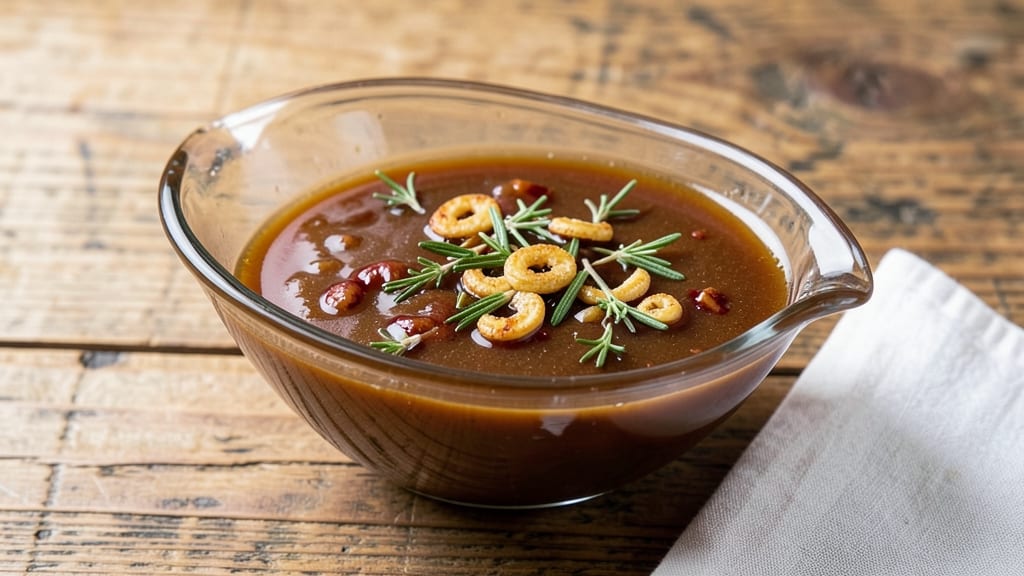
This au jus sauce recipe with beef broth transforms simple pan drippings into a deep, rich sauce that elevates any beef dish. 💛 The secret lies in reducing beef broth with aromatic herbs and a touch of vinegar, creating a velvety sauce that's perfect for drizzling over roasts or dipping crispy fries.
I've perfected this method to deliver maximum flavor with minimal effort—no complicated techniques required.
The process is straightforward: start with beef broth, add a splash of vinegar for brightness, and let it simmer until reduced and concentrated. A simple cornstarch slurry thickens it just enough to coat the back of a spoon without overpowering the meaty depth.
The result is a sauce that's restaurant-quality but achievable in your home kitchen, using ingredients you likely already have on hand.
What makes this sauce truly special is its versatility—it works as a finishing drizzle for steak, a dipping sauce for roasted vegetables, or even a base for gravy. The rich beef flavor comes through while the herbs add freshness, balancing the sauce perfectly.
This is the kind of sauce that turns an ordinary meal into something memorable.
Ready in just 15 minutes, this au jus sauce requires only a handful of ingredients and one pot. The technique is simple, but the results are impressive—proof that great flavor doesn't require complicated methods. Let's make this sauce that will have everyone asking for seconds.
Ingredients for au jus sauce recipe with beef broth
Pantry staples plus aromatic herbs transform simple beef drippings into velvety au jus sauce.
| Ingredient | Amount | Notes |
|---|---|---|
| Beef Broth 🥩 | 4 cups | High-quality, homemade preferred |
| Pan Drippings 🍲 | 2 tbsp | From cooked beef, strained |
| Red Wine Vinegar 🍷 | 1 tbsp | For brightness, substitute balsamic |
| Fresh Thyme Leaves 🌿 | 1 tbsp | Or 1 tsp dried thyme |
| Fresh Rosemary 🌿 | 1 tbsp | Finely chopped, stems removed |
| Garlic Cloves 🧄 | 2 cloves | Minced, for depth of flavor |
| Cornstarch 🌾 | 1 tbsp | For thickening slurry |
| Cold Water 💧 | 1 tbsp | For cornstarch slurry |
| Salt 🧂 | ½ tsp | Kosher or sea salt |
| Black Pepper 🌶️ | ¼ tsp | Freshly ground preferred |
The beef broth is the foundation—homemade adds depth, but quality store-bought works too. Kraft or Swanson are reliable brands, but if you're making a big batch, consider a beef bone broth for richer flavor. Pan drippings should be strained through a fine-mesh sieve to remove any meat bits, which can make the sauce grainy. Fresh thyme and rosemary elevate the sauce, but if you're short on herbs, dried works at one-third the amount. Garlic is non-negotiable here—it's what gives that classic au jus depth. Look for fresh, plump cloves at the store; they keep well in your freezer for months.
No red wine vinegar? Apple cider vinegar or white vinegar works in a pinch, though the flavor will be slightly different. The cornstarch slurry is key for thickening—arrowroot powder is a great 1:1 substitute if you're avoiding gluten. For a richer sauce, add a splash of dry red wine (about 2 tbsp) when reducing. If you're making this ahead, store the unthickened sauce in the fridge for up to 3 days and thicken it fresh when ready to serve. The sauce should coat the back of a spoon but still be pourable—adjust the cornstarch as needed.
This sauce reheats beautifully—simmer gently for 2-3 minutes to restore its velvety texture. For best results, reheat only what you need to avoid over-thickening. It keeps for 5 days in the fridge once thickened, though the flavor deepens over time. Freeze in ice cube trays for single-use portions—perfect for last-minute drizzling. If the sauce separates when reheating, whisk vigorously to restore its smooth consistency. A sprinkle of fresh parsley brightens the color and adds freshness when serving.
Why You'll Love This Recipe
- Uses What You Have: I swear by this recipe because it turns last night’s roast drippings into liquid gold—no extra shopping, no wasted ingredients. Just scrape the pan, add broth and vinegar, and let the thyme and rosemary work their magic while you sip your coffee.
- Deep Umami Magic: That first sip? Rich, savory, with a bright tang from the vinegar cutting through the beefy depth. The rosemary adds a piney warmth, while the thyme brings a cozy herbal note—like a hug in a bowl, but way more delicious.
- Game for Any Meal: Slather it over grilled steak for a fancy dinner, drizzle it on mashed potatoes for a weeknight win, or use it to deglaze the pan after searing chicken thighs. It’s the one sauce that makes everything feel special without trying too hard.
- Leftovers That Don’t Suck: This sauce actually improves overnight—flavors meld, and the vinegar’s sharpness mellows into something smoother. I keep a jar in the fridge for emergencies (aka when I forget to make gravy) and it’s still vibrant after five days. Budget-friendly? Absolutely.
Step-by-step instructions for au jus sauce with beef broth
Transform simple pan drippings into a velvety, flavor-packed sauce using just a few precise techniques.
🍳 Step 1: Deglaze the Pan with Vinegar and Broth
Place the pan containing the 2 tbsp pan drippings over medium-high heat. Immediately add the 1 tbsp red wine vinegar and use a wooden spoon to scrape up all the browned bits from the bottom. These bits pack intense beef flavor—don't miss this step.
Pour in the 4 cups beef broth and bring to a gentle boil. Watch for bubbles forming at the edges—this indicates the liquid is hot enough to extract maximum flavor from the drippings. Reduce heat to medium-low and let it simmer for 5 minutes, allowing the broth to infuse with all the caramelized goodness from the pan.
👨🍳 Step 2: Add Herbs, Garlic, and Seasonings
Stir in the 1 tbsp fresh thyme leaves, 1 tbsp fresh rosemary, and 2 cloves minced garlic. Let the mixture simmer for 3-4 minutes until you can smell the aromatic herbs wafting through the kitchen. This is where the sauce builds its complex flavor profile.
Add the 0.5 tsp salt and 0.25 tsp black pepper, stirring to dissolve completely. Taste the broth now—it should be rich and savory, but still bright from the vinegar. If it needs more acidity, add a little more vinegar; if it's too sharp, a pinch of sugar would balance it perfectly (though we're keeping it authentic here).
🥘 Step 3: Create the Cornstarch Slurry
In a small bowl, whisk together the 1 tbsp cornstarch and 1 tbsp cold water until completely smooth. This slurry is your thickening agent—adding cold water prevents the cornstarch from clumping when it hits the hot liquid. The mixture should look like thin pancake batter.
Here's the thing—adding the slurry too quickly can cause lumps. Instead, slowly drizzle it into the simmering broth while stirring constantly with a wooden spoon. The sauce will begin to thicken immediately, so keep stirring for 1-2 minutes until it reaches your desired consistency—it should coat the back of a spoon but still be pourable.
⏰ Step 4: Simmer and Strain for Perfection
Continue simmering the sauce for 3-5 minutes until it's fully thickened and glossy. The texture should be velvety, not gluey. If it's too thick, add 1-2 tablespoons of hot water to loosen it slightly. Taste again and adjust seasoning if needed—this is your final chance to perfect the balance.
Strain the sauce through a fine-mesh sieve into a clean saucepan to remove any herb stems or garlic bits. This step ensures a silky texture without compromising flavor. Serve immediately over your favorite beef dishes, or let it cool and refrigerate for up to 3 days—reheat gently over low heat, stirring constantly to prevent skin formation.
Pro Tips For Making Au Jus Sauce Recipe With Beef Broth
- SKIM THE DRIPPINGS FIRST: Don’t just scrape everything off the pan—let it cool for 2 minutes, then pour the drippings through a fine-mesh strainer into a measuring cup. The thick, golden bits at the bottom (fond) are flavor gold; you’ll need about 2 tablespoons to deglaze properly. I used to waste this stuff until I realized it’s the difference between "meh" and "wow."
- SIMMER, DON’T BOIL: Once you’ve combined the beef broth, pan drippings, and vinegar, keep the heat at a bare simmer—just enough to see tiny bubbles breaking the surface. Boiling turns the sauce cloudy and dulls the herbs. I learned this after making a batch that looked like soup. Lower heat = cleaner sauce.
- TOSS HERBS IN LAST: Add fresh thyme and rosemary when the sauce is just off the heat, not while simmering. Herbs release their oils faster when they’re cold, and you’ll avoid bitterness. Plus, you can fish them out easily if you prefer a smoother finish—no one wants to strain leaves later.
- USE A SPLASH OF COLD BROTH: If your sauce thickens too much while simmering, take it off the heat and stir in 1-2 tablespoons of cold beef broth. It cuts the richness without thinning the whole thing out. I was skeptical until I tried it—now I keep a small bowl of chilled broth nearby for emergencies.
Creative variations of this dish
Herb-Infused Variations
Swap the thyme and rosemary for fresh tarragon and parsley to create a lighter, more delicate sauce perfect for springtime meals. I find that 1 tbsp each of these herbs adds a bright, almost citrusy note that pairs beautifully with leaner cuts of beef like sirloin.
For a Mediterranean twist, add 1 tsp dried oregano and a pinch of red pepper flakes—this combo works wonderfully with grilled lamb or kebabs. 🌿
Umami Boosters
Elevate the sauce with 1 tbsp soy sauce or 1 tsp fish sauce for an extra umami punch. I discovered this trick while cooking with my host family in France—they swear by a splash of soy for depth.
For a vegetarian-friendly version, replace the beef broth with mushroom broth and add 1 tsp miso paste to mimic that rich, savory beef flavor. The sauce still delivers that signature au jus experience, just with a different protein profile.
Sweet & Tangy Twist
Add 1 tsp honey or maple syrup along with the vinegar to create a sweet-tangy balance that's perfect for glazing roasted vegetables or drizzling over grilled chicken. I love this variation for fall dinners—it adds a touch of sweetness that complements the hearty flavors of the season.
For a smoky-sweet profile, stir in ½ tsp smoked paprika during the final simmer. This works beautifully with pork or even crispy tofu for a vegetarian option.
Creamy Au Jus Upgrade
For a luxurious texture, stir in ¼ cup heavy cream or Greek yogurt during the final simmer. This creates a velvety, almost gravy-like consistency that's perfect for serving over mashed potatoes or roasted root vegetables. I recommend adding the cream just before removing from heat to prevent curdling.
For a lighter option, use coconut milk—it adds creaminess without the richness of dairy. This version feels indulgent but still maintains that classic au jus brightness. 🥛
Spicy Kick
Add 1-2 slices of jalapeño or ½ tsp cayenne pepper to the pan when deglazing for a spicy au jus that pairs perfectly with grilled steaks or tacos. I like to remove the seeds for a milder heat, but keep the ribs for extra flavor.
For a smoky-spicy version, add ½ tsp chipotle powder** along with the garlic. This sauce becomes a showstopper for bold, flavorful dishes that need a little heat to shine.
Nutrition facts
Frequently asked questions
Can I make this au jus sauce without pan drippings?
Yes, but the flavor will be less rich. Use 2 tbsp beef fat (from a package) or 1 tbsp butter instead of drippings when deglazing the pan. For even more depth, add 1 tsp Worcestershire sauce along with the vinegar. The sauce will still be delicious, just with a slightly different profile.
How do I prevent lumps when thickening the sauce?
Always mix the cornstarch with cold water first to create a smooth slurry. Then, whisk it into the simmering broth gradually while stirring constantly. If lumps form, immediately whisk vigorously or strain the sauce through a fine-mesh sieve. The key is patience—adding the slurry too quickly is what causes clumps.
What's the best way to use leftover au jus sauce?
Store it in an airtight container in the fridge for up to 5 days. Reheat gently over low heat while stirring constantly to prevent skin formation. Use it to drizzle over roasted potatoes, as a dipping sauce for fries, or even as a base for beef stroganoff. For extra flavor, add a splash of beef broth when reheating.
Can I make this sauce in a slow cooker?
Combine all ingredients in your slow cooker and cook on high for 2 hours or low for 4 hours. Stir occasionally and adjust the cornstarch slurry at the end to reach your desired thickness. The slow cooker method is perfect for hands-off prep, especially when you're cooking a whole roast.
What if my sauce turns out too thin?
Simmer it uncovered for 5-10 more minutes to reduce it further. If that doesn't work, make another cornstarch slurry (1 tsp cornstarch + 1 tsp water) and whisk it in slowly while stirring constantly. For a quick fix, you can also add 1 tbsp cold water to the cornstarch and whisk it in directly—just be prepared to stir vigorously.