
Main Courses
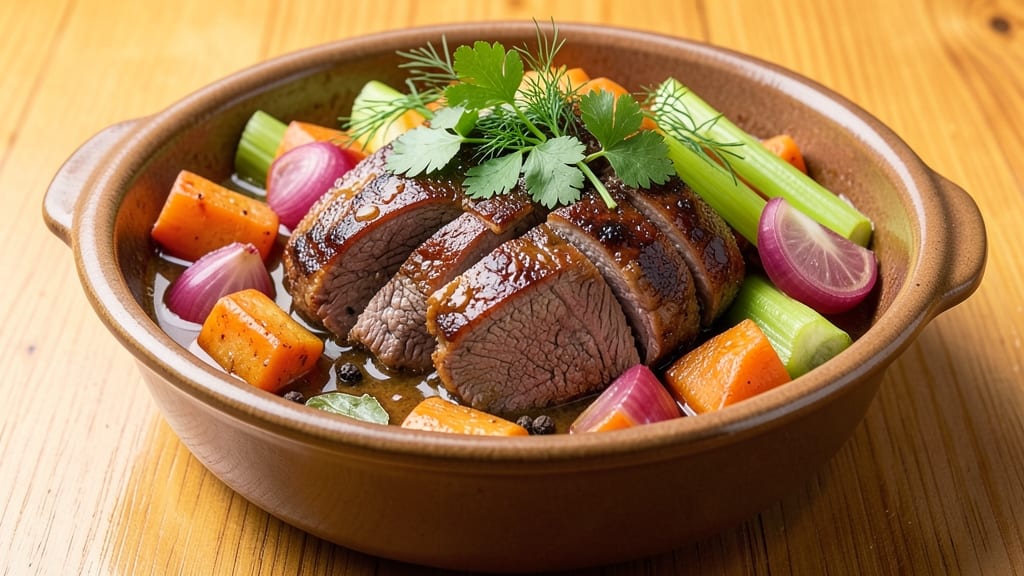
Austrian boiled beef (Tafelspitz) delivers tender, melt-in-your-mouth perfection with a tangy horseradish kick that makes every bite unforgettable. This classic Viennese dish transforms tough beef into silky, buttery slices through a gentle, slow simmer—a technique perfected over centuries in Austrian kitchens.
The secret lies in low-and-slow cooking, where the meat absorbs rich broth flavors while staying impossibly tender.
What sets this recipe apart is the authentic presentation: crisp potato salad, tangy horseradish sauce, and pickles cut through the beef’s richness, balancing each bite. The beef’s exterior remains smooth and glossy, while the interior dissolves at the touch of a fork—a hallmark of true Tafelspitz.
This isn’t just a meal; it’s a celebration of Austrian tradition, served with precision and pride.
The process is foolproof once you master the timing: boiling at a steady simmer for hours ensures the meat never dries out, while the horseradish sauce adds a sharp contrast that elevates every slice.
The result? A dish so restaurant-worthy you’ll want to serve it for holidays or special occasions. Let’s bring this Viennese classic to your table.
Pair it with crusty bread, fresh dill, and a cold lager for the full experience. The sides—creamy potato salad and tangy pickles—complement the beef perfectly, turning a simple dinner into a showstopping feast. Ready to recreate this Austrian masterpiece?
Ingredients for austrian boiled beef
Six ingredients transform tough beef into restaurant-quality Viennese perfection—slow-simmered to melt-in-your-mouth tenderness.
| Ingredient | Amount | Notes |
|---|---|---|
| Beef Chuck Roast 🥩 | 4 lb | Center-cut for even tenderness |
| Yellow Onions 🧅 | 4 whole | Peeled, cut into wedges |
| Carrots 🥕 | 4 whole | Scrubbed, cut into 3-inch pieces |
| Celery Stalks 🌿 | 4 whole | Trimmed, cut into 3-inch pieces |
| Fresh Parsley 🌿 | ½ cup | Chopped, stems included |
| Fresh Dill 🌿 | ¼ cup | Chopped, for garnish |
| Fresh Bay Leaves 🍃 | 4 whole | Lightly crushed |
| Black Peppercorns 🌶️ | 1 tbsp | Whole, lightly crushed |
| Allspice Berries 🌶️ | 1 tsp | Whole, lightly crushed |
| Salt 🧂 | 2 tbsp | Diamond Crystal preferred |
| Fresh Horseradish Root 🌿 | ½ lb | Peeled, grated fresh |
| Sour Cream 🧀 | ½ cup | Full-fat for creaminess |
| Fresh Lemon Juice 🍋 | ¼ cup | Freshly squeezed |
| Potatoes 🥔 | 3 lb | Yukon Gold, cut into 1-inch cubes |
| Mayonnaise 🥫 | ½ cup | High-quality for potato salad |
| Dill Pickles 🥒 | 1 cup | Chopped, for tangy crunch |
| Crusty Bread 🍞 | 1 whole | Freshly baked, sliced |
The beef is non-negotiable—chuck roast from a quality butcher delivers that signature silky texture. Costco or Whole Foods carry excellent cuts, but if you're buying whole, look for good marbling. The root vegetables (carrots, celery, onions) should be fresh and firm, not rubbery. Fresh horseradish? Gourmet stores or specialty sections have it—never the jarred stuff for this dish. The bay leaves and allspice berries add depth, so don't skip them. I always double the parsley and dill for garnish—it makes the presentation pop.
No fresh horseradish? Substitute 1 tbsp prepared horseradish plus 1 tsp lemon juice, but you'll lose that authentic Viennese kick. Running low on sour cream? Greek yogurt at half the amount works in a pinch. The potato salad can be made ahead—just add the pickles and mayo last minute. For the beef broth, if you're short on time, 2 cups beef stock plus 1 cup water gets you close. The key is keeping the simmer gentle and consistent—no rolling boil or you'll end up with tough meat.
Beef keeps 4-5 days in the fridge once cooked—it actually tastes better the next day. The potato salad holds for 3 days, but the pickles should be added fresh when serving. Horseradish sauce? Freeze extra portions in ice cube trays for quick use later. The crusty bread is best served warm—wrap it in a clean kitchen towel to keep it fresh while you finish cooking.
Why You'll Love This Recipe
- One-Pot Wonder: I swear by this recipe when I’m too tired to juggle multiple pans. Toss the beef, onions, carrots, and celery into a pot with broth, add a bay leaf, and let it simmer—no chopping, no fuss. The chuck roast practically melts into tender perfection while you’re answering emails or scrolling through memes.
- Deep, Savory Magic: That slow-cooked beef? It’s got this rich, almost gamey depth that’s hard to resist. The carrots and celery soak up the flavor like sponges, and a sprinkle of fresh parsley at the end brightens it up—simple, but ridiculously satisfying. Honestly, it’s the kind of dish that makes you want to take a second helping without even thinking.
- Meals for Days: Between us, this is my go-to for busy weeks. Cook a big batch on Sunday, and you’ve got lunch or dinner covered for four days. The beef stays moist, the veggies hold up, and reheating is a breeze—just add a splash of water or broth. My kids even ask for it, and that’s saying something.
- Budget-Friendly Feast: Chuck roast is one of the most affordable cuts of beef, and it stretches far when you boil it with veggies. You’re getting a hearty, filling meal without breaking the bank—plus, the leftovers are just as good as the first serving. I’ll be real: it’s the kind of recipe that makes me feel like I’m feeding my family like royalty, even on a tight budget.
Step-by-step instructions for Austrian boiled beef
This method delivers melt-in-your-mouth beef with rich, aromatic broth—just like traditional Austrian cuisine.
Prepare the Vegetable Base
In a large Dutch oven, combine the peeled yellow onions, scrubbed carrots, and trimmed celery stalks—all cut into uniform 3-inch pieces as specified. This creates a flavorful aromatic base that infuses into the beef. Add the lightly crushed bay leaves, whole black peppercorns, and allspice berries to the pot. Sprinkle in the 2 tablespoons of salt and cover with 8 cups of cold water. Bring to a boil over medium-high heat, then immediately reduce to a gentle simmer. The water should just barely cover the vegetables, allowing them to release their natural sweetness without boiling over.
Simmer for 20 minutes until the vegetables soften slightly but remain intact. This step builds the foundation of your broth—don't let the vegetables break down completely, as we'll remove them later. The goal is to extract their flavors, not turn them into mush. Here's where it gets important: the vegetables should be tender enough to release their essence but still hold their shape when you test with a fork. This ensures the broth remains clear and flavorful, not cloudy from overcooked vegetables.
Season and Simmer the Beef
While the vegetables simmer, pat the 4 lb beef chuck roast dry with paper towels—this is crucial for developing a rich, concentrated broth. Season the beef generously with any remaining salt if needed, then carefully lower it into the simmering pot. The beef should be fully submerged, so add enough water to cover it completely if necessary. Return the heat to a gentle simmer and maintain this temperature—never a rolling boil, as this can cause the beef to toughen.
Simmer the beef for 3 hours, skimming any foam or impurities that rise to the surface with a fine-mesh skimmer. This step is all about patience—low and slow is key to tenderizing the beef. After 2 hours, check the internal temperature with a meat thermometer. It should read 195°F—this is the "breakdown" stage where connective tissues melt into gelatin, creating that signature Austrian beef tenderness. If it hasn't reached this temperature, continue simmering for another 30 minutes to 1 hour. The beef is ready when it's fork-tender and pulls apart easily.
Prepare the Horseradish Sauce
While the beef finishes cooking, prepare the signature horseradish sauce by grating the 0.5 lb fresh horseradish root using a box grater or food processor. Place the grated horseradish in a bowl and mix in the 0.5 cup sour cream and 0.25 cup fresh lemon juice. This combination creates a vibrant, tangy sauce that cuts through the richness of the beef. The lemon juice brightens the flavors while the sour cream adds a creamy texture. Taste and adjust the seasoning if needed—you might want to add a pinch more salt or a splash of lemon juice to balance the heat.
Set the sauce aside at room temperature while you complete the rest of the dish. The horseradish will mellow slightly as it sits, allowing its sharpness to integrate more smoothly with the other flavors. This step is where the dish gets its signature kick—don't skip the fresh horseradish. Store-bought versions just can't compare to the fresh, vibrant heat you get from grating it yourself.
Cook the Potatoes and Assemble
In a separate pot, boil the 3 lb Yukon Gold potatoes, cut into 1-inch cubes, until fork-tender—about 12-15 minutes. Drain and transfer to a large bowl. While still warm, mix in the 0.5 cup mayonnaise and 1 cup chopped dill pickles until evenly coated. The warmth of the potatoes helps the mayonnaise cling perfectly, creating a creamy, tangy potato salad. Season with additional salt and pepper if needed, but the pickles and mayonnaise should already provide plenty of flavor. Let the potato salad cool slightly before serving.
Once the beef is fork-tender, carefully remove it from the broth and let it rest on a cutting board for 10 minutes. This resting period allows the juices to redistribute, ensuring each slice stays moist. Meanwhile, strain the broth through a fine-mesh sieve to remove any remaining vegetables or impurities. Skim off any remaining fat if you prefer a lighter broth, or leave it for added richness. Slice the beef against the grain into ¼-inch thick pieces for maximum tenderness.
Serve with Traditional Sides
To serve, arrange the sliced beef on a platter and ladle the strained broth around it. Place the potato salad on the side, garnished with the 0.25 cup chopped fresh dill. Slice the 1 whole crusty bread into thick pieces and serve warm. The combination of tender beef, tangy horseradish sauce, creamy potato salad, and crusty bread creates a full, satisfying meal that stays true to Austrian tradition. The broth can be reheated gently if needed, but it's best served fresh while still warm. This dish is all about balance—rich beef, bright horseradish, creamy potatoes, and the satisfying crunch of fresh bread.
Pro Tips For Making Austrian Boiled Beef
- Sear Before Boiling: DESCRIPTION:
- Chop Onions Coarse: DESCRIPTION:
- Don’t Overcrowd the Pot: DESCRIPTION:
- Reserve the Broth: DESCRIPTION:
Dietary considerations for these flavors
Gluten-Free Adaptations
This recipe is naturally gluten-free, but watch for hidden gluten in store-bought ingredients. Use gluten-free mayonnaise (like Hellmann's Gluten Free) for the potato salad, and ensure your beef broth is certified gluten-free.
The crusty bread is the only component that needs substitution—opt for a gluten-free baguette or homemade rolls made with a 1:1 gluten-free flour blend like Bob's Red Mill. 🥖
Dairy-Free Options
For dairy-free diners, swap the sour cream in the horseradish sauce with coconut yogurt or a dairy-free sour cream alternative like Kite Hill. The potato salad can use vegan mayo (like Just Mayo) and omit the sour cream entirely.
The beef itself remains dairy-free, so the core dish stays intact with minimal adjustments. The tangy kick from lemon juice will still shine through!
Low-Carb Modifications
Skip the potato salad entirely and serve the beef with a zucchini noodle salad instead. Toss spiralized zucchini with 1 tbsp olive oil, 1 tbsp lemon juice, 2 tbsp chopped fresh dill, and a pinch of salt.
For extra flavor, add 1 tbsp chopped capers and 1 tbsp chopped red onion. The beef and horseradish sauce remain unchanged, delivering all the richness without the carbs. 🥦
Vegetarian Substitutes
While this dish is meat-centric, you can create a vegetarian version by replacing the beef with extra-firm tofu or king oyster mushrooms. Simmer the tofu in the same vegetable broth for 2 hours (it won't reach the same tenderness, but the flavors will meld beautifully).
For mushrooms, use 2 large king oyster mushrooms per person, sliced lengthwise, and simmer for 1.5 hours until fork-tender. The horseradish sauce and broth remain the same—just serve with a side of sautéed greens instead of potato salad.
Allergen-Friendly Tips
For nut allergies, ensure all ingredients are nut-free (especially the broth and mayo). For soy allergies, check your beef broth label—some brands use soy-based thickeners. If needed, make your own broth with beef bones, water, and vegetables (no soy).
For egg allergies, use a vegan mayo (like Follow Your Heart) that's certified egg-free. Always double-check labels, as cross-contamination is a risk with processed ingredients. 💡
Nutrition facts
Frequently asked questions
Why does Austrian boiled beef need such a long cooking time?
The 3-hour simmer at 195°F is essential to break down tough connective tissues into gelatin, creating that signature melt-in-your-mouth texture. This slow process also allows the beef to absorb the rich vegetable broth flavors without drying out. Skipping this step results in chewy, not tender, beef.
Can I use a different cut of beef instead of chuck roast?
For best results, stick with chuck roast—it has the right fat-to-lean ratio for this dish. You could try bottom round (leaner, needs extra care) or brisket (richer flavor, may need 4 hours of cooking). Avoid tender cuts like sirloin—they’ll turn mushy. Always choose a cut with good marbling.
How do I know when the beef is perfectly tender?
Use a meat thermometer—the internal temp should reach 195°F. The beef should also pull apart easily with two forks. If it’s still firm after 3 hours, continue cooking for another 30 minutes. Never rush this step—the magic happens at this temperature!
What’s the best way to store and reheat leftovers?
Store cooked beef in an airtight container in the fridge for 4-5 days or freeze for 3 months. To reheat, place slices in a pot with a splash of broth and warm gently on low heat until steaming. Never microwave—it turns the beef rubbery. The potato salad keeps 3 days (add pickles fresh when serving).
Can I make this dish ahead of time for a dinner party?
Cook the beef 1 day ahead—it tastes even better. Reheat gently with broth, then slice just before serving. Prepare the potato salad and horseradish sauce the day before, storing separately. Assemble everything last minute for the freshest presentation. The crusty bread should be warmed in the oven at 350°F for 5 minutes before serving.