
Main Courses
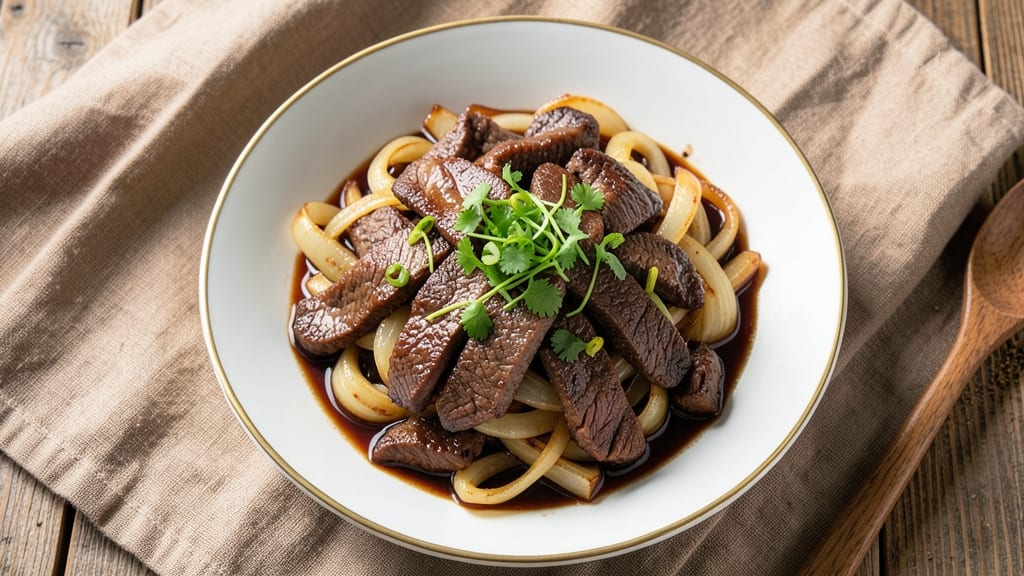
This authentic Chinese Mongolian beef recipe delivers the perfect balance of sweet, savory, and slightly spicy flavors that make it a restaurant favorite. The secret lies in the marinade—a blend of hoisin, soy sauce, and a touch of chili—that tenderizes the beef while building deep, complex flavors.
For true authenticity, we'll stir-fry thinly sliced beef with crispy onion crowns, creating a dish that's as visually stunning as it is delicious.
The cooking technique is what sets this recipe apart: high-heat stir-frying ensures the beef remains tender while developing a caramelized crust, and the onions achieve that signature crispy texture.
We'll use a traditional wok or large skillet to mimic restaurant-style cooking at home, with just the right amount of garlic, ginger, and vinegar to brighten the dish. Every bite delivers that perfect harmony of flavors—sweet from the hoisin, umami from the soy, and a subtle kick from the chili.
What makes this recipe truly special is the attention to detail in both preparation and plating. The beef should be sliced thinly against the grain for maximum tenderness, and the onions should be cooked until crispy at the edges but still slightly tender in the center.
Garnished with fresh green onions and sesame seeds, this dish is as beautiful as it is delicious. Serve it over steamed jasmine rice or noodles for the full Mongolian beef experience.
Whether you're a seasoned home cook or new to Chinese cuisine, this recipe delivers restaurant-quality results with a professional touch. The key is precision—using the right measurements and cooking techniques to ensure every element comes together perfectly. Once you try this authentic version, you'll never settle for anything less.
Ingredients for authentic chinese mongolian beef
Sweet, savory, and spicy—just these 15 ingredients transform simple beef into restaurant-style Mongolian beef.
| Ingredient | Amount | Notes |
|---|---|---|
| Flank Steak 🥩 | 1 ½ lb | Thinly sliced against grain |
| Yellow Onions 🧅 | 2 large | Crowns separated for crisping |
| Hoisin Sauce 🍶 | ½ cup | Store-bought or homemade |
| Soy Sauce 🥢 | ¼ cup | Light or dark preferred |
| Rice Vinegar 🍶 | 2 tbsp | White or seasoned |
| Garlic Cloves 🧄 | 4 cloves | Minced for marinade |
| Fresh Ginger 🌿 | 1 ½ tbsp | Grated, for brightness |
| Sichuan Chili Sauce 🌶️ | 1 tbsp | For subtle heat |
| Sesame Oil 🫒 | 1 tbsp | Toasted for aroma |
| Neutral Oil 🫒 | 2 tbsp | Vegetable or canola |
| Green Onions 🧅 | ¼ cup | Sliced for garnish |
| Sesame Seeds 🌰 | 1 tbsp | Toasted for crunch |
| White Sugar 🍚 | 1 tbsp | Balances flavors |
| Salt 🧂 | 1 tsp | Kosher or sea |
| Black Pepper 🌶️ | ½ tsp | Freshly ground |
The beef is non-negotiable here. Flank steak is the gold standard—lean but tender when sliced thin. Ask your butcher to slice it against the grain if they won't do it for you. For the onions, grab the biggest yellow ones you can find—their crowns crisp up perfectly. Asian markets usually have the best selection, but the regular grocery store works too. Skip the pre-sliced onions—they won't crisp right. Pro tip: soak the onion crowns in ice water for 10 minutes before cooking to keep them crispier longer.
No hoisin sauce? Mix 3 tbsp soy sauce, 1 tbsp honey, and 1 tsp sugar—it's not identical but gets you close. Running low on sesame oil? Swap for 1 tsp toasted sesame seeds mixed into the sauce. The Sichuan chili sauce can be skipped if you're avoiding heat, but trust me, it adds that signature depth. For the rice vinegar, if you only have apple cider vinegar, use half the amount—it's stronger. And if you're making this ahead, prep the marinade first and let the beef soak for up to 2 hours (no longer, or it'll get mushy).
This dish tastes even better the next day—honestly, the flavors meld perfectly after resting. Store leftovers in an airtight container for 3-4 days in the fridge. For freezing, portion into single servings and it keeps for up to 3 months. The crispy onion crowns? Eat them fresh—they lose their crunch fast. I always make extra because they disappear quicker than the beef. Garnish with sesame seeds right before serving, or they'll sink into the sauce.
Why You'll Love This Recipe
- No-Fuss Prep: I swear by this recipe because it’s basically “dump and stir” after slicing the steak thin—no fancy techniques, just a sharp knife and 10 minutes of work. The onions caramelize while you mix the sauce, so you’re basically hands-off after that.
- Sweet-Savory Magic: That hoisin and soy combo? It’s where the real charm lives. The rice vinegar cuts through the richness just enough to make every bite addictive—tender beef with a glossy, sticky glaze that sticks to your chopsticks like it’s supposed to.
- Weeknight to Date Night: Honestly, this works for everything. Throw it over rice for a lazy Tuesday, serve it in lettuce cups for guests, or pile it onto noodles when you’re craving something hearty. The sauce keeps well, so I even use it to drizzle over eggs in the morning.
- Budget-Friendly Feast: Flank steak stretches further than you’d think when sliced right, and the sauce costs pennies. Between us, I’ve made this for four people for under $15—and still had leftovers for lunch the next day. (Yes, even on a Tuesday night.)
Step-by-step instructions for authentic Chinese Mongolian beef
Here's how to recreate the restaurant-quality balance of sweet, savory, and crispy textures at home.
Marinate the Flank Steak
Slice the 1.5 lb flank steak thinly against the grain into ¼-inch strips. This ensures tender bites. In a bowl, combine 0.25 cup soy sauce, 2 tbsp rice vinegar, 1 tbsp white sugar, 1.5 tbsp grated fresh ginger, 4 cloves minced garlic, 1 tbsp Sichuan chili sauce, and 0.5 tsp black pepper. Add the steak strips and toss to coat completely. Let it marinate for at least 30 minutes—I like to do this in the fridge for up to 4 hours for deeper flavor penetration.
The marinade should look glossy and the steak should be evenly coated. If you're short on time, 15 minutes will work, but longer marinating prevents tough meat. Don't skip this step—it's what makes the beef tender and packed with flavor.
Crisp the Onion Crowns
Cut the 2 large yellow onions in half lengthwise and separate the crowns (the bottom third of each half). Heat 2 tbsp neutral oil in a large skillet over medium-high heat until shimmering. Add the onion crowns cut-side down and cook for 8-10 minutes, stirring occasionally, until they turn deep golden brown and crispy. Remove them and set aside on a paper towel-lined plate.
These crispy onion crowns add texture contrast that's key to authentic Mongolian beef. If they brown too quickly, reduce the heat slightly. You want them crispy but not burnt—think restaurant-style crunch.
Stir-Fry the Beef
In the same skillet (no need to clean it—the fond adds flavor), add 1 tbsp sesame oil and swirl to coat. Increase heat to high and add the marinated beef in a single layer. Let it sear undisturbed for 1-2 minutes until the edges turn golden. Stir-fry for 2-3 minutes until the beef is 80% cooked—it should still have a slight pink center. Remove and set aside.
Don't overcrowd the pan or the beef will steam instead of sear. You want those caramelized edges that make this dish so flavorful. If the beef cooks too quickly, work in batches.
Build the Sauce
Return the skillet to medium-high heat and add 0.5 cup hoisin sauce. Stir to deglaze the pan, scraping up any browned bits. Let it simmer for 1-2 minutes until slightly thickened. Add the cooked beef back to the skillet and toss to coat completely. Cook for another 1-2 minutes until the sauce clings to the beef.
This is where the magic happens—the hoisin sauce creates that signature sweet-savory glaze. If the sauce looks too thick, add 1-2 tbsp hot water to loosen it slightly. The beef should be fully cooked now, with a glossy, sticky coating.
Finish and Serve
Transfer the beef to a serving platter. Drizzle with 1 tbsp toasted sesame oil and toss gently to coat. Garnish with 0.25 cup sliced green onions and 1 tbsp toasted sesame seeds. Serve immediately over steamed rice, topped with the crispy onion crowns on the side.
Each bite should deliver tender beef with that perfect balance of sweet, savory, and slightly spicy flavors. The crispy onion crowns add the textural contrast that makes this dish so satisfying. Serve with extra hoisin sauce on the side if you like it extra saucy!
Pro Tips For Making Authentic Chinese Mongolian Beef
- Slice Against the Grain: Flank steak’s tough fibers run diagonally—cut your slices at a 45-degree angle to the grain for tender, fork-friendly bites. I used to ignore this and ended up with chewy, frustrating mouthfuls. Trust me, the extra 2 minutes slicing saves you from disappointed bites.
- Salt the Steak First: Toss your flank steak with soy sauce and a generous pinch of salt at least 30 minutes before cooking. This breaks down the meat fibers and keeps it from curling up in the wok. I learned this the hard way after my first batch turned into a stubborn, uncooperative log.
- Use Half the Onions: Most recipes call for chopped onions, but I’ve found that just the white and light green parts (about 3-4 slices) give the right depth without overwhelming the dish. The sweet, yellow outer layers can turn bitter when cooked with hoisin and vinegar—skip them unless you want a sweeter, less balanced flavor.
- Deglaze with Vinegar Last: Add the rice vinegar after the hoisin and soy sauce have thickened slightly—this keeps the sauce bright and tangy instead of diluted. I used to dump everything in at once, and the sauce always tasted flat. A splash of vinegar at the end cuts through the richness perfectly.
Wine and beer pairings for authentic chinese mongolian beef
Red Wine Pairings
A dry Shiraz from Australia or China is my go-to choice for Mongolian beef—its bold fruit flavors and subtle spice mirror the dish's sweet-savory profile. Look for a 2018 Penfolds Bin 28 or Chateau Ste.
Michelle with notes of blackberry and vanilla. The wine's tannins cut through the richness while enhancing the hoisin sauce's depth. 🍷
Light Beer Options
A crisp Chinese lager like Tsingtao or Snow Beer cleanses your palate between bites without overpowering the beef. For Western preferences, try a Belgian witbier such as Hoegaarden—its citrus and coriander notes complement the dish's bright ginger and vinegar. Serve chilled to preserve the beer's crispness.
Rice Wine Enhancement
For an authentic touch, serve a small cup of Shaoxing wine (Chinese rice wine) on the side. Add 1 tbsp to the sauce if you want to deepen its umami profile. I often use Kikkoman Shaoxing Cooking Wine—it's readily available and adds that signature restaurant-quality depth. 🍶
Non-Alcoholic Pairings
For a refreshing non-alcoholic option, try jasmine tea brewed lightly with a slice of lemon. The floral notes balance the dish's sweetness, while the acidity cuts through the richness. Alternatively, a sparkling lychee drink (common in Chinese restaurants) adds a festive touch without alcohol. 💫
Regional Wine Traditions
In Sichuan province, where Mongolian beef originated, locals pair the dish with Moutai, a strong Chinese baijiu. For a more approachable option, try a 15% ABV baijiu like Wuliangye—its smoky, caramel notes enhance the beef's umami. If you can't find baijiu, a dry Riesling works surprisingly well. 🍸
Nutrition facts
Frequently asked questions
Can I substitute flank steak with another cut of beef?
Yes, but choose thinly sliced cuts that stay tender when cooked quickly. Sirloin or ribeye work well if sliced paper-thin against the grain. Avoid tougher cuts like chuck—they won't become tender enough. For best results, ask your butcher to slice it for you at ¼-inch thickness or use a sharp knife and freeze the beef for 30 minutes before slicing.
Why does my Mongolian beef turn out too sweet?
The hoisin sauce and sugar are key for authentic flavor, but balance is crucial. If it's too sweet, reduce the sugar to ½ tbsp and add 1 tsp rice vinegar for acidity. The beef should have a sweet-savory balance, not cloying sweetness. Taste the marinade before adding beef—it should be complex, not one-dimensional.
How do I make the onion crowns crispier?
Crispiness comes from proper heat control and prep. Use medium-high heat and cook the crowns until deep golden brown (8-10 minutes). For extra crunch, soak them in ice water for 10 minutes before cooking to remove moisture. If using a nonstick pan, reduce oil to 1 tbsp—too much makes them greasy rather than crispy.
Can I make this recipe ahead of time?
Yes, but handle components separately. Marinate the beef up to 4 hours ahead and store in the fridge. Cook the beef fresh (it reheats poorly) and crisp the onions just before serving. Assemble everything 10 minutes before eating—this keeps the onion crowns crispy and the beef tender. The sauce can be pre-made and reheated gently if needed.
What's the secret to tender beef every time?
Three things: thin slicing against the grain, proper marinating (30+ minutes), and high-heat stir-frying. Never overcook—beef should be 80% done when removed from the pan. The residual heat finishes cooking it while keeping it tender. If using frozen beef, thaw completely first and pat dry before marinating to ensure maximum flavor absorption.