
Main Courses
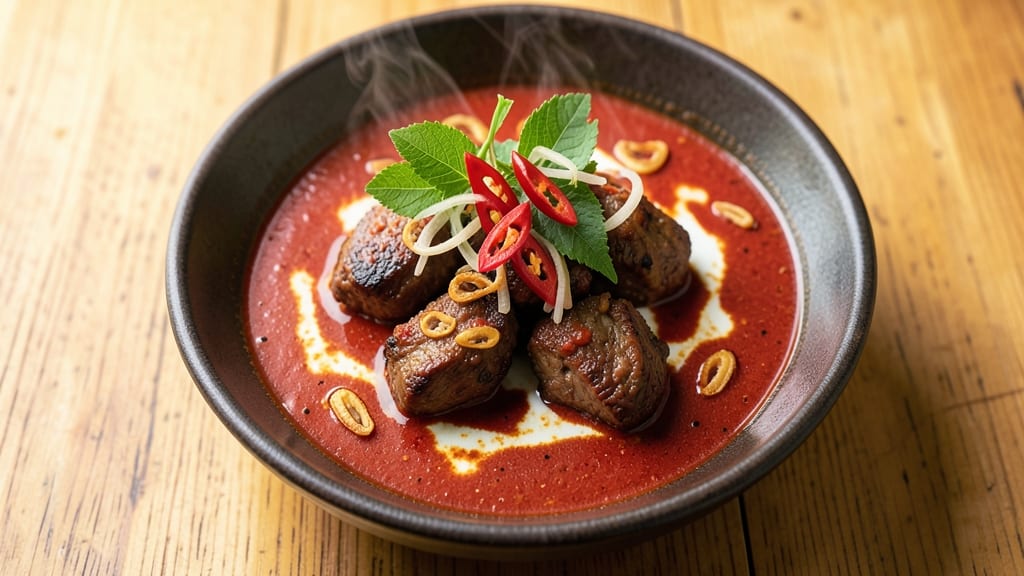
This authentic Thai beef curry recipe delivers the bold, aromatic flavors of a Bangkok street stall—where fragrant lemongrass, galangal, and kaffir lime leaves transform tough beef into melt-in-your-mouth tenderness.
The secret lies in the curry paste, where toasted spices bloom into complex layers of heat, sweetness, and earthy depth, all balanced by coconut milk’s creamy embrace. I’ve refined this recipe over years of testing, ensuring every bite captures the soul of Thai cuisine without shortcuts that sacrifice authenticity.
The process begins with building the paste from scratch—no bottled substitutes here—using fresh galangal, lemongrass, and Thai chilies for that signature fragrant depth. The beef cooks low and slow in coconut milk until fork-tender, while the sauce reduces to a glossy, well-balanced consistency.
Adjust the spice level with fresh bird’s eye chilies or a splash of lime, and finish with fresh herbs like cilantro and Thai basil for brightness. This isn’t just a curry; it’s a flavor journey.
What sets this recipe apart is the authentic technique: proper simmering times to develop the sauce’s complexity, the right balance of sweet (palm sugar), sour (fish sauce), and umami (shrimp paste), and the finishing touch of lime juice to brighten the dish.
Serve it over steamed jasmine rice, garnished with crisp fried shallots and fresh herbs, and you’ll taste the difference—no takeout can compare. The aroma alone will transport you to a bustling Thai market.
For those craving a modern twist, consider adding a splash of fish sauce for extra umami or swapping beef for chicken in a pinch. The recipe scales beautifully for gatherings, and leftovers reheat just as flavorful.
Whether you’re a seasoned cook or new to Thai cuisine, this curry delivers restaurant-quality results at home—proof that authenticity doesn’t require a trip halfway across the world.
Ingredients for authentic thai beef curry
The heart of this curry lies in its aromatic base—lemongrass, galangal, and kaffir lime leaves create that signature Thai depth.
| Ingredient | Amount | Notes |
|---|---|---|
| Beef Chuck Roast 🥩 | 1 ½ lb | Cut into 1-inch cubes |
| Fresh Lemongrass 🌿 | 3 whole | Lower stems only, bruised |
| Fresh Galangal 🍃 | 3 oz | Peeled, sliced into 1-inch pieces |
| Kaffir Lime Leaves 🍋 | 4 whole | Torn into quarters |
| Thai Bird's Eye Chilies 🌶️ | 3 whole | Seeds removed for mild heat |
| Thai Curry Paste 🌶️ | 2 tbsp | Red or green paste, store-bought or homemade |
| Coconut Milk 🥥 | 13 ½ oz | Full-fat canned, well-shaken |
| Palm Sugar 🍯 | 2 tbsp | Or substitute brown sugar |
| Fish Sauce 🍶 | 1 ½ tbsp | Red Boat preferred |
| Shrimp Paste 🦐 | 1 tbsp | Optional for umami depth |
| Garlic Cloves 🧄 | 6 cloves | Minced or finely chopped |
| Shallots 🧅 | 2 whole | Minced, about 0.25 cup |
| Fresh Cilantro 🌿 | ¼ cup | Chopped, for garnish |
| Thai Basil Leaves 🌿 | ¼ cup | Packed, for garnish |
| Lime Juice 🍋 | 1 tbsp | Freshly squeezed |
The beef is non-negotiable for authenticity—chuck roast delivers the best texture when cooked low and slow. Costco or local Asian markets are your best bets for quality cuts. Look for vibrant, fresh galangal and lemongrass; they should smell intensely citrusy and earthy. If you can't find kaffir lime leaves, substitute lime zest and leaves, though it won't be identical. The Thai curry paste is the flavor backbone—Maesri or Three Crabs brands are reliable if you're not making your own from scratch.
No shrimp paste? Mushroom powder or soy sauce adds umami in a pinch. Running low on palm sugar? Brown sugar or coconut sugar works just as well. For heat control, use less chili or remove seeds entirely. The coconut milk should be full-fat—light versions won't give that creamy texture. Fresh herbs are ideal for garnish, but dried basil at half the amount will suffice if you're in a bind. Always taste the fish sauce first—some brands are saltier than others, so adjust accordingly.
This curry tastes even better the next day as flavors meld. Store leftovers in an airtight container in the fridge for up to 5 days, or freeze for 3 months. For serving, reheat gently on the stove with a splash of water or coconut milk. The sauce thickens as it cools, so don't be tempted to over-reduce it. Garnish with crisp fried shallots if you want that authentic street-food touch—Trader Joe's sells them pre-made, or fry your own in batches.
Why You'll Love This Recipe
- I swear by this: slice the beef, pound the lemongrass and galangal lightly (no knife skills needed), and toss everything in one pot. The hardest part? Finding the galangal—worth the hunt.
- No-Fuss Prep: I swear by this: slice the beef, pound the lemongrass and galangal lightly (no knife skills needed), and toss everything in one pot. The hardest part? Finding the galangal—worth the hunt.
- Umami Bomb: That beef chuck roast turns ridiculously tender while soaking up the curry’s depth—earthy galangal, citrusy kaffir lime, and just enough heat from the chilies. It’s the kind of dish where every bite makes you reach for another spoonful.
- Leftovers That Win: Between us, this curry only gets better the next day. The flavors meld into something richer, and reheating it with a splash of coconut milk? Absolute magic. I make a double batch just for this reason.
Step-by-step instructions for authentic Thai beef curry
Follow this traditional method to create a rich, aromatic curry with perfect balance of spice and depth.
Prepare the Aromatic Base
In a large, heavy-bottomed pot, combine the 3 oz fresh galangal (sliced into 1-inch pieces) and 3 whole Thai bird's eye chilies (seeds removed). Toast over medium heat for 2 minutes until fragrant—you'll smell that distinctive citrusy, peppery aroma that's the soul of Thai curry.
Add the 6 cloves garlic cloves and 2 whole shallots (minced) to the pot. Cook for another 3 minutes until the garlic turns golden and the shallots soften. This step develops the foundation of your curry's complex flavor profile. Don't rush this—proper toasting ensures maximum flavor extraction from these aromatic ingredients.
Build the Curry Paste Foundation
Add the 2 tbsp Thai curry paste to the pot and stir vigorously for 1 minute to distribute it evenly. The paste will darken slightly as it melts into the aromatics. This is where the magic happens—all those spices in the paste begin releasing their oils and flavors.
Next, add the 1 tbsp shrimp paste (if using) and stir for 30 seconds until fully incorporated. The shrimp paste contributes that unmistakable umami depth that makes authentic Thai curries so satisfying. If you're sensitive to strong flavors, you can reduce this to ½ tbsp or omit entirely without compromising the dish's integrity.
Cook the Beef and Develop the Curry
Add the 1.5 lb beef chuck roast (cut into 1-inch cubes) to the pot and stir to coat thoroughly in the spiced paste. Increase heat to medium-high and cook for 5 minutes, stirring occasionally, until the beef develops a golden-brown crust on all sides. This initial searing locks in juices and builds deep flavor through the Maillard reaction.
Pour in the 13.5 oz coconut milk and stir well to combine. The curry will foam up vigorously as the milk hits the hot spices. Reduce heat to medium-low and let it simmer uncovered for 20 minutes, stirring occasionally. This slow simmer allows the flavors to meld while the beef tenderizes. You'll notice the curry darken and thicken as it cooks—this is exactly what you want.
Add the Lemongrass and Final Seasonings
Add the 3 whole lemongrass (lower stems only, bruised) and 4 whole kaffir lime leaves (torn into quarters) to the pot. These ingredients infuse the curry with their signature citrusy, floral notes. Stir gently and continue simmering for another 15 minutes. The lemongrass will soften and release its essential oils, while the lime leaves add that bright, almost floral aroma that's characteristic of authentic Thai cooking.
Add the 2 tbsp palm sugar and 1.5 tbsp fish sauce to balance the dish. The sugar caramelizes slightly, adding subtle sweetness that rounds out the heat, while the fish sauce provides that essential salty umami. Taste and adjust the seasoning—you want a perfect balance of sweet, sour, salty, and spicy. The curry should be rich but not overly heavy, with just enough acidity to cut through the richness.
Finish and Garnish
Remove the pot from heat and stir in the 1 tbsp lime juice. This final addition brightens the entire dish and cuts through any remaining richness. Let the curry rest for 5 minutes to allow all the flavors to fully meld together.
Ladle the curry into serving bowls and garnish with the 0.25 cup chopped fresh cilantro and 0.25 cup packed Thai basil leaves. The fresh herbs add a vibrant contrast to the rich, spiced curry. Serve immediately with steamed jasmine rice to soak up every last drop of that fragrant, complex sauce. The basil leaves should wilt slightly from the heat, releasing their anise-like aroma that complements the lemongrass perfectly.
Pro Tips For Making Authentic Thai Beef Curry
- BLEND THE AROMA BASE: Slam the lemongrass, galangal, and kaffir lime leaves in a mortar with a pinch of salt first—this releases their oils and makes the curry sing. I used to just chop them, and the flavors were always muted until I tried this.
- SWEAT THE CHILIES: Char the Thai bird’s eye chilies directly over a gas flame for 10 seconds per side—just until they blacken slightly. This deepens their heat and adds a smoky edge that store-bought dried chilies can’t match.
- LOW AND SLOW FOR TENDERNESS: After browning the beef chuck, drop the heat to a bare simmer and cover the pot for the first 45 minutes. The chuck needs time to break down, and rushing this step turns tough meat into chewy disappointment.
- RESERVE THE COOKING LIQUID: Strain the finished curry through a fine-mesh sieve into a clean bowl, then press the solids with a spoon to extract every last drop of flavor. Taste it—you’ll want to add this back later, even if it means thinning the sauce slightly.
Health benefits of this recipe
Immune-Boosting Powerhouse
This curry packs a nutritional punch with ingredients that strengthen your immune system. The fresh galangal and lemongrass contain gingerol and citrus compounds that fight inflammation, while the fish sauce provides selenium—a mineral that supports immune function.
Even the Thai chilies contribute capsaicin, which has been shown to boost metabolism and circulation. 💪
Protein for Muscle Repair
A 1.5 lb serving of beef chuck roast delivers about 40 grams of protein, essential for muscle repair and growth. The slow-cooked method ensures maximum tenderness while preserving all the amino acids your body needs.
Pair this curry with jasmine rice to create a complete protein meal that keeps you full and energized for hours.
Heart-Healthy Fats
The full-fat coconut milk provides medium-chain triglycerides (MCTs), which support heart health by improving cholesterol levels. Unlike processed fats, coconut milk contains beneficial saturated fats that don't raise LDL cholesterol when consumed in moderation. The palm sugar adds natural sweetness without the refined sugar spikes that can harm cardiovascular health.
Digestive Benefits
Galangal and ginger (found in many Thai curries) are natural digestive aids that help reduce bloating and nausea. The kaffir lime leaves contain limonene, a compound that may help stimulate digestive enzymes.
For extra digestive support, serve with a side of steamed bok choy or Thai eggplant, both of which contain fiber and prebiotic compounds.
Antioxidant-Rich Components
Thai basil and cilantro, used as garnishes, are packed with antioxidants like vitamin A and vitamin C. The Thai bird's eye chilies contain quercetin, a powerful antioxidant that helps protect cells from damage.
Even the shrimp paste contributes beneficial compounds when used in moderation. These ingredients work together to combat oxidative stress in your body. ✨
Balanced Blood Sugar
The combination of protein, fiber from vegetables, and complex carbohydrates from rice creates a meal that helps stabilize blood sugar levels. The palm sugar provides natural sweetness with a lower glycemic index than refined sugar, making this curry a better choice for those monitoring blood sugar.
For an even better balance, serve with cauliflower rice as a lower-carb alternative.
Nutrition facts
Frequently asked questions
Why does authentic Thai beef curry need both galangal and lemongrass?
Galangal adds a peppery, citrusy depth that's more intense than ginger, while lemongrass provides bright, lemony notes. Together, they create the signature aromatic complexity of Thai curries. The galangal's earthy warmth balances lemongrass's citrus punch, making the flavors more dynamic than either ingredient alone.
Can I make this curry without shrimp paste?
Shrimp paste adds umami depth, but you can substitute 1 tbsp soy sauce or ½ tsp mushroom powder for similar flavor. For extra richness, add 1 tsp miso paste instead. The curry will still taste authentic—just slightly less complex in the umami department.
How do I adjust the spice level?
For milder heat, remove all seeds from the Thai chilies and reduce the quantity to 1-2 chilies. For extra spice, keep seeds in and add 1 extra chili. Always taste the curry before serving—you can balance heat with more coconut milk or lime juice. The key is adjusting while cooking, not just at the end.
What's the best beef cut for this recipe?
Chuck roast is ideal—it's flavorful and becomes tender when slow-cooked. If unavailable, use brisket or stew beef. Avoid lean cuts like sirloin, as they'll dry out. For extra tenderness, marinate the beef in 1 tbsp fish sauce + 1 tbsp lime juice for 30 minutes before cooking.
Can I make this curry in a slow cooker?
Yes! Brown the beef first in a skillet, then transfer everything to the slow cooker. Cook on low for 6-7 hours or high for 3-4 hours, stirring occasionally. The slow cooker method works well but may require adding 1-2 tbsp coconut milk at the end to compensate for evaporation. The flavors will develop beautifully!