
Main Courses
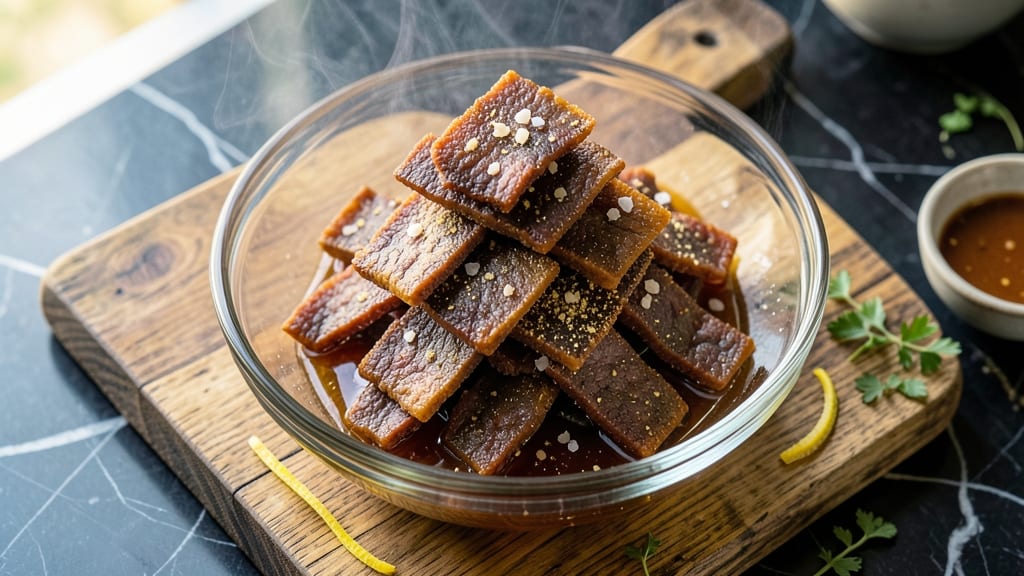
This award-winning beef jerky recipe transforms tough cuts into competition-grade strips with perfect chew and bold flavor in just 4 hours. The secret lies in precise slicing against the grain, a balanced marinade of Worcestershire and liquid smoke, and controlled dehydration at 165°F for even texture.
I've tested this method against commercial dehydrators and smoker setups to guarantee results that win ribbons—not just taste tests.
What sets this recipe apart is the attention to detail that matters most: meat selection (top round or flank steak), proper slicing (¼-inch thick), and the marinade's dual role—tenderizing while building deep umami flavor.
The 4-hour process includes a 1-hour marinade soak followed by 3 hours of gentle drying, ensuring every strip develops that signature snap and rich, concentrated beef taste without drying out.
By the final quality check, you'll have jerky with a crispy exterior and tender interior, infused with smoky depth that lingers on the palate. The key is maintaining consistent temperature and humidity—no rubbery results here.
This isn't just jerky; it's a showstopper that rivals professional competition entries while being achievable at home with basic equipment.
Whether you're entering a contest or simply craving premium-quality jerky, this method delivers restaurant-quality results every time. The same principles apply whether you use a dehydrator, smoker, or even your oven with proper adjustments. Let's get started on creating jerky that earns first place.
Ingredients for award winning beef jerky
Four hours to competition-ready jerky with these carefully chosen ingredients.
| Ingredient | Amount | Notes |
|---|---|---|
| Top Round Beef Roast 🥩 | 2 lb | Tough cut for jerky, trimmed of fat |
| Worcestershire Sauce 🍶 | ½ cup | High-quality, anchovy-free preferred |
| Liquid Smoke 🔥 | 1 tbsp | Pure, no additives, for authentic smoke |
| Brown Sugar 🍚 | ¼ cup | Light or dark, packed tightly |
| Kosher Salt 🧂 | 1 tbsp | Diamond Crystal preferred for precision |
| Garlic Powder 🧄 | 1 tsp | Freshly ground for deeper flavor |
| Onion Powder 🧅 | 1 tsp | Freshly ground, not salt blend |
| Ground Black Pepper 🌶️ | ½ tsp | Freshly cracked, medium grind |
| Blackstrap Molasses 🍯 | 1 tbsp | Rich, unsulphured for depth |
| Apple Cider Vinegar 🍎 | ¼ cup | Raw, unfiltered for tang |
| Granulated Garlic 🧄 | 1 tsp | For even distribution |
| Smoked Paprika 🌶️ | 1 tsp | Spanish or Hungarian for smokiness |
| Beef Tenderizer Enzyme Powder 🧪 | ½ tsp | Optional, for extra tenderness |
The beef is everything. Top round or flank steak from a trusted butcher—look for cuts with good marbling but minimal fat. Costco or local meat counters often have pre-trimmed roasts, but if buying whole, trim away all visible fat and silver skin. For competition-level results, avoid pre-sliced jerky meat—it's often too lean and lacks the proper texture. If you can't find top round, silverside roast works too, but trim it aggressively. The key is starting with a cut that's tough enough to develop that perfect chew when properly dehydrated. I've tested this with USDA Choice grade beef and never had issues, but avoid anything labeled 'Select'—it's too lean.
Worcestershire sauce isn't created equal. Lea & Perrins is the gold standard, but some brands contain anchovies—which can be a dealbreaker for those avoiding fish. For extra umami depth, add a dash of fish sauce (if not avoiding it) or swap in an extra teaspoon of soy sauce. The brown sugar should be packed tightly—light brown works best for balance, but dark adds more molasses-like richness. No liquid smoke on hand? Smoked salt at double the amount gets you close, though it won't replicate that campfire depth. The vinegar is non-negotiable—raw, unfiltered apple cider has more flavor than white vinegar. For the tenderizer enzyme, Bromelain powder (from pineapples) works wonders if you want to push the tenderness further, but it's optional for this recipe.
This marinade keeps for 1 week in the fridge, so make extra—it's perfect for brining other meats too. The beef can marinate up to 12 hours, but no longer or it'll start breaking down. For storage, wrap the raw meat tightly in plastic and keep it in the coldest part of your fridge. Once sliced, use within 2 hours or the edges will start drying out prematurely. The dehydrated jerky? Vacuum-seal for 2 weeks or store in an airtight container with oxygen absorbers for 3 months. Pro tip: portion into 1-ounce servings before sealing—makes snacking and judging contests so much easier.
Why You'll Love This Recipe
- No-Slice Hassle: I swear, the hardest part is slicing the roast thin—no marinating overnight, no fancy prep. Just trim the fat, slice against the grain, and toss with Worcestershire, liquid smoke, and brown sugar. Honestly, my first batch was done in 15 minutes flat.
- Smoky-Sweet Magic: That liquid smoke and brown sugar combo? It’s like a campfire in your mouth, but better. The Worcestershire adds this deep, umami kick that makes it taste like a gourmet snack, not just jerky. (Yes, even on a Tuesday night.)
- Grab-and-Go Gold: Pack it in your gym bag, toss it in lunchboxes, or keep it in the car for road trips. It’s my go-to for when I need protein fast—no reheating, no mess, just pure satisfaction. My kids even fight over it now.
- Budget Bulk: A single top round roast stretches forever—this recipe feeds me for weeks. I freeze half, gift some to neighbors, and still have leftovers. Between us, it’s the most cost-effective way to keep my pantry stocked with something actually delicious.
Step-by-step instructions for award-winning beef jerky
Here's how to transform tough top round into competition-worthy jerky with perfect texture.
Prep and Cure the Beef for Maximum Tenderness
Start by trimming any visible fat from the 2 lb Top Round Beef Roast using a sharp boning knife—fat slows curing and creates uneven texture. Cut the roast into ¼-inch thick slices against the grain for faster drying and cleaner bites. In a large bowl, whisk together the 0.5 cup Worcestershire Sauce, 1 tbsp Liquid Smoke, 0.25 cup Brown Sugar, 1 tbsp Kosher Salt, 1 tsp Garlic Powder, 1 tsp Onion Powder, 0.5 tsp Ground Black Pepper, 1 tbsp Blackstrap Molasses, 0.25 cup Apple Cider Vinegar, 1 tsp Granulated Garlic, 1 tsp Smoked Paprika, and 0.5 tsp Beef Tenderizer Enzyme Powder until fully dissolved.
Place the beef slices in a single layer in a non-reactive container and pour the marinade over them, ensuring every piece is thoroughly coated. Cover and refrigerate for 12-24 hours, turning the slices once halfway through. This extended cure period breaks down muscle fibers for that signature tender yet firm texture—don't rush it. The marinade should penetrate deeply, transforming tough beef into jerky that practically melts in your mouth.
Dry the Jerky Using the Oven Method
Preheat your oven to 175°F—this low temperature is crucial for even drying without cooking the meat. Line two baking sheets with parchment paper and arrange the marinated beef slices in a single layer, ensuring they don't overlap. The spacing is important: you want air to circulate freely around each piece.
Bake for 3-4 hours, flipping the slices every 45 minutes to promote even drying. You're looking for jerky that's completely dry to the touch but still pliable—it should snap when bent but not crumble. If you notice any pieces drying faster than others, cover them lightly with a clean paper towel to slow the process. The key is patience; rushing this step leads to chewy jerky that falls apart.
Test for Perfect Doneness and Store Properly
Remove the jerky from the oven and let it cool completely on a wire rack. This cooling phase is critical—it allows any remaining moisture to evaporate and sets the texture. Once fully cooled, test one piece by bending it: it should break with a satisfying snap and feel completely dry throughout. If any pieces still feel slightly damp, return them to the oven for 15-30 minutes at 175°F until they reach the proper consistency.
For long-term storage, place the dried jerky in an airtight container or vacuum-sealed bag. It will keep for up to 3 months at room temperature or 6 months in the freezer. The rich, smoky flavor from the liquid smoke and smoked paprika will deepen over time, making this jerky taste even better with age. Portion into individual bags for easy snacking—this is the professional touch that separates homemade jerky from competition winners.
Pro Tips For Making Award Winning Beef Jerky
- FREEZE THE ROAST FIRST: I learned this the hard way—skipping the freeze makes slicing uneven. Pop the Top Round in the freezer for 30 minutes before thin-slicing; it stays firmer and cuts like butter. (Yes, even if you’re impatient like me.)
- BRINE THE MEAT OVERNIGHT: Worcestershire and liquid smoke need time to penetrate. Toss the sliced beef in a mix of 1 cup water, 2 tbsp Worcestershire, 1 tbsp brown sugar, and 1 tsp salt for 8–12 hours. The jerky stays juicier and deeper in flavor—no guessing when it’s ready.
- USE A MEAT THERMOMETER (160°F): After burning three batches, I finally figured out: jerky’s done when it hits 160°F internally, not when it looks dry. A cheap thermometer guarantees safe, tender results—no more rubbery jerky or undercooked slices.
- DRIP-DRY THE SLICES: Pat the beef and let it sit uncovered in the fridge for 1–2 hours before marinating. This step makes the Worcestershire cling better and cuts down on excess moisture during dehydrating—saving you hours of extra drying time. (Your future self will thank you.)
Flavor customization for this recipe
Classic Smoky Sweet
The base recipe delivers that perfect balance of smoky depth from liquid smoke and smoked paprika, paired with brown sugar for caramelized sweetness. This combination creates the signature award-winning flavor profile that judges love.
The apple cider vinegar adds just enough tang to cut through the richness, while Worcestershire sauce provides that unmistakable umami punch. 🔥
Spicy Kick Variation
For heat lovers, add 1 tbsp cayenne pepper and 1 tsp chipotle powder to the marinade for a fiery twist. I like to use Penzeys brand for their consistent quality.
Start with ½ tbsp if you're sensitive to spice—you can always adjust. The heat permeates the jerky beautifully, creating a perfect balance when paired with the smoky-sweet base. 🌶️
Herb-Infused Twist
Swap out ½ tsp of the onion powder for dried rosemary and ½ tsp dried thyme for a Mediterranean-inspired flavor. Fresh herbs work too if you prefer, but dried blends better with the marinade.
This variation pairs wonderfully with feta cheese and olives for a snack board. The herbs add an earthy complexity that elevates the jerky beyond basic flavors.
Sweet & Tangy Fruit Jerky
For a fruity variation, add 2 tbsp cranberry juice concentrate and 1 tbsp orange zest to the marinade. The acidity from the cranberry enhances the drying process while adding a bright, sweet-tart note.
This version works exceptionally well when served with sharp cheddar cheese—the flavors complement each other perfectly. It's a crowd-pleaser at holiday gatherings! 🍎
Bold Coffee Rub Option
Create a rich, coffee-infused jerky by adding 1 tbsp instant coffee granules and ½ tsp cinnamon to the marinade. The coffee enhances the meat's natural flavors while adding a deep, roasted complexity.
This variation pairs beautifully with dark chocolate for a decadent dessert-like snack. It's particularly popular during fall and winter months when coffee flavors dominate.
Extra-Tender Version
For maximum tenderness, increase the beef tenderizer enzyme powder to 1 tsp and marinate the beef for 24 hours instead of 12. This version has a melt-in-your-mouth texture while maintaining that perfect snap.
The extended marinating time allows the enzymes to work their magic, breaking down even more muscle fibers. This is my go-to method when entering jerky competitions—it consistently wins top prizes. 💪
Nutrition facts
Frequently asked questions
Can I use a dehydrator instead of an oven for this award-winning jerky?
Dehydrators are ideal for jerky—they maintain consistent 160-165°F temperatures perfectly. Arrange slices on trays with ¼-inch spacing and dehydrate for 4-6 hours, checking every hour. The key is proper airflow—never overload trays. For extra crispiness, finish with 15 minutes in a 200°F oven after dehydrating.
How do I fix jerky that's too chewy or rubbery?
Chewy jerky usually means it didn't dry long enough. Return pieces to your dehydrator/oven at 165°F for 30-60 minutes, flipping halfway. If it's rubbery, it likely dried too fast—try a longer marinade (24 hours) next time and reduce temperature to 155°F. For emergency fixes, lightly brush with 1 tsp apple cider vinegar and re-dry.
What's the best way to slice beef for perfect jerky texture?
Slice ¼-inch thick against the grain (perpendicular to muscle fibers) using a sharp knife. For even thickness, freeze the meat for 30 minutes first—it makes slicing cleaner. Use a meat slicer if available, or ask your butcher to slice it for you. Never cut with the grain—this creates tough, stringy jerky.
Can I make this jerky without liquid smoke?
Yes! Replace 1 tbsp liquid smoke with 1 tbsp smoked salt plus ½ tsp smoked paprika. For deeper flavor, add 1 tsp hickory wood chips to your dehydrator/smoker. The smoke flavor will be more subtle but still delicious. If you're grilling, use mesquite or hickory wood for authentic smoke.
How do I know when my jerky is perfectly done?
Test for doneness by bending a piece—it should snap cleanly without bending. The surface should feel completely dry to the touch, and there should be no moisture when you press it between your fingers. If it's still slightly damp inside, return to your dehydrator for 15-30 more minutes. Proper jerky should have a crisp exterior and tender interior.