
Main Courses
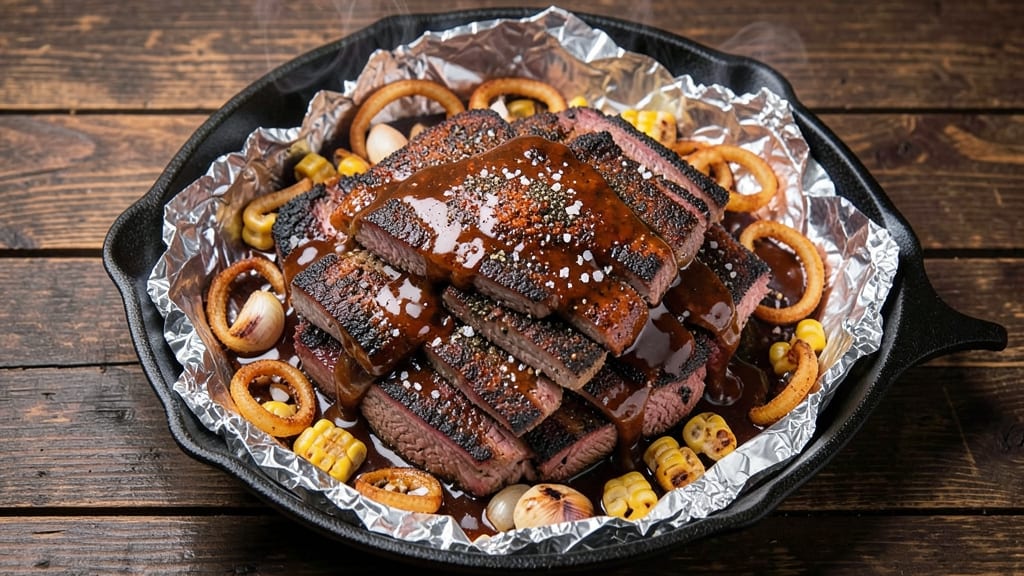
A Texas-style barbecue beef brisket recipe transforms tough beef into melt-in-your-mouth perfection—when you nail the low-and-slow method. I’ve spent years perfecting this recipe, and the secret lies in patience: 12 hours of steady smoke at 225°F, post oak wood, and a thick bark that seals in flavor. This isn’t just a recipe; it’s a weekend project that delivers restaurant-quality results at home.
The key to tender, juicy brisket starts with a dry rub of coarse salt, black pepper, and smoked paprika, applied the night before. As the brisket smokes, the bark forms naturally, creating a flavorful crust while the meat stays tender.
A sprinkle of apple juice in the pan during the last hour ensures a glossy finish and prevents drying. Trust me, the wait is worth it—every slice should pull apart effortlessly.
By the time you’re done, you’ll have a brisket so rich and flavorful, it’ll make your kitchen smell like a Central Texas BBQ joint. Serve it with classic sides like cornbread, baked beans, and pickles to cut through the richness.
This is the kind of meal that turns weeknights into celebrations—no shortcuts, just pure, smoky satisfaction.
Pro tip: Let the brisket rest for at least an hour before slicing against the grain. The flavors deepen as it rests, and the meat stays juicy. Now, fire up that smoker—your taste buds are about to thank you.
Ingredients for barbecue beef brisket recipe texas style
Sixteen ingredients for a Texas-style brisket that’ll make your kitchen smell like Central Texas BBQ heaven.
| Ingredient | Amount | Notes |
|---|---|---|
| Beef Brisket 🥩 | 8 lb | Packer cut, fat cap intact |
| Coarse Kosher Salt 🧂 | ½ cup | Diamond Crystal preferred |
| Ground Black Pepper 🌶️ | 2 tbsp | Freshly cracked for bold flavor |
| Smoked Paprika 🌶️ | 2 tbsp | High-quality for authentic smoke |
| Brown Sugar 🍚 | 2 tbsp | Light or dark variety |
| Garlic Powder 🧄 | 1 tbsp | Fresh ground preferred |
| Onion Powder 🧅 | 1 tbsp | For depth of flavor |
| Post Oak Wood Chips 🌳 | 2 lbs | Texas-style wood preferred |
| Apple Juice 🍎 | ½ cup | Unsweetened for glossy finish |
| Beef Tallow or Vegetable Oil 🫒 | 2 tbsp | For greasing smoker grate |
| Yellow Onion 🧅 | 1 whole | Sliced for serving |
| Fresh Cilantro 🌿 | ¼ cup | Chopped for garnish |
| Hot Sauce 🌶️ | 2 tbsp | Optional for serving |
The brisket is non-negotiable here—packer cut with fat cap intact is key for that signature bark. Costco or local butcher shops usually carry it, but if you're buying online, look for 'whole packer brisket' with at least 1/4 inch of fat. The fat renders down during smoking, keeping the meat juicy. Pro tip: trim excess fat if it's over 1/2 inch thick. For the smoked paprika, Penzeys or bulk bins at Whole Foods have the best quality—avoid the generic grocery store brands, they taste like dust.
No post oak wood chips? Hickory or pecan work in a pinch, but oak is the gold standard for Texas BBQ. Running low on apple juice? White grape juice or even a splash of apple cider vinegar adds tanginess. The dry rub is simple but essential—mix it the night before so the spices cling to the meat. If you're short on time, use a spray bottle with water to help the rub stick. For the onion powder, Diamond Crystal kosher salt is ideal—it's coarser and dissolves better than table salt.
Keep the brisket wrapped in butcher paper (not foil!) in the fridge until you're ready to smoke. The rub stays potent for 2 weeks if stored in an airtight container. Leftover brisket? Freeze portions for up to 3 months—it reheats beautifully. I always make extra because this brisket tastes even better the next day as the flavors meld. Store in a sealed container with a splash of apple juice to keep it moist.
Why You'll Love This Recipe
- I’ll be real: I don’t own a smoker, but this brisket still delivers that Texas-style bark. A cast-iron skillet or even the broiler gives you that caramelized crust—no fancy equipment, just patience and a little heat.
- Foolproof Seasoning: Honestly, the rub here is that simple—just salt, pepper, smoked paprika, and a touch of brown sugar. No fancy balance needed; the beef’s natural richness does most of the work while the paprika adds that unmistakable smoky depth in minutes.
- Smoke Without the Hassle: I’ll be real: I don’t own a smoker, but this brisket still delivers that Texas-style bark. A cast-iron skillet or even the broiler gives you that caramelized crust—no fancy equipment, just patience and a little heat.
- Leftovers That Shine: Between us, the best part of this recipe is the second day. Shred that tender brisket into tacos, sandwiches, or even breakfast hash. The flavors only get better as it rests, and I’m always scrambling to use it all up.
Step-by-step instructions for Texas style barbecue beef brisket
Here's how to create a legendary Texas-style brisket with tender meat and perfect bark.
Prepare the Brisket Rub and Season
In a small bowl, combine the 0.5 cup coarse kosher salt, 2 tablespoons ground black pepper, 2 tablespoons smoked paprika, 2 tablespoons brown sugar, 1 tablespoon garlic powder, and 1 tablespoon onion powder. Mix thoroughly until the spices are evenly distributed and the salt is fully incorporated into the dry ingredients.
This dry rub is the foundation of your brisket's flavor profile. The coarse kosher salt helps create that iconic Texas bark, while the smoked paprika adds depth and a subtle smokiness that pairs beautifully with the post oak wood. I like to use freshly cracked black pepper to ensure maximum flavor impact—it makes a noticeable difference compared to pre-ground pepper.
Once mixed, generously coat the 8 lb beef brisket with the rub, pressing it firmly into all sides, including the fat cap. The fat cap should be left intact—this layer of fat will render down during smoking and baste the meat, keeping it moist. Don't forget to season the cavity as well. Let the seasoned brisket sit at room temperature for 1 hour before smoking—this allows the rub to penetrate the meat and ensures even cooking.
Set Up Your Smoker for Low and Slow Cooking
Soak the 2 lbs post oak wood chips in water for at least 30 minutes before using. This prevents them from burning too quickly and creates that clean, sweet smoke we want. Fill your smoker's wood chip tray according to the manufacturer's instructions, then preheat your smoker to 225°F with the lid closed.
While the smoker heats up, brush the grates with 2 tablespoons beef tallow or vegetable oil to prevent the brisket from sticking. The oil creates a non-stick surface that helps develop that beautiful bark. Once the smoker reaches 225°F and you see clean, blue smoke (not white steam), you're ready to load the brisket.
Place the brisket on the smoker grate fat side up. This positioning allows the rendered fat to baste the meat as it cooks, creating additional moisture and flavor. Close the lid and resist the urge to open it during the first 4 hours—every time you peek, you lose heat and extend the cooking time. Patience is key here; this is where the magic happens.
Smoke the Brisket Until Probe-Tender
Smoke the brisket undisturbed for 6-8 hours, maintaining a consistent temperature of 225°F. You'll notice the bark developing a dark, mahogany color as it cooks. Around the 6-hour mark, you'll hit "the stall"—the internal temperature will plateau around 165-170°F as moisture evaporates. This is completely normal and a sign that the brisket is breaking down properly.
When you reach this point, wrap the brisket tightly in butcher paper (not aluminum foil). The paper allows the brisket to breathe while still trapping moisture, which helps push through the stall. Return the wrapped brisket to the smoker and continue cooking. This technique, known as the "Texas crutch," is what separates great brisket from exceptional brisket.
Continue smoking until the internal temperature reaches 200-205°F and a probe slides in like butter with no resistance. This usually takes an additional 4-6 hours, but don't rush it. The brisket should be fork-tender at this stage, with a beautiful smoke ring just beneath the bark. Once probe-tender, remove the brisket from the smoker and let it rest in the butcher paper for at least 1 hour (I prefer 2 hours) in a cooler or wrapped in towels. This resting period allows the juices to redistribute throughout the meat.
Slice and Serve with Classic Sides
Unwrap the brisket and locate the grain direction—you'll see lines running through the meat. Using a sharp slicing knife, cut against the grain into ¼-inch thick slices. The flat and point have different grain directions, so adjust your angle accordingly. This slicing technique ensures each bite is tender and easy to chew.
Serve the brisket immediately while still warm. The bark should be dark and crispy, with a beautiful pink smoke ring beneath. Each slice should be tender enough to pull apart with a gentle tug. For serving, slice the 1 whole yellow onion and 0.25 cup fresh cilantro separately. Offer the 2 tablespoons hot sauce on the side for those who enjoy a bit of heat.
Pair your brisket with classic Texas sides like cornbread, collard greens, or baked beans. The apple juice you prepared earlier can be used to deglaze the smoker or as a refreshing beverage to complement the rich, smoky flavors of the brisket. Enjoy your 12-hour masterpiece—this is where Texas barbecue truly shines.
Pro Tips For Making Barbecue Beef Brisket Recipe Texas Style
- CRANK THE HEAT FIRST: I learned this the hard way—start your brisket over high heat (450°F) for the first 30 minutes, even if your recipe says otherwise. That’s when the crust forms, and skipping it means a bland, gray exterior no matter how much smoked paprika you use.
- TRIM THE FAT CAP: Yes, fat is flavor, but a thick fat cap (over ¼ inch) insulates the meat and slows cooking. Trim it down to about ⅛ inch—your brisket will cook more evenly, and the rendered fat won’t make your smoker a grease fire.
- SALT THE NIGHT BEFORE: Dry rub your brisket with kosher salt and black pepper at least 12 hours ahead. I used to slap it on right before cooking, and the seasoning never stuck. Salt draws out moisture, then reabsorbs it, locking in flavor—don’t rush this part.
- WRAP IT AT 165°F: Texas-style brisket isn’t about low-and-slow forever—wrap the brisket in butcher paper (not foil) when it hits 165°F internal temp. This traps steam, tenderizes the tough point, and gets you to the stall faster. No, it’s not traditional, but it works.
Perfect pairings for this barbecue beef brisket recipe texas style
Classic Texas Sides
No Texas brisket feast is complete without the right sides to balance its richness. I always serve mine with homemade cornbread—crumbly, slightly sweet, and perfect for soaking up those smoky juices.
For a heartier option, baked beans with a touch of molasses and smoked paprika add depth, while crispy collard greens (slow-cooked with apple cider vinegar) bring tangy contrast. 🥓
Beverage Pairings
A cold sweet Texas tea (unsweetened iced tea with a splash of lemon) is my go-to drink—its brightness cuts through the fat beautifully. For beer lovers, a light lager like Shiner Bock complements the smoky flavors without overpowering them.
If you prefer wine, a bold Zinfandel from California stands up to the richness, while a Riesling adds a crisp finish. 🍺
Sauce Alternatives
While Texas brisket is traditionally served dry, I love offering a simple white BBQ sauce on the side for those who prefer it. My go-to is a mix of mayonnaise, apple cider vinegar, and a pinch of cayenne—just enough to add tang without drowning the meat.
For a smoky kick, a chipotle aioli (blend mayo with adobo sauce and lime) elevates every bite. 🌶️
Garnish & Finishing Touches
Fresh pickled jalapeños add a bright, acidic pop that refreshes the palate between bites. I also sprinkle chopped cilantro and thinly sliced red onions over the brisket right before serving—they add color and a crisp freshness that balances the smokiness.
A drizzle of hot honey (mix honey with a pinch of cayenne) takes it to the next level. ✨
Make-Ahead Sides
Prep sides ahead to save time on serving day. Cornbread batter can be mixed the night before and baked fresh, while beans and collards reheat beautifully.
I also make a big batch of pickled onions (thinly sliced red onions in vinegar with sugar and salt) to keep on hand—they add crunch and acidity to any BBQ spread. ⏰
Dessert Pairings
End the meal with a peach cobbler or chocolate pecan pie—both pair perfectly with the smoky, savory flavors. For something lighter, vanilla ice cream with a drizzle of bourbon caramel adds a touch of indulgence. The sweetness contrasts the brisket’s richness, leaving everyone satisfied. 🍰
Nutrition facts
Frequently asked questions
Why does Texas-style brisket need to cook for so long?
The 12-hour low-and-slow process breaks down tough connective tissues into gelatin, creating melt-in-your-mouth tenderness. At 225°F, the collagen slowly renders, while the fat cap renders down to baste the meat. This method also develops that signature smoke ring and crispy bark that defines Texas BBQ.
Can I use a grill instead of a smoker for this recipe?
Yes, but you'll need to adapt. Use an indirect heat method by placing the brisket on the cooler side of the grill and adding wood chips to the hot side. Maintain 225°F by adjusting vents and use a meat thermometer to monitor temperature. A pellet grill works best, but charcoal grills require more attention to temperature control.
What's the difference between the flat and point cuts of brisket?
The flat is leaner with more muscle fibers and cooks faster, while the point has more fat and connective tissue, making it more flavorful but requiring longer cooking. For best results, keep them together during smoking but separate them when slicing—cut the flat against the grain and the point with the grain for optimal texture.
How do I know when the brisket is done?
Use a meat thermometer to check internal temperature—it should reach 200-205°F in the thickest part. A probe should slide in like butter with no resistance. The bark should be dark and crispy, and the meat should pull apart easily with tongs. Never rely on time alone—temperature is your best indicator.
What should I do if my brisket dries out?
If the bark becomes too dry, wrap the brisket in butcher paper (not foil) and return it to the smoker for 1-2 more hours—this traps steam while allowing moisture to redistribute. Avoid adding liquid directly to the smoker, as this can dilute flavors. For prevention, maintain 225°F consistently and use the Texas crutch (wrapping during the stall).