
Sauces & Condiments
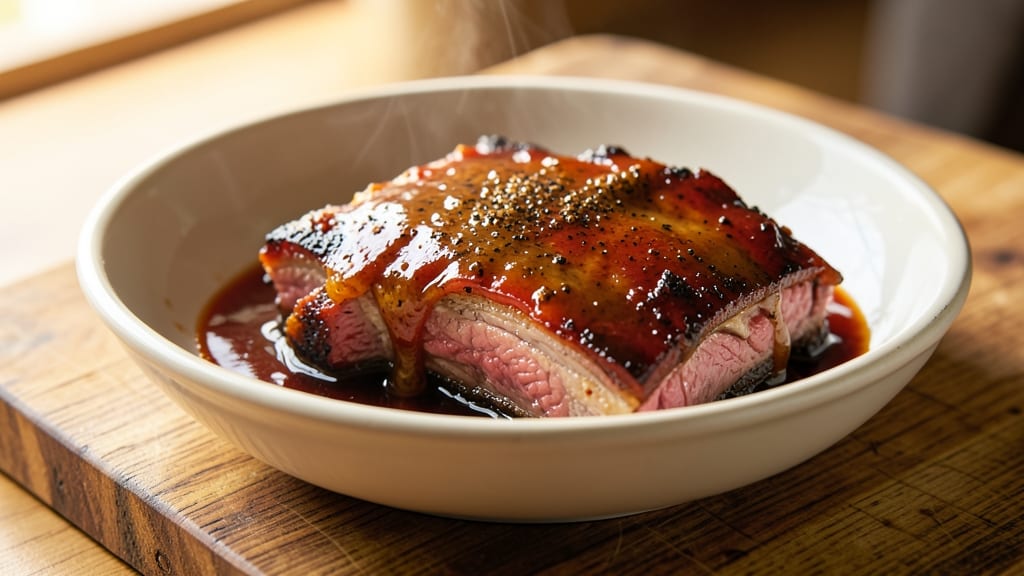
This barbecue sauce recipe for beef ribs transforms tough cuts into tender, sticky masterpieces with every brush. 🔥 The secret lies in balancing smoky depth, tangy brightness, and caramelized sweetness—just like my grandfather’s recipe that won county fair rib competitions.
What makes this sauce special is its ability to cling to ribs, creating a glossy bark that locks in flavor while adding layers of complexity through slow simmering.
The foundation starts with a blend of ketchup, apple cider vinegar, and molasses, creating that signature tangy-sweet profile. I add smoked paprika and a touch of liquid smoke for that unmistakable barbecue aroma, then let the mixture reduce until it coats the back of a spoon.
This isn’t just a sauce—it’s a flavor multiplier that turns simple ribs into showstopping centerpieces.
By the time you’re done basting those ribs, you’ll have a glaze so rich and sticky it practically falls off the bone. The sauce caramelizes beautifully in the smoker or oven, forming a glossy crust that’s both sweet and smoky.
It’s the kind of sauce that makes your whole house smell like a pitmaster’s dream and leaves your guests begging for the recipe.
Perfect for competition-style ribs or weeknight dinners, this sauce works equally well as a glaze or basting liquid. The key is patience—letting the flavors meld during the cooking process. Here’s how to make it, step by step, for ribs that’ll have everyone asking for seconds.
Ingredients for barbecue sauce recipe for beef ribs
Nine simple ingredients for a sauce that’ll make ribs unforgettable.
| Ingredient | Amount | Notes |
|---|---|---|
| Ketchup 🍅 | 1 ½ cups | High-quality, not watery |
| Apple Cider Vinegar 🍏 | ½ cup | Bragg or organic preferred |
| Molasses 🍯 | ¼ cup | Unsulfured for best flavor |
| Smoked Paprika 🌶️ | 2 tbsp | High-quality, not dusty |
| Liquid Smoke 🔥 | 1 tbsp | Adjust for desired smokiness |
| Brown Sugar 🍚 | ¼ cup | Light or dark works |
| Worcestershire Sauce 🍶 | 1 tbsp | Vegan if needed |
| Garlic Powder 🧄 | 1 tsp | Freshly ground preferred |
| Onion Powder 🧅 | 1 tsp | No lumps |
| Salt 🧂 | 1 tsp | Kosher or sea salt |
| Black Pepper 🌶️ | ½ tsp | Freshly ground |
The ketchup is the base, so Heinz or Hunt’s are solid choices—just make sure it’s not watery. Apple cider vinegar gives that tangy kick, and Bragg or organic brands have the best flavor. Molasses can be tricky—unsulfured is key for depth. Smoked paprika? Penzeys or the bulk section at Whole Foods have the best quality. I always grab extra because once you open it, the flavor fades fast. Liquid smoke is where the magic happens—start with 1 tbsp and taste as you go. Too much, and it’ll taste like a campfire. Too little, and you’re missing that signature barbecue aroma.
No ketchup? Crushed tomatoes plus a pinch of sugar gets you close. Skip the vinegar? Lemon juice at half the amount works in a pinch. Molasses too strong? Maple syrup softens the flavor. Worcestershire sauce is non-negotiable for depth, but if you’re vegan, Lee Kum Kee or Annie’s have great versions. The powders—garlic and onion—can be swapped for fresh if you’re feeling fancy, but pre-ground is fine for weeknight sauces. Salt and pepper are just for balance, but don’t skip them—they wake up all the other flavors.
This sauce keeps for 3 months in the fridge, but it’s even better the next day once everything melds. Store it in a jar with a tight seal, and give it a quick stir before using. Freeze portions in ice cube trays for easy basting later. I always make a double batch—one for the ribs, one to drizzle over baked beans or toss with roasted potatoes. The leftovers? Perfect for glazing grilled chicken or even as a marinade for pork chops.
Why You'll Love This Recipe
- Five-Ingredient Magic: I swear by this combo—ketchup, vinegar, molasses, and a dash of liquid smoke. It’s the kind of sauce where you measure once, stir twice, and boom, flavor explosion.
- Smoky Depth Fast: That liquid smoke and smoked paprika? They cut through the sweetness like a campfire should. Honestly, it’s the closest I get to a real smoker’s taste without standing outside all day.
- Weeknight Rib Rescue: Slap this on ribs for dinner, then reheat the leftovers for sandwiches. My kids beg for it on Wednesday mornings—yes, even on a Tuesday night.
- Budget Stretch: Molasses and vinegar do the heavy lifting here, so you’re not breaking the bank. A single batch coats ribs and doubles as a glaze for chicken—talk about getting your money’s worth.
Step-by-step instructions for smoky-sweet beef rib barbecue sauce
This sauce delivers deep, smoky-sweet flavor that clings perfectly to ribs—here's how to make it.
🍳 Step 1: Combine Wet Ingredients for Flavor Foundation
In a medium saucepan, whisk together the 1.5 cups ketchup, 0.5 cup apple cider vinegar, and 0.25 cup molasses over medium-low heat. Stir constantly for 3-4 minutes until everything is fully incorporated and the mixture begins to simmer gently. The molasses will give that rich, caramel-like depth while the vinegar adds tangy brightness.
Here's the thing—don't rush this step. You're building the flavor base, so let the ingredients meld together. If you see the mixture thickening too quickly, reduce the heat slightly. You want it to simmer steadily without burning. The sauce should smell like a perfect balance of sweet and tangy—this is your first checkpoint for success.
🍳 Step 2: Add Dry Ingredients and Liquid Smoke
Remove the saucepan from heat and let it cool for 2-3 minutes—this prevents scorching when you add the dry ingredients. Then whisk in the 2 tbsp smoked paprika, 0.25 cup brown sugar, 1 tbsp Worcestershire sauce, 1 tsp garlic powder, 1 tsp onion powder, 1 tsp salt, and 0.5 tsp black pepper. Stir until completely smooth and all the spices are evenly distributed.
Now return the pan to low heat and add the 1 tbsp liquid smoke. This is where the sauce gets its authentic smoky character. Stir gently and let it simmer for 5-7 minutes, stirring occasionally. You'll notice the sauce thickening as the flavors meld together. If it gets too thick, add 1-2 tablespoons of water to loosen it slightly—you want it to coat the back of a spoon but still be pourable.
🔥 Step 3: Simmer Until Perfect Consistency
Continue simmering the sauce on low heat for 10-15 minutes, stirring occasionally. You're looking for a sauce that's thick enough to cling to ribs but still glossy enough to glaze beautifully. The ideal consistency should be like honey—thick but not syrupy. If it starts to darken too much, reduce the heat further to prevent burning.
Here's my pro tip: Taste as you go. Adjust the sweetness with more brown sugar if needed, or add a splash more vinegar for tang. The liquid smoke can be potent, so if it's too strong, reduce it slightly. The sauce should balance sweet, smoky, and tangy flavors perfectly—this is what makes it irresistible on ribs.
⏰ Step 4: Cool and Store for Maximum Flavor
Once the sauce reaches your desired consistency, remove it from heat and let it cool completely. I like to transfer it to a jar and refrigerate for at least 1 hour before using. This resting period allows all the flavors to fully develop and meld together. The sauce will thicken slightly as it cools, which is perfect for glazing.
When you're ready to use it, give it a quick stir. The sauce should be smooth and glossy, with a beautiful deep red color. If it's too thick, thin it with a splash of water or apple cider vinegar. If it's too thin, simmer it uncovered for a few minutes to reduce. This sauce keeps well in the fridge for up to 2 weeks, so make extra for future rib nights!
Pro Tips For Making Barbecue Sauce Recipe For Beef Ribs
- Simmer Slow and Low: I learned this the hard way—boiling barbecue sauce on high heat turns it into a sticky mess. Keep the heat at a gentle simmer (just bubbles, not a rolling boil) for at least 20 minutes. This lets the flavors meld without burning the molasses or making the vinegar taste harsh.
- Reduce Vinegar Gradually: Apple cider vinegar is potent, and dumping it all at once can make your sauce taste sour. Add it in two batches: half at the start, then the rest after 10 minutes of simmering. This gives the acid time to mellow out.
- Balance the Molasses: Molasses adds depth but can overpower if you’re not careful. Start with 2 tablespoons, taste, then adjust—it’s easier to add more than fix a cloying sweetness. If your sauce tastes too heavy, a splash of vinegar or a pinch of salt cuts through it.
- Use Liquid Smoke Sparingly: A few drops of liquid smoke add that smoky punch, but too much turns your sauce into a campfire aftertaste. Start with ½ teaspoon, taste, then add another ¼ if needed. Remember, you’re enhancing, not replacing, the real smoky flavor of the ribs.
Pro cooking tips for this dish
Smoke Control Secrets
Liquid smoke is potent stuff—start with 1 tbsp but taste as you go. Too much? Your sauce will taste like a campfire. I once overdid it at a competition and had to fix it by adding a splash of apple cider vinegar to cut through the intensity.
Keep a small bowl of vinegar nearby as your emergency flavor balancer. 🔥
Heat Management
Never let this sauce boil—medium-low heat is key for even reduction. I use a stainless steel saucepan because it heats evenly and prevents scorching. If your sauce starts to darken too quickly, immediately reduce to low heat or remove from heat entirely. The goal is caramelization, not burning.
Consistency Mastery
Your sauce should coat the back of a spoon but still glaze beautifully. If it's too thick, thin with 1 tbsp water or vinegar. Too thin? Simmer uncovered for 5-10 minutes to reduce.
I test consistency by dipping a spoon in—it should leave a glossy trail. This is what makes your ribs sticky and irresistible.
Flavor Balancing
Taste as you go! Need more sweetness? Add ½ tsp brown sugar. Too tangy? A pinch of salt or sugar helps. The magic ratio is sweet (molasses/sugar) : tang (vinegar) : smoke (paprika/liquid smoke).
My rule: 2 parts sweet, 1 part tang, 1 part smoke—adjust to taste. This is where home cooks often go wrong.
Resting Period
Never use this sauce fresh off the heat—let it cool and rest for at least 1 hour. This lets flavors meld and thicken naturally. I've seen people skip this and end up with a watery glaze.
Patience here makes all the difference. Store in an airtight container for up to 2 weeks in the fridge.
Sauce Application
For ribs, apply sauce in 3 stages: first when smoking (225°F), then after wrapping (180°F), and finally as a glaze in the last 30 minutes.
Use a pastry brush for even coverage. Pro tip: Save some sauce to brush on after ribs come out—this creates that perfect glossy finish. 💫
Nutrition facts
Frequently asked questions
Can I make this barbecue sauce without ketchup?
Replace the 1.5 cups ketchup with 1.5 cups crushed tomatoes plus 1 teaspoon sugar to balance the acidity. For extra depth, add 1 teaspoon tomato paste while simmering. The texture will be slightly chunkier but still delicious on ribs.
How do I adjust the sweetness level for different preferences?
Start with the recipe as written, then adjust while simmering. Need more sweetness? Add 1-2 tablespoons brown sugar gradually. Too sweet? Balance with 1 teaspoon apple cider vinegar or a pinch of salt. For a smokier profile, increase smoked paprika by ½ teaspoon instead. Taste frequently—this sauce is all about personal preference!
Can I use this sauce on other meats besides beef ribs?
This sauce works beautifully on pork ribs, chicken, brisket, and even grilled vegetables! For chicken, reduce the liquid smoke to ½ tablespoon to avoid overpowering the delicate flavor. On pork, you can use it as-is—just apply it in the last 30 minutes of cooking to prevent burning. The key is adjusting application time based on cook temperature.
Why did my sauce turn too thick or too thin?
Sauce consistency depends on simmering time and heat control. If too thick, thin with 1 tablespoon water or vinegar while warm. Too thin? Simmer uncovered for 5-10 minutes on low heat, stirring occasionally. The ideal texture coats the back of a spoon but remains pourable. For ribs, slightly thicker sauces work best as glazes.
How can I make this sauce spicier?
Add ½ teaspoon cayenne pepper or 1 teaspoon hot sauce while simmering. For heat with depth, try 1 teaspoon chipotle powder or a pinch of crushed red pepper flakes. Always taste first—you can adjust later, but you can't take out added heat! For a smoky kick, increase smoked paprika by ½ teaspoon and reduce sugar slightly to balance.