
Main Courses
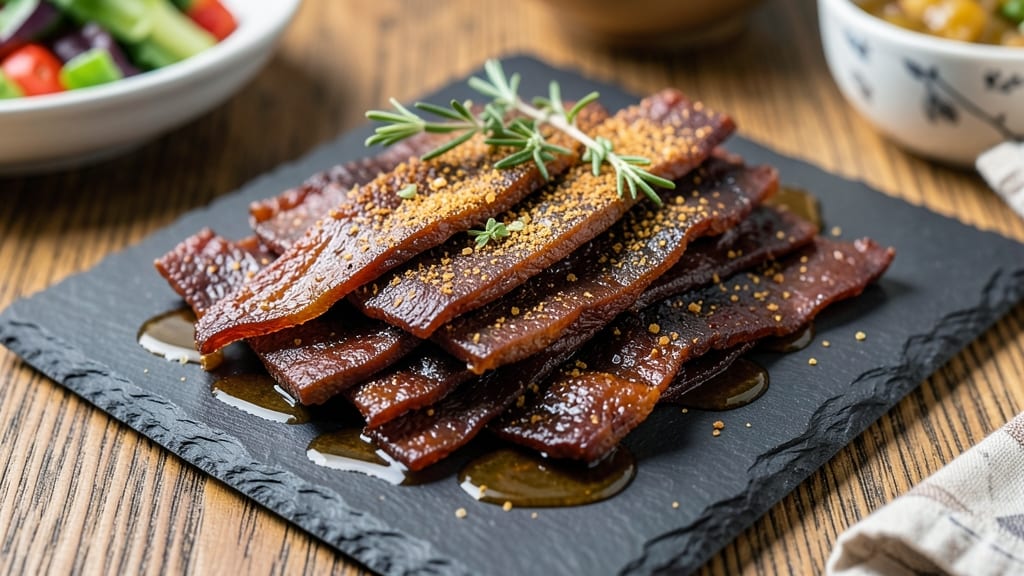
Transforming tough cuts of beef into crispy, smoky BBQ jerky takes just 6 hours in your dehydrator—no smoker required. 🔥 As a pitmaster who grew up on slow-cooked ribs, I’ve perfected this method to deliver restaurant-quality texture and bold BBQ flavor at home.
The secret lies in precise curing, a well-balanced marinade, and controlled dehydration for that perfect snap.
This recipe starts with lean beef slices cured in a simple salt-sugar solution to draw out moisture, then coated in a tangy-sweet BBQ marinade packed with smoked paprika and brown sugar. The dehydrator’s gentle heat ensures even drying without burning, while the marinade infuses deep, caramelized flavor.
No fancy equipment—just a dehydrator, a few hours, and patience for crispy, protein-rich jerky that’s ready to pack for trips or snack on anytime.
The result? Jerky with a satisfying crunch, rich smoky notes, and a perfect balance of sweet and spicy that rivals store-bought—except this version is made with quality meat and no preservatives. Store in an airtight container for up to 2 weeks, or freeze for longer shelf life.
Whether you’re prepping for a hike or craving a smoky snack, this method delivers restaurant-quality results every time.
Ready to skip the preservatives and make jerky your way? Let’s get started—your dehydrator is about to become your new favorite tool for creating crispy, flavorful jerky that’s as satisfying as it is simple.
Ingredients for bbq beef jerky recipe dehydrator
Lean beef, bold spices, and dehydrator magic—your crispy BBQ jerky starts here.
| Ingredient | Amount | Notes |
|---|---|---|
| Lean Beef Top Round Roast 🥩 | 2 lb | Sliced thinly against grain (1/4-inch thick) |
| Kosher Salt 🧂 | 2 tbsp | Diamond Crystal preferred |
| Granulated Sugar 🍚 | 1 tbsp | White or brown sugar |
| Smoked Paprika 🌶️ | 2 tbsp | High-quality for smoky flavor |
| Brown Sugar 🍚 | 1/4 cup | Light or dark variety |
| Worcestershire Sauce 🍶 | 2 tbsp | Vegan version if needed |
| Apple Cider Vinegar 🍎 | 2 tbsp | For tangy kick |
| Garlic Powder 🧄 | 1 tbsp | Freshly ground preferred |
| Ground Black Pepper 🌶️ | 1 tsp | Freshly cracked |
| Onion Powder 🧅 | 1 tsp | For depth of flavor |
| Cayenne Pepper 🔥 | ½ tsp | Adjust for heat preference |
| Extra-Virgin Olive Oil 🫒 | 1 tbsp | For even coating |
| Lemon Juice 🍋 | 1 tbsp | Freshly squeezed |
The beef is everything. Top round roast is lean enough to dry properly without turning greasy, and slicing it thinly against the grain ensures that satisfying chew. Grab a pound or two from Costco or your local butcher shop—they’ll slice it for you if you ask. Look for meat with good marbling; it’ll stay juicier during curing. If you can’t find top round, sirloin or flank steak work too, but trim off any visible fat. The thinner the slices, the faster they dehydrate—aim for 1/4-inch thickness or less. Pro tip: freeze the sliced beef for 30 minutes before curing to firm it up for cleaner cuts.
No smoked paprika? Regular paprika plus a pinch of liquid smoke works in a pinch, though it won’t be as authentic. The brown sugar adds caramelized depth, so don’t skip it—light brown sugar gives a milder sweetness, while dark adds molasses notes. Worcestershire sauce is non-negotiable for that umami punch, but if you’re avoiding anchovies, vegan Worcestershire like Annie’s works perfectly. For extra tang, substitute rice vinegar for apple cider vinegar. The olive oil and lemon juice create a sticky marinade that clings to the beef, so don’t skimp—whisk them together well before applying. If you’re short on time, marinate the beef for at least 4 hours (overnight is ideal), but even 30 minutes helps.
Dehydrated jerky keeps like a dream. Once fully dried, store it in an airtight container or vacuum-sealed bag to lock in freshness—it’ll last 2 weeks at room temperature or 6 months in the freezer. For extra crispiness, reheat in a 300°F oven for 5-10 minutes before eating. Portion into small bags for snacks on the go, or break into strips for easy packing. The jerky’s texture improves after 24 hours of drying, so resist the urge to dig in too soon—patience pays off with that perfect snap. If you make a big batch, label with the date to track freshness.
Why You'll Love This Recipe
- Five-Ingredient Magic: I swear by this combo—just beef, salt, sugars, and smoked paprika. No fancy marinades or weird additives, just pure, smoky-sweet flavor that sticks to every bite.
- Crispy Without Fuss: The dehydrator does all the work here. No oven babysitting, no greasy skillet—just slice, season, and let it dry to that perfect chewy-crisp texture. Honestly, it’s the only jerky I make anymore.
- Snack Attack Ready: This is my go-to for road trips, gym bags, or when I’m craving something salty but don’t want to cook. It keeps for weeks, so I can make a big batch and forget about it—until I’m ready to grab a handful.
- Budget-Friendly Protein: Top round roast is cheap, and a pound stretches forever. I’ve fed my whole family for days with just one batch, plus it’s way healthier than store-bought jerky loaded with preservatives. Win-win.
Step-by-step instructions for dehydrator BBQ beef jerky
Here's how to transform lean beef into restaurant-quality jerky with perfect texture and bold flavor.
👨🍳 Step 1: Prepare the Marinade for Maximum Flavor
In a medium bowl, combine all the marinade ingredients: the 2 tbsp kosher salt, 1 tbsp granulated sugar, 2 tbsp smoked paprika, ¼ cup brown sugar, 2 tbsp Worcestershire sauce, 2 tbsp apple cider vinegar, 1 tbsp garlic powder, 1 tsp ground black pepper, 1 tsp onion powder, and ½ tsp cayenne pepper. Whisk until the sugars dissolve completely—this ensures even distribution throughout the meat.
Add the 1 tbsp extra-virgin olive oil and 1 tbsp lemon juice, then whisk again. The oil helps the marinade cling to the beef, while the lemon juice adds a bright contrast to the smoky flavors. Let the marinade sit at room temperature for 10 minutes before using—this allows the spices to bloom and intensify their aroma.
🔪 Step 2: Slice the Beef Thinly Against the Grain
Place the 2 lb lean beef top round roast on a cutting board. Using a sharp boning knife, slice it into ¼-inch thick strips, cutting against the grain for maximum tenderness. The grain runs lengthwise through the muscle fibers, so slicing perpendicular ensures each piece pulls apart easily.
Arrange the sliced beef on a tray lined with parchment paper. If any slices feel thick, run them through a meat slicer or carefully slice them thinner—uniform thickness guarantees even drying. This is where crispy jerky begins; inconsistent slices lead to some pieces drying out while others stay chewy.
🍳 Step 3: Marinate for 4-6 Hours (Don't Skip This!)
Transfer the sliced beef to a resealable plastic bag and pour the marinade over it. Seal the bag and massage the beef gently to coat every surface. Refrigerate for at least 4 hours, but I prefer 6 hours—this longer marinade time deepens the flavor and tenderizes the meat further.
Here's the thing—don't rush this step. The acidity from the vinegar and lemon juice breaks down the muscle fibers, while the salt and sugar draw out moisture that gets replaced with flavor. After marinating, the beef should feel noticeably softer and absorb the rich, smoky color of the mixture.
🔥 Step 4: Arrange on Dehydrator Trays for Even Drying
Preheat your dehydrator to 160°F—this gentle heat preserves texture while ensuring thorough drying. Line the dehydrator trays with parchment paper and arrange the marinated beef slices in a single layer, leaving ¼ inch between each piece. This spacing prevents them from sticking together and allows proper airflow.
For best results, place thicker slices on the lower trays where it's slightly warmer, and thinner slices on the upper trays. The dehydrator's fan circulates air, but you'll still want to rotate the trays halfway through drying to ensure even crispiness. This step is critical for that perfect jerky texture—too crowded means soggy jerky.
⏰ Step 5: Dehydrate for 6-8 Hours Until Leather-Like
Place the trays in the dehydrator and set the timer for 6 hours. After 4 hours, check the jerky—it should be firm but still pliable. If it's drying too quickly (edges curling), reduce the temperature to 150°F and continue drying. The goal is to reach a leather-like consistency that's flexible but not sticky.
When fully dehydrated, the jerky should bend slightly but not snap back. It will also develop a deep, rich color from the marinade. Remove it from the dehydrator and let it cool completely on a wire rack before storing. This cooling step prevents condensation from forming inside your storage container, which could make the jerky soggy.
Pro Tips For Making Bbq Beef Jerky Recipe Dehydrator
- CHILL THE MEAT FIRST: After slicing your top round into ¼-inch strips, pop it in the fridge for 30-60 minutes. Cold meat dehydrates more evenly—no more chewy centers or crispy edges that burn before the middle dries. (Yes, I know it’s tempting to dive right in, but trust me on this.)
- SALT THE NIGHT BEFORE: Dry-brine your beef strips with kosher salt (1.5 tsp per pound) for at least 8 hours—or overnight if you can swing it. The salt penetrates deeper, and the strips hold their shape better in the dehydrator. I used to skip this and ended up with jerky that curled like a shrimp chip.
- STICK TO 165°F FOR 4-6 HOURS: Your dehydrator’s max temp might scream for higher heat, but jerky needs patience. Run it at 165°F—hot enough to kill bacteria but gentle enough to prevent a burnt crust before the inside dries. After 4 hours, flip the strips and check for flexibility; they should bend without snapping.
- USE COARSE BROWN SUGAR: Fine sugar clumps and makes a sticky mess in the dehydrator trays. Grab the coarse kind (or pulse regular brown sugar in a food processor) so it dissolves evenly into your marinade. It’ll caramelize better, giving your jerky that classic smoky-sweet bark without gunking up your machine. (Cleanup is a nightmare otherwise.)
Pro cooking tips for this dish
Temperature Precision
Your dehydrator’s temperature is the secret weapon for perfect jerky texture. Start at 160°F—this gentle heat ensures even drying without burning. If your jerky starts curling at the edges after 4 hours, drop the temperature to 150°F immediately.
I’ve learned the hard way: jerky that dries too fast becomes brittle and loses moisture too quickly. Use a digital thermometer like the Excalibur to monitor internal temps—it’s worth the investment. 🌡️
Slice Uniformity
Consistency is key—every slice should be ¼-inch thick or thinner. If your kitchen knife isn’t up to the task, ask your local butcher to slice it for you. I’ve seen home cooks struggle with uneven slices, leading to some jerky drying too fast (and turning tough) while others stay chewy.
Pro tip: Freeze the beef for 30 minutes before slicing—it firms up for cleaner cuts. Use a sharp boning knife or a mandoline slicer for precision.
Marinade Bloom
Let your marinade sit at room temperature for 10 minutes before applying it to the beef. This allows the spices to bloom, releasing their full aroma and flavor. I remember my first batch where I skipped this step—the jerky tasted flat, like something was missing.
The smoked paprika and Worcestershire sauce need this time to wake up. Whisk the marinade well, especially the sugars, to prevent clumping. A fine-mesh strainer helps if you prefer a smoother texture.
Dehydrator Trays
Line your dehydrator trays with parchment paper—it prevents sticking and makes cleanup a breeze. Arrange the beef slices in a single layer, leaving ¼ inch between each piece for airflow. I’ve made the mistake of overcrowding trays, which leads to uneven drying and soggy spots.
Place thicker slices on the lower trays where it’s slightly warmer, and thinner slices on the upper trays. Rotate the trays halfway through drying to ensure even crispiness. 🔄
Flavor Layering
For extra depth, brush the jerky with a 50/50 mix of olive oil and apple cider vinegar halfway through drying. This adds a glossy finish and intensifies the smoky flavor. I also like to sprinkle a pinch of extra smoked paprika on the final hour for a richer color.
If you’re feeling adventurous, add a dash of liquid smoke to the marinade for an authentic BBQ pit flavor. Just don’t overdo it—jerky should taste like BBQ, not like a campfire.
Storage Secrets
Once fully dehydrated, let the jerky cool completely on a wire rack before storing. This prevents condensation from forming inside your container, which can make the jerky soggy.
Store in an airtight container or vacuum-sealed bag—it’ll keep for 2 weeks at room temperature or 6 months in the freezer. For extra crispiness, reheat in a 300°F oven for 5-10 minutes before eating.
I always portion mine into small bags for easy snacks on the go, and I label each batch with the date to track freshness. 📅
Nutrition facts
Frequently asked questions
Can I use a different cut of beef instead of top round?
Sirloin or flank steak work well, but trim all visible fat first. The key is lean meat—avoid cuts with marbling over 10%. For extra tenderness, slice against the grain and consider marinating overnight.
Why does my jerky turn out chewy instead of crispy?
Uneven drying or insufficient time are usually the culprits. Check your dehydrator temperature—160°F is ideal. If slices are too thick (>1/4 inch), they’ll never crisp up. For extra crunch, dehydrate 8 hours total and rotate trays halfway.
How do I adjust the spice level for sensitive eaters?
Reduce the cayenne pepper to 1/4 tsp or omit it entirely. For mild heat, add 1/2 tsp ground chipotle instead. The smoky flavor from paprika will still shine through—just with less kick. Always taste your marinade first!
Can I make this jerky without a dehydrator?
Yes! Use an oven at 175°F with the door propped open slightly. Place slices on a wire rack over a baking sheet and bake for 3-4 hours, checking frequently. For a smoky flavor, add 1/2 tsp liquid smoke to the marinade.
What's the best way to store homemade jerky?
Cool completely, then store in an airtight container or vacuum-sealed bag. It’ll keep 2 weeks at room temp or 6 months frozen. For extra crispiness, reheat in a 300°F oven for 5 minutes before eating. Label with dates to track freshness!