
Main Courses
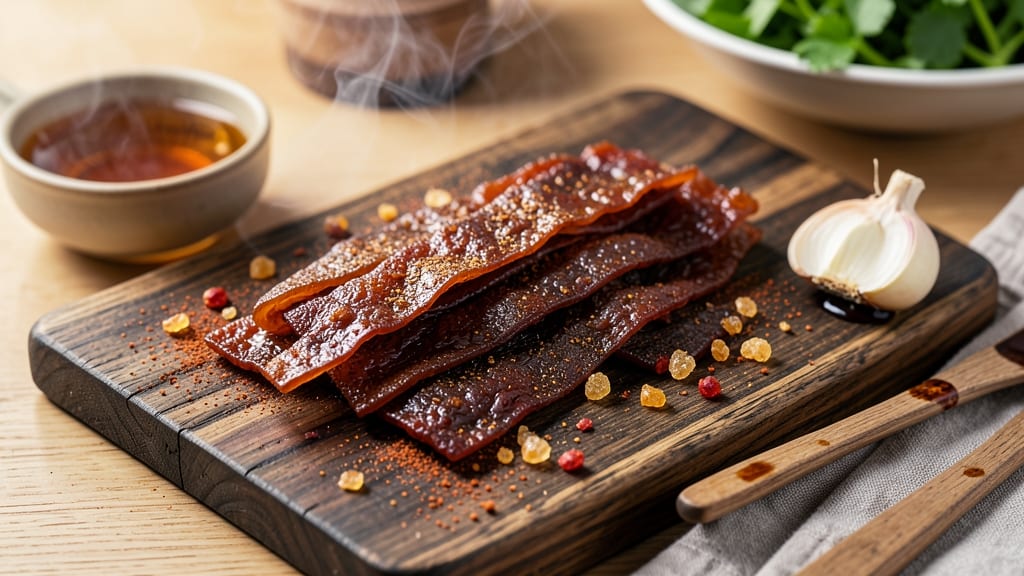
This BBQ ground beef jerky recipe transforms humble ground beef into smoky, spiced crunch that rivals store-bought—but with better flavor and no preservatives. 🔥 As a pitmaster who grew up on slow-cooked ribs, I know how to balance heat, sweetness, and texture for jerky that's perfectly tender yet shelf-stable.
The secret lies in a precise marinade ratio and careful dehydration, ensuring every bite delivers that satisfying snap without sacrificing moisture.
What sets this recipe apart is the combination of traditional BBQ spices with a touch of brown sugar for caramelized depth, all cured with a sodium nitrate-free approach. You'll work with lean ground beef (80/20 fat ratio works best) that's sliced thinly against the grain for maximum tenderness.
The marinade infuses for 12 hours, while the dehydration process takes just 2 hours at 160°F—far faster than traditional methods.
The result is jerky with a rich, smoky flavor profile that's ideal for snacking, camping trips, or gifting. Each piece maintains that perfect chewy-crisp texture while staying safe to store for months in your pantry. This isn't just jerky—it's a portable, protein-packed treat that proves homemade always tastes better.
Whether you're a jerky novice or seasoned dehydrator, this method delivers consistent results every time. The key steps—proper slicing, even marinating, and controlled dehydration—are all explained in detail to ensure your first batch turns out restaurant-quality. Let's get started on making jerky that'll impress even the most skeptical snackers.
Ingredients for bbq ground beef jerky
Fourteen simple ingredients transform lean beef into smoky, shelf-stable jerky with restaurant-quality crunch.
| Ingredient | Amount | Notes |
|---|---|---|
| Lean Ground Beef (80/20 fat ratio) 🥩 | 1 ½ lb | Sliced thinly against grain |
| Brown Sugar 🍯 | ¼ cup | Light or dark variety |
| Worcestershire Sauce 🍶 | 2 tbsp | A1 or Lea & Perrins brand |
| Apple Cider Vinegar 🍎 | ½ cup | For acidity and preservation |
| Smoked Paprika 🌶️ | 2 tbsp | For deep smoky flavor |
| Garlic Powder 🧄 | 1 tbsp | Freshly ground preferred |
| Onion Powder 🧅 | 1 tbsp | For aromatic depth |
| Ground Black Pepper 🌶️ | 1 tbsp | Freshly cracked for heat |
| Salt 🧂 | 2 tbsp | Diamond Crystal kosher |
| Cayenne Pepper 🔥 | 1 tsp | Adjust for heat preference |
| Black Peppercorns 🌶️ | 10 whole | Crushed for texture |
| Water 💧 | ½ cup | For marinade consistency |
The ground beef is everything here—80/20 fat ratio ensures tenderness without greasiness. Grab pre-ground chuck from Costco for convenience, or buy a whole chuck roast and grind it yourself (game-changer for flavor). The thin slicing against the grain is non-negotiable—use a sharp knife or meat slicer. For the spices, Penzeys or bulk bins give the best quality, but regular grocery store brands work fine if fresh. The smoked paprika? Don't skimp—it's what gives jerky its signature smoky depth. I always double-check the fat ratio at the butcher counter because too-lean beef dries out like leather.
No Worcestershire? Substitute soy sauce plus a pinch of sugar—it won't be identical, but close. Running out of apple cider vinegar? White vinegar or lemon juice works in a pinch, though the flavor shifts slightly. The brown sugar can be swapped for maple syrup or agave if you're avoiding refined sugar. For heat control, reduce cayenne to half a teaspoon if you're sensitive to spice. The crushed peppercorns add texture—skip them if you prefer smooth jerky. Pro tip: Mix the dry spices first in a bowl before adding liquids to avoid clumping. And if you're dehydrating in a hot climate, increase marinade time to 16 hours for extra safety.
This jerky keeps for 3-4 months in an airtight container at room temperature, or 6 months in the freezer. I store mine in glass jars with parchment paper between layers—prevents sticking and keeps it crisp. For gifting, package in vacuum-sealed bags with a handwritten tag. The marinade can be made a day ahead and stored in the fridge. Just remember: Never dehydrate below 160°F—food safety first. Leftovers? Toss them after 2 weeks, even if they look fine.
Why You'll Love This Recipe
- No-Fuss Mixing: I swear by this recipe because it’s just five ingredients—no fancy prep, no measuring cups full of spices I’ll never use again. Toss the raw beef with brown sugar, Worcestershire, vinegar, and smoked paprika, then let the dehydrator or oven do the work. That’s it. Honestly, I’ve made it while watching TV, and it still turns out perfect.
- Smoky-Sweet Magic: Between us, the combo of apple cider vinegar and smoked paprika gives this jerky a depth that store-bought can’t touch. The brown sugar caramelizes just enough to make every bite taste like a mini pulled pork sandwich—crispy outside, tender inside, with that tangy-sweet kick that keeps me reaching for more.
- Snack Attack Ready: This jerky is my go-to for game days, road trips, or when the kids need a healthy-ish snack after school. It keeps for weeks in the fridge (or months in the freezer), so I can make a big batch and forget about it. My kids even ask for it over chips—yes, even on a Tuesday night.
- Budget Hack: An 80/20 ground beef bag goes a long way, and the other ingredients? You’re probably already using them. I’ve made this for under $1 per pound, and it’s way better than pre-packaged jerky. Plus, it’s a great way to use up meat before it goes bad—no waste, just flavor.
Step-by-step instructions for smoky-spiced BBQ jerky
Here's how to transform lean ground beef into addictive, smoky jerky with perfect texture and bold flavor.
👨🍳 Step 1: Mix the Marinade to Perfection
In a large mixing bowl, combine the 0.5 cup apple cider vinegar, 0.25 cup brown sugar, 2 tbsp Worcestershire sauce, 0.5 cup water, and 10 whole black peppercorns (crush them lightly with a mortar and pestle or rolling pin). This acidic base helps tenderize the meat while creating that signature tangy-sweet flavor profile.
Next, add the dry ingredients: 2 tbsp smoked paprika, 1 tbsp garlic powder, 1 tbsp onion powder, 1 tbsp ground black pepper, 2 tbsp salt, and 1 tsp cayenne pepper. Stir everything together until the brown sugar dissolves completely and you have a thick, syrupy marinade. The mixture should coat the back of a spoon—this ensures maximum flavor penetration.
🥘 Step 2: Slice and Marinate the Beef
Working with one pound at a time, slice the 1.5 lb lean ground beef (80/20 fat ratio) into ¼-inch thick strips against the grain. You want consistent thickness—this ensures even drying and cooking. For best results, use a sharp boning knife and work quickly to prevent the meat from warming up too much.
Transfer the sliced beef to a large resealable plastic bag and pour the marinade over it. Seal the bag and massage the marinade into the meat, making sure every strip is well coated. Place the bag in the refrigerator and marinate for at least 4 hours, but I recommend overnight for maximum flavor development. The acidity will start breaking down the meat fibers, creating that perfect tender-yet-firm texture.
🔥 Step 3: Prep the Dehydrator or Oven
If using a dehydrator, set it to 160°F and arrange the marinated beef strips in a single layer on the dehydrator trays, leaving about ½ inch between each strip. This spacing allows proper air circulation for even drying. If using an oven method, preheat to 175°F and place wire racks on top of baking sheets with sides.
Here's the thing—low and slow is key. At these temperatures, the meat will dry out gradually without cooking or becoming rubbery. You're aiming for a moisture content where the jerky is dry to the touch but still flexible. If your strips touch during drying, they'll stick together and create uneven texture.
⏰ Step 4: Dry Until Leathery Perfection
Place the beef strips in the dehydrator or oven and dry for 4-6 hours, checking periodically. You'll know it's ready when the jerky is no longer tacky to the touch and has developed a deep, rich color. The edges should curl slightly, and it should feel firm but still pliable—not brittle.
For best results, flip the strips halfway through drying. This ensures even exposure to the heat source and prevents any potential hot spots. If using an oven, prop the door open slightly with a wooden spoon to allow moisture to escape. The jerky is done when it's completely dry through the center—no moisture should appear when you press a strip between your fingers.
🍽️ Step 5: Cool and Store Properly
Once fully dried, remove the jerky from the dehydrator or oven and let it cool completely on a wire rack. This cooling step is crucial—it helps set the texture and prevents condensation from forming in storage. The jerky should be cool to the touch before packaging.
Store in an airtight container in the refrigerator for up to 2 weeks or freeze for up to 6 months. The flavors will continue to develop over time, becoming more intense as the meat dries further. For maximum crunch, let the jerky sit at room temperature for 10-15 minutes before eating—this helps restore some of the moisture lost during storage.
Pro Tips For Making Bbq Ground Beef Jerky
- Chill the Beef First: Grab your ground beef straight from the fridge and pop it in the freezer for 20 minutes before shaping it. I learned this the hard way—warm meat sticks together like glue, and you’ll spend 10 minutes fixing clumps instead of seasoning. Cold beef holds its shape better and absorbs the BBQ rub more evenly.
- Mix the Wet Ingredients: Skip tossing dry spices into raw beef—combine Worcestershire, apple cider vinegar, and brown sugar into a paste first, then coat the meat. The sugar caramelizes faster this way, giving you that deep, sticky glaze without burning the edges. (Yes, even if you’re impatient like me.)
- Watch the Smoked Paprika: Sprinkle smoked paprika last, right before cooking, and use about 1 teaspoon per pound—any more and it’ll overpower the BBQ flavor. I used to dump it all in at once and wondered why my jerky tasted like a campfire instead of smoked ribs.
- Cook in Two Batches: Crowd your pan or dehydrator, and you’ll steam the jerky instead of drying it. Split the meat into two thin layers (¼-inch thick) and cook them separately. It takes 10 extra minutes but guarantees crisp edges and no soggy centers—your future self will thank you.
Wine and beer pairings for this dish
Smoky Beer Pairings
For this BBQ jerky, I reach for amber ales or brown ales—their malty sweetness and caramel notes mirror the jerky's smoky-sweet profile. Try a Fat Tire or New Belgium Fat Tire—the caramel undertones complement the brown sugar perfectly.
If you prefer something lighter, a pale ale like Sierra Nevada Pale Ale cuts through the richness with its citrusy bite. 🍺
BBQ Sauce Beer
If you're using this jerky as a dipper for BBQ sauce, opt for a stout like Guinness or Samuel Smith's Nut Brown Ale. The roasted malt flavors in stouts enhance the smoky, spicy notes of the jerky.
For a sweeter pairing, milk stouts like Dogfish Head's 60 Minute add a creamy, chocolatey depth that balances the heat.
Wine Pairings
Red wine lovers should try a medium-bodied Zinfandel from California—its jammy fruit and peppery finish stand up to the cayenne and smoked paprika. A Syrah from Washington State also works beautifully, with its dark berry flavors and subtle smokiness.
For white wine drinkers, a dry Riesling from Germany provides crisp acidity that cleanses the palate between bites. 🍷
Cider Complements
Dry hard cider like Angry Orchard Dry or Woodchuck Hard Cider pairs surprisingly well with BBQ jerky. The apple notes in the cider echo the apple cider vinegar in the marinade, creating a harmonious flavor bridge.
For a stronger pairing, try a dry English cider like Thatchers—its tannins complement the jerky's texture beautifully.
Non-Alcoholic Options
Don't overlook sparkling water with lime—the effervescence and citrus cut through the richness. For something more substantial, ginger beer like Feast! Big Ginger adds a zesty kick that balances the smoky heat.
Iced hibiscus tea is another great choice—its tartness enhances the jerky's sweet and spicy notes without overpowering them. 💧
Pro Pairing Tip
Let your jerky and beverage sit at room temperature for 10-15 minutes before pairing. This allows the flavors to fully develop and ensures the perfect balance of textures.
I always keep a chilled bottle of LaCroix Lime on hand for quick pairing—it's my go-to for cutting through the smoky richness without alcohol. 💡
Nutrition facts
Frequently asked questions
Can I use ground beef with a different fat ratio?
For best results, stick with 80/20 fat ratio ground beef. The fat helps keep the jerky tender while drying. If you only have 90/10 lean ground beef, it'll work but may turn out drier and more brittle. For extra tenderness, consider adding 1 tablespoon of beef fat per pound to the marinade.
How do I know when the jerky is fully dried?
The jerky is ready when it's no longer tacky to the touch and has a deep, rich color. Press a strip between your fingers—if it feels firm but still slightly pliable (not brittle), it's done. The edges should curl slightly. If you're unsure, let it dry 15-30 minutes longer—under-drying can lead to spoilage.
Can I make this jerky without a dehydrator?
Use your oven set to 175°F with the door propped open slightly. Place wire racks on top of baking sheets to allow airflow. The process will take 6-8 hours instead of 4-6, but you'll get the same great results. Just check periodically to prevent over-drying.
Why does my jerky turn out rubbery?
Rubbery jerky usually means it was overcooked or dried at too high a temperature. Keep your dehydrator or oven at 160-175°F max, and check the jerky frequently. Also, make sure your beef strips are ¼-inch thick or less—thicker slices take longer to dry evenly and can turn out chewy.
How can I make this jerky spicier?
Increase the cayenne pepper to 1.5-2 teaspoons or add ½ teaspoon of chipotle powder to the marinade. For extra heat, try adding 1-2 tablespoons of hot sauce to the marinade. Remember, flavors intensify as the jerky dries, so start with a moderate increase if you're new to spicy jerky!