
Sauces & Condiments
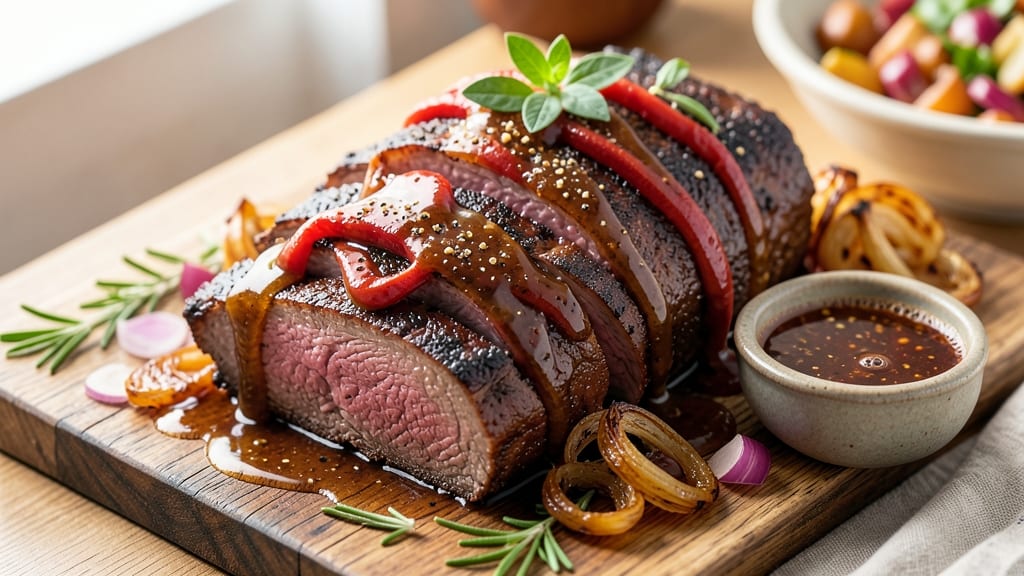
This BBQ sauce recipe for beef roast delivers the deep, caramelized sweetness that transforms tough cuts into melt-in-your-mouth masterpieces. 🔥 As a pitmaster who grew up surrounded by slow-smoked ribs, I know the difference between store-bought glaze and a sauce that develops rich, smoky depth during cooking.
The secret lies in balancing molasses and vinegar while letting the sauce reduce into a thick, glossy finish that clings to meat like a second skin.
The foundation starts with tomato paste and brown sugar for that classic BBQ backbone, but it’s the slow simmer that builds complexity—paprika and garlic powder infuse warmth, while a touch of black pepper adds depth.
Unlike quick sauces that burn off too fast, this one caramelizes beautifully during roasting, creating those coveted sticky, charred edges that make every bite irresistible. The key? Simmering until it thickens just enough to coat a spoon.
What sets this sauce apart is its versatility—use it as a basting glaze for beef roasts, a finishing drizzle for pulled pork, or even a marinade for grilled chicken.
The molasses and vinegar combination ensures a perfect balance of sweetness and tang, while the spices develop richer flavors the longer they cook. Store it in the fridge for up to 2 weeks or freeze for longer shelf life, so you’re always ready to elevate your next smoked dish.
For the best results, let the sauce reduce to a thick, syrupy consistency—this ensures it clings to meat instead of pooling. The caramelized edges you’ll get on your beef roast?
That’s the magic of a sauce designed to work with heat, not against it. Trust me, once you taste the difference, you’ll never go back to bottled versions.
Ingredients for bbq sauce recipe for beef roast
Nine simple ingredients that turn into smoky, caramelized perfection for your beef roast.
| Ingredient | Amount | Notes |
|---|---|---|
| Tomato Paste 🍅 | ½ cup | High-quality, unsweetened preferred |
| Molasses 🍯 | ½ cup | Unsulphured for best flavor |
| Apple Cider Vinegar 🍏 | ½ cup | For tangy depth |
| Brown Sugar 🍚 | ½ cup | Light or dark, packed |
| Smoked Paprika 🌶️ | 2 tbsp | For authentic smoky flavor |
| Garlic Powder 🧄 | 1 tbsp | Freshly ground preferred |
| Ground Black Pepper 🌶️ | 1 tsp | Freshly cracked for heat |
| Ground Cumin 🌿 | 1 tsp | Toasted for depth |
| Salt 🧂 | 1 ½ tsp | Kosher or sea salt |
| Water 💧 | ½ cup | For thinning if needed |
The tomato paste is your flavor foundation—Trader Joe's or Muir Glen are my go-tos because they're consistent. Molasses can vary wildly, so grab unsulphured from the baking aisle (the good stuff, not the cheap syrup). Apple cider vinegar adds that tangy punch—Bragg is my default, but any organic brand works. Brown sugar should be packed, not scooped, and light or dark both work, depending on how sweet you like it. Smoked paprika is non-negotiable for that authentic BBQ flavor—Penzeys or the bulk bins at Whole Foods are your best bets. Toast your cumin seeds in a dry pan for 30 seconds before grinding if you want to take it to the next level (trust me, it makes a difference).
No molasses? Maple syrup works in a pinch, but it’ll be sweeter. Short on tomato paste? Crushed tomatoes or tomato sauce will stretch it out, but you’ll need to adjust the sugar. Vinegar substitute? Lemon juice or balsamic vinegar both work, though the flavor profile shifts slightly. Want more heat? Add a pinch of cayenne. Need it thicker? Simmer longer or add a splash of water. The key is balancing sweet, tang, and smokiness—taste as you go. If it’s too thin, reduce it further; if too thick, thin with water or broth. The sauce should coat the back of a spoon but still drip slowly.
This sauce keeps beautifully—2 weeks in the fridge or 6 months in the freezer. Store it in a sealed jar in the fridge, and shake before using. For freezer storage, portion into ice cube trays and pop them into a bag. The flavors actually deepen over time, so make extra. It’s perfect for basting beef roasts, glazing ribs, or even drizzling over grilled chicken. The caramelized edges you’ll get on your roast? That’s the magic of letting this sauce work its flavor during cooking. Don’t rush it—slow and steady wins the smoky flavor race.
Why You'll Love This Recipe
- Pantry-to-Pan Magic: I swear by this sauce—no specialty shopping, just what’s already lurking in my cupboard. That molasses gives it this deep, caramelized richness without needing fancy ingredients, and the smoked paprika? Instant smoky depth with one shake.
- Roast’s Best Friend: The apple cider vinegar cuts through the sweetness just enough to make this sauce balance—not cloying, not flat. Slather it on a beef roast, and you’ve got that perfect sticky crust with tender meat underneath. Honestly, my slow-cooked brisket hasn’t been this good since I started making this.
- Weeknight or Weekend Hero: Make a double batch and use it for roasts and grilled steaks—same sauce, two different heroes. I’ve even drizzled it over baked potatoes when I’m lazy. The brown sugar keeps it shelf-stable for weeks, so it’s always ready when I am.
- Budget Booster: Tomato paste and molasses stretch this sauce far, and the vinegar adds tang without costing extra. For under $5, I’ve got enough to feed my family and save leftovers for sandwiches. Between us, this is how I feed a house on a teacher’s salary.
Step-by-step instructions for BBQ sauce that caramelizes on beef
Here's how to build a rich, smoky sauce that clings beautifully to roast beef.
🍳 Step 1: Build the Sauce Base with Tomato and Molasses
In a medium saucepan, combine the 0.5 cup tomato paste and 0.5 cup molasses. I like to use a heavy-bottomed pan for even heating—this prevents scorching while we develop the flavors. Add the 0.5 cup apple cider vinegar next, stirring to break up any tomato paste lumps completely.
Place the pan over medium heat and bring everything to a gentle simmer. Let it cook for 8-10 minutes, stirring occasionally, until the mixture thickens slightly and the raw tomato taste disappears. You'll notice the sauce darken and develop a deep, caramelized aroma—that's exactly what we want for that authentic BBQ flavor profile.
🍳 Step 2: Sweeten and Spice the Mixture
Reduce heat to medium-low and whisk in the 0.5 cup brown sugar and 2 tbsp smoked paprika. The smoked paprika will give that signature smoky depth we're after. Add the 1 tbsp garlic powder, 1 tsp ground black pepper, 1 tsp ground cumin, and 1.5 tsp salt, stirring constantly to distribute everything evenly.
Let the sauce simmer for another 5-7 minutes, stirring frequently. You're looking for the sugar to dissolve completely and the spices to bloom—that's when you'll start smelling that rich, complex aroma. If the sauce gets too thick before the spices fully integrate, add 1-2 tablespoons of the 0.5 cup water to loosen it up. The final sauce should coat the back of a spoon but still be pourable.
🥘 Step 3: Finish and Adjust the Consistency
Taste the sauce and adjust the seasoning if needed. I usually find it needs a little more salt at this stage—remember, we're building layers of flavor. If you want it sweeter, add a touch more brown sugar; if you prefer more tang, a splash of apple cider vinegar works well.
For the perfect finishing touch, let the sauce simmer uncovered for 3-5 more minutes to allow any remaining moisture to evaporate. This final reduction intensifies the flavors and gives you that glossy, caramelized finish. The sauce should now be thick enough to cling beautifully to beef but still have enough body to glaze properly when brushed on.
⏰ Step 4: Test and Store for Maximum Flavor
Let the sauce cool completely before using it on your beef roast. I know it's tempting to use it immediately, but giving it time to fully set allows all the flavors to meld perfectly. For the best results, store any leftovers in an airtight container in the refrigerator for up to 2 weeks—the flavors actually improve with time.
When you're ready to use it, gently reheat the sauce in a small saucepan over low heat, stirring occasionally, until warmed through. The sauce should be smooth and glossy—if it's too thick, thin it with a splash of water or beef drippings. This sauce is magical when brushed on beef during the last 15-20 minutes of roasting, creating that beautiful caramelized crust we all love.
Pro Tips For Making Bbq Sauce Recipe For Beef Roast
- STIR CONSTANTLY AT FIRST: The first 5 minutes with tomato paste and brown sugar are where flavor bonds—or burns. I used to walk away, and the sauce would either clump like glue or scorch like a crime scene. Keep that pot moving until the paste darkens and smells like a campfire.
- WHISK IN THE VINEGAR LAST: Apple cider vinegar is the flavor boss, but dump it in too early and you’ll end up with a watery, diluted mess. Wait until the sugar’s dissolved and the paste’s deepened—then pour it in while stirring like you’re mixing a cocktail. The acid cuts through the sweetness just right.
- SALT THE MOLASSES FIRST: Unsalted molasses tastes like syrup from a sad tree. Add a pinch of salt to it before mixing—it balances the bitterness and makes the whole sauce sing. I learned this the hard way after slathering a roast in sauce that tasted like dessert instead of beef glaze.
- SIMMER LONG ENOUGH: Rushing the simmer turns this sauce into a sticky glop. Let it bubble away for at least 20 minutes—until it thickens enough to coat the back of a spoon. That’s when the smoky paprika and caramelized sugar do their magic. (Yes, even if you’re impatient like me.)
Troubleshooting this dish
Too Thin or Watery
If your sauce turns out too thin, don’t panic—simmer it uncovered over medium-low heat for 10-15 minutes, stirring occasionally, until it thickens. For faster results, mash a few ripe bananas or 1-2 tbsp cornstarch mixed with water into the sauce and cook for 2-3 minutes more.
I’ve even used unflavored gelatin (1 tsp dissolved in 2 tbsp hot water) for a thicker, glossier finish. 🔥
Too Thick or Syrupy
Over-thickened sauce? Thin it with warm water, beef broth, or apple cider vinegar—just 1 tbsp at a time—until it reaches a pourable consistency. Avoid adding too much liquid at once, or you’ll dilute the flavors.
If the sauce is already set, reheat it gently and whisk in 1-2 tbsp water while stirring constantly. Pro tip: Let the sauce rest for 10 minutes after simmering—it often thickens further as it cools.
Burnt or Scorched Flavor
Scorching happens when heat gets too high or the sauce sits too long on the bottom. Always use a heavy-bottomed saucepan and stir frequently. If you notice burnt bits, immediately remove the pan from heat, scrape out the burnt bits, and start fresh with a clean pan.
For extra insurance, add 1 tbsp olive oil to the pan before heating—it creates a protective barrier. 💡
Flat or Bland Taste
If your sauce tastes flat, it likely needs more salt, acid, or depth. Boost the tang with 1-2 tbsp extra apple cider vinegar or lemon juice. For smokiness, add ½ tsp liquid smoke or 1 extra tbsp smoked paprika.
If it’s too sweet, balance it with ½ tsp black pepper or a pinch of cayenne. Taste as you go—this sauce is all about layering flavors until they sing.
Separation or Oil Floating
If the sauce separates (common with high-fat ingredients), whisk in 1 tbsp cornstarch or 1 egg yolk to emulsify. For a quick fix, blend the sauce until smooth—this breaks up any oil separation.
To prevent separation in the future, avoid adding too much oil or butter. If you’re using beef drippings, strain them first to remove excess fat. 🌟
Sauce Too Sweet
Too much sugar can overpower the smoky flavors. Balance it with 1-2 tbsp apple cider vinegar or lemon juice to cut the sweetness. If the sauce is already cooked, add a splash of vinegar and simmer for 2-3 minutes to let the flavors meld.
For a deeper fix, stir in ½ tsp ground black pepper or a pinch of cinnamon to add complexity. Trust me, a little acid goes a long way in brightening up the flavor.
Nutrition facts
Frequently asked questions
Can I use this BBQ sauce on other meats besides beef roast?
This versatile sauce works beautifully on pork shoulder, chicken thighs, or even lamb chops. The molasses and vinegar balance gives it a rich depth that complements all red meats and poultry. For poultry, you might reduce the sugar slightly to prevent browning too quickly.
How do I adjust the sweetness level for different tastes?
Start with the recipe as written, then adjust to taste. For less sweetness, reduce the brown sugar by 1-2 tablespoons and add 1 extra tablespoon of vinegar. For more sweetness, increase the brown sugar by 1-2 tablespoons or add 1 extra tablespoon of molasses. Always taste as you go!
Can I make this sauce without molasses?
Yes! If you're avoiding molasses, substitute with ½ cup maple syrup or ½ cup honey. Keep in mind these will make the sauce slightly sweeter, so you may want to reduce the brown sugar by 1-2 tablespoons to balance the flavors. The sauce will still develop that rich, caramelized quality.
How should I store leftovers for best flavor?
Store in an airtight container in the fridge for up to 2 weeks, where the flavors actually deepen over time. For longer storage, freeze in ice cube trays or small containers—this makes it easy to thaw just what you need. Always reheat gently over low heat and stir well before using.
What's the best way to apply this sauce to my beef roast?
For maximum flavor development, apply the sauce during the last 15-20 minutes of cooking. Brush it on generously, then let it caramelize in the oven or on the grill. The high heat will create that beautiful glossy crust we all love. For extra richness, baste the roast with beef drippings mixed with the sauce.