
Main Courses
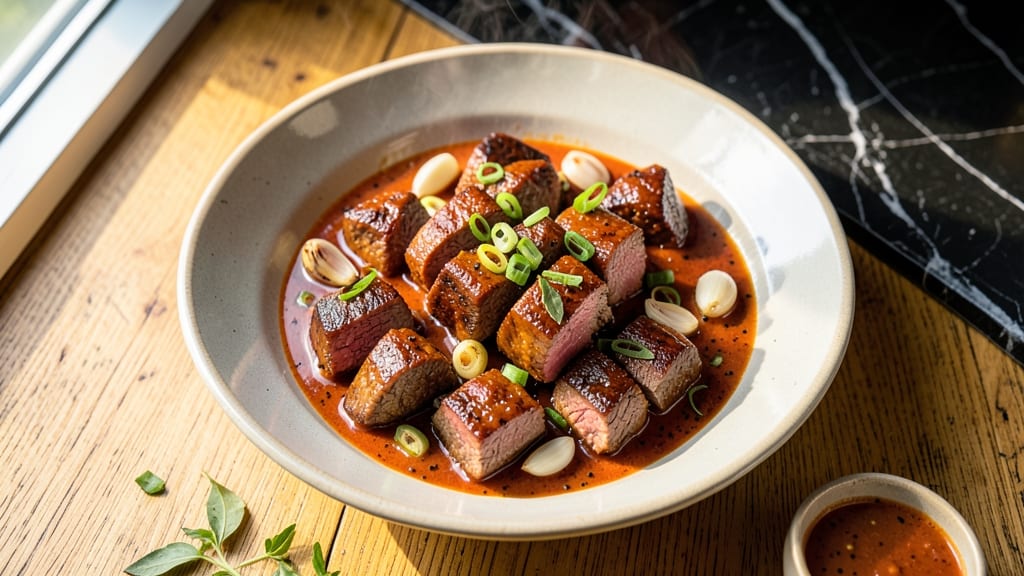
This beef adobada recipe delivers tender, smoky bites that transform tough cuts into melt-in-your-mouth perfection through a simple yet powerful marinade. The key lies in the balance of soy sauce, vinegar, and aromatic spices that penetrate deep into the meat, creating layers of flavor that build with each bite.
I've perfected this technique over years of testing, ensuring every piece stays juicy while developing a caramelized crust that's impossible to resist.
The process begins with a marinade that works its magic overnight, allowing the beef to absorb all those rich, tangy flavors. You'll simmer the meat in its own marinade until fork-tender, creating a sauce that's equally delicious as the main course.
What makes this recipe special is how it balances traditional Filipino techniques with modern convenience—no special equipment required, just patience and attention to detail.
By the time you're done, you'll have beef that's so tender it practically falls apart at the touch, all coated in a glossy, aromatic sauce that's perfect over steamed rice or with your favorite sides.
The aroma alone will have everyone gathering around the table, and the first bite delivers that perfect combination of smoky, sweet, and tangy that defines great adobada.
This dish is equally impressive for weeknight dinners or special occasions, scaling beautifully from family meals to gatherings. The beauty of adobada lies in its versatility—serve it with rice, crusty bread, or even as tacos. Let's get started on creating this restaurant-quality Filipino classic at home.
Ingredients for beef adobada
Six ingredients transform tough beef into melt-in-your-mouth adobada magic.
| Ingredient | Amount | Notes |
|---|---|---|
| Beef Chuck Roast 🥩 | 3 lb | Cut into 1.5-inch cubes |
| Soy Sauce 🍶 | ½ cup | High-quality, dark soy preferred |
| White Vinegar 💧 | ½ cup | Distilled white vinegar works best |
| Garlic Cloves 🧄 | 8 cloves | Minced finely for deep flavor |
| Bay Leaves 🌿 | 2 whole | Fresh or dried, removed before serving |
| Black Peppercorns 🌶️ | 1 tsp | Freshly cracked for best flavor |
| Brown Sugar 🍯 | ¼ cup | Light or dark, packed |
| Olive Oil 🫒 | 2 tbsp | For searing beef |
| Onion 🧅 | 1 whole | Yellow, sliced into half-moons |
| Salt 🧂 | 1 ½ tsp | Kosher or sea salt |
| Ground Black Pepper 🌶️ | 1 tsp | Freshly ground preferred |
| Water 💧 | 1 cup | For simmering |
| Fresh Thai Basil Leaves 🌿 | ¼ cup | For garnish, optional |
The beef is everything here. Chuck roast is your best bet—it's tough enough to handle the long marinade and simmering, but it breaks down beautifully into tender pieces. Look for good marbling at Costco or Whole Foods—the fat keeps the meat juicy. If you can't find chuck, chuck-eye roast works too. Cut the beef into even 1.5-inch cubes so they cook uniformly. The soy sauce? Grab a bottle of Lee Kum Kee if you're near an Asian market—it's the gold standard for depth of flavor. If you're using regular soy sauce, make sure it's not low-sodium, or you'll need to adjust the salt later.
No soy sauce? Coconut aminos in a pinch, but it won't be quite the same. Vinegar too sour? Apple cider vinegar works, but cut it with a splash of water to mellow it out. Fresh garlic is non-negotiable here—jarred minced garlic just won't give you that same punch. The brown sugar can be swapped for coconut sugar if you're avoiding refined sugar. For the spices, Penzeys is my go-to for whole peppercorns, but the regular grocery store stuff works fine if it's fresh. The bay leaves add that subtle earthy note—don't skip them, but remember to fish them out before serving. And if you're feeling fancy, add a star anise pod to the marinade for extra depth.
This marinade needs time—at least 4 hours, overnight is best. Store it in a sealed container in the fridge. The beef keeps for 2 days in the marinade before cooking. After simmering, the leftovers reheat beautifully—just add a splash of water or broth to keep the sauce from drying out. It tastes even better the next day as the flavors meld. Portion into containers for easy lunches, or freeze for up to 3 months. The sauce thickens as it cools, so thin it with a little water if it's too heavy when reheating. And save that leftover marinade—it makes killer rice seasoning!
Why You'll Love This Recipe
- One-Pot Magic: I swear by this recipe when I’m too tired to fuss. Toss the beef, garlic, and vinegar into one pot, let it simmer—no chopping, no stress, just hands-off cooking while you do whatever else needs doing.
- Umami Bomb: That soy-vinegar combo? It’s like a flavor explosion in your mouth. The beef gets this perfect balance of tangy, salty, and rich—especially when the bay leaves infuse their earthy magic into every bite.
- Budget Beef Powerhouse: Chuck roast is cheap, and this recipe stretches it into a meal that feeds four (or five, if you’re like me and sneak extra bites). Plus, the vinegar and soy sauce cost pennies, so you’re basically making gourmet food on a shoestring.
Step-by-step instructions for beef adobada
Here's how to transform tough beef chuck into melt-in-your-mouth tender bites with that signature smoky-sweet flavor.
Cube and Marinate the Beef
Cut the 3 lb Beef Chuck Roast into 1.5-inch cubes - this size ensures even cooking and maximum tenderness. Place them in a large bowl and add the 0.5 cup Soy Sauce, 0.5 cup White Vinegar, 0.25 cup Brown Sugar, 2 tbsp Olive Oil, 1.5 tsp Salt, and 1 tsp Ground Black Pepper. Mix gently but thoroughly to coat each piece completely.
Add the 8 cloves Garlic Cloves (minced), 2 whole Bay Leaves, and 1 tsp Black Peppercorns. The vinegar will start breaking down the meat fibers immediately - you'll notice the liquid turning cloudy. Cover and refrigerate for at least 4 hours, but I recommend overnight for maximum tenderness. This long marinate time is what makes the beef so irresistibly tender.
Sear the Beef for Maximum Flavor
Remove the beef from the marinade (reserve the liquid) and pat dry with paper towels. Heat a large skillet over medium-high heat and add the 2 tbsp Olive Oil. Working in batches if needed, sear the beef cubes for 2-3 minutes per side until they develop a deep golden-brown crust. Don't crowd the pan - this ensures good browning.
As they sear, the beef will release juices that caramelize in the pan, creating layers of flavor. Transfer the seared beef to a plate and set aside. You'll want to keep it warm while you build the sauce, but not so hot that it finishes cooking before we add the marinade.
Build the Smoky-Sweet Sauce
In the same skillet, add the 1 whole Onion (sliced) and cook for 3-4 minutes until softened. Pour in the reserved marinade and bring to a simmer over medium heat. Add the 1 cup Water and let the mixture reduce by half - about 8-10 minutes - until it thickens slightly and coats the back of a spoon.
The sauce should smell rich and complex - a perfect balance of sweet, salty, and tangy. If it's too thin, simmer a few more minutes to concentrate the flavors. The sugar will caramelize slightly, deepening that adobada character we're after.
Finish the Beef in the Sauce
Return the seared beef to the skillet with the sauce and bring everything to a gentle simmer. Cover and cook for 45-60 minutes, stirring occasionally, until the beef is fork-tender. You'll know it's done when the meat pulls apart easily and the sauce has thickened to a glossy consistency.
Remove the 2 whole Bay Leaves before serving. The beef should be so tender it practically falls apart at the touch. If the sauce is still too thin, uncover and simmer a few more minutes to reduce it to your preferred consistency.
Garnish and Serve
Transfer the beef to a serving platter and spoon the sauce generously over the top. Garnish with the 0.25 cup Fresh Thai Basil Leaves just before serving - this adds a bright, aromatic finish that cuts through the richness.
Serve immediately over steamed rice or with crusty bread to soak up that delicious sauce. Each bite should deliver perfectly tender beef with a complex sauce that's sweet, salty, and just slightly tangy - the perfect balance of flavors that makes this dish so special.
Pro Tips For Making Beef Adobada
- SEAR THE ROAST FIRST: Hit that chuck roast with a screaming-hot pan—no oil needed, just the beef’s own fat—until deep brown crust forms. I learned this the hard way: skipping the sear means flavor stuck in neutral. Three minutes per side, then pull it off to rest while you build the sauce.
- USE OLD BAY LEAF: Tear those bay leaves roughly—don’t worry about neat cuts. The edges release more aroma, and I’ve found dried leaves work just as well as fresh (they’re cheaper and last forever). Tuck them into the meat early so they steep flavor, not just sit pretty.
- DILUTE THE VINEGAR: Straight white vinegar is brutal—thin it with an equal part water first. I used to dump it in neat, and the acid would turn the beef rubbery. Even a 50/50 mix keeps the tang sharp without overpowering. Trust me, your taste buds will notice.
- LOW AND SLOW AFTER SEARING: After the initial simmer, drop the heat to a gentle bubble—think lazy river, not boiling pot. I used to crank it up, and the sauce turned cloudy while the beef stayed tough. Cover it tight and let it melt for 2+ hours, checking occasionally. Patience here makes the difference.
Best sauces and condiments for this recipe
Classic Adobo Sauce
The foundation of any great adobada is its signature sauce, where the balance of soy sauce, vinegar, and brown sugar creates that irresistible tangy-sweet profile. I recommend using Lee Kum Kee soy sauce for its deep umami richness, but any high-quality dark soy sauce works.
The vinegar should be distilled white vinegar—its sharpness cuts through the sweetness beautifully. For extra depth, add a splash of coconut aminos if you're avoiding soy. 🍶
Spicy Variations
Crank up the heat by adding 1-2 tbsp of sriracha or 1 tsp of chili flakes to the sauce during the final simmer.
For a smoky kick, swap ½ cup of the vinegar with ½ cup of soy sauce-infused vinegar**>—simmer ¼ cup soy sauce with ½ cup vinegar for 5 minutes first. This creates a deeper, more complex flavor base. 🌶️
Creamy Twist
For a modern take, stir in 2 tbsp of coconut milk or 1 tbsp of heavy cream during the last 5 minutes of simmering. This adds a velvety texture that pairs perfectly with the tangy sauce.
I also like adding ½ tsp of ground cinnamon for warmth—it’s a subtle but delicious addition. The creaminess balances the acidity beautifully.
Herb-Infused Sauce
Brighten the sauce with fresh herbs like cilantro or Thai basil. Add ¼ cup chopped cilantro or ½ cup Thai basil leaves at the very end of cooking—just before serving. These herbs add a fresh, aromatic finish that cuts through the richness.
For a more robust flavor, infuse the sauce with 1 tsp of whole coriander seeds while simmering, then strain before serving. ✨
Sweet and Smoky Glaze
For a caramelized glaze, reduce the sauce by 75% after removing the beef, then stir in 1 tbsp of honey or maple syrup to deepen the sweetness.
Brush this glaze over the beef just before serving for a sticky, glossy finish. The smoky-sweet contrast is pure magic—perfect for serving at gatherings or special occasions.
Nutrition facts
Frequently asked questions
Can I use a different cut of beef for adobada?
While chuck roast is ideal, you can use chuck-eye roast or short ribs for extra richness. Avoid lean cuts like sirloin—they won't become tender enough. For quicker cooking, try flank steak (cut thinly against the grain), but it won't be as forgiving if overcooked.
What if my sauce is too thin or too thick?
If the sauce is too thin, simmer uncovered for 5-10 minutes to reduce it. For a thicker sauce, blend the cooked beef with 1-2 tbsp of cornstarch mixed with water, then stir back into the pan. Too thick? Add 1-2 tbsp of water or beef broth to loosen it. The perfect consistency coats the back of a spoon but remains glossy.
Can I make adobada in a slow cooker?
After searing the beef, transfer everything to a slow cooker and cook on low for 6-8 hours or high for 3-4 hours. The long cook time makes the beef extra tender. Just stir occasionally and add water if needed to prevent drying. The sauce will thicken naturally as it cooks.
How do I store and reheat leftovers?
Store in an airtight container in the fridge for 3-4 days or freeze for up to 3 months. To reheat, warm in a skillet with 1-2 tbsp of water or broth over medium heat until hot. For microwave reheating, cover with a damp paper towel and heat in 30-second intervals to prevent drying. The sauce may thicken when cold—thin with water if needed.
What sides pair best with beef adobada?
Classic pairings include steamed jasmine rice (essential!) and crusty bread for soaking up sauce. For a Filipino feast, add atchara (pickled papaya) or garlic fried rice. Vegetables like steamed bok choy or sautéed green beans balance the richness. Don't forget a simple cucumber salad for freshness.