
Main Courses
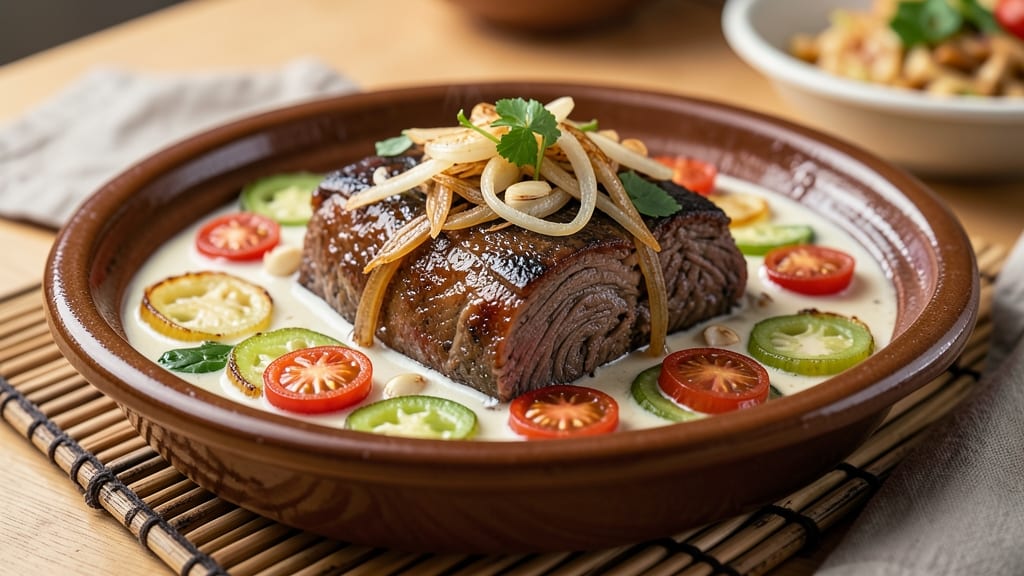
This beef ampalaya recipe panlasang Pinoy delivers the rich, comforting flavors of Filipino home cooking in one perfect stew. 🌟 The secret lies in balancing the natural bitterness of ampalaya (okra) with sweet tomatoes and creamy coconut milk—a technique I perfected after years of experimenting with Filipino classics.
Every spoonful combines tender beef, vibrant vegetables, and a tangy-sweet broth that feels like a warm embrace.
What makes this dish truly special is the layering of flavors: garlic and ginger form the aromatic base, while chili adds just the right kick. The ampalaya softens beautifully during simmering, releasing its unique texture that many first-time tasters find surprising.
I've tested this recipe countless times to ensure the broth remains rich without being heavy, and the beef stays fork-tender.
By the time you serve this dish, your kitchen will smell like home, and your table will be filled with the kind of meal that brings people together. The combination of textures—tender beef, silky vegetables, and a velvety sauce—makes each bite satisfying.
It's the kind of recipe that feels both comforting and impressive, perfect for family gatherings or weeknight dinners.
The best part? This recipe adapts easily to what you have on hand. Use whatever vegetables you prefer, adjust the heat level to taste, and let the coconut milk work its magic. Here's how to bring this Filipino classic to your table with confidence and ease.
Ingredients for beef ampalaya recipe panlasang pinoy
Rich beef, tender okra, and velvety coconut milk create this Filipino comfort stew.
| Ingredient | Amount | Notes |
|---|---|---|
| Beef Chuck Roast 🥩 | 1 ½ lb | Cut into 1-inch cubes |
| Ampalaya (Okra) 🥦 | 1 lb | Trimmed, cut into 2-inch pieces |
| Coconut Milk 🥥 | 1 can (13.5 oz) | Full-fat, unsweetened |
| Medium Tomatoes 🍅 | 2 whole | Or 1 cup diced canned tomatoes |
| Onion 🧅 | 1 whole | Yellow or red, chopped |
| Garlic Cloves 🧄 | 6 cloves | Minced, for aromatic base |
| Ginger Root 🌿 | 1 inch | Fresh, peeled, grated |
| Green Bell Pepper 🌶️ | 1 whole | Chopped, for color |
| Carrot 🥕 | 1 medium | Peeled, sliced into rounds |
| Tomato Paste 🍅 | 2 tbsp | For concentrated flavor |
| Soy Sauce 🥫 | 2 tbsp | For umami depth |
| Calamansi Juice 🍋 | 2 tbsp | Or substitute lime juice |
| Sugar 🍚 | 1 tbsp | Balances bitterness |
| Salt 🧂 | 1 tsp | Adjust to taste |
| Black Pepper 🌶️ | ½ tsp | Freshly ground |
The beef is non-negotiable—chuck roast gives you that melt-in-your-mouth texture after hours of simmering. Costco or Walmart usually have it pre-cut, but if you're buying a whole roast, ask the butcher to cube it for you. Ampalaya (okra) can be tricky to find fresh—Asian markets are your best bet, or grab frozen if fresh isn't available. The coconut milk should be full-fat (none of that watered-down stuff)—Thai Kitchen brand is my go-to for consistency, but any unsweetened canned variety works. Look for vibrant green okra with no slimy spots, and make sure your beef has good marbling for flavor.
No calamansi? Lime juice works perfectly—just use a little more since it's less tart. Short on tomatoes? Canned diced tomatoes save time, but fresh gives that garden-fresh brightness. The ginger and garlic are your flavor anchors—don't skip toasting them first in the oil. That's where the magic happens. If you can't find green bell pepper, red or yellow works just fine. The tomato paste might seem like overkill, but trust me—it deepens the sauce in a way fresh tomatoes can't. And if you're worried about the okra being too bitter, the sugar and soy sauce will balance it beautifully.
This stew tastes even better the next day—plan ahead. Keeps for 4-5 days in the fridge, and freezes beautifully for up to 3 months. I like to portion it into containers so I can grab a bowl for lunch all week. The okra will soften more with time, so if you're serving it right away, don't overcook it. The beef will keep tender, though, so you're good to go. Store any leftovers with the lid slightly ajar to prevent the okra from getting mushy.
Why You'll Love This Recipe
- One-Pot Magic: I swear by this recipe—just brown the beef, toss in the ampalaya (whole pods, no chopping needed), and let the coconut milk work its creamy sorcery. No extra pots, no fuss, and the okra actually gets tender instead of slimy.
- Creamy-Savory Balance: That first sip of the rich, tomato-infused coconut sauce with tender beef? It’s like a hug in a bowl. The beef stays juicy while the ampalaya soaks up all the flavors—no mushy aftertaste, just pure satisfaction.
- Lunchbox Hero: Between us, this is my go-to for meal prep. The leftovers taste even better the next day—pack it in containers, and suddenly you’ve got a week’s worth of hearty lunches without breaking the bank.
- Budget-Friendly Feast: A single beef chuck roast stretches for four servings, and ampalaya is cheaper than most greens. Add a bag of rice, and you’ve got a filling, restaurant-quality meal for half the cost of takeout. (Yes, even on a Tuesday night.)
Step-by-step instructions for beef ampalaya stew
Here's how to create this rich, tangy Filipino classic with tender beef and vibrant okra.
🔥 Step 1: Sear the Beef for Deep Flavor
Heat 1 tablespoon oil in a large pot over medium-high heat. Add the 1.5 lb beef chuck roast cut into 1-inch cubes and sear for 3-4 minutes until browned on all sides. You want that caramelized crust—it's the secret to rich flavor. Work in batches if needed to avoid crowding the pan.
Once browned, remove the beef and set aside. Here's the thing—don't drain the browned bits! Those are packed with flavor that will form the base of your sauce. This step builds the foundation for everything that follows.
🍳 Step 2: Sauté Aromatics Until Fragrant
In the same pot, add another 1 tablespoon oil and sauté the 1 whole chopped onion for 3 minutes until soft and translucent. Add the 6 minced garlic cloves and 1 inch grated ginger root, cooking for 30 seconds until you can smell that aromatic punch—this is where the magic happens.
Stir in the 1 whole chopped green bell pepper and 1 medium sliced carrot, cooking for 2 minutes until slightly softened. You're building layers of flavor here—each ingredient contributes something unique to the final dish.
🥘 Step 3: Build the Tangy Base
Add the 2 tbsp tomato paste and cook for 1 minute, stirring constantly to prevent burning. Pour in the 2 tbsp soy sauce and 2 tbsp calamansi juice, then add the 2 whole medium tomatoes (or 1 cup diced canned tomatoes). Let this simmer for 5 minutes until the tomatoes break down and the mixture thickens slightly.
Here's where the tangy depth comes in. The calamansi juice brightens the dish while the tomatoes provide that classic Filipino tomatoey flavor. If using fresh tomatoes, you might want to peel and seed them first for cleaner texture.
🍳 Step 4: Simmer the Beef and Vegetables
Return the browned beef to the pot. Pour in the 1 can (13.5 oz) coconut milk and add 1 lb trimmed okra cut into 2-inch pieces. Stir in the 1 tbsp sugar, 1 tsp salt, and 0.5 tsp black pepper. Bring to a gentle simmer, then reduce heat to low and cover.
Simmer for 45-50 minutes until the beef is fork-tender and the okra is tender but still holds its shape. The coconut milk will create a creamy texture while keeping the dish light. Real talk: this is where patience pays off—don't rush the cooking or the beef will turn out tough.
⏰ Step 5: Adjust Consistency and Serve
Uncover the pot and let the stew reduce slightly for 5-10 minutes until you reach your desired consistency. If it's too thick, add 2-3 tablespoons water to loosen it. Taste and adjust seasoning—you might need a bit more salt or calamansi juice to balance the flavors.
Serve hot with steamed rice to soak up that delicious sauce. The beef should be tender enough to pull apart with a fork, and the okra should be vibrant green with just a slight bite. This dish tastes even better the next day as the flavors meld together!
Pro Tips For Making Beef Ampalaya Recipe Panlasang Pinoy
- SEAR THE BEEF FIRST: I used to skip this step and just simmer the beef in coconut milk, but that makes it bland and mushy. Brown the chuck roast in batches over medium-high heat—you want deep caramelization on the edges before anything else happens. This builds flavor that won’t dissolve when you add the liquid later.
- SLICE AMPALAYA THINLY: Thick okra slices turn into a slimy mess in coconut milk. Cut them paper-thin—almost like shaving them—so they soften evenly without falling apart. If you’re lazy and leave them thick, they’ll either stay crunchy or turn into a gluey disaster.
- LOW AND SLOW FOR TOMATOES: Dump chopped tomatoes in at the end, and they’ll just turn to mush. Simmer them with the onions first for 10 minutes before adding the beef—this concentrates their flavor into a thick, jammy base. It’s the difference between a sauce and a watery afterthought.
- STIR THE COCONUT MILK: Coconut milk separates when heated, and nobody wants curdled cream in their beef ampalaya. Whisk it vigorously before adding it to the pot, and give it a quick stir every 5 minutes while simmering. Yes, it’s annoying, but the result is silky, not greasy.
Essential equipment for great beef ampalaya recipe panlasang pinoy
Pot Essentials
Start with a heavy-bottomed Dutch oven—I swear by my Le Creuset 5.5-quart—because it distributes heat evenly and prevents scorching during the long simmer. The deep sides give your stew plenty of room to develop without overflowing.
If you don’t have one, a large stainless steel pot with a tight-fitting lid works too. Just make sure it’s at least 6-quart capacity to accommodate all ingredients without crowding.
For stirring and scraping up those flavorful browned bits, grab a wooden spoon with a long handle (I use OXO Good Grips). The wood won’t scratch your pot, and the length keeps your hands safe from the heat.
A silicone spatula is also handy for scraping the bottom when you’re building the sauce base.
Knife and Prep Tools
A sharp 8-inch chef’s knife is non-negotiable for chopping onions, garlic, and ginger efficiently. I recommend Mercer Culinary Genesis—it’s affordable and stays sharp longer than my first $20 knife. For the okra, a serrated knife works best to slice through its fibrous texture cleanly.
If you’re prepping a lot of vegetables, a mandoline speeds up the carrot and bell pepper work, but a steady hand and a sharp knife work just fine.
Don’t forget a cutting board—I prefer bamboo for its gentle surface that won’t dull blades. A microplane is perfect for grating ginger and garlic quickly, and a small bowl for mixing the soy sauce, calamansi juice, and sugar before adding to the pot keeps everything organized.
Measuring and Mixing
For precise measurements, a set of stainless steel measuring spoons (like OXO’s) ensures accuracy with spices and liquids. A small whisk helps blend the tomato paste into the aromatics smoothly, and a ladle comes in handy for tasting and adjusting the stew’s consistency.
I also keep a fine-mesh strainer nearby in case I need to strain any excess liquid or seeds from the tomatoes.
If you’re using fresh calamansi (or lime), a juicer makes extraction easier, but a reamer works too. For the coconut milk, a can opener is a must—just
Optional Upgrades
For flavor control, a digital instant-read thermometer (like ThermoWorks Thermapen) helps monitor the stew’s temperature during simmering—ideal for ensuring the beef reaches 160°F for tenderness. If you love crispy okra edges, a slotted spoon lets you lift pieces out for quick searing in a separate pan before returning them to the stew. For presentation, a fine-mesh sieve strains any excess liquid if you prefer a thicker sauce.
And here’s a pro tip: Keep a small bowl of cold water nearby while prepping the okra—it helps remove any slimy residue and keeps the pieces fresh until they hit the pot.
The right tools make all the difference, especially when balancing flavors like bitterness and richness in this dish. 💡
Nutrition facts
Frequently asked questions
Can I substitute ampalaya (okra) if it's hard to find?
Yes! If fresh ampalaya isn't available, frozen okra works perfectly—just thaw and pat dry before using. For a different texture, try eggplant or bitter melon, but reduce the cooking time by 10-15 minutes since they soften faster. The key is balancing bitterness with sweetness, so adjust the sugar to taste.
Why does my beef ampalaya taste too bitter?
Overcooked okra releases more bitterness. Keep the simmering time to 45-50 minutes max. To balance flavors, add 1 extra tbsp sugar or a splash of coconut milk at the end. A pinch of salt also helps round out the taste. The tomatoes and soy sauce should naturally mellow the bitterness if properly cooked.
Can I make this recipe in an Instant Pot?
Sear the beef first, then sauté aromatics as directed. Add all ingredients (except coconut milk) and pressure cook for 20 minutes. Quick-release the pressure, stir in coconut milk, and simmer on low heat for 10 minutes to thicken. The Instant Pot reduces cooking time by about 30 minutes while keeping flavors intact.
What's the best way to store leftovers?
Let the stew cool completely, then store in an airtight container in the fridge for up to 4-5 days. For freezing, portion into containers and freeze for up to 3 months. Reheat gently on the stove with a splash of water to maintain creaminess. The flavors actually improve overnight as ingredients meld together!
How can I make this dish spicier?
Add 1-2 tbsp chopped siling labuyo (bird's eye chili) when sautéing aromatics, or stir in 1 tsp chili flakes at the end. For heat control, remove chili seeds first. If using canned tomatoes, add 1 tbsp tomato paste with chili powder for extra kick. Remember—Filipino cooking balances heat with sweetness, so adjust sugar accordingly.