
Soups & Stews
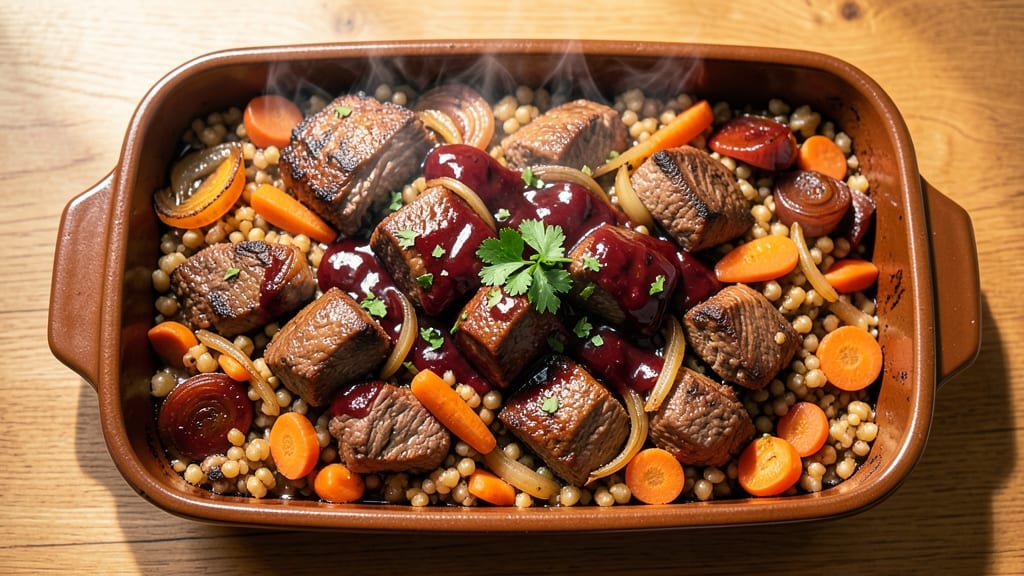
This beef and barley casserole recipe delivers the kind of deep, savory comfort that transforms a simple weeknight into a memorable meal. 🔥 The secret lies in slow-simmered barley and richly browned beef, where tender meat and chewy grains meld into a hearty, gravy-thick dish that tastes even better the next day.
I perfected this version after years of testing—balancing traditional techniques with modern shortcuts for foolproof results every time.
The foundation starts with properly browning the beef, which builds layers of flavor that no shortcut can replicate. Deglazing the pan with red wine captures those precious browned bits, forming the base of a velvety gravy that coats every bite.
Barley adds satisfying texture and earthy depth, while aromatic vegetables round out the dish with natural sweetness. This isn't just a casserole—it's a one-pot masterpiece that requires minimal effort but maximum flavor.
By the time it finishes simmering, you'll have a dish with fork-tender beef, perfectly chewy barley, and a sauce so rich it clings to every spoonful. The aroma alone will have everyone gathering at the table, and the first bite delivers that perfect balance of savory, umami, and subtle sweetness.
It's the kind of meal that feels indulgent yet comes together with simple pantry staples and basic techniques.
Serve with crusty bread for soaking up every last drop of gravy, or pair it with a simple green salad to balance the richness. The leftovers reheat beautifully, making this an ideal make-ahead dish for busy weeks.
Here's how to create this satisfying centerpiece that tastes like a restaurant-worthy special but comes from your own kitchen.
Ingredients for beef and barley casserole
Six hearty ingredients transform into a restaurant-worthy casserole that tastes even better tomorrow.
| Ingredient | Amount | Notes |
|---|---|---|
| Chuck Roast 🥩 | 2 ½ lb | Pre-cut into 1-inch cubes |
| Pearl Barley 🌾 | 1 cup | Uncooked, rinsed well |
| Red Wine 🍷 | 1 cup | Dry, bold variety like Cabernet |
| Beef Broth 💧 | 2 cups | Low-sodium preferred |
| Onions 🧅 | 1 whole | Yellow or red, diced |
| Carrots 🥕 | 4 medium | Peeled, sliced into rounds |
| Celery Stalk 🧆 | 3 whole | Diced, not leaves |
| Garlic Cloves 🧄 | 4 cloves | Minced, not powdered |
| Tomato Paste 🍅 | 2 tbsp | Smooth, not chunky |
| Worcestershire Sauce 🍶 | 1 tbsp | Anchovy-free version preferred |
| Bay Leaves 🌿 | 2 whole | Dried, not fresh |
| Thyme 🍃 | 1 tsp | Dried, or 1 tbsp fresh |
| Salt 🧂 | 1 ½ tsp | Kosher or sea salt |
| Black Pepper 🌶️ | 1 tsp | Freshly ground |
| Olive Oil 🫒 | 2 tbsp | Extra-virgin preferred |
The chuck roast is the star here—Costco or Whole Foods carry the best cuts with good marbling. If you're buying whole, ask the butcher to cube it for you (saves time). The pearl barley? Bob's Red Mill is my go-to brand—it's consistent and cooks up perfectly chewy. For the red wine, any bold, dry variety works—Cabernet, Merlot, whatever's open. If you're avoiding alcohol, beef broth with a splash of balsamic mimics the depth perfectly. The tomato paste? Those little squeeze tubes at Trader Joe's are perfect—no waste, lasts forever.
No red wine? Beef broth with 1 tbsp balsamic vinegar gets you close. Fresh thyme is ideal but dried works at one-third the amount. The Worcestershire sauce has anchovies, so check the label if you're avoiding fish. For the carrots, baby carrots work in a pinch (just halve them), but whole carrots give you more control over the size. The celery should be crisp—if it's rubbery, skip it. The onions and garlic can be prepped ahead (they keep in the fridge for 5-7 days), but don't chop the barley until you're ready to cook—it dries out fast.
This casserole tastes even better the next day—honestly, that's when the flavors really meld. Keeps in the fridge for 4-5 days and freezes beautifully for 3 months. I always double the recipe so we have leftovers for lunches. For freezing, portion into individual containers before reheating—just add a splash of broth to loosen if it's too thick. The barley softens more when reheated, so start checking at 3 minutes in the microwave if you're in a hurry.
Why You'll Love This Recipe
- One-Pot Magic: I swear by this—just toss everything in one dish, walk away, and let the red wine and beef broth work their slow-cook magic. No chopping boards to clean, no extra pans, and that deep, savory aroma fills the kitchen while you do anything else.
- Rich & Earthy Depth: The chuck roast gets fork-tender, while the pearl barley soaks up all that red wine and onion caramelization. It’s like a hug in a bowl—warm, hearty, and packed with layers of flavor that make you reach for seconds without even thinking.
- Meal Prep MVP: Between us, this is my go-to for busy weeks. Cook a big batch on Sunday, and you’ve got hearty lunches for days. The barley holds up perfectly, and the beef stays juicy—no sad, dry leftovers here.
- Budget-Friendly Feast: Chuck roast and barley are cheap, but they feel fancy. A bottle of red wine (even a cheap one) and some broth elevate it to dinner-party-worthy without breaking the bank. Honestly, it’s the kind of dish that makes you feel like you’re splurging when you’re really just being smart.
Step-by-step instructions for beef and barley casserole
Here's how to build rich, hearty flavor layer by layer—no shortcuts, just deep satisfaction.
🍳 Step 1: Sear the Chuck Roast for Maximum Flavor
Heat the 2 tablespoons olive oil in a large Dutch oven over medium-high heat until shimmering. Pat the 2.5 lb chuck roast dry with paper towels and add it to the pot in a single layer. Let it sear undisturbed for 4-5 minutes until deeply browned on one side—this creates that irresistible crust we're after.
Flip the roast and sear the other sides for another 3-4 minutes. Remove it from the pot and set it aside on a plate. You'll notice the meat releases easily when it's ready to flip, and that's your signal. Don't rush this step; those browned bits are pure flavor gold that will dissolve into our sauce later.
👨🍳 Step 2: Build the Aromatic Base
In the same Dutch oven, add the diced onions, sliced carrots, and diced celery stalk. Cook them over medium heat for 5-6 minutes, stirring occasionally, until they soften and begin to caramelize slightly. This is where the foundation of our flavor develops—those sweet, softened vegetables will infuse the entire dish.
Add the minced garlic cloves and cook for another 30 seconds until fragrant. Stir in the 2 tablespoons tomato paste and cook for 1 minute to deepen its flavor. Here's where it gets good—pour in the 1 cup red wine and let it simmer for 2-3 minutes until reduced by half. This reduction concentrates the wine's flavor and forms our sauce base.
🥘 Step 3: Layer and Simmer the Casserole
Return the seared chuck roast to the Dutch oven. Add the 1 cup pearl barley, 2 cups beef broth, 1 tablespoon Worcestershire sauce, 2 whole bay leaves, 1 teaspoon thyme, 1.5 teaspoons salt, and 1 teaspoon black pepper. Stir gently to combine, making sure the roast is mostly submerged in the liquid. This ensures even cooking and maximum flavor absorption.
Bring the mixture to a gentle simmer over medium-low heat. Once simmering, cover the Dutch oven with a tight-fitting lid and transfer it to a 350°F preheated oven. Here's the thing—this dish needs time to develop its magic. Bake for 2 hours, checking occasionally to ensure there's enough liquid (add a splash of water if needed). The barley should be tender and the meat fork-tender by this point.
⏰ Step 4: Rest and Develop the Flavor
Remove the casserole from the oven and let it rest uncovered for 15-20 minutes**. This resting period allows the juices to redistribute throughout the meat and barley, ensuring each bite is moist and flavorful. During this time, you'll notice the aromas intensify—this is when the dish truly comes together.
Before serving, taste and adjust the seasoning if needed. The barley should be tender but still have a slight bite, and the beef should be easily fork-tender. If the sauce is too thick, you can stir in a splash of water or broth to loosen it. Serve hot, straight from the pot, with crusty bread to soak up every last bit of that savory sauce.
Pro Tips For Making Beef And Barley Casserole
- Sear the Chuck Roast: Hit that roast with a hot pan—no oil needed, just the natural fats—and let it brown for 3-4 minutes per side. I used to skip this, and the dish always tasted flat; the crust locks in flavor like nothing else.
- Soak the Barley: Toss the pearl barley in cold water for at least 20 minutes before adding it to the pot. My grandmother swore by this, and she was right: it cuts cooking time by half and keeps the grains from turning mushy.
- Deglaze with Wine: After browning the onions, don’t just pour in the wine—let it simmer for 2-3 minutes first. The alcohol burns off, leaving behind deeper flavor. I learned this the hard way when my first batch tasted like a cooking experiment gone wrong.
- Simmer, Don’t Boil: Keep the heat low enough that you barely see bubbles—this prevents the barley from breaking apart and the broth from turning cloudy. Sounds weird, but it works: the dish stays rich and the barley holds its shape.
Regional styles of this beef and barley casserole
British Pub Classic
The British version of this dish often features lamb instead of beef, creating a rich, gamey depth that pairs beautifully with barley.
I've made this version with leg of lamb shoulder, cubed and browned just like the beef, then simmered with ale instead of red wine—about 1 cup of bitter IPA adds a malty complexity.
Serve with Yorkshire pudding for a true pub experience, or a simple mushy peas on the side. 🍺
American Heartland Twist
In the Midwest, this casserole often includes ground beef mixed with the chuck roast cubes for extra texture. I like to add ½ cup of diced potatoes to the mix, which soak up the gravy beautifully.
A dash of smoked paprika (about ½ teaspoon) gives it a subtle BBQ nod, and some cooks even top it with cheddar cheese before baking for a melty finish. Pair it with cornbread for a Southern-inspired meal.
French-Inspired Version
For a French touch, replace the beef with duck confit (about 2 cups diced) and use white wine instead of red. The duck's fat renders into the sauce, creating a luxurious texture.
Add 1 cup of pearl onions (peeled and halved) and a pinch of fresh tarragon (about 1 teaspoon chopped) for an elegant twist. Serve with crusty baguette and a side of haricots verts for a refined yet rustic meal. 🥖
Italian Adaptation
In Italy, this dish might feature pancetta (about 4 oz diced) instead of beef, along with San Marzano tomatoes (about ½ cup crushed). Swap the barley for orzo pasta (about 1 cup) and add rosemary (about 1 sprig) for a fragrant aroma.
The result is a hearty pasta e fagioli-inspired dish with a comforting, rustic feel. Pair it with garlic bread and a simple arugula salad with lemon dressing.
Modern Shortcut
For a quicker version, use a pressure cooker—sear the beef as directed, then add all ingredients and cook on high pressure for 25 minutes. The barley will cook faster, and you'll save 2 hours of oven time.
I like to finish it in the oven for 15 minutes** to thicken the sauce. This works perfectly for busy weeknights while keeping that deep, satisfying flavor. 💡
Nutrition facts
Frequently asked questions
Can I substitute barley with another grain?
Yes! For a quicker cook time, use 1 cup of pearl couscous or ½ cup of quick-cooking quinoa, but reduce the liquid by ½ cup since these grains absorb less moisture. For a traditional texture, stick with barley—it's the star of this dish and gives that satisfying chewiness. If you're gluten-free, swap for buckwheat groats (cook time increases to 45-60 minutes).
How do I prevent the barley from getting mushy?
Undercooking is the key! Barley should be al dente—remove it from the oven when it's still slightly firm (about 1 hour 45 minutes instead of 2 hours) and let it finish cooking while resting. The residual heat will tenderize it perfectly. Also, avoid stirring the casserole too much during baking, which can break the barley grains. If it's still firm after resting, add ¼ cup water and bake 10 more minutes.
Can I make this in a slow cooker?
Brown the beef as directed, then transfer everything to a 6-quart slow cooker. Cook on low for 8 hours or high for 5 hours, adding ¼ cup water if the mixture looks dry. The slow cooker method actually enhances the flavors since the beef and barley have more time to meld. For best results, finish with 15 minutes in a 400°F oven to thicken the sauce and crisp any edges.
Why does my casserole taste bland?
Most likely, the beef wasn't browned enough or the wine wasn't reduced properly. Always sear the beef until deeply browned on all sides—those browned bits (fond) are flavor powerhouses. For the wine, reduce it until it's syrupy (about ½ cup remaining). If needed, boost flavor by adding 1 teaspoon soy sauce or ½ teaspoon smoked paprika before serving. Taste as you go and adjust salt gradually—it's easier to fix than over-salting!
Can I prepare this ahead of time?
This dish tastes even better the next day! Assemble it completely (including baking), then refrigerate for up to 4 days or freeze for 3 months. To reheat, cover with foil and warm in a 350°F oven for 30-45 minutes (add ¼ cup broth if it's too thick). For microwave reheating, cover and heat in 1-minute intervals on 50% power, stirring between each interval. The barley will soften more when reheated, so start checking at 3 minutes.