
Soups & Stews
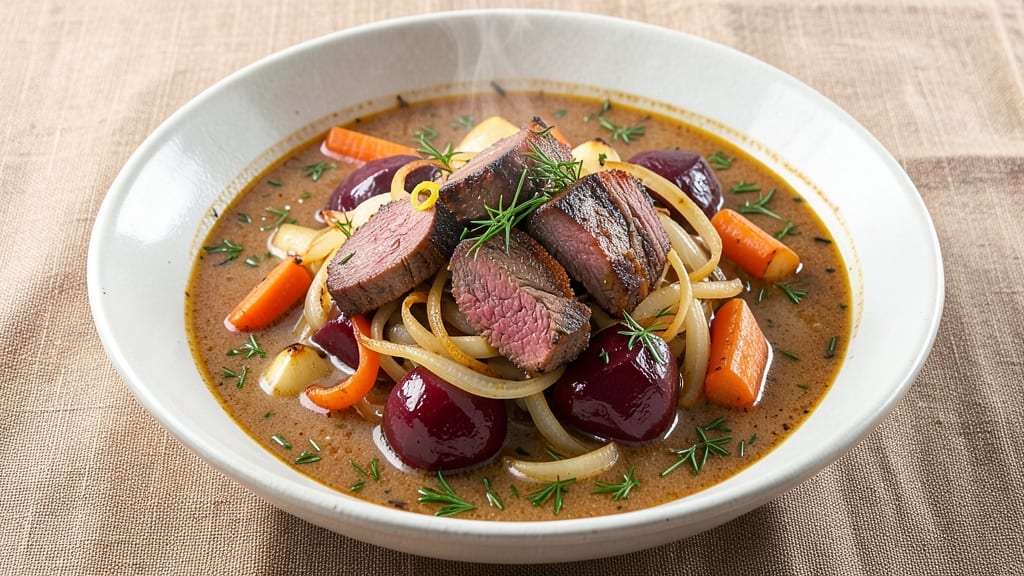
This beef and beet borscht recipe delivers the deep ruby hues and hearty comfort of eastern European tradition. The secret lies in slow-cooked beef, tender beets, and a rich broth that simmers into velvety perfection—creating a soup that's both nourishing and deeply satisfying.
I've perfected this version to balance traditional flavors with modern techniques, ensuring the beets remain tender while the beef stays fork-tender and flavorful.
The beauty of this recipe is its versatility—it works as a standalone winter meal or pairs beautifully with crusty rye bread and a dollop of sour cream.
What makes it special is the layered approach: first, the beets are roasted to deepen their natural sweetness, then combined with the beef and broth for a harmonious blend of earthy and savory notes. The result is a soup that's rich in color and even richer in flavor.
By the time you finish, you'll have a steaming bowl of borscht with vibrant red hues, tender beef chunks, and beets that melt just enough to release their sweetness.
The broth is deep and aromatic, carrying all the flavors together in every spoonful. This is comfort food at its finest—warm, hearty, and impossible to resist.
Serve with a sprinkle of fresh dill and a side of crusty bread to soak up every last drop. The recipe scales easily for gatherings, making it perfect for family meals or holiday gatherings. Let's create this classic dish that brings warmth to any table.
Ingredients for beef and beet borscht
Sixteen ingredients transform into a velvety, ruby-hued borscht that captures eastern European tradition.
| Ingredient | Amount | Notes |
|---|---|---|
| Beef Chuck Roast 🥩 | 2 lb | Cut into 1-inch cubes |
| Medium Beets 🍠 | 4 whole | Medium-sized, peeled and chopped |
| Yellow Onions 🧅 | 2 whole | Medium, chopped |
| Carrots 🥕 | 4 whole | Medium, peeled and chopped |
| Fresh Parsnips 🥕 | 2 whole | Peeled and chopped |
| Garlic Cloves 🧄 | 4 cloves | Fresh, minced |
| Beef Broth 💧 | 6 cups | Homemade or high-quality store-bought |
| Tomato Paste 🍅 | ¼ cup | Smooth, not chunky |
| Apple Cider Vinegar 🍎 | 2 tbsp | For brightness |
| Black Peppercorns 🌶️ | 1 tsp | Freshly cracked |
| Bay Leaves 🌿 | 2 whole | Dried, removed before serving |
| Fresh Dill 🌿 | ¼ cup | Chopped, for garnish |
| Sour Cream 🧀 | ½ cup | Full-fat for serving |
| Olive Oil 🫒 | ½ cup | For roasting beets |
| Salt 🧂 | 1 ½ tsp | Kosher or sea salt |
The beef is the foundation—chuck roast delivers that melt-in-your-mouth texture when slow-cooked. Look for well-marbled cuts at Whole Foods or your local butcher; it’s worth the extra cost for this dish. Beets are key too: medium-sized ones roast evenly, and their natural sweetness deepens with heat. For the best flavor, buy organic beets if possible—they’re richer and less likely to bleed color into your hands. The yellow onions and carrots should be fresh, with no soft spots or sprouting. If you’re short on time, pre-chopped veggies from the grocery store’s fresh section work fine, but whole veggies taste fresher.
No chuck roast? Brisket or short ribs work in a pinch, but they’ll need extra time to tenderize. Swap the beets for sweet potatoes if you’re in a hurry, though they’ll change the color and flavor profile. The tomato paste can be substituted with crushed tomatoes (use 1 cup instead), but it’ll add more acidity. For a deeper flavor, toast the garlic and spices in olive oil for a minute before adding them to the pot. The apple cider vinegar is non-negotiable—it brightens the whole dish, so don’t skip it. If you’re making this ahead, the broth can be prepped and refrigerated for up to 3 days before adding the beef and veggies.
This soup tastes even better the next day as flavors meld. Store leftovers in an airtight container in the fridge for up to 5 days, or freeze for 3 months. For serving, garnish with a dollop of sour cream and a sprinkle of fresh dill—it adds a bright contrast to the rich broth. If you’re prepping for a crowd, double the recipe; the flavors intensify with more time on the stove. The beef broth can be made in bulk and frozen, so keep a batch on hand for future soups and stews.
Why You'll Love This Recipe
- One-Pot Magic: I swear by this recipe when I’ve got zero energy to scrub pots. The beef chuck roast slow-cooks right in the broth with the beets, onions, carrots, and parsnips—no extra pans, no fuss. Just dump, simmer, and let it do its thing while you stir in the sour cream at the end.
- Earthy Meets Rich: Between us, the deep purple beets and creamy parsnips balance that beef so perfectly—it’s like a hug in a bowl. The onions caramelize just enough to add sweetness, and the chuck stays tender without falling apart. Honestly, my picky husband asks for seconds.
- Weeknight to Holiday: This borscht works for lazy Tuesdays and when my in-laws show up. Serve it with crusty bread for a casual dinner, or add a dollop of yogurt and fresh dill for a fancy touch. The leftovers? Even better the next day, especially with a sprinkle of black pepper.
- Budget Stretch: Beef chuck roast is affordable, and the veggies last for days. I often double the batch—half for dinner, half to freeze. When I’m tired of borscht, I toss the leftover veggies into frittatas or soups. Not the prettiest, but it saves me money and time. Win-win.
Step-by-step instructions for beef and beet borscht
A rich, velvety soup that balances earthy beets with tender beef—this method delivers deep flavor and perfect texture.
Roast the Vegetables for Sweet Depth
Preheat your oven to 400°F. In a large bowl, toss the chopped medium beets, carrots, fresh parsnips, and yellow onions with 0.5 cup olive oil and 1.5 tsp salt. Spread them evenly on two rimmed baking sheets. Roast for 30-35 minutes until tender and caramelized at the edges—you'll smell that sweet, nutty aroma when they're ready.
I like to stir the vegetables halfway through cooking to ensure even browning. The roasting process transforms their natural sugars into a deep, caramelized sweetness that forms the foundation of the soup. Remove them from the oven and set aside—they'll continue to release their flavors as the soup simmers.
Sear the Beef for Rich Flavor
Heat a large Dutch oven over medium-high heat. Working in batches if needed, sear the 2 lb beef chuck roast, cut into 1-inch cubes, until deeply browned on all sides—this should take about 8-10 minutes total. The beef should develop a rich crust that releases easily from the pan.
As you sear, resist the urge to overcrowd the pan. Browned beef adds incredible depth to the broth, so take your time. Once all the beef is browned, remove it from the Dutch oven and set it aside on a plate. You'll add it back later when the soup is nearly finished.
Build the Broth Base
In the same Dutch oven, reduce the heat to medium and add 4 cloves minced garlic cloves, 0.25 cup tomato paste, and 2 tbsp apple cider vinegar. Stir for 1 minute until the tomato paste darkens slightly and the garlic becomes fragrant. Pour in the 6 cups beef broth, scraping up any browned bits from the bottom of the pan—these contain concentrated flavor.
Bring the mixture to a gentle simmer, then add the roasted vegetables, 2 whole bay leaves, and 1 tsp freshly cracked black peppercorns. Let it simmer uncovered for 20 minutes, allowing the flavors to meld and the vegetables to soften further. The broth should develop a rich, ruby hue from the beets and a subtle tang from the vinegar.
Simmer the Beef to Tender Perfection
Return the seared beef to the Dutch oven. Partially cover the pot and simmer for 1.5 to 2 hours until the beef is fork-tender and easily pulls apart. I check for doneness by inserting a fork—if it slides in smoothly and the beef separates easily, it's ready. The broth should now be deeply infused with the flavors of the beef and vegetables.
If the soup seems too thick, add ½ cup water or more beef broth to reach your desired consistency. The goal is a velvety, hearty soup that coats the back of a spoon. Remove and discard the bay leaves before proceeding to the final steps.
Finish and Serve with Fresh Herbs
Reduce the heat to low and stir in the 0.25 cup chopped fresh dill. Let the soup simmer for an additional 5 minutes to allow the dill to release its bright, fresh flavor. Taste and adjust the seasoning with more salt or vinegar if needed—this is where you fine-tune the balance between richness and brightness.
To serve, ladle the hot borscht into bowls and top each serving with a dollop of 0.5 cup sour cream. The contrast of cool, tangy sour cream against the warm, hearty soup creates the perfect finish. This borscht is best enjoyed fresh, but the flavors only deepen as it sits—making it an ideal make-ahead dish for cozy gatherings.
Pro Tips For Making Beef And Beet Borscht
- Sear the Chuck Roast Hard: After browning the beef chuck, don’t just give it a quick sear—press that pan hard for 3-4 minutes per side until it’s deep mahogany. I learned this the hard way; my first few batches tasted like stew instead of borscht because the meat lacked that caramelized crust. The extra effort makes the broth richer and the texture more satisfying.
- Peel Beets While Warm: Roast or boil the beets first, then peel them while still warm under cold running water. The skins slide off like magic—no scrubbing required. I used to peel them raw and end up with bloody hands and uneven cuts. Warm beets are a game-changer for even slices and less mess.
- Don’t Rush the Beef: Let the chuck roast simmer low and slow—at least 2.5 hours—until it’s fork-tender but not falling apart. I’ve seen people cut corners with 1.5 hours, and the meat turns out chewy. A meat thermometer at 205°F guarantees melt-in-your-mouth results without guessing.
- Use Parsnips for Depth: Skip the celery and add parsnips instead—they add a subtle sweetness and earthiness that balances the beets. I was skeptical until I tried it; now I double the amount (about 2 cups) and let them cook down with the onions. They disappear into the broth but leave a noticeable flavor boost.
Dietary considerations for these flavors
Gluten-Free Adaptations
Traditional borscht often includes barley or rye bread, but this recipe stays naturally gluten-free by focusing on the hearty beef and vegetables. For a thicker texture, swap the barley with gluten-free pearl couscous or quinoa—cook them separately and stir in at the end.
I've tested this with Bob's Red Mill gluten-free couscous, which absorbs the broth beautifully while keeping the dish gluten-free. Always check labels on broths and tomato paste to ensure they're certified gluten-free. 🌾
Vegetarian Options
For a meat-free version, replace the beef with mushrooms (like cremini or portobello) or smoked tofu for umami depth. Sear the mushrooms in the same way you would the beef, then simmer them in the broth. I've found that 2 cups sliced mushrooms work well, adding a meaty texture.
Boost the richness with an extra ¼ cup tomato paste and a splash of soy sauce for depth. The beets and carrots will carry the dish beautifully. 🍄
Dairy-Free Serving
While sour cream adds a creamy finish, you can easily make this dairy-free. Swap it for coconut yogurt or cashew cream—both provide tangy richness without dairy. I recommend So Delicious coconut yogurt for its smooth texture and slightly sweet flavor.
Garnish with extra fresh dill and a drizzle of olive oil to enhance the dish's natural richness. The soup remains just as hearty and satisfying. 🥥
Low-Carb Considerations
To reduce carbohydrates, skip the potatoes (if added in other variations) and use cauliflower florets instead of some of the carrots. Cauliflower adds a subtle sweetness and bulk without spiking carbs.
I've also had success with zucchini noodles as a garnish—simmer them in the broth for 3-4 minutes before serving. This keeps the dish low-carb while maintaining its comforting texture. 🥬
Allergen-Friendly Tips
For nut allergies, avoid cashew cream and opt for a dairy-free sour cream alternative like Kite Hill almond-free coconut yogurt. If you're avoiding nightshades (like tomatoes), replace the tomato paste with carrot purée or an extra ¼ cup roasted red peppers.
Always double-check labels on broths and vinegars for hidden allergens. With these swaps, everyone at the table can enjoy this rich, ruby-hued borscht. 💛
Nutrition facts
Frequently asked questions
Why does roasting the beets first make the borscht taste better?
Roasting intensifies the beets' natural sweetness and caramelizes their edges, creating a deeper, more complex flavor than boiling. The process also softens them perfectly for the soup while preventing them from turning mushy during simmering. This technique is key to achieving that rich, velvety texture that defines authentic borscht.
Can I use canned beets instead of fresh?
Yes, but with adjustments! Drain and rinse canned beets, then chop them finely. Since they're already cooked, simmer them in the broth for only 10-15 minutes to prevent mushiness. You may need to add ½ cup extra broth to maintain the soup's consistency. For best results, use high-quality canned beets with minimal additives.
How do I prevent the beef from becoming tough?
Low-and-slow cooking is essential! After searing, simmer the beef at a gentle boil (190-200°F) for 1.5-2 hours until fork-tender. The key is patience—resist the urge to rush. If using tougher cuts like brisket, increase simmering time to 2.5 hours. Always check doneness by piercing with a fork; it should slide in smoothly.
What's the best way to store leftovers?
Cool the borscht to room temperature first, then transfer to airtight containers. It keeps in the fridge for 4-5 days or freezes beautifully for 3 months. For reheating, warm gently on the stove over medium-low heat, adding a splash of broth if needed. The flavors actually improve after resting overnight!
Can I make this borscht without vinegar?
While vinegar adds brightness, you can substitute with 1 tbsp lemon juice or ½ tsp mustard powder for tang. However, the vinegar's acidity helps tenderize the beef and balance the richness. If omitting, reduce the tomato paste to 1 tbsp to prevent excess acidity in the finished soup.