
Soups & Stews
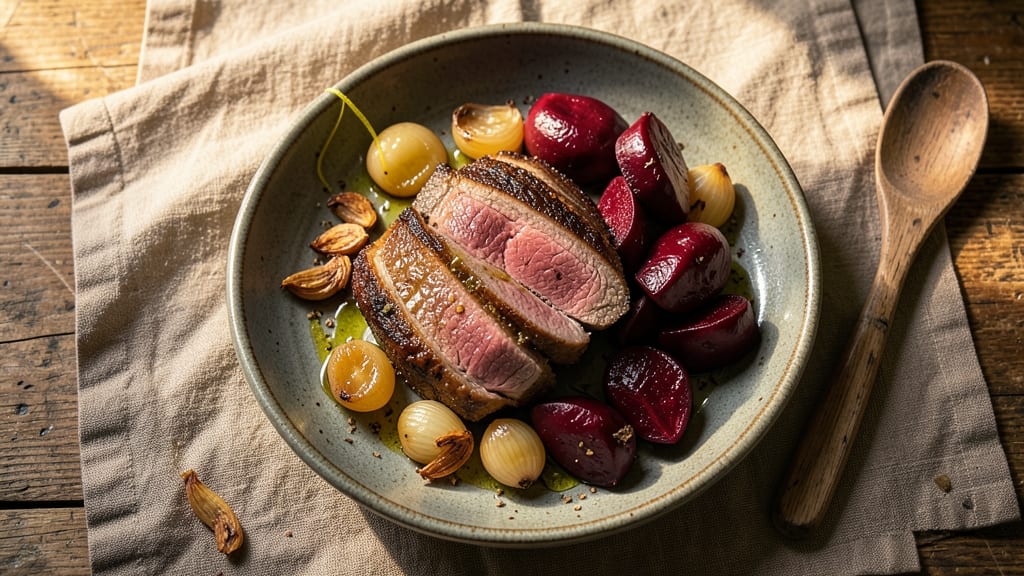
This beef and beets recipe transforms humble ingredients into a deeply flavorful dish where tender beef meets sweet, caramelized beets and rich onions. The secret lies in slow-roasting the beets until their natural sugars concentrate into a velvety sweetness, while the beef develops a perfect balance of tenderness and depth.
What makes this recipe stand out is how the flavors meld together—earthy beets, savory beef, and caramelized onions create a harmonious bite that feels both comforting and elegant.
The process starts with roasting the beets and onions until they're tender and deeply caramelized, then combining them with beef that's been seared and simmered to perfection.
This method ensures the beef stays juicy while absorbing the sweet, tangy flavors of the beets and onions, creating a dish that's rich yet balanced. The result is a hearty meal that's perfect for a cozy dinner or a special occasion, where every spoonful delivers layers of flavor.
What you'll achieve is a dish that's both impressive and approachable—deeply satisfying with its tender beef and sweet beets, yet simple enough to prepare for a weeknight dinner. The caramelized onions add a touch of sophistication, while the slow cooking ensures the beef remains tender and flavorful.
This recipe is designed to be foolproof, with clear steps that guide you from start to finish, so you can enjoy a restaurant-quality meal at home.
Serve this dish with crusty bread to soak up the rich juices or pair it with a simple green salad for a well-rounded meal. The flavors are robust enough to stand alone but versatile enough to complement other sides.
Whether you're cooking for family or treating yourself, this beef and beets recipe delivers a dish that's both comforting and refined.
Ingredients for beef and beets
Humble ingredients transform into a restaurant-worthy dish with tender beef and sweet caramelized beets.
| Ingredient | Amount | Notes |
|---|---|---|
| Beef Chuck Roast 🥩 | 1 ½ lb | Pre-cut into 1.5-inch cubes |
| Medium Beets 🍠 | 4 whole | Wrapped in foil, unpeeled |
| Yellow Onions 🧅 | 2 whole | Cut into 1-inch thick slices |
| Extra-Virgin Olive Oil 🫒 | ½ cup | For roasting and searing |
| Dried Thyme 🌿 | 1 tsp | Or 1 tbsp fresh thyme leaves |
| Garlic Cloves 🧄 | 4 cloves | Minced for depth of flavor |
| Balsamic Vinegar 🍷 | 2 tbsp | For finishing touch |
| Dijon Mustard 🍯 | 1 tbsp | For marinade richness |
| Beef Broth 💧 | 1 cup | Low-sodium preferred |
| Kosher Salt 🧂 | 1 ½ tsp | Adjust to taste |
| Freshly Ground Black Pepper 🌶️ | 1 tsp | For seasoning beef |
| Crusty Bread 🍞 | 1 loaf | For serving (optional) |
The beef chuck roast is key here—it's the only cut that gives you that melt-in-your-mouth tenderness after slow cooking. Costco or Whole Foods carry excellent pre-cut chuck roast, but if you're buying whole, look for good marbling and ask the butcher to cube it for you. Medium beets work best—they're sweet enough without being too watery. Trader Joe's often has pre-wrapped beets, but regular grocery stores usually carry them too. For onions, yellows caramelize better than reds—they develop that deep, sweet flavor we're going for. If you can't find fresh thyme, dried works fine, but fresh is definitely better if you've got it.
No balsamic vinegar? Apple cider vinegar works in a pinch, though it won't be quite as rich. Running short on beef broth? Vegetable broth plus 1 tsp soy sauce gets you close. The mustard is non-negotiable for that tangy depth, but if you're avoiding it, 1 tsp lemon juice adds a similar brightness. For the onions, you can use shallots if that's what you've got—they're milder but still caramelize beautifully. The garlic can be pre-minced from a jar, but fresh is always better if you're up for the 30-second chop. And if you're wondering about the crusty bread—it's purely for serving, but honestly, this dish is hearty enough to stand alone if you're skipping sides.
Beets and onions keep beautifully in the fridge for up to 2 weeks if stored properly—wrap them in foil and they'll stay fresh. The beef can be prepped a day ahead and refrigerated, then cooked straight from cold. This dish actually tastes better the next day as the flavors meld together. For leftovers, store in an airtight container for 4-5 days or freeze for up to 3 months. I always make a double batch because it reheats so well—perfect for quick lunches during the week. The caramelized onions are the star here, so save some for toast or eggs if you're feeling fancy.
Why You'll Love This Recipe
- One-Pan Magic: I swear by this recipe when I’m too tired to juggle pots. Chuck roast and beets roast together—same pan, same heat—while the onions caramelize into sweet little pockets of flavor. Minimal chopping, zero cleanup stress.
- Lunchbox Gold: Between us, this is my go-to for meal prep. Slice the beef thin, toss with the roasted beets and onions, and pack it in containers—it stays tender for days. Honestly, my kids beg for leftovers (and I don’t even have to pretend I’m a short-order cook).
- Budget-Friendly Feast: A chuck roast stretches farther than you’d think, especially when paired with beets—naturally sweet, so you don’t need fancy add-ins. I’ll be real: this feeds six for under $20, and the leftovers? Even better the next day.
Step-by-step instructions for deep-roasted beef and beets
The secret to this dish lies in the slow transformation of tough cuts into tender, caramelized perfection.
Season and Sear the Beef Chuck Roast
Begin by patting the 1.5 lb beef chuck roast dry with paper towels—this ensures maximum browning. In a small bowl, combine 1.5 tsp kosher salt, 1 tsp freshly ground black pepper, 1 tsp dried thyme, and 1 tbsp Dijon mustard to create a dry rub. Massage this mixture evenly over the beef, pressing firmly so it adheres to every surface. Let it sit at room temperature for 15 minutes while you prepare the vegetables.
Heat 0.25 cup extra-virgin olive oil in a large Dutch oven over medium-high heat. Once shimmering, add the beef and sear for 4-5 minutes per side until deeply browned. The goal is to develop a rich crust that locks in flavor. Remove the beef and set it aside on a plate.
Roast the Beets and Caramelize the Onions
Preheat your oven to 400°F. Wrap the 4 whole medium beets (still unpeeled) individually in aluminum foil, then place them on a baking sheet. Roast for 45-50 minutes until tender when pierced with a fork. The skins should slide off easily once cooled.
In the same Dutch oven, add the remaining 0.25 cup extra-virgin olive oil and the 2 whole yellow onions, sliced into 1-inch thick rings. Cook over medium heat for 15-20 minutes, stirring occasionally, until the onions turn deep golden brown and caramelized. This process takes patience—resist the urge to rush it. Remove the onions and set aside.
Braise the Beef with Aromatics
Return the seared beef to the Dutch oven and add the 4 minced garlic cloves, stirring to coat. Pour in the 1 cup beef broth and bring to a simmer. Cover and transfer to the oven, reducing heat to 325°F. Braise for 2-2.5 hours, or until the beef is fork-tender and easily pulls apart.
About 30 minutes before the beef finishes, add the roasted beets and caramelized onions to the pot. Stir gently to combine, allowing the flavors to meld. The beets will soften further from the residual heat, developing a natural sweetness that pairs beautifully with the beef.
Finish with Balsamic and Serve
Remove the beef, beets, and onions from the oven and transfer everything to a serving platter. Increase the oven temperature to broil. In a small saucepan, heat the 2 tbsp balsamic vinegar over medium heat until it reduces by half, about 3-4 minutes. Drizzle this glaze evenly over the beef and beets.
Return the platter to the broiler for 2-3 minutes to create a glossy finish. Serve immediately with the 1 loaf crusty bread on the side for dipping into the reduced juices. The contrast of tender beef, sweet beets, and caramelized onions creates a harmonious balance of textures and flavors.
Pro Tips For Making Beef And Beets
- Sear the Beef First: I learned this the hard way—skip the sear, and your chuck roast turns out dry no matter how long you braise it. Hit that roast with a hot pan and olive oil until it’s deep brown on all sides, then deglaze with a splash of red wine or broth. That crust locks in flavor and moisture better than anything else.
- Roast Beets Whole: Peeling and chopping beets is a mess, and it makes them lose their natural sweetness. Wrap them in foil with a drizzle of olive oil, salt, and thyme, then roast at 400°F (200°C) for 45 minutes. The skins will slide right off after, and the texture stays tender—no surprise leaks or uneven cooking.
- Don’t Overcrowd the Pan: I used to toss everything in at once, thinking it’d save time. Wrong. Brown the onions first in olive oil until they’re soft and golden, then pull them out before adding the beef. If you crowd the pan, the onions steam instead of caramelize, and your dish loses that deep, savory base flavor.
- Use a Meat Thermometer: Chuck roast is forgiving, but guessing leads to disappointment. Pull it at 195°F (90°C) internal temp—yes, it’ll still be slightly firm, but it’ll finish cooking while resting. Overcook it, and you’ll end up with shoe leather. A $10 thermometer changes everything.
Essential equipment for this dish
Dutch Oven Essentials
A heavy-duty Dutch oven is the unsung hero of this recipe—it's the only pot that can handle searing, braising, and broiling all in one.
I swear by the Le Creuset 6-quart for its even heat distribution and durable stoneware exterior, but the Lodge 5.5-quart is a budget-friendly alternative that works just as well. The deep sides prevent spills during braising, and the tight lid traps steam to tenderize the beef perfectly. 🔥
Precision Thermometer
Never guess the temperature again! A meat thermometer with a probe is essential for checking the beef's internal temperature—aim for 195°F for fork-tender results. The ThermoWorks Smoke is my go-to because its flexible probe slips into tight spaces, and the digital display is easy to read.
For beets, they're done when they reach 205°F (though they'll continue softening as they rest).
Baking Sheet for Beets
Use a rimmed baking sheet with sides to prevent foil-wrapped beets from rolling off during roasting. I prefer half-sheet pans (18x13 inches) because they fit perfectly in my oven and allow even air circulation.
If you're short on space, a wire cooling rack placed over a baking sheet works too—it helps the beets crisp slightly on the bottom.
Tongs for Handling
A pair of heat-resistant tongs makes flipping the beef and stirring onions effortless. The OXO Good Grips are my favorite—they stay cool in the pan and have a comfortable grip.
Avoid metal spoons that can scratch your Dutch oven's enamel. For beets, they're easy to handle once cooled, but tongs help transfer them straight from foil to the pot.
Knife Skills Matter
Invest in a sharp chef's knife (like the Wüsthof 8-inch) for mincing garlic and slicing onions evenly. Precise cuts ensure onions caramelize uniformly, and finely minced garlic distributes flavor perfectly.
A mandoline speeds up onion prep if you're making this for a crowd, but practice safety—always use the guard and cut away from your body. 💡
Optional: Broiler Pan
While you can broil directly in your Dutch oven, a broiler pan with a heat-resistant handle gives you more control over the finishing step. The Cuisinart 10-inch has raised edges that catch drips, making cleanup easier.
If you skip this, just use a baking sheet lined with foil—just watch the dish closely to avoid over-browning.
Nutrition facts
Frequently asked questions
Can I substitute red beets for golden beets in this recipe?
Golden beets work beautifully—they have a milder, slightly sweeter flavor that pairs wonderfully with beef. Use the same quantity, but expect a slightly lighter color in your dish. If you're concerned about color contrast, consider adding a few red beets for visual appeal while keeping most golden.
What cut of beef works best for this slow-cooked dish?
Chuck roast is ideal because it's flavorful and becomes fork-tender when slow-cooked. For a leaner option, try beef short ribs (cut into chunks) or even brisket. Avoid tender cuts like sirloin—they'll dry out. If you can't find chuck, ask your butcher for "beef for stewing" or "pot roast."
How do I prevent the beets from getting watery when roasting?
Keep them unpeeled and wrapped tightly in foil to trap moisture. The skins act as a natural barrier. If you prefer peeled beets, trim off the stems and roast them uncovered for 5-10 minutes longer at 400°F to evaporate excess liquid. For extra crisp edges, place them on a wire rack over a baking sheet.
Can I make this dish in a slow cooker instead of the oven?
Yes! Sear the beef first, then transfer everything to a slow cooker with 1 cup beef broth. Cook on low for 6-8 hours or high for 3-4 hours. Add the beets and onions during the last 1 hour of cooking. The texture will be slightly softer, but the flavors will meld beautifully. Just add the balsamic glaze at the end.
What's the best way to reheat leftovers?
Gently reheat in a skillet with a splash of beef broth over low heat to prevent drying. For best results, warm for 5-7 minutes until heated through. Avoid microwaving—the texture becomes rubbery. If reheating from frozen, thaw overnight in the fridge first, then follow the same skillet method with 10 extra minutes of warming.