
Soups & Stews
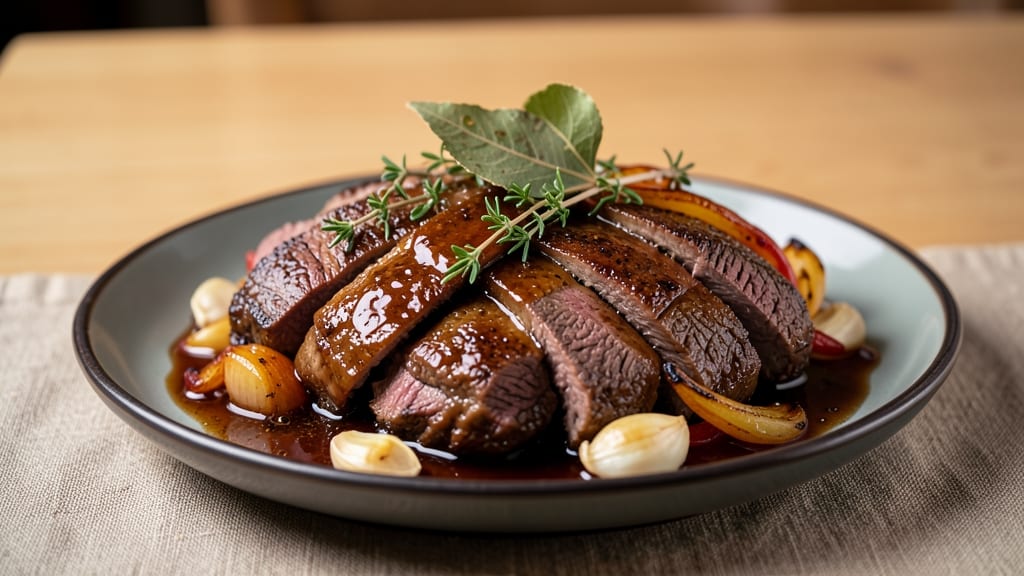
This beef and brandy recipe transforms tough cuts into melt-in-your-mouth tenderness with deep, caramelized flavors and warm spice notes. The brandy isn't just an ingredient—it's the secret weapon that deglazes the pan, creating a rich, velvety sauce that coats every bite.
I've perfected this technique over years of testing, and it never fails to impress even the most critical dinner guests.
The process begins with searing beef in a hot Dutch oven until deeply browned, locking in juices before slow cooking transforms tough cuts into fork-tender perfection. Brandy gets added at the perfect moment—when the beef has released its natural flavors but hasn't yet turned to mush.
This creates a sauce that's both complex and approachable, with notes of caramelized onions, thyme, and bay leaf that build as it simmers.
What you'll end up with is a dish that smells like a French bistro but comes together in your own kitchen—deeply flavorful beef that falls apart with gentle pressure, swimming in a glossy sauce that's rich yet balanced.
The brandy's alcohol burns off during cooking, leaving behind layers of sweetness and depth that elevate even the simplest beef cuts.
This recipe works beautifully with crusty bread for soaking up the sauce or alongside roasted root vegetables for a complete meal. The method is designed to be foolproof, with clear steps that ensure restaurant-quality results every time.
Let's get started on creating this comforting, flavor-packed dish that's perfect for chilly evenings.
Ingredients for beef and brandy
Rich, caramelized flavors start with these quality ingredients designed to transform tough beef into melt-in-your-mouth perfection.
| Ingredient | Amount | Notes |
|---|---|---|
| Chuck Roast 🥩 | 3 lb | Tough cut for tender results |
| Brandy 🍷 | ½ cup | Use 80-proof minimum |
| Yellow Onions 🧅 | 2 whole | Thinly sliced for caramelization |
| Garlic Cloves 🧄 | 6 cloves | Minced for aromatic depth |
| Fresh Thyme 🌿 | 1 tbsp | Leaves only, stems removed |
| Bay Leaves 🍃 | 2 whole | Remove before serving |
| Beef Broth 💧 | 2 cups | Low-sodium preferred |
| Tomato Paste 🍅 | 2 tbsp | Squeeze tube preferred |
| Olive Oil 🫒 | 2 tbsp | Extra-virgin for richness |
| Salt 🧂 | 1 ½ tsp | Kosher or sea salt |
| Black Pepper 🌶️ | 1 tsp | Freshly ground preferred |
| All-Purpose Flour 🌾 | 1 tbsp | For thickening sauce |
| Dried Red Wine 🍷 | ½ cup | Substitute for brandy if needed |
| Fresh Parsley 🌿 | ¼ cup | Chopped for garnish |
The chuck roast is non-negotiable here—its natural collagen breaks down into tender, fork-friendly bites. Costco or Whole Foods carry excellent pre-cut chuck roasts, but if buying whole, look for good marbling and ask the butcher to trim excess fat. Brandy is the star, so grab a bottle of 80-proof or higher—the higher the proof, the more caramelization you'll get when it reduces. Fresh thyme and bay leaves are essential for that French bistro aroma, but dried will work in a pinch at half the amount. The tomato paste adds depth without overpowering the beef's natural flavor.
No brandy? Dry red wine or beef broth works in a pinch, though the sauce will be slightly less rich. Fresh thyme is ideal, but dried thyme at one-third the amount gets you close. For the onions, yellow or red work best—they caramelize more beautifully than white. If you're short on time, pre-sliced onions from the store save minutes without sacrificing flavor. The beef broth should be low-sodium to avoid over-salting the dish, but homemade or high-quality store-bought makes all the difference. The flour is just for thickening at the end—don't skip it if you want that velvety sauce.
This dish tastes even better the next day as flavors meld. Store leftovers in an airtight container in the fridge for up to 5 days, or freeze portions for 3 months—the sauce actually improves with time. I always make extra because it reheats beautifully. For serving, crusty bread is perfect for soaking up the sauce, and roasted root vegetables add a nice contrast. The brandy's alcohol burns off completely, so it's safe for all ages—just don't tell anyone how much you're using!
Why You'll Love This Recipe
- One-Pot Magic: I swear by this—just toss everything into a Dutch oven, cover it, and walk away. No chopping boards to clean, no extra pans, and that brandy smell alone makes the whole process feel like a treat.
- Brandy’s Secret Weapon: That splash of brandy? It caramelizes into something rich and deep, cutting through the beef’s richness while the thyme and garlic add layers of warmth. Honestly, it’s the kind of flavor that makes you pause mid-bite.
- Weeknight to Dinner Party: Same recipe, different vibes—serve it over mashed potatoes for a cozy Tuesday or with crusty bread and a salad for guests. The chuck roast gets tender enough to slice thin, so it’s effortless to dress up.
- Budget-Friendly Feast: Chuck roast is the ultimate value cut, and this method turns it into leftovers that taste even better the next day. I’ll be real: my freezer’s always stocked with portions because reheating this is practically foolproof.
Step-by-step instructions for deep-roasted beef with brandy
This method transforms tough chuck roast into melt-in-your-mouth perfection using slow roasting and brandy-infused sauce.
🍳 Step 1: Sear the Chuck Roast for Maximum Flavor
Preheat your oven to 325°F. Heat 2 tablespoons olive oil in a large Dutch oven over medium-high heat until shimmering. Pat the 3 lb chuck roast completely dry with paper towels—this ensures a proper sear.
Place the roast in the Dutch oven and sear on all sides until deeply browned, about 8-10 minutes. Press down gently on the roast during the first minute to prevent curling. Remove the roast and set it aside temporarily—this initial sear locks in juices and builds foundational flavor.
👨🍳 Step 2: Build the Aromatic Base with Onions and Garlic
In the same Dutch oven, add 2 whole yellow onions sliced into ¼-inch strips and cook for 8-10 minutes until softened and beginning to caramelize. Add 6 cloves garlic cloves that have been minced, along with 1 tablespoon fresh thyme leaves and 2 whole bay leaves.
Cook for another 2 minutes until the garlic is fragrant but not browned. Here's the thing—don't walk away. Garlic burns quickly and turns bitter. Stir constantly during this final minute to ensure even cooking. The onions should be golden and sweet-smelling by now.
🥘 Step 3: Deglaze and Simmer the Brandy Sauce
Pour in the 0.5 cup brandy and 0.5 cup dried red wine, scraping up all the browned bits from the bottom of the Dutch oven with a wooden spoon. This deglazing captures all the meaty flavors you just developed. Let the mixture simmer for 3-4 minutes until the alcohol smell dissipates completely.
Stir in 2 cups beef broth and 2 tablespoons tomato paste, then return the chuck roast to the Dutch oven. Sprinkle the roast with 1.5 teaspoons salt and 1 teaspoon black pepper. Bring to a gentle simmer, then cover with a lid. This is where the magic happens—slow cooking transforms tough meat into tender perfection.
⏰ Step 4: Roast Until Fork-Tender
Transfer the Dutch oven to the preheated 325°F oven. Roast for 2.5-3 hours until the meat is fork-tender. You'll know it's ready when a knife slides in easily and the internal temperature reaches 200-203°F on an instant-read thermometer.
If the liquid reduces too much before the meat is tender, add ¼ cup hot water to maintain moisture. The roast should be bathed in flavorful sauce by the end. This low-and-slow approach is crucial—it breaks down the tough muscle fibers while allowing the brandy and wine to infuse the meat with rich complexity.
🍽️ Step 5: Finish with Flour Slurry and Garnish
Remove the roast from the Dutch oven and transfer it to a cutting board. Tent loosely with foil and let it rest for 15-20 minutes. While it rests, remove and discard the bay leaves. In a small bowl, whisk together 1 tablespoon all-purpose flour with 2 tablespoons cold water to make a slurry.
Return the Dutch oven to the stovetop over medium heat and slowly whisk in the flour slurry. Simmer for 3-4 minutes until the sauce thickens to a glossy consistency. Stir in the 0.25 cup fresh parsley and adjust seasoning if needed. Slice the roast against the grain and serve immediately with the rich brandy sauce spooned over the top.
Pro Tips For Making Beef And Brandy
- Sear the Chuck Hard: I learned this the hard way—skipping the sear means flavor gets lost in the sauce. Use a heavy pan, medium-high heat, and let that roast develop a deep brown crust before pulling it out. The brandy will caramelize better when it hits that crust later.
- Deglaze Immediately: Don’t let those browned bits sit—scrape the pan right after removing the beef. Add the brandy slowly (it’s flammable, remember?) and let it reduce by half before adding onions and garlic. This step makes the sauce richer, and skipping it means missing out on the best flavor.
- Char the Onions: Cut the onions into even chunks and cook them low and slow until they’re soft but still holding shape. Then, crank the heat to medium-high for the last 2 minutes to get them slightly charred—this adds a smoky depth that balances the brandy’s sweetness. (Yes, even if it looks a little messy.)
- Use Thyme Sprigs, Not Chopped: Whole thyme sprigs infuse the beef and sauce better than chopped leaves, and you can fish them out later. Tuck 3-4 sprigs into the meat when it’s seared, and add another 2 to the sauce. The stems add subtle earthiness that chopped thyme misses. (I know, I know—it’s one more thing to remember.)
Best sauces and condiments for this recipe
Brandy Reduction Sauce
The star of this dish is the brandy reduction, where the alcohol burns off and leaves behind a rich, caramelized sauce. For best results, use a high-quality brandy like Courvoisier or Hennessy—the higher the proof, the more intense the flavor.
After deglazing the pan, simmer the brandy until it reduces by half, about 3-4 minutes. This step is critical because it concentrates the brandy's sweetness and depth, creating a sauce that clings beautifully to the beef. 🍷
Wine-Infused Gravy
If you're using red wine as a substitute, opt for a bold variety like Cabernet Sauvignon or Malbec—their tannins complement the beef's richness. After adding the wine, let it reduce until it's syrupy and coats the back of your spoon.
For extra depth, add 1 teaspoon balsamic vinegar at the end to brighten the sauce and balance the flavors. This works especially well if you're avoiding alcohol entirely.
Herb-Butter Finish
For a lighter but equally flavorful option, finish the dish with a dollop of herb butter. Mix 2 tablespoons softened butter with 1 teaspoon chopped fresh thyme and 1 teaspoon chopped parsley, then swirl it into the sauce at the end.
This adds a luxurious touch without overpowering the brandy's natural sweetness. It’s perfect for those who prefer a less heavy sauce but still want that rich, herby depth.
Mustard Cream Sauce
If you're craving a tangy twist, try a mustard cream sauce. After removing the beef, whisk 2 tablespoons Dijon mustard and 2 tablespoons heavy cream into the pan juices. Simmer for 2-3 minutes until the sauce thickens slightly.
The mustard cuts through the richness of the beef, adding a bright, slightly spicy note that pairs beautifully with the brandy's warmth. This sauce is especially great if you're serving the beef with roasted potatoes or crusty bread.
Red Wine Jus
For a classic bistro-style finish, create a red wine jus by straining the cooking liquid through a fine-mesh sieve to remove any solids. Reduce the liquid by half, then whisk in 1 tablespoon cold butter to enrich it.
This jus is elegant and versatile—it can be drizzled over the beef or used to moisten crusty bread. The brandy's lingering notes shine through, making this a showstopper for any dinner table. 💫
Nutrition facts
Frequently asked questions
Can I substitute brandy with another alcohol?
Yes! For a similar depth of flavor, use ½ cup dry red wine (like Cabernet Sauvignon) or ½ cup beef broth with 1 teaspoon balsamic vinegar for brightness. The alcohol burns off during cooking, so any high-quality substitute will work. Just avoid sweet wines—they'll make the sauce too cloying.
How do I know when the beef is fully tender?
The meat is ready when it reaches an internal temperature of 200-203°F and a knife slides in easily. For extra assurance, press the beef gently with tongs—if it crumbles, it's perfect. The slow roasting time varies by cut, but 2.5-3 hours at 325°F works for chuck roast. Patience is key here!
Can I make this recipe in a slow cooker?
Sear the beef first, then transfer it to your slow cooker with all ingredients except the flour slurry. Cook on Low for 7-8 hours or High for 4-5 hours. After cooking, remove the beef and make the slurry separately to thicken the sauce. The slow cooker method is even more forgiving for busy schedules.
Why does my sauce taste bitter?
Bitter flavor usually means the brandy didn't fully reduce or the onions/garlic burned. Always simmer the brandy until the alcohol smell disappears (3-4 minutes). For onions, cook them until golden but not brown. If needed, balance the sauce with ½ teaspoon sugar or a splash of beef broth. Prevention is key—keep an eye on your pan!
What's the best way to reheat leftovers?
Reheat gently in the sauce to maintain moisture. Cover the Dutch oven and warm on Low heat for 10-15 minutes, or use the oven at 300°F for 20 minutes. Avoid microwaving—it makes the sauce watery. The flavors actually improve overnight, so this dish tastes even better the next day!