
Soups & Stews
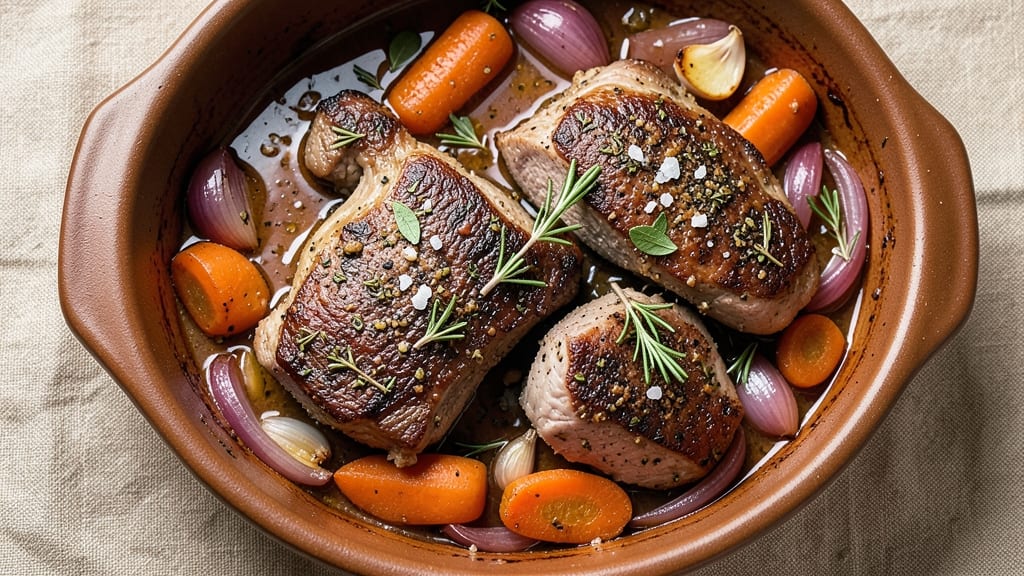
This beef and lamb stew recipe transforms tough cuts into melt-in-your-mouth tenderness through slow braising and deep-spiced red wine. The secret lies in proper browning and a balanced blend of herbs that infuse the crust while keeping the meat rich and flavorful.
What sets this apart is the herb-infused crust that adds texture without overpowering the hearty broth.
Professional techniques like searing the meat in batches and deglazing the pot create a rich foundation, while red wine and aromatic spices build layers of complexity.
The slow simmer ensures the meat becomes fork-tender while developing deep, caramelized flavors. This isn't just a stew—it's a restaurant-quality dish made approachable for home cooks.
By the time you serve it, you'll have a dish with perfectly tender beef and lamb, a velvety sauce infused with wine and herbs, and an herb crust that adds satisfying texture.
The aroma alone transforms any meal into something special. Serve with crusty bread to soak up every last drop of that rich, spiced broth.
Whether you're cooking for a family gathering or a cozy weeknight dinner, this recipe delivers professional results with simple techniques. The instructions walk you through every step, from proper meat preparation to achieving that signature crust. Let's create a stew that will have everyone asking for seconds.
Ingredients for beef and lamb stew
Sixteen ingredients transform tough cuts into restaurant-worthy stew with wine-infused richness and crisp herb crust.
| Ingredient | Amount | Notes |
|---|---|---|
| Beef Chuck Roast 🥩 | 2 lb | Cut into 1.5-inch cubes, trimmed of fat |
| Lamb Shoulder 🐑 | 2 lb | Bone-in, cut into 1.5-inch pieces |
| Yellow Onions 🧅 | 3 whole | Chopped into 1-inch pieces |
| Carrots 🥕 | 4 whole | Peeled, cut into 2-inch chunks |
| Garlic Cloves 🧄 | 8 cloves | Minced, for crust and braise |
| Red Wine 🍷 | 1 ½ cups | Bold dry variety like Cabernet Sauvignon |
| Beef Broth 💧 | 4 cups | Low-sodium preferred |
| Fresh Thyme Sprigs 🌿 | 6 whole | Stems removed, leaves chopped |
| Fresh Rosemary 🌿 | 2 sprigs | Needles chopped, stems reserved |
| Fresh Parsley 🌿 | ¼ cup | Chopped, for herb crust |
| All-Purpose Flour 🌾 | ½ cup | For herb crust |
| Olive Oil 🫒 | ½ cup | Extra-virgin, for searing |
| Tomato Paste 🍅 | 2 tbsp | For depth of flavor |
| Bay Leaves 🌿 | 2 whole | For braising |
| Kosher Salt 🧂 | 2 tbsp | Diamond Crystal preferred |
| Ground Black Pepper 🌶️ | 1 tbsp | Freshly cracked |
The meat selection is non-negotiable here. Beef chuck roast and lamb shoulder (bone-in for flavor) are the stars—they need the slow braise to become tender. If your butcher doesn't cut lamb shoulder, ask for lamb leg instead. For the best quality, shop at Whole Foods or your local butcher where they handle the meat fresh. Look for bright red beef with good marbling and lamb with a vibrant pink hue—these are your indicators of freshness. The herbs should be fragrant and green, not wilted. Trader Joe's often has great fresh bundles at reasonable prices, but if you're buying from a market, grab extra—you'll want them for garnish too.
No red wine? Dry sherry or beef broth with 1 tbsp balsamic vinegar works in a pinch, but the acidity will differ slightly. The tomato paste can be swapped for 1 cup crushed tomatoes if you prefer, though it'll dilute the wine's depth. Fresh herbs are ideal, but dried thyme and rosemary at one-third the amount will suffice if needed. For the crust, if you don't have parsley, fresh cilantro or basil adds a nice brightness. The flour is just for texture—if you're gluten-free, use gluten-free all-purpose flour instead. And trust me on the bone-in lamb—it adds incredible flavor to the broth as it braises.
This stew tastes even better the next day as flavors meld. Store leftovers in an airtight container in the fridge for up to 5 days or freeze for 3 months. The herb crust can be prepped ahead and stored separately—just sprinkle it on before serving. For a quick weeknight dinner, double the batch and freeze half. The broth reduces beautifully, so if you want extra for another use, make 2 cups more—it keeps well in the freezer. Serve with crusty bread to soak up every last drop of that rich, spiced sauce.
Why You'll Love This Recipe
- One-Pot Magic: I swear by this—just dump everything in a Dutch oven, walk away, and let it work its own spell. No chopping boards full of scraps, no multiple pans, just that deep, rich aroma filling your kitchen by the end.
- Rich Dual-Meat Payoff: The beef chuck stays tender while the lamb shoulder adds a gamey depth—like a hug for your taste buds. Honestly, the first time I tried it, I nearly skipped dinner to eat it straight from the pot.
- Weeknight or Weekend Hero: Make it on a Tuesday for a cozy bowl of leftovers, or double the batch for a Sunday gathering. The carrots soften just enough to melt in your mouth, but the onions? They’re still bright, holding their own like the star they are.
- Budget-Friendly Feast: You’re getting two cuts of meat for the price of one, plus veggies that stretch into multiple meals. Between us, this stew is my go-to for feeding a crowd without breaking the bank—or my willpower to resist seconds.
Step-by-step instructions for beef and lamb stew
This rich, aromatic stew delivers deep flavor through precise technique and layered ingredients.
Create the Herb-Infused Crust for the Meats
In a food processor, combine the 0.5 cup all-purpose flour, 0.25 cup chopped fresh parsley, 6 chopped thyme leaves, 2 chopped rosemary needles, 2 tbsp kosher salt, and 1 tbsp freshly cracked black pepper. Pulse until finely ground but not powdered—you want a coarse texture that will cling to the meat. Transfer this mixture to a bowl and stir in 0.5 cup olive oil until it forms a thick paste.
Pat the 2 lb beef chuck roast and 2 lb lamb shoulder completely dry with paper towels—this ensures maximum crust adhesion. Generously coat each piece with the herb-oil mixture, pressing it into the meat so it adheres evenly. Let the seasoned meats rest at room temperature for 30 minutes while you prepare the vegetables. This step is crucial for developing deep, complex flavor and creating that signature crust.
Sear the Meats for Maximum Flavor
Heat a large Dutch oven over medium-high heat until it's very hot. Working in batches if needed, add the 0.5 cup olive oil and let it shimmer for 1 minute. Add the beef and lamb pieces in a single layer, being careful not to overcrowd the pan. Sear undisturbed for 3-4 minutes per side until deeply browned and crispy—this is where all the flavor develops. Transfer the seared meats to a plate and set aside.
In the same pot, add 3 chopped yellow onions and 4 peeled carrot chunks, cooking for 5 minutes until softened. Stir in 8 minced garlic cloves and 2 tbsp tomato paste, cooking for another 2 minutes until fragrant. This aromatic base will form the flavor foundation for your stew.
Build the Braising Liquid
Deglaze the pot by pouring in 1.5 cups red wine, scraping up all the browned bits from the bottom with a wooden spoon. Let it simmer for 3 minutes until reduced by half. Add 4 cups beef broth, 2 whole bay leaves, and return the seared meats and vegetables to the pot. Bring to a gentle boil, then reduce heat to low until small bubbles occasionally break the surface.
Cover the pot and let it simmer for 2.5 hours, stirring occasionally. The meat should be fork-tender and easily pull apart. If the liquid reduces too much before then, add hot water 1 cup at a time to maintain adequate coverage. This long, slow braise is what transforms tough cuts into melt-in-your-mouth tenderness.
Finish and Serve with Herb Garnish
Once the meats are tender, remove them from the pot and transfer to a serving platter. Skim any excess fat from the surface of the braising liquid, then strain the sauce through a fine-mesh sieve into a clean saucepan. Return the strained sauce to the Dutch oven and simmer uncovered for 5-7 minutes until slightly thickened.
Return the meats to the pot, spooning the reduced sauce over them. Garnish generously with chopped fresh parsley and serve immediately with crusty bread or over buttered egg noodles. The stew should be rich, aromatic, and perfectly balanced between the deep red wine notes and the savory herb crust on the meats.
Pro Tips For Making Beef And Lamb Stew
- SEAR MEAT IN BATCHES: Don’t toss both the beef chuck and lamb shoulder in the pot at once—crowding steals heat and leaves you with pale, greasy meat. Sear the beef first (it’s denser) in a hot Dutch oven until deep brown, then remove and repeat with the lamb. The extra effort guarantees a rich, caramelized crust that’ll melt into the stew later.
- CUT LAMB INTO EVEN PIECES: Lamb shoulder loves to fall apart, but uneven chunks mean some cook faster than others. Trim excess fat first, then slice into 1.5-inch cubes—big enough to hold shape but small enough to tenderize evenly. I learned this the hard way when one bite was rubbery while another was perfect.
- ADD CARROTS LATE: Dumping carrots in at the start turns them to mush. Wait until the beef and lamb have 30 minutes of cooking left, then toss in the whole carrots (peeled, halved lengthwise). They’ll soften just enough to be tender without dissolving into the sauce—like al dente but for stews.
- USE COLD WATER FOR STARTER: Skip the warm broth splash at first. Cold water in the Dutch oven keeps the meat from cooking immediately, giving you time to build layers of flavor from the onions, garlic, and seared meat before everything simmers together. I was skeptical until I tried it—now it’s non-negotiable.
Essential equipment for this recipe
Dutch Oven Essentials
A 5-7 quart Dutch oven is your best friend for this recipe—it retains heat perfectly and creates that signature crust through even searing. I recommend the Le Creuset Signature for its even heat distribution, but All-Clad Stainless Steel is a budget-friendly alternative.
The heavy base prevents hot spots that can burn your meat unevenly. 🔥
Meat Thermometer
Invest in a thermometer with a probe—I swear by the ThermoWorks Smoke—to monitor internal temperatures accurately. Beef should reach 195°F and lamb 170°F for perfect tenderness.
Without one, you risk overcooking or undercooking the meats, which ruins the texture. Place the probe in the thickest part of the lamb shoulder for precise readings.
Food Processor
The herb crust requires a food processor to achieve the right texture—pulse the ingredients until they're finely ground but still slightly coarse. A Cuisinart DLC-2HC works perfectly, but even a basic Ninja BN601 handles the job.
If you don't have one, a mortar and pestle works in a pinch, though it takes more effort. The crust should cling beautifully to the meat for that restaurant-quality finish.
Wooden Spoon
A long wooden spoon (I use OXO Good Grips) is essential for deglazing the pot and stirring the stew without scratching the surface. Wood handles high heat better than silicone and won’t melt like plastic utensils.
Keep it nearby while searing to scrape up those flavorful browned bits—this is where the magic happens in the sauce.
Fine-Mesh Sieve
For a silky-smooth sauce, strain the braising liquid through a fine-mesh sieve (like the OXO Good Grips) to remove any bits of meat or herbs. This step elevates the dish from hearty to refined.
If you don’t have one, a cheesecloth works, but it’s messier. The result? A sauce so velvety it’ll make your guests think you spent hours blending it.
Instant-Read Thermometer
While the probe thermometer monitors the meat, an instant-read thermometer (like Thermapen ONE) helps check the broth’s temperature during simmering. Aim for 190-195°F—any hotter, and the sauce risks curdling.
I also use it to test the crust’s oil temperature before searing to ensure it’s hot enough for that perfect crust. Precision here makes all the difference. ✨
Nutrition facts
Frequently asked questions
Can I substitute lamb with another meat for this stew?
Yes, but the flavor profile will change. For a beef-only version, use 3 lbs beef chuck roast and reduce the broth to 3 cups. For a lamb substitute, try venison or goat—both work well but have stronger gamey flavors. Avoid chicken or pork as they cook much faster and won't develop the same tender texture. The wine pairing should match the meat's intensity too.
How do I adjust this recipe for a slow cooker?
Transfer all ingredients to your slow cooker after searing the meats and building the base. Cook on low for 7-8 hours or high for 4-5 hours. The liquid won't reduce as much, so you may need to simmer uncovered for 10 minutes at the end to thicken. For the herb crust, coat the meats right before serving—it won't hold up during long cooking.
Why did my stew turn out too watery?
This usually happens when the meat releases too much liquid or the broth wasn't reduced enough. To fix it, simmer uncovered for 10-15 minutes to evaporate excess liquid. For next time, use bone-in cuts (they release more collagen) and skim fat regularly. If needed, remove the meat, thicken the sauce with 1 tbsp cornstarch mixed with water, then return the meat to the pot.
Can I make this stew in an Instant Pot?
Sear the meats as directed, then add all ingredients except the herb crust. Cook on high pressure for 35 minutes, followed by a 10-minute natural release. The sauce will be thinner, so reduce it uncovered on sauté mode for 5 minutes. Add the herb crust right before serving—it won't survive the pressure cooking. The meat will be perfectly tender with minimal effort.
What's the best way to reheat leftovers?
Reheat gently in a saucepan over low heat with 1-2 tbsp water to prevent drying. For best results, cover and warm for 10-15 minutes, stirring occasionally. Never microwave—it makes the sauce watery. If reheating from frozen, thaw overnight in the fridge first, then follow the same method. The flavors actually improve after the first day as they meld together.