
Soups & Stews
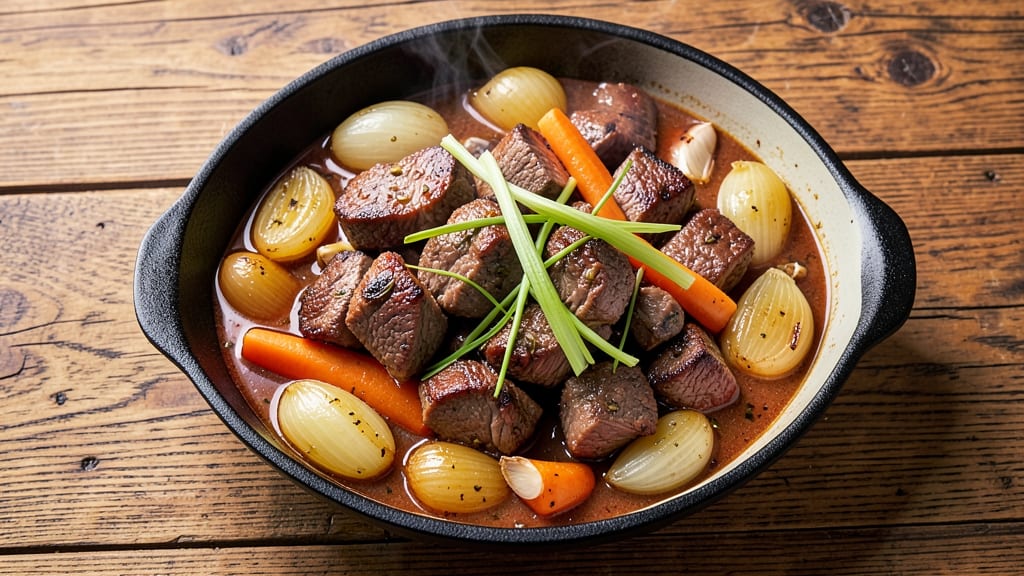
This beef and onion stew recipe transforms tough cuts into melt-in-your-mouth tenderness through slow simmering and caramelized onions. The secret lies in low-and-slow cooking, where beef becomes fork-tender while onions develop deep sweetness.
I developed this version after years of testing—balancing rich beef flavors with the natural sweetness of onions creates a dish that's both comforting and elegant.
What sets this stew apart is the technique: searing the beef in batches creates a flavorful crust, while slow simmering develops complex layers of taste. The onions caramelize beautifully, adding sweetness without overpowering the beef's natural richness.
This method delivers restaurant-quality results in your own kitchen, with minimal effort after initial prep.
By the time it's finished, you'll have a stew with tender beef chunks swimming in a velvety sauce, where each bite delivers perfect balance between savory meat and sweet onions.
The aroma alone transforms any home into a cozy dining experience. Perfect for chilly evenings or family gatherings, this stew is hearty enough to satisfy a crowd.
The best part? This recipe scales beautifully—double the batch for leftovers or serve as-is for an intimate dinner. The slow cooking process means flavors deepen over time, making it even more delicious the next day. Here's how to create this comforting classic in your own kitchen.
Ingredients for beef and onion stew
Transform tough beef and sweet onions into restaurant-quality tenderness with these carefully chosen ingredients.
| Ingredient | Amount | Notes |
|---|---|---|
| Chuck Roast Beef 🥩 | 2 lb | Cut into 1.5-inch cubes |
| Yellow Onions 🧅 | 3 whole | Thinly sliced, 1-inch pieces |
| Yellow Onion 🧅 | 1 whole | Finely chopped for caramelizing |
| Garlic Cloves 🧄 | 4 cloves | Minced, not pre-minced jar |
| Carrots 🥕 | 4 whole | Peeled, cut into 1-inch chunks |
| Celery Stalks 🌿 | 3 whole | Diced, 0.5-inch pieces |
| Tomato Paste 🍅 | ½ cup | Smooth, not chunky |
| Dry Red Wine 🍷 | 1 cup | Bold, like Cabernet Sauvignon |
| Beef Broth 💧 | 4 cups | Homemade or quality store-bought |
| All-Purpose Flour 🌾 | 1 tbsp | For thickening sauce |
| Fresh Thyme 🌿 | 2 sprigs | Leaves only, stems removed |
| Fresh Bay Leaves 🍃 | 2 whole | Removed before serving |
| Kosher Salt 🧂 | 1 ½ tsp | Diamond Crystal preferred |
| Ground Black Pepper 🌶️ | 1 tsp | Freshly ground for best flavor |
| Olive Oil 🫒 | 2 tbsp | Extra-virgin for searing |
The beef is everything here—chuck roast delivers that melt-in-your-mouth texture when cooked low and slow. Look for cuts with good marbling at Costco or Whole Foods if you want to splurge, but the regular supermarket chuck works perfectly fine. The onions? Yellow onions caramelize best, but red onions add pretty color if you're feeling fancy. For the garlic, fresh is non-negotiable—pre-minced jarred garlic has no flavor. I always grab extra because it's worth the freshness. The carrots and celery form your aromatic base—don't skip peeling them, but don't go crazy with the knife either.
No red wine? Beef broth with a splash of balsamic vinegar works in a pinch, though it won't have the same depth. Fresh thyme is ideal, but dried works at one-third the amount. If tomato paste feels like overkill for half a cup, Trader Joe's squeeze tubes are perfect—no waste, and they keep for months. The flour is just for thickening at the end, so any all-purpose brand will do. For the broth, homemade is best but Swanson's or Pacific Foods are solid store-bought options. The bay leaves add subtle earthiness—don't skip them, but remove them before serving or they'll make the stew taste bitter.
This stew tastes even better the next day as flavors meld together. Store in an airtight container in the fridge for up to 5 days, or freeze for 3 months. I always make extra because it reheats beautifully—just add a splash of broth if it gets too thick. For serving, a sprinkle of fresh parsley or a dollop of sour cream takes it to the next level. The onions caramelize beautifully, so if you're prepping ahead, caramelize them first and store separately until ready to combine with the beef.
Why You'll Love This Recipe
- Foolproof Slow Cooker: I swear by this—dump everything in, walk away, and come back to melt-in-your-mouth beef. The chuck roast practically falls apart, and the onions caramelize right in the pot (no extra pan needed). Honestly, I’ve made it with just a knife and a spoon.
- Deep, Savory Magic: That first bite? The beef’s rich, almost buttery tenderness paired with onions so sweet they’re practically candy. Between us, the garlic and carrots turn into this golden, jammy base—like someone took all the best parts of a restaurant stew and simplified them.
- Leftovers That Beg Repeat: This stew tastes better the next day. I’ll be real: I’ve reheated portions for breakfast with crusty bread, and no one bats an eye. It’s my freezer’s secret weapon—portion it out, and you’ve got a week’s worth of easy dinners covered.
- Budget Meal That Feeds: A single chuck roast stretches for four servings, and the onions and carrots bulk it up without breaking the bank. I’ve fed my whole family plus a neighbor for under $15—solid math for something this satisfying. (Yes, even on a Tuesday night.)
Step-by-step instructions for beef and onion stew
Transform humble ingredients into a velvety stew with layers of caramelized sweetness and deep, savory richness.
Sear the Beef and Build Flavor Layers
Heat a heavy Dutch oven over medium-high heat until hot. Add the 2 tablespoons olive oil and let it shimmer for 1 minute. Working in batches to avoid crowding, add the 2 lb chuck roast beef cut into 1.5-inch cubes and sear for 3-4 minutes per side until deeply browned. This step is non-negotiable—those caramelized crusts dissolve into the stew, creating depth of flavor you can't replicate any other way.
As each batch browns, remove the beef and set it aside on a plate. In the same pot, add the 1 whole yellow onion chopped for caramelizing and the 4 cloves garlic cloves minced. Cook for 2-3 minutes until the onions soften and begin to take on a golden hue. You'll smell that sweet, almost jammy aroma—that's when you know you're on the right track. These caramelized onions will form the sweet foundation of your stew.
Develop the Vegetable Base and Deglaze
Add the remaining 3 whole yellow onions sliced into 1-inch pieces, 4 whole carrots cut into 1-inch chunks, and 3 whole celery stalks diced into 0.5-inch pieces to the Dutch oven. Stir to combine with the caramelized onions and cook for 5 minutes until the vegetables begin to soften. The vegetables should release their juices and create a fragrant, aromatic base.
Pour in the 1 cup dry red wine and scrape up all the browned bits from the bottom of the pot with a wooden spoon. This deglazing step captures all those precious meaty flavors that would otherwise stick to the pan. Let the wine simmer for 3-4 minutes until reduced by half, until you notice the liquid has thickened and the alcohol smell has dissipated. This reduction concentrates the flavors and prepares the stew for the long simmer ahead.
Thicken and Simmer for Maximum Tenderness
Sprinkle the 1 tablespoon all-purpose flour over the vegetables and stir vigorously for 1 minute to coat everything evenly. This creates a light roux that will help thicken the stew as it cooks. Immediately pour in the 4 cups beef broth and stir well to combine, making sure there are no flour lumps remaining. Add the 0.5 cup tomato paste, 2 sprigs fresh thyme (leaves only), 2 whole fresh bay leaves, 1.5 teaspoons kosher salt, and 1 teaspoon ground black pepper.
Return all the browned beef to the pot and bring the mixture to a gentle boil. Once boiling, reduce heat to low and cover partially, leaving a small gap for steam to escape. This slow simmer is where the magic happens—it allows the connective tissue in the beef to break down and create that signature stew tenderness. Let it cook for 2.5 to 3 hours until the beef is fork-tender and pulls apart easily. You'll know it's ready when the stew has thickened and the flavors have melded into a harmonious, rich broth.
Finish and Adjust for Perfect Texture
Remove the 2 whole fresh bay leaves from the stew (they're done serving their purpose). Taste the stew and adjust seasoning if needed—this is your chance to fine-tune the balance of salt, acidity, and sweetness. If the stew needs more depth, add a splash of the red wine you used earlier. If it's too thick, whisk in 2-3 tablespoons of water or beef broth to reach your desired consistency. The final texture should be velvety yet still have body, with visible chunks of beef and vegetables.
Let the stew sit off the heat for 10 minutes before serving. This resting period allows the flavors to continue developing and the stew to thicken slightly as it cools. Ladle into warmed bowls and serve immediately with crusty bread to soak up every last drop of that rich, caramelized goodness. The contrast of the warm bread against the hearty stew makes each bite even more satisfying.
Pro Tips For Making Beef And Onion Stew
- SEAR THE CHUCK FIRST: I learned this the hard way—skipping the sear means flavorless beef. Get a screaming-hot pot, pat the chuck dry, and brown it in batches with 2 tablespoons of oil until deep caramel forms. That crust locks in juices and builds the stew’s foundation.
- CHOP ONIONS UNEVENLY: No, you don’t need perfect slices. Roughly chop yellow onions into ½-inch chunks—some bigger, some smaller—so they cook at different rates. This ensures a mix of tender and slightly crisp textures instead of a mushy pile by the end.
- DON’T CROWD THE POT: After searing, resist the urge to dump everything in at once. Layer the onions, carrots, and garlic in a single layer first, then add the beef. This guarantees even browning and prevents steaming, which turns your stew into a sad, watery soup.
- SIMMER LOW AND LONG: Chuck needs time—no shortcuts. After initial browning, cover the pot and simmer at a gentle bubble (180°F/82°C) for at least 2.5 hours. Yes, it’s tempting to crank the heat, but rushing turns tough meat into chewy disappointment. Set a timer and walk away.
Regional styles of beef and onion stew
French Classic
In France, this stew is known as bœuf bourguignon, where the beef is slow-cooked with red wine, lardons, and mushrooms. The key difference is adding 8 oz pearl onions and 8 oz mushrooms (cremini or button) to the base.
I like to use dry Pinot Noir instead of Cabernet for a lighter, fruitier profile. The French version often includes bacon or pancetta for extra depth—about 4 oz diced browned before searing the beef. 🍷
Irish Hearty Version
Irish stew traditionally uses lamb or mutton instead of beef, but this hearty twist swaps it for chuck roast. The Irish approach includes 1 large potato (peeled and cubed) and 1 parsnip (peeled and chopped) added during the final 30 minutes of cooking.
For authenticity, add 1 teaspoon dried rosemary and ½ teaspoon ground nutmeg to the seasonings. Serve with soda bread for a true Irish meal experience. 🌟
German Sauerbraten Style
German Sauerbraten transforms beef into a tangy, sweet stew by marinating the meat overnight in a mix of ½ cup red wine vinegar, ½ cup red wine, 1 tbsp mustard, and 1 tbsp juniper berries.
After marinating, pat the beef dry and sear it as usual, then proceed with the recipe but replace the beef broth with 4 cups apple cider for a fruity twist. Add 1 small apple (peeled and sliced) during the final 30 minutes of cooking. 🍏
American Southern Twist
The Southern approach leans into bold flavors with ½ cup ketchup added during the final 20 minutes of simmering, along with 1 teaspoon smoked paprika and ½ teaspoon cayenne pepper for heat.
Swap the red wine for 1 cup bourbon (like Maker's Mark) and add 1 cup crushed tomatoes instead of tomato paste. Garnish with chopped green onions before serving. This version is perfect for tailgates or chilly evenings. 🌶️
Spanish Cocido Adaptation
In Spain, this stew becomes cocido madrileño, a multi-course meal where the beef is cooked with 1 large white onion, 2 carrots, 2 celery stalks, and 1 leek (white part only).
Add 1 tsp saffron threads (steeped in 2 tbsp warm broth) and 1 bay leaf during the simmer. For authenticity, serve with garbanzo beans (1 can, drained) added in the final 45 minutes. The Spanish version is often served with orange slices for a bright contrast. 🍊
Nutrition facts
Frequently asked questions
Can I use a different cut of beef instead of chuck roast?
Yes! While chuck roast is ideal for its fat content and tenderness, you can substitute with brisket or stew meat (like short ribs). For leaner cuts like sirloin, add 1 tablespoon olive oil to the pot during simmering to prevent dryness. The cooking time may vary slightly—brisket often needs 3-4 hours for perfect tenderness.
How can I make this stew in a slow cooker or Instant Pot?
For a slow cooker: Sear the beef and caramelize onions on the stovetop first, then transfer everything to the slow cooker with 4 cups broth. Cook on low for 6-7 hours or high for 3-4 hours. For an Instant Pot: Sauté the beef, onions, and garlic, then add all ingredients and pressure cook for 40 minutes on high. Release pressure naturally for 10 minutes before serving.
Why do my onions burn before they caramelize?
This happens when the heat is too high or the pot isn't heavy enough. Use a Dutch oven and keep the heat at medium-low while caramelizing. Stir occasionally to prevent sticking, and add 1-2 tablespoons water if the onions start browning too quickly. Patience is key—caramelization takes 20-30 minutes at low heat.
Can I make this stew ahead of time?
This stew tastes even better the next day as flavors meld together. Store in an airtight container in the fridge for up to 5 days or freeze for 3 months. Reheat gently on the stove over low heat, stirring occasionally and adding a splash of broth if it thickens too much. The texture will be even richer after resting!
What's the best way to thicken the sauce if it's too thin?
If the sauce is too thin, mix 1 tablespoon cornstarch with 2 tablespoons cold water to make a slurry. Stir it into the stew and simmer for 5 minutes until thickened. For extra richness, whisk in 2 tablespoons beef broth reduced by half in a separate pan. Avoid over-thickening—aim for a velvety consistency with visible beef chunks.