
Soups & Stews
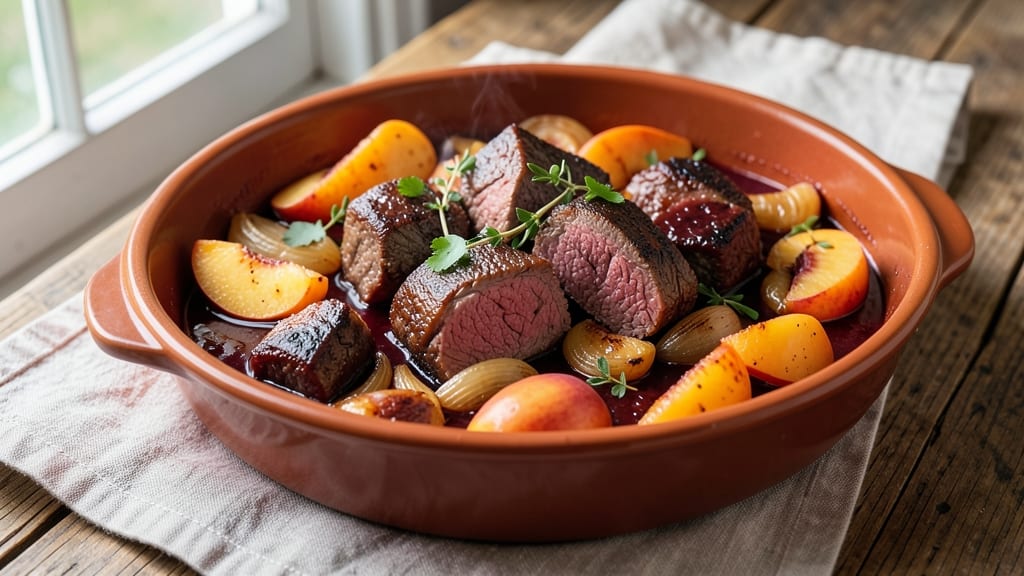
This beef and peaches recipe transforms humble ingredients into a rich, caramelized stew that balances sweet and savory in every bite. The secret lies in slow-braising beef with peaches until their natural sugars meld into a velvety sauce, creating depth that feels both rustic and refined.
I developed this after years of experimenting with fruit-infused braises, and the results are worth the effort—tender beef, tender peaches, and a sauce so flavorful it disappears faster than you can say "second helping."
The technique is straightforward but yields restaurant-quality results: sear beef until deeply browned for maximum flavor, then simmer with peaches, aromatic spices, and just enough liquid to create a luscious, clinging sauce.
The key is patience—letting the flavors develop over 90 minutes transforms simple ingredients into something extraordinary. This isn't just a stew; it's a meal that turns ordinary weeknights into special occasions.
What you'll end up with is a deeply aromatic dish where the beef remains fork-tender, the peaches caramelize into sweet pockets of fruit, and the sauce coats every spoonful with a perfect balance of sweetness and savory richness.
The aroma alone will have everyone gathering at the table, and the first bite delivers on that promise of comfort food elevated.
Serve with crusty bread to soak up every last drop of sauce or alongside buttery mashed potatoes for a heartier meal. Pair it with a bold red wine or a peach-infused cocktail to complement the dish's sweet-savory harmony.
This recipe proves that even the most unexpected combinations—like beef and peaches—can create something truly memorable.
Ingredients for beef and peaches
Fourteen ingredients transform into a deeply aromatic stew where tender beef and caramelized peaches create sweet-savory harmony.
| Ingredient | Amount | Notes |
|---|---|---|
| Chuck Roast 🥩 | 2 lb | Cut into 1.5-inch cubes |
| Yellow Onions 🧅 | 1 whole | Diced, medium size |
| Garlic Cloves 🧄 | 6 cloves | Peeled, smashed |
| Fresh Peaches 🍑 | 4 whole | Pitted, peeled, sliced |
| Red Wine 🍷 | 1 ½ cups | Bold dry variety |
| Beef Broth 💧 | 3 cups | Low-sodium preferred |
| Tomato Paste 🍅 | 2 tbsp | Smooth, not chunky |
| Dried Thyme 🌿 | 1 tsp | Or 1 tbsp fresh |
| Bay Leaves 🍃 | 2 whole | Fresh preferred |
| Ground Black Pepper 🌶️ | 1 tsp | Freshly cracked |
| Kosher Salt 🧂 | 1 ½ tsp | Diamond Crystal preferred |
| Olive Oil 🫒 | 2 tbsp | Extra-virgin for searing |
| All-Purpose Flour 🌾 | 2 tbsp | For thickening sauce |
| Balsamic Vinegar 🍶 | 1 tbsp | For finishing sauce |
The chuck roast is non-negotiable here—its marbling ensures fork-tender results after slow braising. Look for well-marbled cuts at specialty butchers or the meat department of Whole Foods, where they often carry higher-quality roasts than standard grocery stores. If you can't find chuck, chuck-eye roast is a close second. The peaches should be ripe but firm; local farmers markets offer the best selection in summer, while frozen peaches work in a pinch during off-season. For the red wine, Cabernet Sauvignon or Merlot add depth without overpowering the dish's natural sweetness.
No red wine? Substitute beef broth with an extra 1 tbsp balsamic vinegar for acidity. Fresh thyme is ideal, but dried at one-third the amount works if you're in a hurry. The tomato paste can be omitted entirely if you prefer a fruit-forward sauce, though it adds a subtle umami backbone. For the flour, all-purpose works fine, but a splash of cornstarch (1 tsp) creates a glossier finish. The balsamic vinegar at the end isn't just for flavor—it deepens the sauce's caramel notes, so don't skip it. If you're using frozen peaches, thaw and drain them first to avoid watering down the stew.
This stew tastes even better the next day as flavors meld, so make a double batch if you're feeding a crowd. Store in an airtight container in the fridge for up to 5 days, or freeze portions for 3 months. The sauce thickens as it cools, so add a splash of broth when reheating. For serving, crusty bread or buttered noodles soak up every last drop of that velvety sauce. The aroma alone will have everyone anticipating the first bite—trust me, it's worth the wait.
Why You'll Love This Recipe
- One-Pot Magic: I swear by this recipe when I’m too tired to dirty multiple pans. Chuck roast and peaches simmer together in the same pot, with just onions and garlic to keep it simple—no fancy techniques, just hands-off cooking while you sip that red wine you’re already using.
- Sweet-Savory Balance: The first time I tasted this, I nearly dropped my fork. The rich, caramelized beef meets juicy peaches in every bite, and that red wine cuts through the sweetness like a perfect summer romance—bold but smooth, just like my grandma’s old wine glasses.
- Weeknight to Dinner Party: Between us, this dish works everywhere. Toss it together for a lazy Tuesday supper, or serve it at your next dinner party when you want to impress without slaving away. The leftovers? Even better the next day, especially with crusty bread to soak up the sauce.
- Budget-Friendly Luxury: Honestly, chuck roast is my go-to for stretching meals without breaking the bank. Peaches in season? Even cheaper. A bottle of red wine you already own? Boom—you’ve just made a restaurant-worthy dish that won’t drain your wallet. (Yes, even on a Tuesday night.)
Step-by-step instructions for sweet-savory beef and peaches stew
Master this technique and you'll achieve perfect balance between rich beef and caramelized peaches.
Sear the Chuck Roast for Deep Flavor
Heat a large Dutch oven over medium-high heat until hot. Add the 2 tablespoons olive oil and swirl to coat the bottom evenly. Working in batches if needed, add the 2 lb chuck roast cut into 1.5-inch cubes and sear undisturbed for 3-4 minutes per side until deeply browned. This step develops the Maillard reaction that creates complex flavors.
Don't crowd the pan—searing requires space for proper browning. Once all pieces are browned, transfer them to a plate and set aside. You'll know they're ready when they release easily from the pan and develop a rich, caramelized crust.
Build the Sweet-Savory Base
In the same Dutch oven, add the 1 whole yellow onions diced and cook for 5 minutes until softened. Add the 6 cloves garlic cloves that have been peeled and smashed, and cook for another 1 minute until fragrant. Stir in the 2 tablespoons tomato paste and cook for 2 minutes to deepen its flavor.
Here's where the sweetness begins: add the 4 whole fresh peaches that have been pitted, peeled, and sliced. Cook for 5 minutes until they begin to soften and release their juices. The peaches will caramelize slightly, creating a natural sweetness that balances the savory beef.
Deglaze and Simmer the Stew
Pour in the 1.5 cups red wine and scrape up all the browned bits from the bottom of the Dutch oven with a wooden spoon. This deglazing step captures all the rich flavors you've built. Let the wine simmer for 3-4 minutes until reduced by half.
Add the 3 cups beef broth, 1.5 teaspoons kosher salt, 1 teaspoon dried thyme, 2 whole bay leaves, and 1 teaspoon ground black pepper. Return the beef to the pot and bring to a gentle simmer. Partially cover and cook for 1 hour and 30 minutes or until the beef is fork-tender.
Thicken and Finish with Balsamic
In a small bowl, whisk together the 2 tablespoons all-purpose flour and 1 tablespoon balsamic vinegar. Slowly stir this mixture into the stew, allowing it to thicken for 3-5 minutes over medium heat. The balsamic vinegar adds a tangy depth that cuts through the richness of the beef and sweetness of the peaches.
Taste and adjust seasoning if needed. The stew should have a velvety consistency with a balance of sweet and savory flavors. Serve immediately over mashed potatoes or crusty bread to soak up every last bit of the luscious sauce.
Pro Tips For Making Beef And Peaches
- Sear the Chuck Roast First: After I stopped skipping this step, the flavor changed completely. Heat your Dutch oven until it’s smoking, pat the roast very dry, and sear it on all sides for 3-4 minutes per side—no peeking. That crust locks in juices and turns the wine into a rich sauce instead of a sad one.
- Slice Peaches Thinly, Not Thick: Thick peach slices turn mushy in the wine. Cut them paper-thin (⅛-inch or less) and toss them in the sauce just before serving so they stay firm and sweet. If you’re lazy, use frozen peaches—but drain them well first.
- Deglaze with Cold Wine: I used to pour in warm wine straight from the bottle, and the sauce always tasted flat. Chill the wine first, then deglaze the pan with it—it cuts through the onion and garlic better and keeps the sauce bright. Add a splash of water or broth if it gets too thick.
- Use a Meat Thermometer: Chuck roast needs patience—pull it at 195°F (it’ll rest to 185°F). I learned this the hard way after serving a roast that was still tough. If you don’t have one, slice into the thickest part: if it’s fork-tender, you’re good. If not, back it goes.
Dietary considerations for beef and peaches
Gluten-Free Adaptations
This recipe is naturally gluten-free if you use certified gluten-free flour for thickening. I recommend Bob's Red Mill 1:1 Gluten-Free Baking Flour—just substitute it one-to-one for the all-purpose flour.
The balsamic vinegar and beef broth should also be labeled gluten-free to avoid cross-contamination. Always check labels, as some brands add gluten-containing additives. 🌾
Dairy-Free Considerations
The original recipe contains no dairy, making it inherently dairy-free. However, if you're serving with mashed potatoes or bread, opt for dairy-free alternatives like olive oil-based mashed potatoes or gluten-free bread made with almond milk.
The stew's rich sauce stands perfectly on its own without dairy. For extra creaminess, stir in 2 tablespoons coconut cream at the end.
Low-Sodium Options
To reduce sodium, use low-sodium beef broth and omit added salt until the end. Taste the stew before adding salt—you may need only ½ teaspoon instead of the full 1.5 teaspoons.
Fresh herbs like thyme and bay leaves add natural flavor without sodium. For extra depth, add 1 teaspoon smoked paprika during searing to enhance umami without salt. 🧂
Vegetarian Substitutions
For a vegetarian version, replace the beef with 2 cups firm tofu or 1 lb mushrooms (like portobello or cremini). Press tofu to remove moisture, then cube and pan-fry until browned. Mushrooms should be sliced and sautéed until deeply caramelized.
The peaches and wine will still create a luscious sauce, though the texture will be lighter. Add 1 tablespoon soy sauce for umami depth.
Peach Allergy Alternatives
If peaches are a concern, substitute with 4 cups diced mango or 4 cups roasted red peppers for sweetness. For a savory twist, use 2 cups caramelized onions instead. The key is balancing sweetness—add 1 tablespoon honey or 1 tablespoon maple syrup if using a less sweet substitute.
The recipe's core technique remains the same, focusing on slow-braising for depth. 🍑
Protein Swaps
For a lighter protein, use 2 cups shredded chicken breast instead of beef. Cook it separately until fully done, then add it back to the stew during the final 10 minutes of simmering.
For a richer option, try 2 cups diced short ribs, which require 2-3 extra hours of braising. The peaches and wine will complement any protein, but beef remains the star for maximum tenderness. 🥩
Nutrition facts
Frequently asked questions
Can I use frozen peaches instead of fresh?
Yes! Frozen peaches work perfectly—just thaw and drain them first to avoid diluting the sauce. For best results, pat them dry before adding to the stew. The texture will be slightly softer, but the sweetness remains intact. This is especially helpful when fresh peaches aren't in season.
What's the best wine to use if I don't have red wine?
Substitute with 1.5 cups beef broth plus 1 tbsp balsamic vinegar for acidity. For a fruity alternative, try 1 cup peach nectar or apple juice—just reduce the broth to 2 cups to maintain balance. The key is keeping the liquid ratio similar to preserve the stew's depth.
Why does my beef turn out tough instead of tender?
Overcooking is the most common cause—chuck roast needs 90 minutes of simmering, not longer. Use a meat thermometer: the internal temp should reach 203°F for perfect tenderness. Also ensure you're using a Dutch oven with a tight lid to trap steam. If your beef is still tough, try adding ½ cup warm water and simmering another 20 minutes uncovered.
Can I make this recipe in a slow cooker?
Brown the beef first, then transfer everything to a 6-quart slow cooker. Cook on low for 6-7 hours or high for 3-4 hours. The slow cooker's gentle heat works wonders for tenderizing the beef. For extra richness, add 2 tbsp cornstarch during the last 30 minutes to thicken the sauce.
How do I store leftovers without drying out the sauce?
Cool the stew completely, then store in an airtight container with a thin layer of broth poured over the top. This prevents the sauce from drying out. Leftovers keep for 5 days in the fridge or 3 months frozen. When reheating, add 1-2 tbsp water or broth to restore the sauce's velvety consistency.