
Soups & Stews
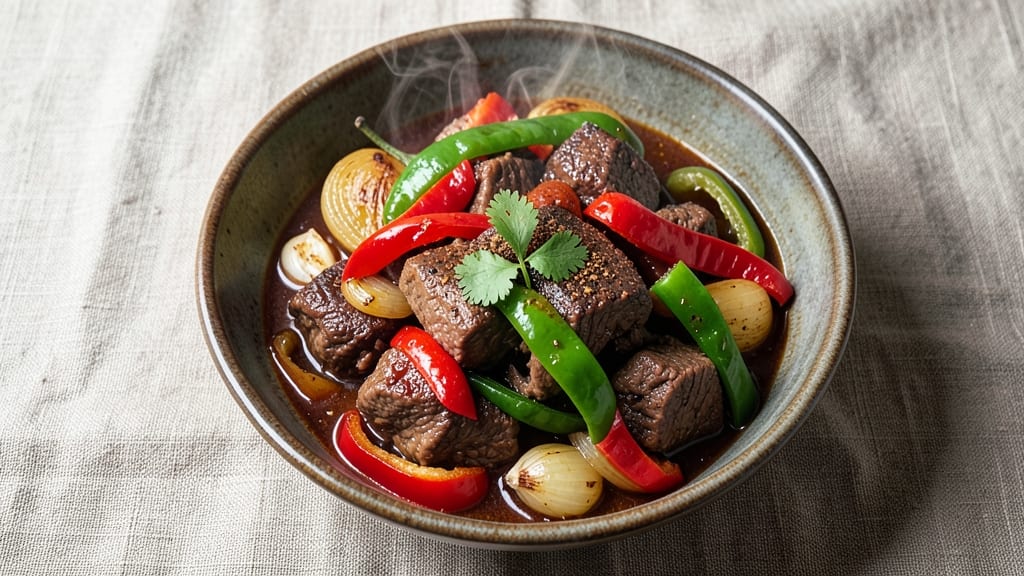
This beef and pepper stew recipe transforms tough cuts into melt-in-your-mouth tenderness with layers of caramelized onion depth and rich, savory broth. The secret lies in slow simmering—where beef becomes fork-tender while peppers and onions meld into a sweet, complex sauce.
I developed this version after years of perfecting the balance between deep flavors and restaurant-quality texture, using techniques that work equally well on the stovetop or in a slow cooker.
The foundation starts with proper browning of the beef, creating a flavorful crust that dissolves into the stew as it simmers. Caramelized onions form the base, their sweetness cutting through the richness of the meat, while bell peppers add vibrant color and subtle crunch.
A touch of tomato paste deepens the color and adds umami complexity that elevates the entire dish.
What you'll end up with is a hearty stew where each bite delivers perfectly tender beef, tender-crisp vegetables, and a sauce so rich it coats every spoonful.
The aroma alone will have your kitchen smelling like a home-cooked masterpiece, and the flavors develop even more as it rests—proof that good things are worth the wait.
This recipe serves as both a comforting weeknight meal and an impressive centerpiece for dinner parties. The technique is straightforward but delivers professional results, with options to adapt for pressure cookers or instant pots when time is limited.
Let's get started on creating this deep-simmered classic that brings warmth to any table.
Ingredients for beef and pepper stew
Pantry staples plus a few key ingredients for restaurant-style beef and pepper stew.
| Ingredient | Amount | Notes |
|---|---|---|
| Chuck Roast 🥩 | 2 lb | Cut into 1.5-inch cubes |
| Yellow Onions 🧅 | 2 whole | Thickly sliced for caramelizing |
| Red Bell Peppers 🍅 | 2 whole | Cut into 1-inch strips |
| Green Bell Peppers 🍅 | 1 whole | Cut into 1-inch strips |
| Garlic Cloves 🧄 | 4 cloves | Minced for depth |
| Tomato Paste 🍅 | ½ cup | For umami richness |
| Beef Broth 💧 | 3 cups | Low-sodium preferred |
| Red Wine 🍷 | ½ cup | Dry variety like Cabernet |
| Olive Oil 🫒 | 2 tbsp | For searing beef |
| Dried Thyme 🌿 | 1 tsp | Or 1 tbsp fresh |
| Bay Leaves 🍃 | 2 whole | Removed before serving |
| Salt 🧂 | 1 ½ tsp | Kosher or sea salt |
| Black Pepper 🌶️ | ½ tsp | Freshly ground |
| Worcestershire Sauce 🍶 | 1 tbsp | For extra umami |
| Flour 🌾 | 2 tbsp | For coating beef |
The chuck roast is non-negotiable—it's what gives you that melt-in-your-mouth texture. Costco or Walmart usually have it pre-cut into cubes, which saves time. Look for good marbling (those little white streaks of fat) if you're buying a whole roast to cube yourself. The bell peppers should be firm and vibrant—no mushy spots. I grab mine from the produce section at Trader Joe's because they're always fresh and affordable. For the tomato paste, Muir Glen is my go-to—it's consistent and never watery.
No red wine? Substitute beef broth with a splash of balsamic vinegar—it mimics the depth. Fresh thyme is ideal, but dried works at one-third the amount. If you're using pre-cut onions, pat them dry first—they caramelize better. The Worcestershire sauce adds that savory punch, but if you're avoiding it, extra soy sauce or a dash of fish sauce works in a pinch. For the flour, King Arthur all-purpose is my favorite—it's light and absorbs well without making the stew gummy.
This stew tastes even better the next day as flavors meld. Keeps for 5 days in the fridge, freezes for 3 months. I always make a double batch—one for dinner, one for leftovers. Store in airtight containers with a layer of broth on top to preserve moisture. Reheat gently on the stove with a splash of water or broth if it's too thick.
Why You'll Love This Recipe
- One-Pot Magic: I swear by this—just toss the chuck roast, chopped peppers, and onions into a pot, add broth, and walk away. The peppers soften into sweet, melty perfection while the beef falls apart tender. No fancy techniques, no stress.
- Deep Umami Bomb: That slow-cooked chuck roast? Rich, beefy, and packed with flavor. The garlic cloves caramelize into little golden nuggets, while the bell peppers add a bright, slightly sweet crunch. It’s the kind of taste that lingers—honestly, I’ve been known to eat it straight from the pot.
- Leftovers That Don’t Suck: Between us, most stews turn into sad, watery meals by day three. Not this one. The beef stays juicy, the peppers hold their shape, and the sauce thickens just enough to coat every bite. I make a double batch on Sundays—lunches for the week, no excuses.
- Budget Meal for Busy Nights: Chuck roast is cheap, peppers are versatile, and garlic? Always affordable. This stew feeds four for under $15 and still feels like a restaurant-worthy dish. Plus, it’s the kind of meal that makes Tuesday nights feel like a celebration—no fancy ingredients, just pure satisfaction.
Step-by-step instructions for beef and pepper stew
This rich, deep-simmered stew delivers tender beef and caramelized vegetables with layers of flavor.
🍳 Step 1: Sear the Chuck Roast for Maximum Flavor
Pat the 2 lb chuck roast dry with paper towels and cut it into 1.5-inch cubes. In a large Dutch oven, heat 2 tablespoons olive oil over medium-high heat until shimmering. Working in batches, add the beef cubes and sear for 3-4 minutes per side until deeply browned. This step creates a rich crust that builds flavor as the stew simmers.
As you sear, sprinkle each batch lightly with 2 tablespoons flour, shaking off any excess. This coating helps thicken the stew later. Transfer the browned beef to a plate and set aside. Here's the thing—don't crowd the pan or the temperature will drop, and you won't get that beautiful sear we're after.
👨🍳 Step 2: Caramelize Onions and Vegetables
In the same Dutch oven, reduce heat to medium and add 2 whole yellow onions, sliced thickly. Cook for 8-10 minutes, stirring occasionally, until the onions turn golden brown and soft. This caramelization adds sweet depth to the stew—don't rush it.
Add the 2 whole red bell peppers and 1 whole green bell peppers, cut into 1-inch strips, along with the 4 cloves garlic cloves, minced. Cook for another 5-6 minutes until the peppers soften and the garlic becomes fragrant. You'll know it's ready when the vegetables release easily from the pan and the garlic stops sizzling.
🍳 Step 3: Build the Rich Base
Stir in the 0.5 cup tomato paste and cook for 2 minutes until it darkens slightly. This step deepens the umami flavor and gives the stew its signature richness. Pour in the 0.5 cup red wine and scrape up any browned bits from the bottom of the pot—this is where all the flavor hides.
Add the seared beef back to the pot along with the 3 cups beef broth, 1.5 teaspoons salt, 0.5 teaspoon black pepper, 1 teaspoon dried thyme, 2 whole bay leaves, and 1 tablespoon Worcestershire sauce. Bring to a gentle boil, then reduce heat to low and let it simmer uncovered for 1 hour. This slow cook transforms the tough beef into fork-tender perfection.
⏰ Step 4: Simmer to Perfection
After the initial 1 hour of simmering, taste the stew and adjust seasoning if needed. The beef should be tender enough to pull apart with a fork. If it's not quite there, continue simmering for another 30-45 minutes, skimming off any excess fat that rises to the surface.
Real talk: The longer you let this stew cook, the deeper the flavors become. I've found that 1.5 to 2 hours of total simmering time gives you that restaurant-quality richness. Once the beef is fork-tender and the sauce has thickened slightly, remove the bay leaves before serving. They add wonderful aroma during cooking but can be too strong when eaten.
Pro Tips For Making Beef And Pepper Stew
- SEAR THE ROAST FIRST: I learned this the hard way—skipping the sear means flavorless beef. Brown that chuck roast in batches over medium-high heat until it’s deep golden, not just pink. The crust locks in juices and builds depth that simmering alone can’t match.
- CHAR THE PEPPERS: Cut those bell peppers into 1-inch chunks, then toss them in a dry skillet over high heat for 3–4 minutes before adding anything else. They’ll blister and caramelize, giving the stew a smoky sweetness that raw peppers just can’t compete with.
- SALT THE MEAT HEAVILY: Season the chuck roast with at least 1 tablespoon of kosher salt (yes, even if it’s pre-salted) and let it sit for 30 minutes before searing. This guarantees moisture stays trapped in the meat—no dry, tough bites here.
- USE A DUTCH OVEN: If your pot isn’t deep enough, transfer the stew to a Dutch oven halfway through cooking. The wider surface area prevents boiling over, and the thick base keeps heat even—critical for tenderizing that chuck without turning it to mush.
Wine and beer pairings for this beef and pepper stew
Red Wine Pairings
This rich stew begs for a bold red wine that can stand up to its deep flavors. I always reach for a medium-bodied Cabernet Sauvignon—its dark fruit notes and subtle oak complement the caramelized onions and beef beautifully.
A California Cabernet with 12-14% ABV works perfectly, but if you prefer something lighter, a Chianti from Italy offers bright acidity that cuts through the richness. 🍷
For a more affordable option, try a Malbec from Argentina. Its velvety texture and blackberry undertones mirror the stew's depth while adding a touch of spice. Avoid heavy, tannic wines like Syrah—they can overpower the dish.
Serve your wine slightly chilled (60-65°F) to enhance its fruitiness and balance the stew's warmth.
Beer Complements
A well-hopped amber ale or brown ale is my go-to beer pairing for this stew. Look for a Belgian-style Dubbel like Westmalle Trappist, which offers malty sweetness and caramel notes that echo the caramelized onions.
Alternatively, a German Dunkel with its rich, toasty flavors provides a perfect contrast to the stew's savory depth. 🍺
For a lighter option, a crisp Belgian Witbier like Hoegaarden adds refreshing citrus notes that cleanse your palate between bites. Avoid heavy stouts or IPAs—they can make the stew taste overly bitter. Serve your beer at 45-50°F to highlight its malt profile and balance the stew's richness.
Non-Alcoholic Options
Don't have wine or beer? No problem! A sparkling apple cider from Martinelli's adds a crisp, fruity contrast that brightens the stew's flavors. For something more savory, try a ginger beer like BrewDog Ginger Beer, which complements the caramelized onions and beef with its spicy kick. 🍏
For a classic non-alcoholic option, a sparkling grape juice like Fruit2 offers the same acidity as wine without the alcohol. Serve it slightly chilled (40-45°F) to enhance its refreshing qualities. These pairings ensure everyone at the table can enjoy the stew's rich flavors without missing out.
Serving Temperature
Always serve your wine or beer at the right temperature to enhance the pairing. Red wines should be slightly cooler than room temperature—around 60-65°F. Beer should be served between 45-50°F for optimal flavor.
I like to chill my wine in the fridge for 30 minutes before serving to achieve the perfect temperature. 🌡️
For non-alcoholic drinks, keep them chilled but not ice-cold. A 40-45°F serving temperature ensures the flavors shine without being overwhelmed by cold. This attention to temperature ensures your drink enhances the stew's flavors rather than competing with them.
Nutrition facts
Frequently asked questions
Can I use a different cut of beef for this stew?
While chuck roast is ideal for its tenderness and flavor, you can substitute with stew meat or even chuck shoulder. Avoid lean cuts like sirloin—they'll dry out. For tougher cuts, increase simmering time by 30-45 minutes to ensure perfect tenderness. Never use ground beef, as it cooks too quickly and lacks the rich texture we're after.
How do I make this stew in a slow cooker?
Brown the beef first in a skillet, then transfer everything (including browned bits) to your slow cooker. Use low heat for 6-7 hours or high heat for 3-4 hours. The slow cooker's gentle heat works wonders for melting the fat and creating a rich sauce. Just skip the initial quick simmer—let the slow cooker do all the work!
What if my stew tastes too acidic?
Add a pinch of sugar or a splash of heavy cream to balance the acidity. If the wine was too strong, stir in a teaspoon of baking soda (just a pinch!) to neutralize. For prevention, use low-sodium broth and reduce wine to ¼ cup if you're sensitive to acidity. Always taste as you go!
Can I prep this stew ahead of time?
This stew tastes even better the next day. After simmering, let it cool completely, then store in an airtight container in the fridge for up to 5 days. For freezing, portion into meal-sized containers and freeze for up to 3 months. Thaw overnight in the fridge before reheating gently on the stove.
What's the best way to serve this stew?
Serve it hot with crusty bread or over mashed potatoes to soak up the rich sauce. For extra flair, garnish with fresh parsley or a sprinkle of grated Parmesan. Pair with a green salad to balance the richness. The stew's natural flavors shine when served family-style from the pot!