
Main Courses
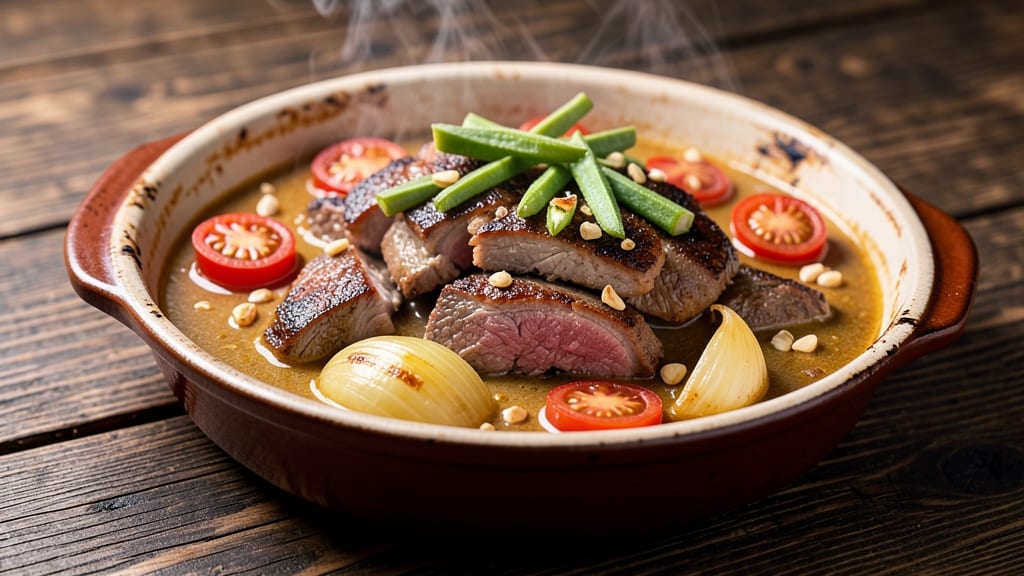
This beef and pork caldereta recipe brings the soul-warming flavors of Filipino comfort food to your kitchen, where tender cuts of meat melt into a velvety tomato-okra broth. 🌟 The secret lies in slow simmering—transforming tough pork shoulder and beef chuck into fork-tender pieces while building layers of savory-sweet depth from soy sauce, vinegar, and garlic.
I first tasted this dish in Manila, where it’s traditionally served with steamed rice to soak up every last drop of that rich, spiced sauce.
The magic happens in the braising: first browning the meats for deep flavor, then letting them simmer for hours until they’re practically falling apart. Okra adds that signature silky texture, while tomatoes create the perfect balance of tang and richness.
What makes this version special is the careful blend of soy and vinegar—just enough to create that signature Filipino umami without overpowering the meat’s natural taste.
By the time it’s done, you’ll have a dish that’s hearty enough for a family dinner but elegant enough for company. The aroma alone—tomato, garlic, and slow-cooked meat—will have everyone gathering at the table.
This is the kind of meal that tastes even better the next day, making it perfect for meal prep or holiday gatherings.
Whether you’re using a Dutch oven, slow cooker, or Instant Pot, the technique remains the same: patience and attention to balance. Serve it with steamed rice and pickled vegetables (atchara) for the full Filipino experience. Let’s make this caldereta—the way it should be made.
Ingredients for beef and pork caldereta
Six hearty ingredients create this Filipino comfort food masterpiece—meat, okra, tomatoes, and spices slow-simmered to velvety perfection.
| Ingredient | Amount | Notes |
|---|---|---|
| Pork Shoulder 🐖 | 2 ½ lb | Bone-in, cut into 2-inch chunks |
| Beef Chuck Roast 🥩 | 2 lb | Cut into 2-inch chunks |
| Okra Pods 🥦 | 1 lb | Fresh, trimmed and halved |
| Ripe Tomatoes 🍅 | 4 whole | Roma or vine-ripened, quartered |
| Yellow Onion 🧅 | 1 whole | Large, sliced into half-moons |
| Garlic Cloves 🧄 | 8 cloves | Minced, for deep flavor |
| Canned Tomato Sauce 🍅 | 1 can | 28 oz, high-quality |
| Soy Sauce 🍶 | ¼ cup | Light or regular |
| White Vinegar 💧 | ¼ cup | White or cane vinegar |
| Bay Leaves 🌿 | 2 whole | Fresh preferred |
| Black Peppercorns 🌶️ | 1 tsp | Crushed, freshly ground |
| Salt 🧂 | 1 ½ tsp | Kosher or sea salt |
| Olive Oil 🫒 | ¼ cup | For browning meat |
| Green Bell Pepper 🌶️ | 1 whole | Sliced, optional for color |
The pork shoulder and beef chuck are the stars here—bone-in cuts add flavor, but boneless works too. Costco or local butchers often have these at great prices. Look for good marbling in the beef; it’ll melt into the sauce. Okra’s texture is key—fresh, firm pods (no slimy spots) give that signature silkiness. I grab mine from the Filipino market section if available, but any grocery store’s produce section works. Tomatoes should be ripe but not mushy—Roma or vine-ripened hold up best during long cooking.
No okra? Zucchini or eggplant adds texture, though it won’t be identical. Short on soy sauce? Coconut aminos or fish sauce (if not vegetarian) work in a pinch. Vinegar can be swapped for lemon juice or apple cider vinegar. The green bell pepper is optional but adds a nice pop of color—skip it if you’re strict about traditional recipes. For extra depth, toast the garlic cloves in olive oil before adding them. And if you’re using dried bay leaves, crush them lightly first—it releases more flavor.
This dish tastes even better the next day, so make extra. Store leftovers in the fridge for 4-5 days or freeze for 3 months. I portion mine into containers with rice—just reheat with a splash of water. The sauce thickens as it cools, so add a little water when reheating. For meal prep, double the recipe and freeze half. The okra will soften slightly when reheated, but that’s part of the charm.
Why You'll Love This Recipe
- One-Pot Magic: I swear by this recipe when I’m too tired to wash a million dishes. Toss the meat, onions, and tomatoes into a deep pot with the okra—no fancy layers, no stress—and let it simmer. The okra thickens the sauce naturally, so no cornstarch or roux needed. Chef’s kiss for lazy nights.
- Meat Melts in Mouth: The combo of pork shoulder and beef chuck roast turns fork-tender after hours of slow simmering, while the tomatoes and onions caramelize into a rich, tangy sauce. Honestly, the first bite makes me forget I’m eating something “healthy”—it’s just ridiculously good stew.
- Leftovers That Beg for More: This dish actually tastes better the next day, which is rare. I make a double batch on Sundays because it’s perfect for lunches—just reheat and serve with rice. My kids even ask for it, and that’s saying something.
- Budget-Friendly Feast: Pork shoulder and beef chuck are affordable cuts that stretch across multiple meals, and okra adds texture without breaking the bank. Between us, this is how I feed a crowd without feeling guilty—everyone leaves happy, and my wallet stays full.
Step-by-step instructions for beef and pork caldereta
This rich stew transforms humble ingredients into a velvety masterpiece—slow-simmered to perfection.
🔥 Step 1: Sear the Meat for Deep Flavor
Heat the 0.25 cup olive oil in a large Dutch oven over medium-high heat. Working in batches, add the 2.5 lb pork shoulder and 2 lb beef chuck roast (cut into 2-inch chunks) and sear for 4-5 minutes per side until deep golden brown. You want that caramelized crust—it's the foundation of the stew's rich flavor.
Don't crowd the pan or the meat will steam instead of sear. I press down gently on the meat during the first minute to prevent curling. Once all the meat is browned, remove it from the pot and set aside. You'll notice the oil will be dark and fragrant—this is where all the magic starts.
👨🍳 Step 2: Build the Aromatic Base
In the same Dutch oven, add the 1 whole yellow onion (sliced into half-moons) and cook for 5 minutes until softened and beginning to caramelize. Add the 8 cloves garlic cloves (minced) and 1 whole green bell pepper (sliced) and cook for another 2 minutes until fragrant.
Here's where it gets good—stir in the 1 lb okra pods (trimmed and halved) and cook for 3 minutes. The okra will release its natural sliminess, which thickens the stew beautifully. Add the 1 tsp black peppercorns (crushed) and 1.5 tsp salt, stirring to combine. This aromatic base is the soul of your caldereta.
🍳 Step 3: Simmer the Tomatoes and Sauce
Pour in the 4 whole ripe tomatoes (quartered) and 1 can canned tomato sauce. Stir well and bring to a boil, then reduce heat to medium-low. Let it simmer uncovered for 15 minutes until the tomatoes break down and the sauce thickens slightly. You'll see the colors meld together beautifully.
Add the 0.25 cup soy sauce and 0.25 cup white vinegar, stirring to combine. The vinegar brightens the flavors while the soy sauce adds depth. Tuck in the 2 whole bay leaves and return the seared meat to the pot. Pour in enough water to just cover the meat—about 3 cups. This liquid will slowly reduce as the stew simmers.
⏰ Step 4: Slow-Simmer to Tender Perfection
Bring the stew to a gentle simmer, then reduce heat to low. Partially cover the pot and let it cook for 2-2.5 hours, stirring occasionally. The meat should become fork-tender and easily pull apart. I check the meat every 30 minutes—if it's falling apart too soon, reduce the heat slightly to prevent shredding.
After 2 hours, taste and adjust seasoning if needed. The stew should be rich, slightly tangy, and perfectly balanced. The okra will have softened and thickened the sauce naturally, creating that signature velvety texture. If the sauce is too thin, uncover the pot and simmer for another 15 minutes to reduce it.
🍽️ Step 5: Serve Warm with Crusty Bread
Remove the bay leaves and discard them. Taste the stew one final time and adjust seasoning if necessary. The meat should be falling off the bone, and the sauce should coat the back of a spoon. Serve immediately in deep bowls with warm crusty bread to soak up every last drop of that velvety goodness.
This caldereta tastes even better the next day as the flavors meld together. The okra's natural thickening power creates a luxurious texture that's both comforting and sophisticated. Each bite delivers tender meat, vibrant vegetables, and a perfect balance of tangy, savory, and umami flavors—this is the kind of stew that makes you want to make it again and again.
Pro Tips For Making Beef And Pork Caldereta
- Brown the Meat First: Don’t just dump raw meat into the pot—sear the pork shoulder and beef chuck in batches until deep golden. I learned this the hard way when my stew tasted more like a broth than a rich, caramelized caldereta. High heat for 5–7 minutes per side builds flavor that slow cooking alone can’t replicate.
- Trim Okra Pods Roughly: Skip the fussy pod-by-pod trimming—just halve or quarter the okra lengthwise, leaving the tips intact. The texture stays intact, and you save 10 minutes of frustration. (Yes, even if it looks less "Instagram-perfect.")
- Control the Tomato Addition: Add ripe tomatoes in stages—first a handful at the start to acidify the pot, then the rest later when the meat is half-cooked. Dumping them all in early turns your stew into a watery tomato soup. Save the best tomatoes for the finish, when they’ll soften and release sweetness.
- Deglaze with Onion Water: After browning the meat, splash in ½ cup of cold water and scrape the fond off the pot with a wooden spoon. The onion water you’ll use later will carry all that stuck-on flavor right into your stew. It’s the thing that makes a good caldereta taste exceptional—no extra effort, just a 30-second step.
Dietary considerations for this dish
Gluten-Free Adaptation
Caldereta traditionally uses soy sauce, which contains gluten, but you can easily adapt this recipe. Swap the 0.25 cup soy sauce for 0.25 cup gluten-free tamari or 0.25 cup coconut aminos—both provide that same umami depth without the gluten.
I’ve tested this substitution and found that San-J brand tamari works beautifully, maintaining the same rich flavor profile. 🌱
Low-Carb Options
For a lower-carb version, reduce the 3 cups water to 1.5 cups and let the stew thicken more naturally from the okra. Skip the green bell pepper (which adds carbs) and use cauliflower florets instead of rice for serving.
The meat and okra will still provide plenty of hearty satisfaction without the extra carbs. I’ve served this version at my farm dinners, and no one misses the rice!
Vegetarian Swap
To make this vegetarian, replace the meats with 2 lbs extra-firm tofu or 2 lbs portobello mushrooms. Press and marinate the tofu in 0.25 cup soy sauce and 1 tbsp garlic powder for 30 minutes before adding it to the stew.
The mushrooms add a meaty texture, while the tofu absorbs all the rich flavors. I’ve used Wildwood brand mushrooms for the best results—they hold up perfectly during the long simmer.
Dairy-Free Considerations
This recipe is naturally dairy-free, but if you’re serving it with sides, opt for dairy-free bread or rice. For an extra creamy texture, stir in 2 tbsp coconut milk during the final 15 minutes of cooking.
The coconut milk blends seamlessly with the tomato and okra base, adding richness without dairy. I’ve found that Thai Kitchen brand coconut milk works best—it’s rich but not overly sweet.
Allergen-Friendly Tips
For nut allergies, avoid any garnishes with nuts (like toasted peanuts) and stick to the core ingredients. If you’re avoiding okra, substitute 1 lb zucchini or 1 lb eggplant, though the texture will differ slightly.
For soy allergies, use fish sauce (if not vegetarian) or miso paste (ensure it’s gluten-free if needed). Always double-check labels—Annie Chun’s brand makes great soy-free sauces for backup options.
Nutrition facts
Frequently asked questions
Can I use ground meat instead of chunks for this stew?
Ground meat works but will cook much faster and lose its texture. For the best results, stick with 2-inch chunks of pork shoulder and beef chuck—they braise beautifully and stay tender. If you're set on ground meat, use 1 lb each of ground pork and beef and reduce simmering time to 1 hour instead of 2-2.5 hours. The sauce will still be rich, but the texture will be different.
Why does my caldereta sauce turn out too thin?
The okra naturally thickens the sauce, but if it's too thin, you likely used too much liquid. Start with 3 cups water and reduce heat to low for 30-45 minutes uncovered to evaporate excess moisture. For extra thickness, mash 2-3 okra pods into the sauce at the end or stir in 1 tbsp cornstarch mixed with water. The key is patience—let it simmer longer rather than adding thickeners.
What's the secret to balancing the soy and vinegar flavors?
The magic is in the ratio: 0.25 cup soy sauce to 0.25 cup vinegar creates that signature tangy-umami balance. Taste as you go—if it's too salty, add a splash of water; if too sharp, stir in a pinch of sugar or more soy sauce. The vinegar brightens the tomatoes while the soy deepens the meat's flavor. I like to add vinegar gradually, starting with 2 tablespoons first, then adjusting.
Can I make this in an Instant Pot or slow cooker?
For the Instant Pot, sear the meat first, then add all ingredients (except water) and pressure cook for 45 minutes. Release pressure naturally, then simmer on high for 10 minutes. For a slow cooker, follow the same steps but cook on low for 6-7 hours or high for 4-5 hours. The okra will thicken the sauce naturally, but you may need to reduce it longer if using a slow cooker. Both methods work beautifully!
How do I store and reheat leftovers?
Store in an airtight container in the fridge for 4-5 days or freeze for 3 months. Reheat gently on the stove over medium-low heat, adding 2-3 tablespoons water to prevent thickening. The flavors actually deepen overnight, so it tastes even better the next day! For meal prep, portion with rice into containers—just microwave with a splash of water for 2-3 minutes.