
Soups & Stews
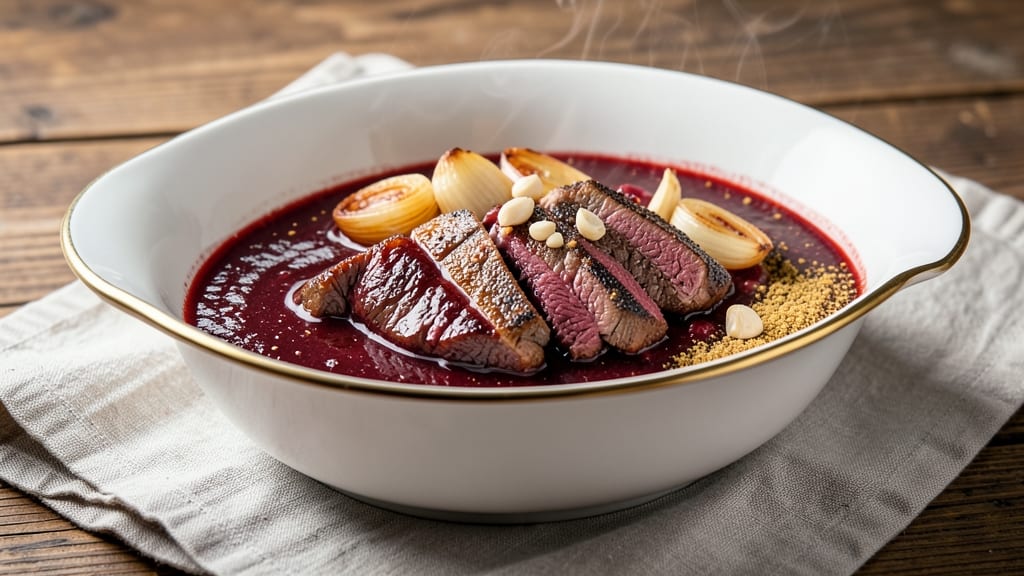
Beef and red wine gravy transforms simple pan drippings into a luxurious sauce with depth and complexity. This recipe captures all the rich, savory flavors from your roast while balancing acidity and richness perfectly. The key lies in proper deglazing and slow reduction—techniques that elevate ordinary cooking into something restaurant-worthy.
The process begins with beef drippings, which form the foundation for flavor. Deglazing the pan with red wine dissolves browned bits, creating a velvety base. As it simmers, the wine reduces, intensifying its aroma while allowing the roux to thicken just enough for that signature silky texture.
A splash of beef broth at the end ensures the gravy remains balanced, neither too heavy nor too acidic.
What you’ll end up with is a glossy, deep-red sauce that clings beautifully to roast beef, mashed potatoes, or even steak. The wine’s acidity cuts through the richness, while the caramelized drippings add a layer of umami that makes every bite unforgettable.
This gravy isn’t just a side—it’s the star of the meal, turning simple proteins into something extraordinary.
Store leftovers in the fridge for up to 5 days or freeze for longer shelf life. When reheating, do so gently to preserve texture. Pair it with classic roasts, holiday dinners, or even as a dipping sauce for crusty bread.
The possibilities are endless, but the technique remains foolproof—just follow the steps, and the flavors will do the rest.
Ingredients for beef and red wine gravy
Six simple ingredients transform humble beef drippings into restaurant-quality gravy.
| Ingredient | Amount | Notes |
|---|---|---|
| Beef Drippings 🥩 | 2 tbsp | From roast beef pan |
| All-Purpose Flour 🌾 | 2 tbsp | For roux base |
| Dry Red Wine 🍷 | ½ cup | Bold variety preferred |
| Beef Broth 💧 | ½ cup | Low-sodium preferred |
| Shallot 🧅 | 1 whole | Minced for depth |
| Garlic Cloves 🧄 | 2 cloves | Minced finely |
| Unsalted Butter 🧈 | 2 tbsp | Cold for roux |
| Fresh Thyme Leaves 🌿 | ¼ tsp | Or 1/8 tsp dried |
| Salt 🧂 | ½ tsp | Adjust to taste |
| Black Pepper 🌶️ | ¼ tsp | Freshly ground |
The beef drippings are non-negotiable—this is where all the flavor lives. Save every last drop from your roast pan, even if it means scraping with a spatula. For the wine, Cabernet Sauvignon or Merlot work best—their bold profiles stand up to the richness. Shallots add sweetness without overpowering, so don't skip them. If you're using pre-minced shallots from a jar, rinse them first to remove excess liquid. The butter should be cold when you add it to the flour for the roux—this prevents burning and gives you that perfect golden color.
No red wine? Substitute with beef broth plus 1 tbsp balsamic vinegar—it mimics the acidity. Fresh thyme is ideal, but dried works at one-third the amount. If you're short on time, Trader Joe's sells pre-minced shallots and garlic in convenient jars. For the flour, King Arthur All-Purpose works consistently, but any high-protein flour will do. The key is patience—rushing the roux will make your gravy grainy. If you accidentally burn it, start over; there's no coming back from that.
Gravy reheats beautifully—just warm it gently on the stove, stirring constantly. Store in the fridge for up to 5 days, or freeze for 3 months. For extra richness, stir in a pat of butter when reheating. This sauce is versatile enough for holiday meals, weeknight dinners, or even as a dipping sauce. The leftovers actually improve overnight as the flavors meld further. Portion into small containers if you're making ahead for a crowd—it's less work to reheat smaller batches.
Why You'll Love This Recipe
- Here’s what sold me: I can make this for half the cost of restaurant gravy, and it’s better. Use cheap wine, beef broth from a carton, and whatever shallots are on sale—it still delivers that restaurant-worthy depth without breaking the bank.
- Pantry Magic: I swear by this recipe when I forget to thaw anything—just scrape up those beef drippings from last night’s roast, toss in flour and wine, and boom. The shallot adds this subtle sweetness that makes it taste like I spent hours, not minutes.
- Wine’s Secret Weapon: That dry red wine? It’s not just for sipping—it deepens the flavor in ways store-bought gravy never could. The acidity cuts through the richness, leaving you with something silky and complex that tastes like a fancy dinner, not a weeknight hack.
- Leftovers That Shine: Make a double batch and stash it in the fridge. Slather it over mashed potatoes, drizzle it on steak sandwiches, or toss it with egg noodles—it turns basic meals into something special. My kids even ask for it on their plain toast. (Yes, really.)
Step-by-step instructions for beef and red wine gravy
Transform simple pan drippings into a velvety, restaurant-quality gravy with this foolproof method.
Create a Smooth Roux with Beef Drippings and Flour
Heat the 2 tablespoons beef drippings in a medium saucepan over medium heat. Once the drippings are shimmering but not smoking, add the 2 tablespoons all-purpose flour all at once. Stir immediately with a wooden spoon to prevent lumps from forming.
Cook the mixture for 2-3 minutes, stirring constantly, until it turns a rich, golden brown color. This is your roux—the flavor foundation of your gravy. If it darkens too quickly, reduce the heat slightly. The roux should smell nutty and toasty, not burnt. This step develops depth that separates good gravy from great gravy.
Deglaze with Red Wine for Maximum Flavor
Pour in the ½ cup dry red wine and stir vigorously to scrape up any browned bits from the bottom of the pan. These bits, called fond, are packed with flavor. Let the mixture simmer gently for 3-4 minutes, stirring occasionally, until the wine has reduced by about half and the alcohol smell has dissipated.
Here's the thing—don't rush this reduction. The wine needs time to cook off its sharpness and meld with the roux. You'll know it's ready when the mixture thickens slightly and the wine's acidity softens into a rich, fruity aroma. This is where the magic happens—where simple ingredients transform into something luxurious.
Build Depth with Shallot, Garlic, and Butter
Add the minced shallot and minced garlic cloves to the pan, stirring constantly for 1-2 minutes until they become fragrant but don't brown. Then reduce heat to low and whisk in the 2 tablespoons cold unsalted butter, one tablespoon at a time. The butter will help emulsify the gravy and add richness.
I always use cold butter here—it prevents the gravy from breaking. Stir until the butter melts completely and the mixture becomes silky smooth. Add the ½ cup beef broth and the ¼ teaspoon fresh thyme leaves, then bring to a gentle simmer. This is your flavor base, so taste and adjust seasoning with ½ teaspoon salt and ¼ teaspoon black pepper as needed.
Simmer to Perfect Consistency
Let the gravy simmer gently for 5-7 minutes, stirring occasionally, until it reaches your desired thickness. It should coat the back of a spoon but still be pourable. If it thickens too quickly, whisk in 1-2 tablespoons hot water to loosen it. The gravy should be glossy, not stringy.
Strain the gravy through a fine-mesh sieve into a clean saucepan to remove any lumps or thyme stems. Return to low heat and keep warm until ready to serve. The final gravy should be deep red with a velvety texture—rich enough to coat each bite of meat but light enough to let the beef flavors shine through.
Pro Tips For Making Beef And Red Wine Gravy
- Deglaze Immediately: As soon as you pull that beef from the pan, wipe it clean with a paper towel and pour in the wine right away—don’t let those browned bits sit. I learned this the hard way after walking away for "just a minute" and watching my fond turn to burnt sludge. High heat. Seriously, crank it up so the wine sizzles and lifts all that flavor.
- Toast the Flour: Don’t just whisk flour into cold drippings—cook it for 30 seconds until it smells nutty and golden. This removes the raw flour taste and gives your gravy a deeper, richer base. (Yes, even if you’re impatient like me, resist the urge to rush this.)
- Strain Like Your Life Depends on It: Skip the fine-mesh strainer and use a cheesecloth-lined sieve instead. The shallots and any stray bits will make your gravy look cloudy, no matter how much you stir. I used to ignore this, and my gravy always ended up looking like it was made in a blender.
- Reduce the Broth Slowly: Simmer the broth on low heat—even if it takes 20 minutes—so the wine’s alcohol fully cooks off without turning bitter. High heat turns this into a sad, thin sauce instead of the velvety, rich finish you’re after. (Your future self will thank you.)
Best sauces and condiments for this beef and red wine gravy
Classic Pairings
This rich red wine gravy shines with herb-roasted beef or prime rib—the beefy flavors amplify the sauce's depth. For a lighter contrast, pair it with creamy mashed potatoes or buttery egg noodles.
The wine's acidity cuts through the richness of roasted root vegetables like carrots and parsnips, making them irresistible. 🍽️
Unexpected Uses
Don’t limit this gravy to just meat dishes! Use it as a dipping sauce for garlic bread or crusty baguette slices. It elevates steak sandwiches or even beef sliders by adding layers of flavor.
For a cozy twist, drizzle it over mac and cheese or grilled cheese sandwiches—the wine adds a sophisticated touch.
Wine Pairing
Since this gravy already uses red wine, serve it alongside a bold Cabernet Sauvignon or rich Syrah to complement the dish’s depth. The wine’s tannins mirror the gravy’s richness, creating harmony. For a lighter option, a Pinot Noir balances the sauce’s intensity without overpowering it. 🍷
Vegetarian Twist
Make this gravy vegetarian by using vegetable broth instead of beef broth and mushroom drippings instead of beef. Add soy sauce or miso paste for umami depth. It pairs beautifully with portobello mushrooms or lentil loaf—the wine’s acidity still brightens the dish without needing meat.
Storage Secrets
Store leftovers in an airtight container in the fridge for up to 5 days or freeze for 3 months. When reheating, warm over low heat and stir in 1 tablespoon cold butter to restore richness.
For extra flavor, add a splash of beef broth or red wine before reheating. Gravy actually tastes better the next day as flavors meld! ❄️
Nutrition facts
Frequently asked questions
Can I use any red wine for this gravy?
For best results, use a bold, dry red wine like Cabernet Sauvignon or Merlot—these hold up well to cooking and complement beef flavors. A lighter wine like Pinot Noir will work but may taste more delicate. Avoid sweet wines or those with strong oak notes, as they can overpower the dish. If you don't have red wine, substitute with ½ cup beef broth + 1 tbsp balsamic vinegar for acidity.
What if my gravy turns out too thin?
Simmer it longer to reduce, or mix 1 tsp cornstarch with 1 tbsp cold water and whisk into the hot gravy until thickened. For a smoother texture, strain through a fine-mesh sieve. If it's too thick, whisk in 1-2 tbsp hot water or broth gradually. The ideal consistency coats the back of a spoon but remains pourable.
Can I make this gravy ahead of time?
Gravy actually tastes better the next day as flavors meld. Store in an airtight container in the fridge for up to 5 days or freeze for 3 months. When reheating, warm over low heat and stir in 1 tbsp cold butter to restore richness. For extra depth, add a splash of red wine or beef broth before reheating.
Why did my roux burn?
Roux burns when the heat is too high or you're not stirring constantly. Keep the heat at medium-low and whisk vigorously for 2-3 minutes until golden brown. If it darkens too quickly, reduce heat immediately. A burnt roux will make your gravy taste bitter—start over if this happens. Cold butter helps stabilize the roux, so add it gradually at the end of this step.
What can I do with leftover gravy?
Use it as a dipping sauce for crusty bread, drizzle over mashed potatoes or pasta, or serve with steak sandwiches. For extra flavor, stir in 1 tbsp brandy or a pinch of smoked paprika. It also freezes well—portion into ice cube trays for easy single-use servings. The wine's acidity makes it perfect for cutting through rich dishes like mac and cheese or roasted vegetables.