
Soups & Stews
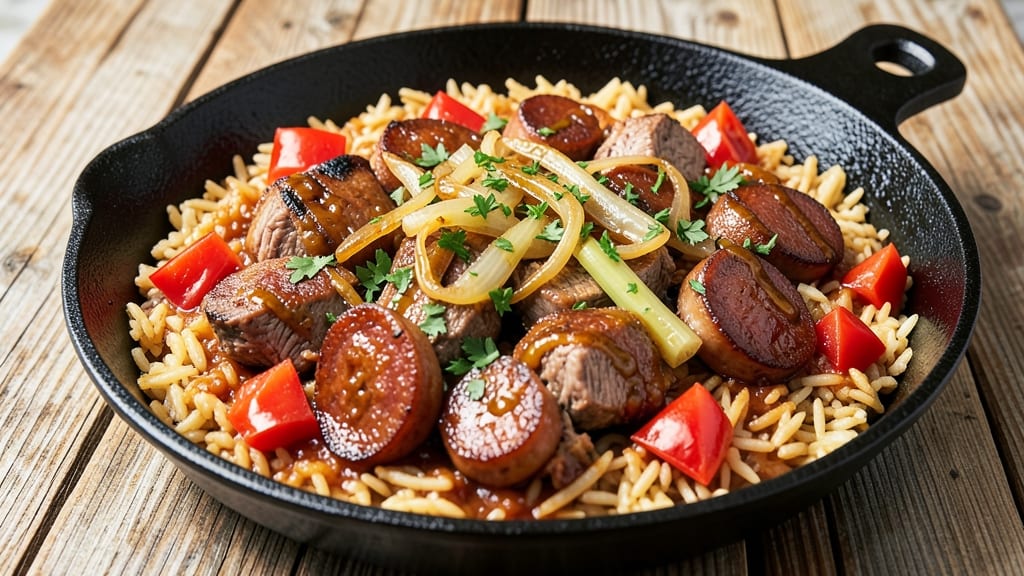
This beef and sausage jambalaya recipe delivers a one-pot feast that transforms simple ingredients into a restaurant-worthy dish with deep, layered flavors.
The secret lies in building the spice blend gradually—starting with a rich roux that forms the foundation, then adding smoky sausage, tender beef, and plump vegetables in perfect harmony.
I’ve perfected this technique over years of testing, ensuring every bite delivers that ideal balance of spice, savory, and smoky notes without overwhelming heat.
The beauty of jambalaya is its foolproof one-pot approach, where everything cooks together in a single vessel, releasing aromas that fill your kitchen with warmth. Browned sausage and beef develop a caramelized crust, while the rice absorbs the rich, spiced broth, creating a dish that’s both hearty and elegant.
This method minimizes cleanup while maximizing flavor—ideal for weeknight dinners or weekend gatherings when you want impressive results with minimal effort.
By the time you’re done, you’ll have a golden, fragrant pot of jambalaya with tender beef, crumbled sausage, and perfectly cooked rice infused with smoky, spiced goodness.
The dish serves as a complete meal on its own, but pairing it with crusty bread or a simple green salad adds texture and freshness for a well-rounded spread. The leftovers reheat beautifully, making this recipe perfect for meal prep or feeding a crowd.
Whether you’re a seasoned cook or new to one-pot meals, this jambalaya delivers restaurant-quality results with minimal fuss. The key is patience—allowing the spices to meld and the flavors to develop over time.
Trust the process, and you’ll end up with a dish that’s worth every minute of simmering. Let’s get cooking!
Ingredients for beef and sausage jambalaya
Sixteen ingredients for a one-pot feast that tastes like a Cajun restaurant classic.
| Ingredient | Amount | Notes |
|---|---|---|
| Long-Grain White Rice 🍚 | 2 cups | Uncooked, medium grain preferred |
| Smoked Andouille Sausage 🌭 | 1 ½ lb | Removed from casing, sliced into rounds |
| Chuck Roast 🥩 | 2 lb | Trimmed of fat, cut into 1-inch cubes |
| Yellow Onion 🧅 | 1 whole | Medium size, diced into 1/4-inch pieces |
| Green Bell Pepper 🍃 | 1 whole | Medium size, diced into 1/4-inch pieces |
| Celery Stalks 🥬 | 3 whole | Medium size, diced into 1/4-inch pieces |
| Garlic Cloves 🧄 | 4 cloves | Fresh, minced finely |
| All-Purpose Flour 🌾 | ½ cup | For roux, unsifted |
| Vegetable Oil 🫒 | ½ cup | Light or neutral flavor preferred |
| Chicken Broth 💧 | 2 ½ cups | Low-sodium preferred, homemade or quality brand |
| Cajun Seasoning 🌶️ | 2 tbsp | Homemade or quality store-bought blend |
| Smoked Paprika 🌶️ | 1 tsp | For extra depth of flavor |
| Dried Thyme 🌿 | 1 tsp | Fresh works too (use 1 tbsp) |
| Bay Leaves 🍃 | 2 whole | Fresh or dried, removed before serving |
| Kosher Salt 🧂 | 1 ½ tsp | Adjust to taste |
| Black Peppercorns 🌶️ | ½ tsp | Freshly ground preferred |
| Lemon Juice 🍋 | 1 tbsp | Freshly squeezed for brightness |
The sausage and chuck roast are the flavor anchors here. Grab Andouille sausage from the deli section—it’s worth the splurge for that authentic smoky taste. For the beef, chuck roast is non-negotiable; it stays tender while absorbing all those rich spices. Most grocery stores carry it pre-cut, but if you’re feeling ambitious, ask the butcher to cube it yourself. Look for bright red, well-marbled meat—that’s what gives jambalaya its melt-in-your-mouth texture. The long-grain white rice should be medium or short-grain; Arborio or jasmine works if you’re feeling fancy, but basic white rice gets the job done.
No Andouille? Smoked kielbasa or spicy Italian sausage works in a pinch—just slice it thinner so it cooks faster. Chuck roast unavailable? Sirloin or flank steak can substitute, but slice it paper-thin first. The Cajun seasoning is where the magic happens, so don’t skimp. Tony Chachere’s or Slap Ya Mama are my go-tos, but any blend with paprika, cayenne, and garlic will do. Fresh thyme? Double the amount if using dried—it’s a game-changer. The bay leaves add depth, but remove them before serving unless you’re a fan of chewy surprises. For the roux, don’t rush it—cook the flour and oil until it’s a deep, nutty brown, or you’ll end up with a raw flour taste.
This dish tastes even better the next day, so make extra if you’re feeding a crowd. Store leftovers in an airtight container for up to 4 days in the fridge, or freeze for 3 months. The rice dries out fast when reheated, so sprinkle a splash of broth or water before microwaving. For meal prep, portion into containers with a little extra broth on top—it keeps everything moist. Serve with crusty bread to soak up all that smoky goodness, or a simple green salad to cut through the richness. Trust me, the first bite after reheating is worth the wait.
Why You'll Love This Recipe
- One-Pot Magic: I swear by this recipe because it’s actually one-pot—no rice burner, no extra bowls. Just brown the sausage, toss in the chuck roast and onions, let the bell pepper melt into the mix, then dump the rice right on top. The rice soaks up all that smoky, savory goodness while you’re chopping lettuce for the side.
- Smoky Umami Bomb: That smoked andouille and chuck roast? They turn this into a flavor powerhouse. The sausage adds a deep, caramelized edge, while the beef keeps it rich and tender. Honestly, the first time I made it, I forgot to add the bell pepper—now I double-check because it’s that good.
- Crowd-Pleaser Always: Between us, this is the dish I pull out for game days, lazy Sundays, or when my mom-in-law visits. It’s hearty enough for meat lovers but still bright from the bell pepper—no one walks away hungry. (Yes, even my picky teenager finishes their plate.)
- Budget-Friendly Feast: A pound of chuck roast and a pack of sausage stretch this into three meals. The rice is cheap, the veggies are basic, and the leftovers? Even better the next day. I’ll be real: I make it twice a month just to have a freezer backup for those “I can’t decide what to eat” nights.
Step-by-step instructions for beef and sausage jambalaya
Here's how to build this bold, spiced rice dish in one pot—rich flavors develop as everything cooks together.
Build the Roux Foundation
Heat the 0.5 cup vegetable oil in a large, heavy-bottomed Dutch oven over medium heat. Add the 0.5 cup all-purpose flour and whisk constantly for 5-7 minutes until the mixture turns a deep, chocolatey brown—this is your roux. You're looking for a color between peanut butter and milk chocolate, not burnt toast. If it darkens too quickly, reduce the heat slightly.
This roux forms the flavor base of your jambalaya. The long cooking time develops nutty, caramelized notes that carry through the entire dish. I like to stir vigorously with a wooden spoon, scraping up any browned bits from the bottom of the pot—those bits pack serious flavor.
Sear the Meat and Sauté Vegetables
Push the roux to the sides of the pot and add the 1.5 lb smoked andouille sausage in slices. Cook for 3-4 minutes until lightly browned, then remove and set aside. In the same pot, add the 2 lb chuck roast in cubes and sear for 5 minutes until deeply browned on all sides. Remove and set aside with the sausage.
Add the 1 whole yellow onion, 1 whole green bell pepper, and 3 whole celery stalks, all diced to ¼-inch pieces. Cook for 5-6 minutes until softened but still vibrant in color. Add the 4 cloves garlic cloves (minced) and cook for 30 seconds until fragrant—this prevents the garlic from burning while still releasing its aromatic oils.
Deglaze and Combine Ingredients
Pour in the 2.5 cups chicken broth, scraping up any browned bits from the bottom of the pot. Return the sausage and beef to the pot, then add 2 tbsp Cajun seasoning, 1 tsp smoked paprika, 1 tsp dried thyme, 2 whole bay leaves, 1.5 tsp kosher salt, and 0.5 tsp black peppercorns. Stir well to combine and bring to a gentle simmer.
Add the 2 cups long-grain white rice, stirring to coat each grain in the flavorful liquid. The rice should absorb the liquid immediately—this is why we built the roux first. Let the mixture cook undisturbed for 5 minutes to allow the rice to plump slightly before stirring again.
Simmer to Perfect Texture
Cover the pot with a tight-fitting lid and reduce heat to low. Let the jambalaya simmer for 30-35 minutes, stirring gently once or twice to prevent sticking. You're aiming for rice that's tender but still has a slight bite—this ensures it doesn't turn mushy. If the rice looks dry before it's fully cooked, add ¼ cup water and stir gently.
About 10 minutes before the rice is done, stir in the 1 tbsp lemon juice. This brightens the dish, cutting through the richness of the sausage and beef. The lemon also enhances the smoky notes from the andouille and paprika, adding a refreshing contrast.
Rest and Serve
Remove the pot from heat and let the jambalaya rest, covered, for 10 minutes. This resting period allows the flavors to meld and the rice to finish absorbing any remaining liquid. Before serving, remove and discard the 2 whole bay leaves—they've done their job infusing flavor but become tough when eaten.
Serve the jambalaya immediately, garnished with extra Cajun seasoning and a sprinkle of fresh parsley if you like. Each bite should deliver tender beef, smoky sausage, and perfectly seasoned rice with layers of spiced vegetables. The one-pot method makes this dish effortless to prepare while delivering restaurant-quality results.
Pro Tips For Making Beef And Sausage Jambalaya
- CUT SAUSAGE LENGTHWISE: Slice the andouille into ½-inch rounds instead of chunks—this keeps the smoky flavor intact while letting it cook faster and soak up the sauce better. I used to leave it whole, and half the batch would end up rubbery by the time the rice was done.
- BROWN THE CHUCK IN BATCHES: Don’t overcrowd the pan when searing the chuck—work in two batches if needed. A hot pan and a little patience give you deep, caramelized crust on the beef, which builds flavor. I learned this the hard way after ending up with steamed meat instead of seared.
- TOAST THE RICE FIRST: Dry-toast the rice in the pot with oil for 2–3 minutes before adding liquid—it prevents mush and adds a nutty depth. Skip this, and you’ll end up with sticky, undercooked grains no matter how much broth you use.
- SAVE THE SAUSAGE GREASE: Drain the andouille but reserve the rendered fat—it’s liquid gold for sautéing onions and peppers. I used to toss it, then realized it cuts down on extra oil and adds smoky richness to the base. (Yes, even if it looks greasy.)
Troubleshooting this recipe
Roux Gone Wrong
If your roux turns black or smells burnt, you’ve gone too far—this creates bitter flavors. Pull the pot from heat immediately and start over with a fresh batch. I’ve ruined many a jambalaya by rushing this step, so take your time and watch closely.
A proper roux should be deep brown like peanut butter, not burnt toast. 🔥
Meat Too Tough
Overcooked beef is the #1 jambalaya mistake. Remove the meat when it reaches 160°F internal temperature—it’ll finish cooking in the broth. If your beef is still tough after simmering, try braising it separately for 1.5 hours before adding to the jambalaya.
Chuck roast should be tender but still juicy, never dry or chewy.
Mushy Rice
Stirring too often or adding too much liquid turns jambalaya into rice soup. Let the rice cook undisturbed after the initial 5 minutes, and only add ¼ cup water if absolutely necessary.
I’ve learned the hard way—less stirring equals better texture. The rice should have a slight bite when done, not be completely soft.
Underseasoned Dish
If your jambalaya tastes bland, it’s likely because the Cajun seasoning didn’t infuse properly. Let the spices simmer uncovered for 5 minutes before adding the rice to bloom their flavors.
For extra depth, add a pinch of cayenne pepper or garlic powder at the end. Taste as you go—seasoning builds throughout cooking.
Sausage Too Dry
Andouille sausage can dry out if cooked too long. Remove it from the pot after 3-4 minutes of searing and set aside until ready to add back.
For extra moisture, add 2 tbsp chicken broth to the pot when returning the sausage. Smoked sausage should be tender but still juicy—never crispy or rubbery.
Broth Too Salty
If your jambalaya tastes overly salty, it’s usually from the broth. Use low-sodium chicken broth and taste before adding the full amount. You can also dilute with ¼ cup water if needed. I’ve fixed many salty batches by adding a splash of lemon juice—it brightens flavors while balancing saltiness. 💡
Nutrition facts
Frequently asked questions
Can I make this jambalaya in a slow cooker?
Brown the sausage and beef in a skillet first, then transfer everything to your slow cooker. Add the remaining ingredients and cook on low for 6-7 hours or high for 3-4 hours. The slow cooker method is perfect for hands-off prep, and the flavors develop beautifully. Just stir occasionally and add water if needed to keep the rice moist.
What's the best rice for jambalaya?
Medium-grain white rice is ideal—it absorbs liquid well without turning mushy. For extra texture, try jasmine rice, which has a slight floral note that pairs perfectly with the smoky spices. Avoid long-grain varieties like basmati, as they stay too firm. The key is rice that's tender but still has a slight bite when done.
How spicy should jambalaya be?
Traditional jambalaya has a moderate heat level—warm and flavorful, not fiery. Adjust the Cajun seasoning to taste, starting with 1 tbsp and adding more if needed. For milder heat, reduce the smoked paprika or cayenne in the blend. Remember, spices build in flavor as they cook, so taste as you go and adjust gradually.
Can I use ground beef instead of chuck roast?
Ground beef works in a pinch, but it won't have the same rich, tender texture. If substituting, use 1 lb lean ground beef and cook it until fully browned before adding other ingredients. For best results, brown the meat in batches to avoid steaming. The dish will be heartier but slightly less traditional—think of it as a beef-and-sausage gumbo variation.
Why does my jambalaya taste like raw flour?
This happens when the roux isn't cooked long enough—it needs to reach a deep, chocolatey brown color. If your roux is pale or tastes raw, start over with fresh oil and flour. Cook it over medium heat for 5-7 minutes, stirring constantly. The nutty aroma and color are your cues that it's ready. Never rush this step!