
Soups & Stews
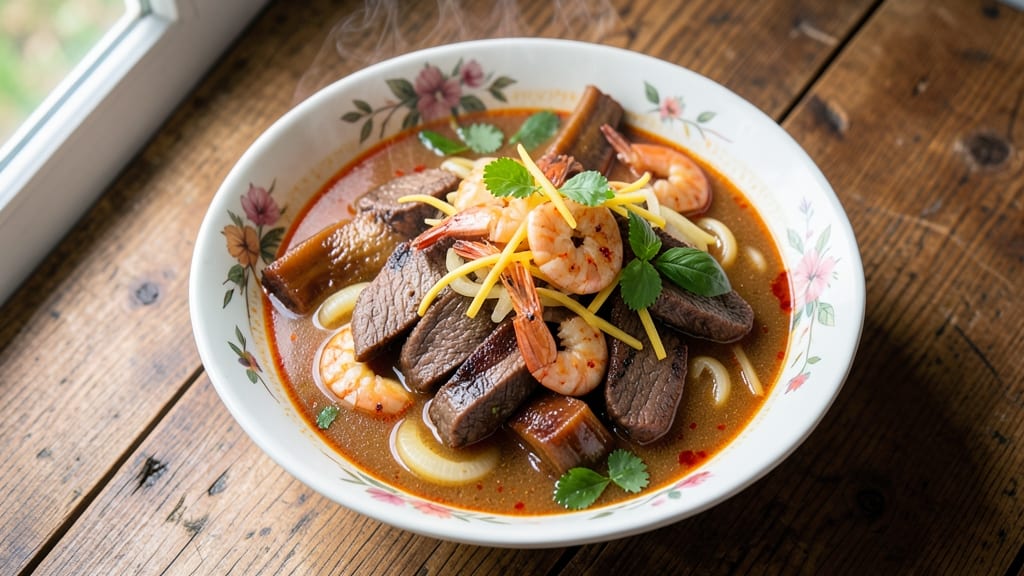
This beef and shrimp pho recipe transforms your kitchen into a Vietnamese noodle house with its fragrant star anise and cinnamon broth that simmers for hours. 🌟 The secret lies in slow-cooking bone marrow, beef bones, and aromatic spices until the broth becomes rich, golden, and deeply flavorful—while keeping the shrimp tender and the beef fork-short.
I perfected this version after years of experimenting with traditional techniques and modern shortcuts, ensuring every bowl delivers restaurant-quality depth without requiring a pressure cooker.
The magic begins with charring onions and ginger over an open flame to unlock their natural sweetness, then building the broth with star anise, cinnamon, and cloves that infuse the liquid with warmth.
While the broth works its magic, thinly sliced beef and shrimp cook separately to maintain texture—juicy beef that melts in your mouth and shrimp that stays tender-crisp.
The result is a bowl where each element shines: silky rice noodles, vibrant herbs, and a broth so fragrant it makes your kitchen smell like a bustling Hanoi street.
Assembling the bowl is where the real artistry comes in. Fresh herbs like Thai basil and cilantro add brightness, while bean sprouts and lime bring acidity to cut through the richness. The beef and shrimp float in that golden broth, ready to be twirled into noodles with every slurp.
This recipe balances tradition with practicality—whether you're using a slow cooker or stovetop, the result is the same: a bowl of pho so good, it'll become your new weeknight staple.
For those skipping beef, shrimp alone carries the dish with its natural sweetness, while the broth's depth ensures every spoonful feels complete. The recipe scales effortlessly, making it perfect for feeding a crowd or meal prepping for the week. Let's create this aromatic masterpiece that brings Vietnam to your table.
Ingredients for beef and shrimp pho
Six aromatic spices and fresh herbs transform simple ingredients into fragrant pho magic.
| Ingredient | Amount | Notes |
|---|---|---|
| Beef Bones (Beef Marrow Bones) 🥩 | 2 ½ lb | For rich broth, cut into chunks |
| Beef Sirloin (Thinly Sliced) 🥩 | 1 lb | Cut against grain, discard fat |
| Large Shrimp (Peeled, Deveined) 🦐 | 1 ½ lb | Tail-on for presentation |
| Fresh Ginger (Peeled) 🧄 | ½ cup | Grated, aromatic, no skin |
| Yellow Onions 🧅 | 3 whole | Charred for sweetness |
| Star Anise Pods 🌿 | 4 whole | Whole pods for infusion |
| Cinnamon Sticks 🌿 | 2 whole | 2-inch pieces for depth |
| Cloves 🌿 | 6 whole | Whole, lightly crushed |
| Garlic Cloves 🧄 | 8 cloves | Smashed, not minced |
| Fish Sauce 🍶 | 2 tbsp | Red Boat preferred |
| Rice Noodles (Bánh Phở) 🍜 | 12 oz | Flat rice noodles |
| Fresh Thai Basil 🌿 | ½ cup | Light purple stems |
| Fresh Cilantro 🌿 | ¼ cup | Chopped, bright green |
| Bean Sprouts 🌱 | 2 cups | Fresh, crisp |
| Lime Wedges 🍋 | 4 whole | Freshly cut |
| Sriracha (Optional) 🌶️ | 1 tbsp | For heat preference |
| Hoisin Sauce (Optional) 🍶 | 1 tbsp | For richness |
The broth's soul starts with beef marrow bones—look for them at Whole Foods or the meat counter. Red Boat fish sauce is non-negotiable for authentic umami. For ginger, grab the knobby Thai ginger at Asian markets—it's more potent than regular. The star anise and cinnamon? Penzeys Spices sells them whole, which is perfect for infusing flavor without grit. If you can't find Thai basil, regular basil plus a pinch of anise gets you close. The shrimp? Wild-caught, 31/40 count—anything smaller gets rubbery. Save the shells for extra broth punch if you're feeling fancy.
No fish sauce? Soy sauce plus a splash of vinegar works in a pinch. Skip the star anise? Double the cinnamon and add 1 tsp cardamom. Shrimp too expensive? Mushrooms or tofu mimic the texture beautifully. The noodles should be fresh or dried, but never pre-boiled—soak them in hot water for 10 minutes max. For the beef, chuck roast works if you can't find sirloin—just slice it paper-thin. The charred onions? Broil them 5 minutes until blackened for maximum sweetness. No broiler? Sear them in a dry pan.
Broth keeps for 5 days in the fridge or 3 months frozen—portion it into containers for easy reheating. The noodles? Store dry in a sealed bag for up to 6 months. Fresh herbs last 3 days wrapped in damp paper towels. Pro tip: Make double broth—it's even better the next day as flavors meld. The beef and shrimp cook in minutes, so keep them separate until serving. Lime wedges? Roll them in plastic wrap** to keep them juicy longer.
Why You'll Love This Recipe
- One-Pot Magic: I swear by this recipe—just toss those beef marrow bones and onions into a pot, cover with water, and let it simmer. By the time I’ve sliced the beef and shrimp, the broth is already rich and fragrant, no extra pots or pans needed.
- Umami Bomb: That first sip of broth—chef’s kiss—the marrow bones melt into the water, turning it into a deep, savory elixir. The shrimp and thinly sliced beef soak it up perfectly, giving you that perfect balance of richness and brightness.
- Weeknight Hero: Between us, this is my go-to when I need something impressive but can’t be bothered with fuss. Toss in the shrimp last minute, and boom—dinner’s ready. My kids think it’s "fancy restaurant food," and honestly? It kind of is.
- Leftovers That Don’t Suck: Pho actually gets better the next day—yes, really. The flavors meld even more, and reheating it keeps that silky broth intact. I make a big batch on Sundays, and it lasts me three lunches without a single complaint.
Step-by-step instructions for beef and shrimp pho
Here's how to craft a fragrant, restaurant-quality pho that balances rich broth with delicate flavors.
🔥 Step 1: Build the Fragrant Broth Base
Cut the 2.5 lb beef bones (beef marrow bones) into 2-inch chunks and place them in a large stockpot. Add the 3 whole yellow onions (cut into quarters), 0.5 cup fresh ginger (peeled) (sliced into thick rounds), 4 whole star anise pods, 2 whole cinnamon sticks, 6 whole cloves, and 8 cloves garlic cloves (lightly smashed). Cover everything with 12 cups cold water—you want the bones completely submerged.
Bring to a gentle boil over medium-high heat, then immediately reduce to a simmer. Skim off any foam that rises to the surface during the first 15 minutes—this ensures a clear, clean broth. Let it simmer uncovered for 2 hours, stirring occasionally. The broth should develop a deep amber color and an aromatic scent from the spices. If it reduces too much, add hot water to maintain the level.
🍳 Step 2: Infuse and Strain the Broth
After 2 hours, strain the broth through a fine-mesh sieve into a clean pot, pressing gently on the solids to extract flavor without making it cloudy. Discard the solids. Return the strained broth to the pot and stir in 2 tbsp fish sauce. Taste and adjust seasoning—you want it salty but not overpowering, with a warm, spiced sweetness from the aromatics. Keep the broth at a gentle simmer while you prepare the remaining components.
Here's the thing—don't rush this step. The longer the broth simmers, the deeper the flavor. If you're short on time, you can reduce the simmering to 1.5 hours, but 2 hours is ideal for maximum richness.
👨🍳 Step 3: Prepare the Protein and Noodles
While the broth simmers, slice the 1 lb beef sirloin (thinly sliced) against the grain into paper-thin strips. Discard any visible fat. For the 1.5 lb large shrimp (peeled, deveined), leave the tails on for presentation and slice each shrimp into 3 equal pieces. Set both aside.
Soak the 12 oz rice noodles (bánh phở) in warm water for 20-30 minutes until pliable but still firm to the bite. Drain and rinse briefly under cold water to stop cooking. Keep them covered with a damp towel to prevent drying.
🥘 Step 4: Assemble and Serve the Pho
Ladle hot broth into 6 bowls, filling each ¾ full. Add 2-3 slices of beef sirloin and 3-4 shrimp pieces to each bowl. Let the proteins cook in the hot broth for 1-2 minutes—they'll finish cooking from the residual heat. Top each bowl with handful of bean sprouts, 1 tbsp fresh Thai basil, and 1 tbsp fresh cilantro. Serve with 4 lime wedges on the side.
For the optional 1 tbsp Sriracha or 1 tbsp hoisin sauce, drizzle lightly over the top or serve on the side for customization. The key to serving pho is immediacy—the noodles and herbs should be fresh, and the broth should be piping hot. Garnish each bowl with an extra sprinkle of Thai basil and a squeeze of lime just before serving.
Pro Tips For Making Beef And Shrimp Pho
- CHAR THE BONES HARD: Don’t skimp on the initial sear—blast those marrow bones on high heat until they turn deep mahogany and smell like a Vietnamese street stall. I used to rush this, and the broth never had that rich, caramelized depth. After burning three batches, I finally figured out: 5 minutes minimum per side, no peeking.
- SALT THE SHRIMP FIRST: Toss your shrimp in a mix of 1 teaspoon salt and 1 tablespoon fish sauce before adding them to the broth. This keeps them from curling into tight, rubbery knots while they cook. I was skeptical until I tried it—now I can’t imagine skipping it.
- SLICE GINGER THINLY, NOT JULIENNED: Skip the fancy matchsticks—just smash the ginger with the flat side of your knife, then slice thick (about ¼-inch). Too thin, and it burns before the broth flavors. Too thick, and it sits like a rock. My grandmother swore by this, and she was right: it melts into the broth without bitterness.
- STIR THE BEEF IN LAST: Let the broth simmer uncovered for 10 minutes after adding shrimp—this lets the aromatics settle. Then, just before serving, add the sliced beef sirloin and stir gently. Crowding the pot too early makes the broth murky, and the beef turns out tough. (Yes, even if you’re impatient like me.)
Storing and reheating this recipe
Broth Storage Secrets
The pho broth is the heart of this dish, and it keeps beautifully when stored properly. Let it cool completely before transferring to airtight glass containers—I recommend Mason jars for easy reheating.
Store in the refrigerator for up to 5 days, or freeze in quart-sized portions for 3 months. When reheating, bring to a gentle simmer (never boil) to preserve those delicate aromatics. 🌟
Protein Prep Ahead
Slice the beef and shrimp fresh the day you plan to serve, but store them separately in airtight containers with a paper towel to absorb moisture. The beef will keep in the fridge for 2 days, while shrimp stays best for 1 day.
For shrimp, pat them dry before storing to prevent rubberiness. Reheat proteins in the broth for 1-2 minutes—they finish cooking instantly in the hot liquid.
Noodle Preservation
Keep dried rice noodles in their original packaging or transfer to a sealed plastic bag with a silica gel packet to absorb moisture. They'll stay fresh for 6 months at room temperature.
For pre-soaked noodles, store them in a damp paper towel inside a resealable bag for 2 days in the fridge. Reheat by soaking in hot broth for 5 minutes—no need to boil.
Herb Handling
Fresh herbs like Thai basil and cilantro wilt quickly, so store them in a sealed container with a damp paper towel wrapped around them. Place a plastic bag loosely over the top to retain humidity.
They'll stay fresh for 3-4 days in the fridge. For maximum flavor, add herbs right before serving—never store them in the broth.
Complete Bowl Assembly
Assemble pho bowls fresh for the best texture, but you can prep components separately. Keep the broth hot, proteins chilled, and noodles covered. When ready, assemble everything in individual bowls and serve immediately. For meal prep, store broth and proteins separately, then combine with fresh noodles and herbs when reheating.
The magic happens in the first slurp—hot broth, tender proteins, and crisp herbs all working together. 💫
Nutrition facts
Frequently asked questions
Can I make this beef and shrimp pho without beef for a seafood-only version?
Swap the beef for 1.5 lb firm white fish (like cod or halibut) cut into thin strips, or use 2 lb shrimp alone for a shrimp-only bowl. The broth will still be rich enough to carry the dish—just add 1 tbsp extra fish sauce to compensate for the missing umami from beef.
How do I know when the broth is ready and properly seasoned?
The broth should smell deeply aromatic with notes of star anise and cinnamon, and have a golden amber color. Taste it before adding fish sauce—it should be slightly sweet from the charred onions and ginger, with just a hint of saltiness. After adding fish sauce, it should taste balanced but not overpowering. If it needs more depth, add ½ tsp salt or 1 tsp sugar to adjust.
Why did my shrimp turn rubbery instead of staying tender?
Rubbery shrimp usually means overcooking or improper prep. Always cook shrimp in the hot broth for just 1-2 minutes—they finish cooking instantly from residual heat. For extra tenderness, pat them dry before slicing and avoid using small shrimp (31/40 count or larger). If reheating, never boil them—just warm in broth.
Can I use a pressure cooker to speed up the broth?
Yes! For a 3-quart pressure cooker, use 1.5 lb beef bones and reduce water to 8 cups. Pressure cook on high for 45 minutes, then strain and simmer uncovered for 30 minutes to develop depth. The broth will be just as rich, but watch the water level—it reduces quickly under pressure.
What's the best way to make this recipe gluten-free?
Use gluten-free fish sauce (like Red Boat's gluten-free version) and check your rice noodles for gluten-free certification. Most pho noodles are naturally gluten-free, but verify the package. For extra safety, rinse the noodles thoroughly before soaking. The broth and proteins remain naturally gluten-free.