
Soups & Stews
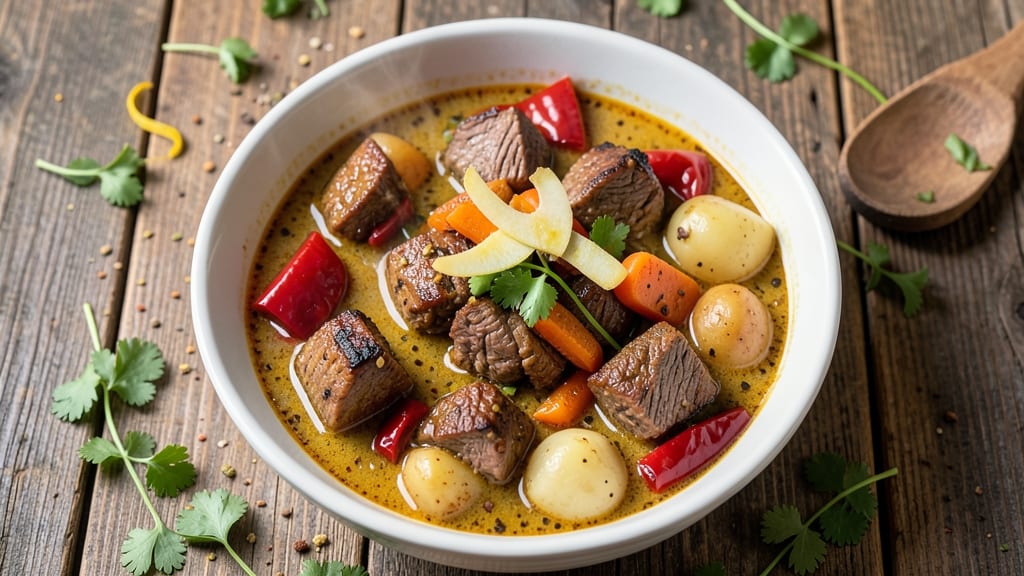
This beef and vegetable curry recipe delivers restaurant-quality depth in a single pot, where fragrant coconut milk and warm turmeric transform tough beef into tender, flavorful bites. The secret lies in slow simmering—allowing spices to bloom and vegetables to soften just enough to absorb that rich, aromatic sauce. I’ve perfected this over years of testing, balancing heat, sweetness, and earthiness for a dish that feels both comforting and sophisticated.
The magic starts with a dry spice blend—cumin, coriander, and turmeric—that toasts in hot oil until fragrant, unlocking their full potential. Beef chuck, cut into even pieces, sears first to develop a deep, caramelized crust before simmering in coconut milk until fork-tender.
Vegetables like bell peppers, carrots, and potatoes add texture and natural sweetness, while tomatoes and ginger round out the flavors. The result? A curry so balanced it satisfies even the pickiest eaters.
What makes this recipe stand out is its versatility—serve it over basmati rice for a hearty meal, or with warm naan to soak up every last drop of sauce.
The aroma alone will have your kitchen smelling like a bustling Indian restaurant, but the effort is minimal: just one pot to clean. Whether you’re feeding a crowd or meal prepping for the week, this curry delivers bold, comforting flavors without the fuss.
Pair it with a cooling mint lemonade or a steaming cup of chai to complete the experience. The dish reheats beautifully, making it perfect for leftovers, and the flavors only deepen over time. Let’s get cooking—this curry is a game-changer for weeknight dinners.
Ingredients for beef and vegetable curry
Pantry staples and fresh spices come together for this aromatic, one-pot wonder.
| Ingredient | Amount | Notes |
|---|---|---|
| Beef Chuck Roast 🥩 | 1 ½ lb | Cut into 1.5-inch cubes |
| Coconut Milk 🥥 | 1 can | Full-fat, unsweetened |
| Bell Peppers 🌶️ | 2 whole | Any color, sliced |
| Carrots 🥕 | 2 medium | Peeled and sliced |
| Russet Potatoes 🥔 | 2 medium | Peeled and cubed |
| Fresh Ginger 🌿 | 2 tbsp | Grated, fresh preferred |
| Ground Cumin 🌶️ | 1 tbsp | Toasted for depth |
| Ground Coriander 🌿 | 1 tbsp | Freshly ground preferred |
| Turmeric Powder 🧂 | 1 tbsp | Bright yellow color |
| Garlic Cloves 🧄 | 4 cloves | Minced, fresh preferred |
| Tomato Paste 🍅 | 2 tbsp | Smooth, no chunks |
| Vegetable Oil 🫒 | 3 tbsp | For searing |
| Salt 🧂 | 1 ½ tsp | Kosher or sea salt |
| Black Pepper 🌶️ | ½ tsp | Freshly ground |
| Fresh Cilantro 🌿 | ¼ cup | Chopped, for garnish |
The beef is everything here—chuck roast gives that melt-in-your-mouth texture. Grab it from the butcher section or pre-cubed at Costco for convenience. For the spices, Penzeys or bulk bins are your best bet—they stay fresh longer. Fresh ginger and garlic make all the difference, but if you're in a pinch, jarred ginger works (just double the amount). The coconut milk? Full-fat only—it's worth the splurge for that creamy texture. Look for cans with no added water or preservatives.
No fresh ginger? Powdered ginger at half the amount gets you close, but it lacks that bright punch. Short on bell peppers? Zucchini or cauliflower work in a pinch—they just cook faster. The tomato paste can be skipped if you're not a fan, but it adds that deep, umami backbone. For extra heat, toss in a dash of cayenne or red pepper flakes. And if you're meal prepping, double the batch—this curry only gets better the next day. Trust me on that.
This reheats beautifully—honestly tastes better the next day once everything melds. Keeps for 4-5 days in the fridge, freezes for 3 months if you portion it right. I store mine in glass containers with a lid, and the flavors stay vibrant. Garnish with fresh cilantro right before serving—it adds that bright pop of color and freshness. Leftovers? Save them for rice bowls or wraps the next day.
Why You'll Love This Recipe
- One-Pot Magic: I swear by this for lazy nights—just chop the veggies (no fancy knife skills needed), toss everything in one pot, and walk away. The chuck roast practically melts into tender shreds while the potatoes soak up that coconut milk like a sponge.
- Deep, Rich Payoff: That first bite? Warm, spiced beef with caramelized carrots and peppers swimming in creamy coconut—it’s the kind of dish that makes you slow down. Honestly, the slow cooker (or stovetop) does all the work while you build layers of flavor.
- Leftovers That Don’t Suck: This curry actually improves the next day—even better reheated with a splash of water. I make a double batch on Sundays because it’s my go-to for packed lunches, and the potatoes stay hearty while the beef gets even more fall-apart tender.
- Budget-Friendly Feast: Chuck roast is cheap, and the veggies stretch it into a meal that feeds four for under $15. Between us, this is how I trick myself into eating well without breaking the bank—plus, the potatoes bulk it up so everyone feels full.
Step-by-step instructions for beef and vegetable curry
Here's how to build layers of flavor in one pot—rich coconut, aromatic spices, and tender beef.
Sear the Beef for Deep Flavor
Heat 3 tablespoons vegetable oil in a large Dutch oven over medium-high heat until shimmering. Pat the 1.5 lb beef chuck roast dry with paper towels and cut into 1.5-inch cubes. Working in batches to avoid crowding, add the beef to the pot and sear for 3-4 minutes per side until deep golden brown and slightly crispy.
This step is non-negotiable—searing develops the Maillard reaction, creating that caramelized depth that carries through the entire dish. Don't rush it; you'll know it's ready when the edges release easily from the pan. Transfer the beef to a plate and set aside.
Build the Spice Base
In the same pot, reduce heat to medium and add 2 tablespoons tomato paste, stirring to coat the browned bits on the bottom. Cook for 1 minute until fragrant. Add the 2 tablespoons fresh ginger, 4 cloves garlic cloves, 1 tablespoon ground cumin, 1 tablespoon ground coriander, 1 tablespoon turmeric powder, 1.5 teaspoons salt, and 0.5 teaspoon black pepper. Stir constantly for 1-2 minutes until the spices bloom and fill your kitchen with their warm, earthy aroma.
This aromatic base is where the magic happens. The spices should sizzle and darken slightly—if they burn, you've gone too fast. Here's the thing: fresh spices make a difference, but even toasted ground spices will work if you keep the heat moderate and stir frequently.
Add Vegetables and Simmer
Return the seared beef to the pot. Add the 2 whole bell peppers, 2 medium carrots, and 2 medium russet potatoes, all cut into 1-inch chunks. Pour in the 1 can coconut milk and stir to combine. Bring to a gentle simmer, then reduce heat to low, cover partially, and let cook for 45-50 minutes until the beef is fork-tender and the vegetables are soft but still hold their shape.
Real talk: the coconut milk will look like it's separating at first—that's normal. Stir it occasionally to keep the spices suspended. You're aiming for a thick, velvety sauce that coats the back of a spoon. If it gets too thick, add ¼ cup water to loosen it.
Finish and Garnish
Once everything is tender, remove the lid and increase heat to medium to reduce the sauce slightly for 5-7 minutes until it thickens to your preferred consistency. Taste and adjust seasoning—you might need a pinch more salt or a crack of black pepper. Stir in the 0.25 cup fresh cilantro just before serving to brighten the dish with its fresh, citrusy notes.
Let the curry sit off heat for 5 minutes before serving—this gives the flavors time to meld and the sauce to thicken slightly. Serve over steamed basmati rice or with warm naan bread. The beef should pull apart easily, the vegetables tender but still vibrant, and the sauce rich with coconut and spice.
Pro Tips For Making Beef And Vegetable Curry
- Sear the Chuck First: I learned this the hard way—skipping the sear means flavorless beef. Brown the chuck roast in batches over medium-high heat with 1 tablespoon of oil until deep golden, then pull it out. That crust locks in juices and carries the rich, caramelized taste through the coconut milk.
- Cut Potatoes Small: Russet potatoes take forever to soften in curry. Dice them into 1-inch cubes (or smaller if you’re impatient) before adding to the pot. They’ll absorb the coconut milk and spices evenly without turning to mush—no one wants a watery curry.
- Simmer, Don’t Boil: After adding coconut milk, keep the heat at a gentle simmer. I used to crank it up, and the milk would split, leaving a greasy mess. A low, steady simmer (barely bubbles) keeps the sauce creamy and lets the beef tenderize properly—no one’s rushing this part.
- Add Bell Peppers Last: The peppers soften fast and turn to mush if cooked too long. Toss them in with the carrots only in the final 10 minutes of simmering. Their bright crunch and color make the dish pop—no one wants sad, limp peppers in their curry.
Dietary considerations for this recipe
Gluten-Free Adaptations
This curry is naturally gluten-free, but always double-check your spices and coconut milk for hidden gluten. I use Penzeys Spices because their blends are certified gluten-free, and Thai Kitchen coconut milk is a safe bet—just verify the label.
For extra security, toast your spices in a clean, dedicated dry pan to avoid cross-contamination. 🌱
Dairy-Free Options
Coconut milk already makes this curry dairy-free, but watch for added ingredients like ghee or butter in spice blends. I recommend Simply Organic spices or homemade blends to ensure no dairy sneaks in. The creamy texture comes entirely from the coconut, so no substitutions are needed—just keep it pure. 🥥
Low-Carb Modifications
Swap the potatoes for cauliflower or zucchini to cut carbs while keeping texture. I use riced cauliflower (about 2 cups) sautéed in 1 tbsp oil until tender before adding to the curry. The bell peppers and carrots stay as-is—they’re already low-carb stars. 🥦
Spice Sensitivity Adjustments
Reduce the ground cumin and ground coriander to ½ tbsp each if you’re sensitive to spices. For extra warmth without heat, add ½ tsp mild paprika instead of cayenne. Fresh ginger can be swapped for ½ tsp ground ginger if needed—just know it’ll be subtler. 🌶️
Protein Swaps
Replace beef with chickpeas (1 can, drained) for a vegetarian version—they soak up flavors beautifully. For seafood lovers, firm white fish like cod or halibut (cut into chunks) cooks in 10 minutes instead of simmering. Just reduce the simmer time by 20 minutes to avoid overcooking. 🐟
Allergen-Friendly Tips
For nut allergies, ensure your coconut milk is nut-free (check labels—some brands process in nut facilities). If you’re avoiding seeds, skip the cilantro garnish and use fresh basil instead. Always store spices in airtight containers to prevent cross-contamination with allergens. 💡
Nutrition facts
Frequently asked questions
Can I use ground beef instead of beef chuck roast?
Ground beef works in a pinch, but the texture will be different—it won't have the same rich, tender quality. If you must substitute, use 80/20 ground beef for better flavor and sear it thoroughly to develop depth. Cooking time will also be shorter (30 minutes instead of 45-50 minutes) since ground beef cooks faster. For best results, stick with chuck roast for that melt-in-your-mouth experience.
How do I adjust the spice level for kids or sensitive eaters?
Start by reducing the cumin and coriander to ½ teaspoon each and skip the cayenne entirely. For warmth without heat, add ½ teaspoon mild paprika instead. If you're still concerned, make a separate mild batch with just turmeric and ginger—these add color and flavor without spice. Always taste as you go!
Can I make this curry in an Instant Pot or slow cooker?
For an Instant Pot, sear the beef first, then add all spices and vegetables. Cook on high pressure for 25 minutes, then natural release. For a slow cooker, combine everything after searing and cook on low for 6-7 hours or high for 3-4 hours. The Instant Pot version will be slightly faster, while the slow cooker version lets flavors meld even more. Both methods work beautifully!
Why did my curry turn out watery?
Watery curry usually means the coconut milk wasn't reduced enough. After simmering, remove the lid and cook on medium heat for 5-7 minutes to thicken the sauce. If it's still too thin, mix 1 tablespoon cornstarch with 2 tablespoons water, stir it in, and simmer for 2 more minutes. Avoid adding too much liquid at once—this dish relies on a rich, velvety consistency.
What vegetables can I substitute if I don't have bell peppers, carrots, or potatoes?
Get creative! Swap bell peppers for zucchini or eggplant, carrots for sweet potatoes or butternut squash, and potatoes for cauliflower or green beans. Just adjust cooking times—softer veggies like zucchini or green beans will cook in 15 minutes, while denser options like sweet potatoes need 30-40 minutes. Keep the total vegetable volume similar for balance.