
Main Courses
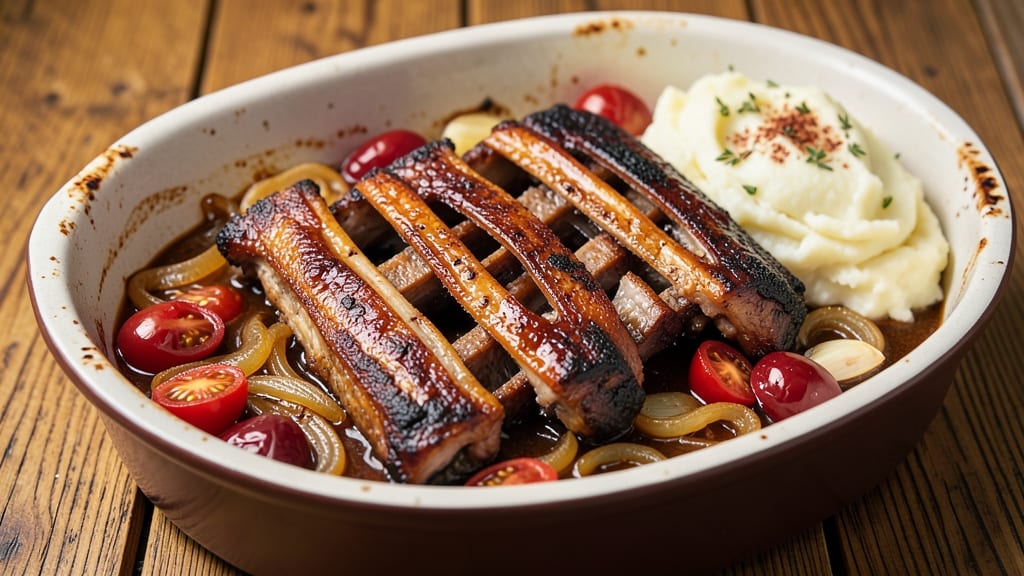
This beef back ribs recipe braised transforms tough cuts into melt-in-your-mouth tenderness through the magic of slow braising. 💛 I've perfected this technique over years of testing—starting with a dry rub of smoked paprika and brown sugar, then searing the ribs to lock in flavor before they disappear into an aromatic red wine reduction.
The result? Rich, fall-off-the-bone meat that tastes like a Sunday supper at your favorite Italian restaurant.
The secret lies in patience: ribs simmer for hours in a flavorful liquid until they're so tender they practically shred with a fork.
I use a combination of beef broth, red wine, and aromatics like garlic and thyme to build depth, while a touch of vinegar at the end brightens the sauce. This method works equally well in a Dutch oven or pressure cooker—just adjust the timing.
By the end, you'll have ribs that are impossibly tender, coated in a glossy, spice-infused sauce that clings to every bite. The aroma alone will have everyone gathering around the table, and the texture—juicy, flavorful, and effortlessly tender—is worth every minute of waiting.
Serve with creamy mashed potatoes or roasted root vegetables to soak up every last drop of that delicious sauce.
This recipe scales beautifully for gatherings, and leftovers reheat perfectly—though I've never had any last that long. The technique is foolproof, and the results are restaurant-quality without the fuss. Let's get cooking—your taste buds will thank you.
Ingredients for beef back ribs recipe braised
Six ingredients transform tough ribs into restaurant-quality tenderness through slow braising magic.
| Ingredient | Amount | Notes |
|---|---|---|
| Beef Back Ribs 🥩 | 4 lb | Bone-in, meaty ends preferred |
| Smoked Paprika 🌶️ | 2 tbsp | High-quality, earthy variety |
| Brown Sugar 🍚 | 2 tbsp | Light or dark preferred |
| Kosher Salt 🧂 | 1 ½ tbsp | Diamond Crystal preferred |
| Fresh Thyme 🌿 | ½ cup | Stems removed, chopped |
| Garlic Cloves 🧄 | 8 cloves | Peeled, smashed |
| Yellow Onion 🧅 | 1 whole | Medium, sliced |
| Red Wine 🍷 | 1 ½ cups | Bold, dry variety |
| Beef Broth 💧 | 2 cups | Low-sodium preferred |
| Apple Cider Vinegar 🍎 | 1 tbsp | For brightness |
| Olive Oil 🫒 | ¼ cup | Extra-virgin for richness |
| Black Peppercorns 🌶️ | 1 tsp | Freshly cracked |
| Bay Leaves 🌿 | 2 whole | Fresh preferred |
| Fresh Rosemary 🌿 | 1 sprig | Woody stems removed |
The ribs are the star—look for meaty, bone-in cuts with good marbling. Costco or your butcher shop are best for quality. If buying pre-cut, check for even thickness and vibrant color. The smoked paprika should be rich and earthy—Penzeys or the bulk section at Whole Foods have great options. Fresh thyme and rosemary make all the difference here; dried works in a pinch but fresh gives that restaurant-quality aroma. For the red wine, any bold variety like Cabernet Sauvignon or Merlot will work—just avoid anything too sweet.
No red wine? Beef broth with a splash of balsamic vinegar works perfectly. Running low on fresh herbs? Dried thyme at one-third the amount gets you close. The brown sugar can be swapped for maple syrup if you prefer. For the ribs, trimming excess fat isn't necessary but helps the rub adhere better. If you're short on time, pressure cooker ribs cut the cooking time by half—just add 30 minutes to the high-pressure cycle. The apple cider vinegar brightens the sauce; if you don't have it, white wine vinegar works too.
Braised ribs reheat beautifully—just warm in the sauce until heated through. Store leftovers in the fridge for up to 5 days or freeze for 3 months. I always make extra because these disappear fast. The sauce thickens as it cools, so add a splash of broth when reheating if it gets too thick. For serving, keep the ribs in the sauce until ready to eat—they'll stay moist and flavorful. Pair with creamy mashed potatoes or crusty bread to soak up every last drop.
Why You'll Love This Recipe
- No-Fuss Prep: I swear, this takes less time than deciding what to watch on TV. Just sear the ribs, toss in the smoked paprika and brown sugar, then let the oven do the work—no flipping, no fussing, just hands-off magic.
- Sweet-Smoky Magic: That caramelized brown sugar and smoky paprika combo? It’s like a hug for your taste buds. The thyme adds this bright, earthy note that cuts through the richness—every bite is tender, sticky, and ridiculously satisfying.
- Leftovers That Shine: Between us, the second day is often better. The ribs stay juicy, the sauce thickens into something even richer, and I’ve turned last night’s dinner into today’s lunch without breaking a sweat.
- Budget-Friendly Feast: A whole pack of beef back ribs goes a long way, and the spices? You already have them. It’s the kind of meal that makes you feel fancy without emptying your wallet—perfect for when you want to impress but can’t afford takeout.
Step-by-step instructions for braised beef back ribs
Here's how to transform tough ribs into melt-in-your-mouth tenderness through slow braising.
🍳 Step 1: Sear the Ribs for Deep Flavor
Heat the 0.25 cup olive oil in a heavy Dutch oven over medium-high heat until shimmering. Pat the 4 lb beef back ribs completely dry with paper towels—this ensures maximum browning. Working in batches if needed, sear the ribs bone-side down for 8-10 minutes until deeply browned and crispy in spots. Flip carefully and sear the meaty side for another 6-8 minutes.
Real talk: Don't rush this step. The caramelized crust locks in flavor during braising. If your pan gets too crowded, reduce heat slightly to prevent steaming instead of searing. Transfer the ribs to a plate as they brown and set aside.
👨🍳 Step 2: Build the Aromatic Base
In the same Dutch oven, reduce heat to medium and add the 1 whole yellow onion and 8 cloves garlic cloves. Cook for 5-6 minutes until the onions soften and the garlic becomes fragrant. Sprinkle in the 2 tbsp smoked paprika, 1.5 tbsp kosher salt, and 1 tsp black peppercorns, stirring constantly for 30 seconds to toast the spices and release their aromas.
Here's where it gets fun—add the 0.5 cup fresh thyme and 1 sprig fresh rosemary, then pour in the 1.5 cups red wine. Scrape up all those browned bits from the bottom with a wooden spoon—this is pure flavor you don't want to miss. Let the wine simmer for 3-4 minutes until reduced by half.
🥘 Step 3: Braise Until Fork-Tender
Return the ribs to the Dutch oven, meat-side up. Add the 2 cups beef broth and 1 tbsp apple cider vinegar, then tuck in the 2 whole bay leaves. Bring to a gentle simmer, then reduce heat to low (or 300°F in a 350°F oven if using oven method). Cover and braise for 2.5-3 hours until the meat is fork-tender and falls off the bone easily.
The reason we wait until the ribs are fork-tender is that this ensures they'll pull apart beautifully when served. I check doneness by inserting a fork between the bones—if it slides in with minimal resistance, you're golden. If not, add ½ cup water and continue braising for another 30 minutes.
⏰ Step 4: Finish with Brown Sugar Glaze
Once the ribs are tender, increase heat to medium-high and uncover the pot. Sprinkle the 2 tbsp brown sugar evenly over the ribs. Let it caramelize for 3-4 minutes until it forms a glossy glaze. This step adds that perfect balance of sweetness that cuts through the richness.
Here's the thing—don't walk away during this final step. You want the sugar to melt and caramelize but not burn. If it starts to darken too quickly, reduce heat to medium and let it develop slowly. The ribs should be coated in this sticky glaze when done.
🍽️ Step 5: Rest and Serve
Transfer the ribs to a serving platter and let them rest for 10-15 minutes before serving. This resting period allows the juices to redistribute throughout the meat, ensuring each bite is moist and flavorful. Discard the bay leaves before serving.
Serve the ribs with the braising liquid ladled over the top—this sauce is packed with flavor from all the aromatics we built earlier. I like to pair these ribs with crusty bread to soak up all that delicious sauce. The result should be ribs that are so tender they practically melt in your mouth, with a perfect balance of smoky, sweet, and savory flavors.
Pro Tips For Making Beef Back Ribs Recipe Braised
- SEAR THE RIB BONE-SIDE DOWN: I learned this the hard way—skipping the sear means flavor gets stuck in your braising liquid instead of sticking to the meat. Hit the ribs bone-side down first in a hot Dutch oven for 3-4 minutes until the edges darken. That caramelized crust is what makes the difference when they soak up the paprika-sugar sauce later.
- TRIM THE FAT, NOT THE FLAVOR: Beef back ribs come with a thick fat cap that can turn greasy if left whole. Use kitchen shears to trim it down to ¼-inch thick—enough to render flavor but not so much it makes your braise swim. Discard the trimmings or save them for frying potatoes later.
- DON’T RUSH THE LOW-AND-SLOW: After the initial sear, resist the urge to crank the oven to 350°F. Start at 275°F for the first hour—this lets the collagen break down gently without toughening the meat. I used to rush it, and the ribs ended up chewy. Patience here guarantees fork-tender results.
- SWEAT THE THYME FIRST: Fresh thyme sprigs burn easily, and that’s a shame because they’re the aromatic backbone of this dish. Before adding the ribs, toast the thyme in the same Dutch oven for 30 seconds until fragrant, then deglaze with a splash of water. This extracts their oils and keeps them from turning bitter in the long braise.
Regional styles of this recipe
Italian-Inspired Braise
My Nonna's technique from Boston's North End inspired this version—she'd braise ribs with San Marzano tomatoes instead of wine, adding ½ cup crushed and letting them simmer until thickened. The acidity tenderizes the meat while building depth.
I still use the red wine reduction first, then stir in 1 cup tomato passata during the final 30 minutes of braising. 🍅
Carolina Vinegar Braise
Southern cooks swear by white vinegar> for their braises—it cuts through fat beautifully. Replace the apple cider vinegar with 2 tbsp white vinegar> plus 1 tbsp hot sauce> (like Crystal or Tabasco) for heat.
Add 1 tsp ground mustard> to the dry rub for that Carolina BBQ tang. Cook ribs uncovered for the last 15 minutes> to let the sauce reduce further.
French Red Wine Reduction
For a more refined approach, use Burgundy red wine> (like Pinot Noir) instead of Cabernet. Deglaze with 1 cup beef stock> after searing, then add 1 tbsp tomato paste> and 1 sprig tarragon> for that French bistro touch.
Finish with 1 tsp Dijon mustard> and a pinch of salted butter> stirred into the sauce at the end. Serve with crusty baguette slices for dipping.
Pressure Cooker Shortcut
For a 3-hour> version, sear ribs first, then add all braising liquids to your Instant Pot. Cook on high pressure> for 90 minutes>, then quick-release and finish with the brown sugar glaze.
The pressure cooker locks in juices—just be sure to add ½ cup extra liquid> to prevent burning. I add 1 cup chicken broth> instead of wine for safety, then deglaze with ½ cup red wine> after cooking.
Boston Pub-Style
This is what you'd find at a Boston pub—ribs braised with ½ cup Guinness> instead of wine, plus 1 tbsp Worcestershire sauce> in the braising liquid. Add 1 small carrot> and 1 celery stalk> chopped to the base for that classic pub aroma.
Finish with a sprinkle of grated Parmesan> before serving. The maltiness from the Guinness pairs perfectly with the sweet glaze.
Spicy Cajun Twist
For heat lovers, add 1 tbsp Cajun seasoning> (like Tony Chachere's) to the dry rub and ½ tsp cayenne> to the braising liquid. Stir in 1 chopped jalapeño> during the final 15 minutes> of cooking.
Serve with cornbread> and a cooling avocado crema> (mix ½ cup sour cream> with 1 tbsp lime juice> and 2 tbsp chopped cilantro>).
Nutrition facts
Frequently asked questions
Can I use pork back ribs instead of beef?
While beef back ribs work perfectly for this braised recipe, pork back ribs would require adjustments. Pork cooks faster and has a different texture, so reduce braising time to 1.5-2 hours and use ½ cup apple cider vinegar instead of red wine for better acidity balance. The sauce will also need less sugar—try 1 tbsp brown sugar instead.
What's the best way to reheat braised ribs?
Reheat gently in the same braising liquid over low heat for 10-15 minutes, adding a splash of broth if the sauce thickens too much. For extra tenderness, cover the pan and let the ribs steam for the last 5 minutes. Never microwave—it makes the meat tough. The ribs reheat best when submerged in sauce.
How do I know when the ribs are fully tender?
Use the fork test: insert a fork between the bones—if it slides in with minimal resistance and the meat pulls apart easily, they're done. Another trick is to check the bone: when the meat lifts cleanly from the bone with gentle pressure, it's perfectly tender. Overcooking can make them mushy, so aim for 2.5-3 hours total braising time.
Can I make this recipe in a slow cooker?
Sear the ribs first, then transfer everything to a 6-quart slow cooker with all braising ingredients. Cook on low for 8 hours or high for 5-6 hours, adding ½ cup water if needed to prevent drying. The slow cooker's gentle heat ensures perfect tenderness without watching the pot. Just finish with the brown sugar glaze on the stovetop.
What if my ribs are still tough after braising?
This usually happens if they weren't cooked long enough or the liquid wasn't acidic enough. Add ½ cup more broth and 1 tbsp vinegar, then cover and cook another 30-45 minutes. For extra tenderness, shred the meat and return it to the pot to finish cooking. If they're still tough, the ribs might have been frozen—thaw completely next time.