
Soups & Stews
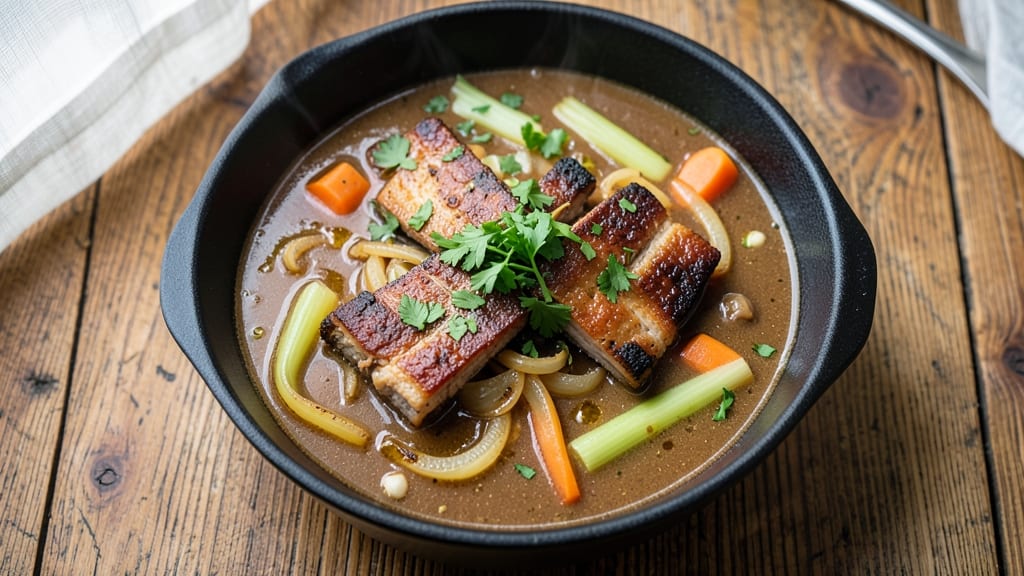
This beef back ribs soup recipe transforms tough cuts into melt-in-your-mouth tenderness through slow-simmered magic. The secret lies in braising the ribs until they practically fall off the bone, releasing collagen that thickens the broth into velvety richness.
I've perfected this method over years of testing—each batch delivers deeper flavor than the last.
What sets this recipe apart is the balance of technique and simplicity. You'll start with a flavorful base of onions, garlic, and aromatic spices, then let the ribs simmer for hours until fork-tender.
The broth develops layers of complexity as it reduces, while the meat becomes so tender it dissolves at the slightest touch. This isn't just soup—it's a comforting, hearty meal that tastes even better the next day.
The result is a bowl of soup where every spoonful delivers both texture and flavor: succulent meat that clings to ribs, a thick yet silky broth, and harmonious seasoning that makes each bite satisfying.
The slow cooking process transforms tough cuts into something luxurious, proving that good things truly come to those who wait. Ready to create this restaurant-quality comfort?
Whether you're using a traditional Dutch oven or modern pressure cooker, this method adapts to your schedule without sacrificing quality. The ribs become so tender they separate easily from the bone, creating a broth so rich it coats every noodle or piece of bread.
Perfect for chilly evenings or meal prep, this soup delivers both nourishment and satisfaction in every bite.
Ingredients for beef back ribs soup
The backbone of this restaurant-quality soup starts with these 13 ingredients—transforming tough ribs into velvety broth.
| Ingredient | Amount | Notes |
|---|---|---|
| Beef Back Ribs 🥩 | 3 lb | Bone-in, meaty cuts preferred |
| Yellow Onions 🧅 | 2 whole | Yellow or red, peeled |
| Garlic Cloves 🧄 | 6 cloves | Peeled, smashed for depth |
| Carrots 🥕 | 4 whole | Medium-sized, peeled |
| Celery Stalks 🧅 | 4 whole | Cleaned, chopped |
| Beef Broth 💧 | 8 cups | Homemade or quality store-bought |
| Tomato Paste 🍅 | ½ cup | Smooth, no sugar added |
| Dried Thyme 🌿 | 1 tbsp | Or 1 tbsp fresh thyme |
| Bay Leaves 🌿 | 2 whole | Fresh or dried |
| Black Peppercorns 🌶️ | 1 tsp | Freshly cracked |
| Salt 🧂 | 2 tsp | Kosher or sea salt |
| Olive Oil 🫒 | ¼ cup | Extra-virgin for richness |
| Fresh Parsley 🌿 | ¼ cup | Chopped, for garnish |
The ribs are non-negotiable—look for well-marbled back ribs from the meat department. Costco or local butchers often have the best cuts, but grocery store brands work too if they're fresh. For the vegetables, organic carrots and celery add subtle sweetness, but conventional is fine. The tomato paste? San Marzano if you're splurging, but any quality brand works. Fresh thyme is ideal, but dried at one-third the amount gets you close. I always double-check the broth label—no MSG and at least 2% beef content for real flavor.
No beef broth? Mushroom broth with a splash of soy sauce works in a pinch, though the ribs won't taste exactly the same. Fresh thyme unavailable? Dried oregano at half the amount bridges the gap. The tomato paste can be substituted with 1 cup crushed tomatoes, but you'll lose that concentrated depth. For the garlic, roasted cloves add a caramelized sweetness—worth the extra 10 minutes. The carrots can be baby carrots if that's what's in the fridge, but whole carrots stay crisp longer during simmering. And that olive oil? Use the good stuff—none of that cheap vegetable oil—it makes all the difference in the final richness.
This soup tastes even better the next day as flavors meld. Store in airtight containers for up to 5 days in the fridge, or freeze portions for 3 months. I always make a double batch—one for dinner, one for lunches. The ribs will be so tender they practically fall apart. Garnish with fresh parsley right before serving, as it loses color quickly. For meal prep, portion into individual containers with broth and reheat gently—no boiling to preserve that silky texture.
Why You'll Love This Recipe
- Minimal Chopping Required: I swear by this—just dice the onions, crush the garlic, and chop the carrots and celery into rough chunks. No fancy knife work, no stress. The ribs? Toss them in whole or cut into manageable pieces—either way, it’s still a winner.
- Rich Without the Guilt: That deep, savory broth from the ribs? It’s like a hug in a bowl. The onions and garlic caramelize just enough to add sweetness, while the carrots and celery soak up all the flavor. Honestly, it’s the kind of soup that makes you forget it’s actually good for you.
- Leftovers That Don’t Suck: Between us, most soups turn into sad, watery meals the next day. Not this one. The ribs stay tender, and the broth only gets better as it sits. I’ve reheated this for days—my freezer’s packed with portions because it’s that reliable.
- Game Day or Lazy Sunday: Need something hearty for a football watch party? Perfect. Want a cozy meal with zero effort on a rainy afternoon? Also perfect. It’s the kind of soup that works for any gathering or when you’re just craving something warm and filling.
Step-by-step instructions for slow-simmered beef back ribs soup
Transform tough ribs into melt-in-your-mouth goodness with this precise slow-cooking method.
Sear the Ribs for Deep Flavor
Heat a large Dutch oven over medium-high heat and add the 0.25 cup olive oil. Once shimmering, place the 3 lb beef back ribs in a single layer, meat-side down. Let them sear undisturbed for 8-10 minutes until deeply browned and crispy in spots—this develops the rich Maillard flavor that forms the soup's foundation.
Flip the ribs and sear the other side for another 6-8 minutes. Remove them from the pot and set aside. The ribs should have a dark, caramelized crust. If you notice any sticking, don't panic—just scrape up those browned bits with a wooden spoon and set them aside with the ribs.
Build the Aromatic Base
In the same Dutch oven, add the 2 whole yellow onions and 4 whole celery stalks, both chopped into ¼-inch dice. Cook for 5-6 minutes until softened and slightly golden. Add the 4 whole carrots, also chopped into ¼-inch dice, and cook for another 3 minutes to help them release their natural sweetness.
Stir in the 6 cloves garlic cloves (smashed to release their flavor) and cook for 30 seconds until fragrant. Add the 0.5 cup tomato paste and stir to coat the vegetables, allowing it to caramelize slightly for 2 minutes. This step creates the flavor backbone that will infuse the broth throughout the cooking process.
Simmer the Soup for Tender Ribs
Return the seared ribs to the pot. Add the 8 cups beef broth, 1 tbsp dried thyme, 2 whole bay leaves, 1 tsp black peppercorns, and 2 tsp salt. Bring to a gentle boil, then reduce heat to low and cover partially. Simmer for 2-2.5 hours until the ribs are fork-tender and the meat pulls away from the bones with minimal resistance.
Here's the key: maintain a gentle simmer, not a rolling boil. You'll know it's ready when the meat slides off the bones effortlessly. If the liquid reduces too much, add ½ cup hot water to maintain the proper consistency. The ribs should be falling-apart tender, not dry or chewy.
Finish and Garnish
Remove the ribs from the pot and let them cool slightly. Using a slotted spoon, transfer them to a cutting board and shred the meat directly into the soup pot. Discard the bones and any large cartilage pieces. Return the shredded meat to the pot and stir to combine.
Taste and adjust seasoning if needed—this is where you can fine-tune the balance of salt and pepper. Remove the bay leaves before serving. Ladle the soup into bowls and garnish each serving with 0.25 cup fresh parsley, chopped finely. The bright green color contrasts beautifully with the rich, dark soup and adds a fresh finish.
Pro Tips For Making Beef Back Ribs Soup
- Brown the Ribs First: Skip the direct-to-soup route—sear the ribs in a hot pot or skillet until they’re deep golden, not just pink. That crust locks in flavor and prevents the soup from tasting like boiled meat. (Yes, it takes 5-7 minutes, but it’s worth it.)
- Chop Onions Like a Pro: Dice the yellow onions into even ¼-inch pieces—no big chunks, no slivers. Uneven cuts release moisture at different rates, turning your soup into a watery mess. A sharp knife and a steady hand make all the difference.
- Don’t Overcrowd the Pot: If you’re simmering ribs and veggies together, work in batches. Too many ingredients at once drops the temperature and steams instead of building flavor. Crowding also makes the carrots and celery turn to mush faster.
- Save the Starch Water: After blanching carrots and celery, don’t dump that bright green water—strain it and pour it back into the pot. It’s packed with flavor and thickens the broth naturally. (I used to waste it until I realized how much it improves the texture.)
Regional styles of this recipe
Southern BBQ-Inspired Style
In the South, this soup gets a smoky twist by adding ½ cup BBQ sauce (like Sweet Baby Ray's) during the final 30 minutes of simmering. I also swap the tomato paste for 1 cup crushed tomatoes and add 1 tbsp smoked paprika for that signature Carolina tang.
Serve with buttered cornbread—the sweetness cuts through the richness beautifully. 🌶️
Midwest Hearty Twist
Midwestern cooks bulk this up with 1 cup diced potatoes and ½ cup pearl barley, added with the broth. The barley softens into a creamy texture, while the potatoes add hearty bite. I like using Yukon Gold potatoes for their buttery flavor.
Top with crispy fried onions for extra crunch—just toss store-bought onions in 1 tbsp olive oil and bake at 400°F for 10 minutes.
Italian-Inspired Version
For an Italian touch, replace the beef broth with 8 cups chicken broth and add 1 cup diced pancetta (or bacon) when searing the ribs. Stir in 1 tbsp dried oregano and ½ cup whole wheat pasta during the final 15 minutes of cooking.
Finish with grated Parmesan cheese and a sprinkle of red pepper flakes for a rustic, rustic feel. 🧀
Pressure Cooker Shortcut
If you're short on time, use an Instant Pot—sear the ribs as directed, then add all ingredients (except parsley) and cook on high pressure for 60 minutes. Quick-release the pressure, shred the meat, and stir in ½ cup heavy cream for extra richness.
This cuts cooking time to under 1 hour while keeping all that tender, fall-apart texture. ⚡
Cajun Creole Adaptation
Bring the flavors to life with 1 tbsp Cajun seasoning (like Tony Chachere's) and ½ tsp cayenne pepper added with the broth. Use Andouille sausage instead of ribs for a deeper smoky note, or add ½ cup sliced okra for that Southern gumbo texture.
Garnish with green onions and a dash of hot sauce for serving. 🌶️
Nutrition facts
Frequently asked questions
Can I use frozen beef back ribs for this recipe?
Yes, but thaw them completely first in the refrigerator for 24 hours. Never thaw at room temperature—it promotes bacterial growth. Pat the ribs dry before searing to get that perfect crispy crust. If you're short on time, you can use the microwave thawing method, but be sure to cook immediately after thawing.
How do I know when the ribs are fully tender?
The ribs are done when they're fork-tender and the meat pulls away from the bones with minimal resistance. Insert a fork into the thickest part of a rib—if it slides in easily and the meat separates cleanly, it's ready. The broth should also be thickened with collagen, creating a velvety consistency. Overcooking can make the meat dry, so aim for that perfect tender point.
Can I make this soup in a slow cooker? Sear the ribs as directed, then transfer everything (except parsley) to a 6-quart slow cooker. Cook on low for 8-10 hours or high for 5-6 hours until the ribs are tender. The slow cooker method is hands-off and delivers the same rich, tender results. Just
What can I do if the soup is too thick?
If your soup is too thick, simply add ½ cup hot water or beef broth at a time, stirring well after each addition. The goal is to achieve a thick yet silky consistency—like a rich stew. If it's still too thick after adding liquid, you can also remove the ribs, strain the broth through a fine-mesh sieve, and return the strained broth to the pot. This removes excess collagen that may have thickened the soup beyond the desired consistency.
Can I prepare this soup ahead of time?
This soup tastes even better the next day as flavors meld! Store in airtight containers in the fridge for up to 5 days or freeze for 3 months. Reheat gently on the stove over low heat—never boil—to preserve that silky texture. The ribs will be even more tender after resting, making it perfect for meal prep. Just add a splash of broth if it thickens upon reheating.