
Soups & Stews
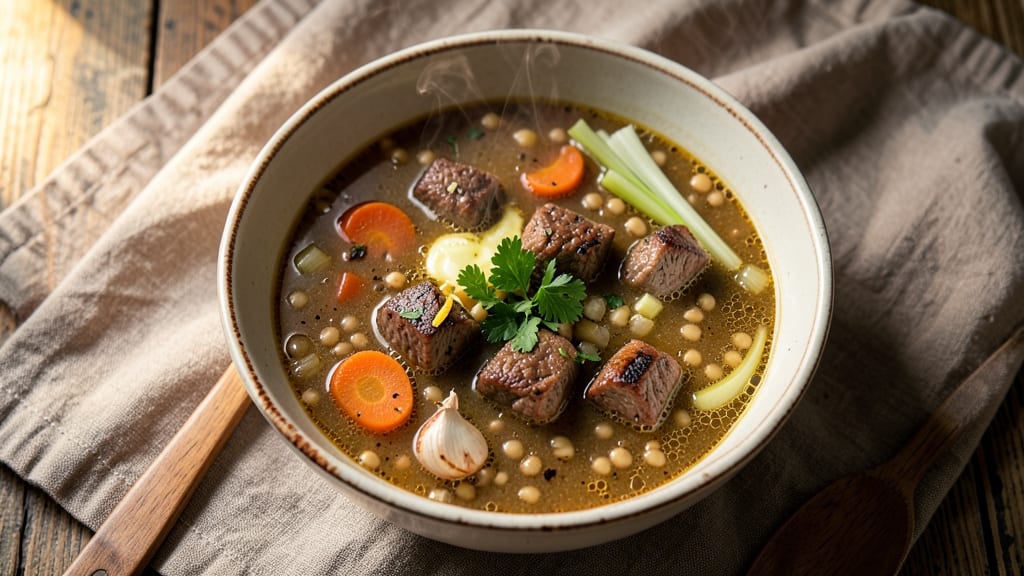
Alton Brown's beef barley soup recipe transforms humble ingredients into a deeply satisfying bowl of slow-simmered comfort. The secret lies in toasting the barley for nutty depth and letting the beef develop rich, tender flavors over hours of gentle cooking.
This isn't just soup—it's a restaurant-quality dish that builds flavor layer by layer, with every sip delivering warmth and complexity.
The process begins with browning beef chuck for maximum flavor, then simmering it in a homemade broth until fork-tender. Barley, toasted to a golden hue, adds a satisfying crunch that contrasts beautifully with the velvety broth.
What makes this recipe special is how simple ingredients—beef, barley, vegetables, and herbs—combine to create something far more impressive than their individual parts.
By the time you're done, you'll have a soup that's rich in flavor, tender in texture, and packed with hearty goodness. The aroma alone will have everyone gathering around the table, while the first spoonful delivers that perfect balance of savory beef, earthy barley, and fresh herbs.
This is the kind of soup that tastes even better the next day, making it ideal for meal prep or feeding a crowd.
Perfect for chilly evenings or as a comforting meal any time of year, this beef barley soup proves that slow cooking yields extraordinary results. The technique is straightforward but requires patience—worth every minute for a bowl that feels like a warm embrace.
Let's get started on creating this classic with modern flair.
Ingredients for beef barley soup recipe alton brown
Sixteen ingredients building restaurant-quality beef barley soup with deep, toasted barley crunch and rich beef flavor.
| Ingredient | Amount | Notes |
|---|---|---|
| Beef Chuck Roast 🥩 | 2 lb | Cut into 1-inch cubes |
| Pearl Barley 🌾 | 1 cup | Uncooked, rinsed well |
| Yellow Onion 🧅 | 1 whole | Chopped into 1/2-inch pieces |
| Carrots 🥕 | 4 medium | Peeled, cut into 1/2-inch slices |
| Celery Stalks 🧄 | 3 whole | Chopped into 1/2-inch pieces |
| Garlic Cloves 🧄 | 4 cloves | Minced finely |
| Fresh Thyme 🌿 | 2 sprigs | Or 1 tsp dried thyme |
| Fresh Parsley 🌿 | ¼ cup | Chopped for garnish |
| Beef Broth 💧 | 6 cups | Homemade preferred |
| Dry Red Wine 🍷 | 1 cup | Bold variety like Cabernet |
| Tomato Paste 🍅 | 2 tbsp | For depth of flavor |
| Olive Oil 🫒 | 2 tbsp | For toasting barley |
| Salt 🧂 | 1 ½ tsp | Kosher or sea salt |
| Black Pepper 🌶️ | ½ tsp | Freshly ground |
| Bay Leaves 🍃 | 2 whole | For subtle aroma |
The beef chuck is non-negotiable here—look for good marbling at the butcher counter. Costco or Whole Foods carry excellent cuts for this recipe. Pearl barley should be rinsed well before toasting to remove excess starch, which prevents gumminess. Fresh thyme and bay leaves elevate the dish beyond basic flavors—Penzeys Spices has excellent dried options if you prefer convenience. For the broth, homemade is ideal, but a high-quality store-bought like Pacific Foods works in a pinch.
No red wine? Substitute with additional beef broth—just add 1 tablespoon of balsamic vinegar for depth. Fresh herbs can be swapped for dried at one-third the amount, but the texture differs. The carrots and celery can be swapped for other root vegetables like parsnips or turnips if preferred. For a quicker prep, pre-chopped mirepoix mixes from Trader Joe's save time without sacrificing flavor. The tomato paste can be omitted if you dislike its intensity, though it adds wonderful richness.
This soup tastes even better the next day as flavors meld. Store in an airtight container for up to 5 days in the fridge. For freezing, portion into 2-cup servings for easy reheating. The barley holds its texture well after reheating—add a splash of broth if it appears too thick. Double the batch and freeze half for future meals—homemade soup makes the best freezer meals.
Why You'll Love This Recipe
- One-Pot Magic: I swear by this soup because it’s actually one-pot—no chopping boards, no extra pans. Toss the chuck roast, onions, carrots, and celery into the pot, add water, and let it simmer. The barley softens right in the broth, so you’re not juggling multiple dishes or worrying about timing.
- Deep Umami Bomb: That slow-cooked chuck roast? It melts into the broth, turning it into a rich, savory base that’s way more interesting than basic beef broth. The barley adds a satisfying chew, and the carrots and celery sweeten just enough to balance it out—like a hug in a bowl, but with more protein.
- Leftovers That Don’t Suck: Between us, most soups turn into sad, watery meals by day three. Not this one. The barley thickens as it sits, and the beef stays tender, so your lunch the next day is just as good as the first serving. I’ve reheated mine three times, and it’s still hearty enough to fill me up.
- Budget-Friendly Powerhouse: A chuck roast is cheap, barley lasts forever, and veggies are dirt simple to find. I’ve made this for under $1.50 per serving, and it’s the kind of meal that makes you feel like you’re feeding a crowd without breaking the bank. Plus, it’s the one dish I can make when I’m too tired to think about groceries.
Step-by-step instructions for alton brown's beef barley soup
Master this slow-simmered classic with professional techniques for rich, layered flavor.
Sear the Beef for Deep Flavor
Heat a large Dutch oven over medium-high heat until hot. Add the 2 tablespoons olive oil and let it shimmer for 30 seconds. Working in batches to avoid crowding, add the 2 lb beef chuck roast cut into 1-inch cubes and sear for 3-4 minutes per side until deeply browned.
This crucial step develops the Maillard reaction, creating complex flavors that form the soup's foundation. Don't rush the searing—you want each piece to develop a rich, caramelized crust. Transfer the browned beef to a plate and set aside temporarily.
Toast the Barley and Build the Vegetable Base
In the same Dutch oven, add another 1 tablespoon olive oil and reduce heat to medium. Add the 1 cup pearl barley and toast for 2-3 minutes, stirring constantly, until it turns a golden color and smells nutty. This toasting enhances the barley's flavor and prevents it from becoming mushy.
Add the chopped yellow onion, peeled and sliced carrots, and chopped celery stalks. Cook for 5-6 minutes, stirring occasionally, until the vegetables begin to soften and release their aromatics. Add the minced garlic cloves and cook for another 30 seconds until fragrant.
Deglaze and Combine All Ingredients
Pour in the 1 cup dry red wine and scrape up all the browned bits from the bottom of the pot with a wooden spoon. This deglazing step captures all the caramelized flavors you've built. Let the wine simmer for 2-3 minutes until reduced by half.
Add the 2 tablespoons tomato paste, 6 cups beef broth, 1.5 teaspoons salt, 0.5 teaspoon black pepper, and the 2 whole bay leaves. Stir well to combine, then return the seared beef to the pot. Bring to a gentle boil, then reduce heat to low and add the 2 sprigs fresh thyme.
Simmer Until Tender and Flavorful
Cover the pot and let the soup simmer gently for 2 hours, stirring occasionally. The soup should bubble softly with occasional small bubbles breaking the surface. This long simmering time allows all the flavors to meld together and the beef to become fork-tender.
Check the barley for doneness after 1 hour—it should be tender but still hold its shape. If it's not quite ready, continue simmering for another 30-60 minutes. The soup should reduce slightly, becoming more concentrated and flavorful as it cooks.
Finish and Serve with Fresh Herbs
Remove the bay leaves and thyme sprigs from the soup. Taste and adjust seasoning if needed—you may need to add more salt or pepper to balance the flavors. The soup should be rich and well-seasoned with a deep, savory taste.
Ladle the soup into bowls and garnish each serving with 0.25 cup chopped fresh parsley. Serve immediately with crusty bread to soak up the delicious broth. The toasted barley will add a delightful crunch to each spoonful, balancing the creamy texture of the soup.
Pro Tips For Making Beef Barley Soup Recipe Alton Brown
- SEAR THE ROAST FIRST: I learned this the hard way—skipping the sear means flavor that’s more "beef broth" than "beef." Pat the chuck roast very dry, then hit it with high heat in a heavy pot until you get deep brown crusts on all sides. That crust isn’t just for looks; it’s where the Maillard reaction turns your soup from good to rich and complex.
- SOAK THE BARLEY (BUT NOT TOO LONG): Pearl barley absorbs water like a sponge, and over-soaking turns it mushy. Give it a 15-minute soak in cold water (no need to boil it first), then drain. This cuts cooking time by about 30 minutes without sacrificing texture—just don’t let it sit in water longer than 20 minutes, or you’ll regret it when you taste the gummy bite.
- DON’T SKIP THE BROWNING ON VEGETABLES: I used to toss diced onions, carrots, and celery into the pot raw, thinking it didn’t matter. Wrong. After browning them in batches (yes, it takes a few minutes), the soup develops a depth that raw veggies just can’t match. The onions should be golden, the carrots caramelized at the edges—this is where the sweetness comes from.
- USE THE FAT FROM THE ROAST: That golden, rendered fat from the seared chuck roast? Don’t pour it out. It’s liquid flavor. After removing the roast for the first simmer, leave the pot on the stove for 2–3 minutes to let the fat bloom. Stir it into the broth later—it’ll make the soup taste richer without adding extra oil or butter. (Yes, even if you’re impatient like me.)
Serving suggestions for this beef barley soup recipe alton brown
Bread Pairings
Serve this hearty soup with a crusty baguette or sourdough to soak up every last drop of flavor. I love using Artisan Baker's or Trader Joe's frozen sourdough—just toast it until golden for extra crunch.
For a more rustic touch, try a homemade whole wheat loaf or rye bread to complement the barley's nutty undertones. 🥖
For a gourmet twist, pair with garlic focaccia or cheesy pull-apart bread—the rich, buttery notes contrast beautifully with the soup's savory depth. If you're serving a crowd, pita bread or naan works perfectly for easy scooping. Keep the bread on the table so everyone can enjoy the full experience.
Cheese Additions
Add a sprinkle of grated Parmesan cheese right before serving to bring out the soup's savory notes. I recommend Parmigiano-Reggiano for its nutty, sharp flavor that pairs exceptionally well.
For a creamy touch, stir in shredded Gruyère or Swiss cheese during the last 15 minutes of simmering. These cheeses melt beautifully and add a luxurious texture.
For a vegetarian-friendly option, top with crumbled feta or goat cheese—the tangy contrast cuts through the richness of the beef. If you prefer something bolder, blue cheese crumbles add a deep, funky dimension that surprises and delights.
Just be mindful of how much you add, as cheese can quickly overpower the delicate balance of flavors.
Toppings for Extra Crunch
Finish each bowl with a fresh herb garnish like chopped parsley or cilantro for brightness. I also love adding toasted breadcrumbs or crushed croutons for a satisfying crunch. For a smoky touch, sprinkle with smoked paprika or crumbled bacon bits—just 2 tablespoons of crispy bacon adds incredible depth. 🌟
For a pop of color and freshness, try thinly sliced radishes or quick-pickled red onions. These add a bright, crisp contrast to the warm, hearty soup. If you're feeling adventurous, top with crispy fried shallots or toasted pumpkin seeds for an unexpected but delicious crunch.
These toppings elevate the dish from comforting to extraordinary.
Side Dish Ideas
A simple mixed green salad with a lemon vinaigrette balances the richness of the soup perfectly. Toss arugula, spinach, and cherry tomatoes with olive oil, lemon juice, and a pinch of salt for a refreshing contrast.
For a heartier side, serve with roasted Brussels sprouts or mashed sweet potatoes—both add natural sweetness that complements the soup's savory profile.
If you're serving this soup as a main course, consider adding crispy roasted potatoes or buttery cornbread. The contrast of textures and temperatures makes every bite exciting.
For a lighter option, a steamed vegetable medley with green beans, carrots, and peas adds color and nutrition without overpowering the main dish. Keep sides simple so the soup remains the star.
Nutrition facts
Frequently asked questions
Can I use a slow cooker for this beef barley soup?
Brown the beef in a skillet first, then transfer everything to a 6-quart slow cooker. Cook on low for 7-8 hours or high for 4-5 hours, stirring occasionally. The slow cooker keeps the barley tender and beef fork-tender without watching the pot. Just add 1/2 cup water if it gets too thick during cooking.
What's the best way to make this soup vegetarian?
Replace the beef with 2 cups mushrooms (cremini or portobello) and 1 cup lentils for heartiness. Use vegetable broth instead of beef broth, and add 1 teaspoon soy sauce for umami depth. The toasted barley and wine still work beautifully—just reduce the simmer time to 1 hour for the lentils.
Why does my barley turn mushy?
Mushy barley usually means it cooked too long or wasn't toasted properly first. Always toast the barley in oil for 2-3 minutes until golden before adding liquid. For extra insurance, use 1/2 cup pearl barley and 1/2 cup quick-cooking barley—the quick barley absorbs liquid faster and holds its shape better. Never let the soup boil vigorously after adding barley.
Can I make this soup ahead of time?
This soup tastes even better the next day! Store in an airtight container for up to 5 days in the fridge. For freezing, portion into 2-cup servings and freeze for up to 3 months. Thaw overnight in the fridge—never microwave directly from frozen. If it seems thick after reheating, add a splash of broth or water to reach your desired consistency.
What's the secret to making the broth extra flavorful?
Start with a homemade beef broth using beef bones, onion, carrot, celery, and bay leaves simmered for 4-6 hours. For extra depth, add 1 teaspoon fish sauce or 1/2 cup tomato paste to the soup during simmering. A splash of red wine vinegar (1 tablespoon) at the end brightens the flavors without overpowering.