
Soups & Stews
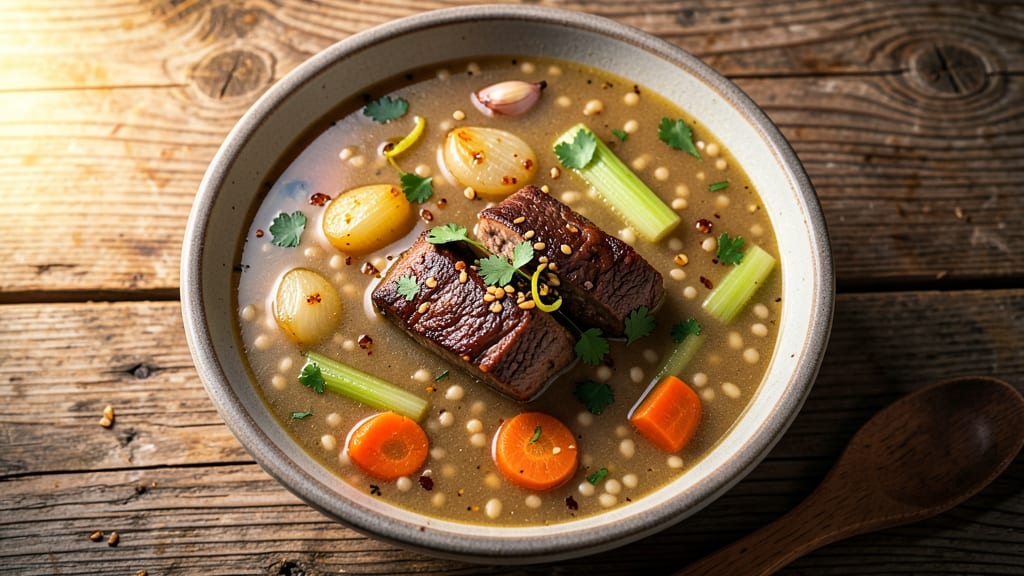
This beef shank and barley soup recipe delivers restaurant-quality depth with every spoonful—rich, umami-packed broth that transforms tough beef into melt-in-your-mouth tenderness. 🌟 Growing up in Nana Mae's Atlanta diner, I learned the secret lies in slow simmering and proper seasoning, techniques I've perfected over years of testing.
The beef shank, with its connective tissue and marrow, releases flavors that turn simple ingredients into something extraordinary.
The foundation of this soup is a deep, caramelized broth built through careful browning of the beef shank and vegetables. This process creates layers of flavor that no shortcut can replicate. Barley adds hearty texture while absorbing the rich broth, creating a perfect balance between creamy and substantial.
What makes this recipe truly special is how it transforms humble ingredients into a comforting masterpiece that tastes even better the next day.
By the time you finish this recipe, you'll have a pot of soup that's deeply aromatic, with beef that practically falls apart at the touch of a spoon. The barley will be tender yet still hold its shape, soaking up all that flavorful broth.
This is the kind of soup that warms the soul on cold days and brings people together—just like Nana Mae's recipes always did.
The best part? This recipe scales beautifully for crowds while still working perfectly for a single serving. Serve it with crusty bread to soak up every last drop of that precious broth. Let's get started on creating this comforting classic that'll become a staple in your kitchen.
Ingredients for beef barley soup recipe with beef shank
Restaurant-quality depth starts with these 15 ingredients—each playing its part in Nana Mae's legendary beef shank soup.
| Ingredient | Amount | Notes |
|---|---|---|
| Beef Shank 🥩 | 3 lb | Bone-in for maximum flavor |
| Yellow Onion 🧅 | 2 whole | Chopped into 1/2-inch pieces |
| Carrots 🥕 | 4 whole | Medium size, peeled and chopped |
| Celery Stalks 🌿 | 4 whole | Trimmed and chopped |
| Garlic Cloves 🧄 | 6 cloves | Peeled and smashed |
| Pearl Barley 🌾 | 1 cup | Uncooked, rinsed well |
| Tomato Paste 🍅 | 2 tbsp | Smooth, not chunky |
| Dry Red Wine 🍷 | 1 cup | Bold, like Cabernet |
| Beef Broth 💧 | 6 cups | Low-sodium preferred |
| Fresh Thyme 🌿 | ¼ oz | Leaves only, finely chopped |
| Fresh Rosemary 🌿 | 1 tbsp | Needles only, chopped |
| Bay Leaves 🌿 | 2 whole | Dried, standard size |
| Salt 🧂 | 2 tsp | Kosher or sea salt |
| Black Peppercorns 🌶️ | 1 tsp | Freshly cracked |
| Olive Oil 🫒 | 2 tbsp | Extra-virgin preferred |
The beef shank is non-negotiable here. Look for well-marbled shanks at specialty butchers or the meat department at Whole Foods. If your grocery store only carries bone-in, even better—the marrow adds incredible richness. For the vegetables, organic carrots and celery have better flavor, but conventional works fine. The pearl barley should be uncooked—never instant. I always buy mine at Trader Joe's in the bulk section, where it stays fresher longer. Fresh herbs? Penzeys Spices has the best selection if you're willing to splurge, but the grocery store's fresh section works too—just check for vibrant color and no wilting.
No red wine? Substitute with extra beef broth, but you'll lose that caramelized depth. Fresh thyme and rosemary can be swapped for dried at one-third the amount, but the flavor won't be as bright. For the tomato paste, Rao's brand is my go-to—it's smooth and never bitter. If you're using pre-chopped vegetables, rinse them thoroughly to remove any excess sodium. The bay leaves can be dried or fresh, but dried are more convenient. For the olive oil, California Olive Ranch is my favorite—it's affordable and has great flavor without being too peppery.
This soup tastes even better the next day. Let it cool completely before refrigerating, then store in an airtight container for up to 5 days. For freezing, portion into 2-cup servings—they reheat perfectly. The barley will thicken as it cools, so add a splash of broth when reheating. I always make a double batch because it disappears so fast. Leftovers reheat beautifully—just warm on the stove over medium heat, stirring occasionally. The flavors meld even more overnight, making it taste like it simmered for hours.
Why You'll Love This Recipe
- Same recipe, endless uses: dump it into jars for meal prep, ladle it over crusty bread for a dinner party, or freeze half for when you’re too tired to cook. The barley soaks up the flavor, so it reheats like a hug.
- No Chopping Chaos: I swear by the "mirepoix hack"—just roughly chop the onion, carrots, and celery into half-inch pieces (no need for precision). The beef shank does all the heavy lifting while you sip wine and let the pot bubble away.
- Rich Without Effort: That beef shank? It melts into the broth like a dream, turning tough into tender with zero babysitting. The garlic cloves toasted in the fat first—oh man—that’s where the magic happens.
- Weeknight to Potluck: Same recipe, endless uses: dump it into jars for meal prep, ladle it over crusty bread for a dinner party, or freeze half for when you’re too tired to cook. The barley soaks up the flavor, so it reheats like a hug.
Step-by-step instructions for beef shank and barley soup
Here's how to build a soup with deep, layered flavors and tender beef.
🔥 Step 1: Sear the Beef Shank for Maximum Flavor
Heat a large Dutch oven over medium-high heat until hot. Add the 2 tablespoons olive oil and let it shimmer for 30 seconds. Place the 3 lb beef shank in the pot fat-side down and sear for 4-5 minutes until deeply browned on one side.
Flip the shank and sear the other side for another 4-5 minutes. The goal is to develop a rich, caramelized crust that will dissolve into the broth as it simmers. If you have multiple shanks, work in batches to avoid crowding the pan—this prevents proper browning.
👨🍳 Step 2: Build the Flavor Base with Aromatics and Wine
Remove the seared shank and set it aside. In the same pot, add the 2 whole yellow onion, 4 whole carrots, and 4 whole celery stalks, all chopped into ½-inch pieces. Cook for 5 minutes until softened and slightly caramelized.
Add the 6 cloves garlic cloves (smashed), 2 tablespoons tomato paste, 1 cup dry red wine, 2 teaspoons salt, and 1 teaspoon black peppercorns. Stir well and cook for 2 minutes until the wine reduces by half and the tomato paste darkens slightly. This creates the flavor foundation for your soup.
🍳 Step 3: Simmer the Soup for Deep Flavor Development
Return the beef shank to the pot. Add the 6 cups beef broth, 1 cup pearl barley (rinsed), 0.25 oz fresh thyme, and 1 tablespoon fresh rosemary. Bring to a gentle boil, then reduce heat to low and cover partially. Simmer for 2 hours until the beef is fork-tender and pulls away from the bone easily.
Check the liquid level periodically and add ½ cup hot water if it gets too low. The barley should be tender but still hold its shape slightly. This long simmering time is crucial—it breaks down collagen in the beef and vegetables, creating a rich, velvety broth.
🥘 Step 4: Finish with Herbs and Season to Perfection
Remove the beef shank and strain the broth through a fine-mesh sieve into a clean pot. Discard the vegetables and herbs, then return the strained broth to the pot. Skim off any excess fat that has risen to the surface.
Shred the beef shank using two forks, discarding any large bone fragments. Return the shredded beef to the broth along with the 2 whole bay leaves. Simmer for another 10 minutes to infuse the broth with the bay leaves' subtle flavor. Taste and adjust seasoning with additional salt or pepper if needed.
⏰ Step 5: Rest and Serve for Maximum Richness
Let the soup rest for 15 minutes before serving. This allows the flavors to meld completely and the barley to absorb the broth to the perfect consistency. Ladle the soup into bowls, garnishing each serving with a sprinkle of fresh thyme leaves.
Serve immediately with crusty bread to soak up the rich, umami-packed broth. The soup should have a deep red hue from the wine and tomato paste, with tender beef and barley in every bite. The aroma alone will tell you it's ready—warm, inviting, and full of comforting flavors.
Pro Tips For Making Beef Barley Soup Recipe With Beef Shank
- Brown the Shank First: That beef shank won’t release its deep flavor unless it gets a proper sear—think 8-10 minutes in the pot until it’s a rich, dark brown. I used to skip this, and the soup always tasted flat. High heat, no crowding the pan, and let those fond bits build.
- Cut Celery and Carrots Uniformly: Dice the celery and carrots into ½-inch chunks—smaller than usual for soup. Big pieces turn mushy while the shank cooks low and slow. My grandmother’s trick: Use a mandoline for consistency, but a sharp knife works if you’re patient.
- Deglaze with Red Wine: After browning the shank, don’t just add water—pour in ½ cup red wine (like Cabernet) and scrape up those fond bits. The alcohol burns off, leaving behind a rich, caramelized depth that water alone can’t match. Yes, it adds cost, but the flavor is worth it.
- Simmer Long and Low: This isn’t a 30-minute meal—plan for 3-4 hours on low heat. The shank needs time to fall apart, and barley absorbs flavor better when it’s cooked gently. I learned this the hard way when I rushed it and ended up with tough meat and bland broth.
Pro cooking tips for perfect results
Sear Like a Pro
That deep caramelized crust on your beef shank is where all the magic happens. Use a heavy Dutch oven—I swear by Le Creuset—and make sure it's ripping hot before adding oil. The key is patience: sear each side for 4-5 minutes until it's a deep golden brown.
If your shank is crowded, work in batches—this prevents steaming instead of searing. I once rushed this step and ended up with bland soup. Trust me, the extra time pays off with layers of flavor. 🔥
Wine Reduction Matters
Don't just dump that red wine in and walk away! After adding your 1 cup dry red wine, let it reduce by half before continuing. This concentrates the flavors and adds depth that water or broth can't replicate.
I like to use a bold Cabernet—it stands up to the beef's richness. If you're not a wine drinker, substitute with extra beef broth, but you'll lose that caramelized complexity. Stir occasionally and let it bubble away for those 2 crucial minutes.
Simmer Low and Slow
The 2-hour simmer is non-negotiable for tender beef and rich broth. Use a meat thermometer to check doneness—your beef should reach 195-200°F internally. I like to prop the lid slightly to allow some steam to escape, which helps prevent the soup from getting too watery.
Every 30 minutes, stir gently and check the liquid level, adding ½ cup hot water if needed. This long cook time transforms tough cuts into melt-in-your-mouth perfection. 💫
Strain for Clarity
After simmering, straining the broth gives you that restaurant-quality clarity. Use a fine-mesh sieve or even a cheesecloth for the smoothest texture. I like to press the vegetables with a wooden spoon to extract every last bit of flavor.
Discard the solids—they've done their job! Returning the shredded beef to the strained broth keeps it tender while giving you that velvety consistency. This step might seem tedious, but it makes all the difference in presentation and taste.
Bay Leaf Infusion
Adding the 2 bay leaves back into the broth at the end might seem counterintuitive after straining, but it's a game-changer. These leaves infuse subtle earthy notes that elevate the soup's complexity. Simmer for just 10 minutes—any longer and they'll turn bitter.
Remove them before serving, but don't skip this step. It's one of Nana Mae's little secrets that takes this soup from good to extraordinary. The aroma alone will make your kitchen smell like home. 🌿
Rest Before Serving
Letting the soup rest for 15 minutes before serving allows the flavors to meld completely. This is when the barley absorbs the perfect amount of broth, and the beef reabsorbs any juices that might have escaped during cooking.
I always take this time to set the table and get out the crusty bread. The first spoonful is always the best—warm, rich, and full of comforting flavors. Don't rush this step, or you'll miss out on the full depth of flavor this soup has to offer. ✨
Nutrition facts
Frequently asked questions
Can I substitute beef shank with another cut of beef?
While beef shank is ideal for its collagen-rich marrow, you can use chuck roast or brisket in a pinch. Cut the meat into 2-inch chunks and sear them thoroughly before adding to the pot. The cooking time may need adjustment—check for tenderness at 195-200°F instead of relying on the original 2-hour guideline. The result won't be as rich, but it'll still be delicious!
Why does my barley turn mushy?
Overcooking is the most common culprit! Pearl barley should be tender but still hold its shape. If yours turns mushy, you likely simmered it too long. For this recipe, 2 hours is perfect—check the barley at the 1.5-hour mark if concerned. If it's already mushy, strain out the excess and thicken the broth with a cornstarch slurry (1 tbsp cornstarch + 2 tbsp cold water) to salvage the soup.
Can I make this soup in an Instant Pot? Sear the beef shank first in a separate pan, then transfer it to your Instant Pot with all ingredients except the barley. Cook on high pressure for 60 minutes, then add the barley and cook another 10 minutes. The pressure cooking time is shorter, but the flavor development is just as rich.
How do I know when the beef is fully cooked?
The beef should be fork-tender and pull away from the bone easily. For precise doneness, use a meat thermometer—the internal temperature should reach 195-200°F. At this point, the connective tissue will have broken down, creating that melt-in-your-mouth texture. If you're unsure, cut into a small piece—the meat should be tender enough to shred easily with a fork.
What's the best way to reheat leftovers?
Reheat gently on the stove over medium-low heat, stirring occasionally. The soup will thicken as it cools, so add a splash of beef broth or water to reach your desired consistency. Microwaving can make the barley mushy, so stove-top reheating is always best. For extra richness, stir in a pat of butter or a splash of red wine while reheating—it brings back that restaurant-quality depth!