
Soups & Stews
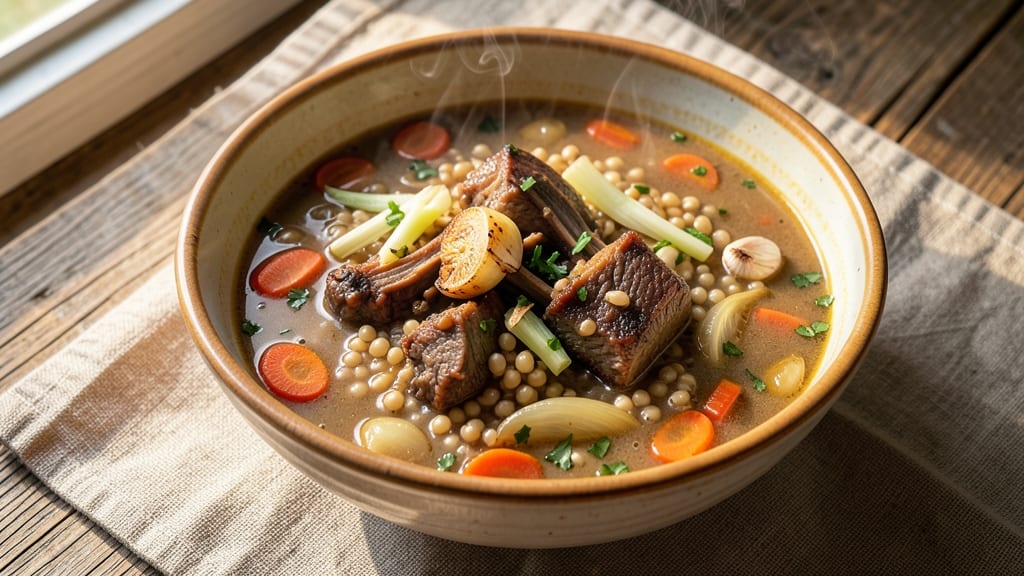
This beef barley soup recipe with soup bones transforms humble ingredients into a deeply flavorful, nourishing meal that tastes like a hug in a bowl. 🔥 The secret lies in slow-roasting soup bones until they crackle with caramelized richness, then simmering them for hours to extract gelatinous depth that transforms simple broth into liquid gold.
Every spoonful delivers tender beef, hearty barley, and vegetables infused with that unmistakable bone broth intensity.
The beauty of this recipe is its balance of tradition and convenience—you can achieve restaurant-quality results with a 6-hour slow cooker or a 2-hour pressure cooker, making it perfect for busy weeknights or weekend projects.
The barley softens just enough to hold its shape while absorbing all that savory broth, creating a perfect textural contrast to the melt-in-your-mouth beef chunks. This isn't just soup; it's a one-pot wonder that feeds the soul as much as it feeds the body.
What makes this version truly special is the deep-roasted bone technique, which develops complex caramelized notes that elevate the broth beyond basic beef flavor. The soup builds layers of umami through slow simmering, while the barley adds satisfying chew and earthy depth.
By the final hour, your kitchen will smell like a cozy country kitchen, and every bite will deliver that perfect harmony of tender beef, hearty barley, and velvety broth.
Serve this soup with crusty bread to soak up every last drop of that precious broth, or garnish with fresh parsley for a pop of color. It reheats beautifully, making it ideal for meal prep—just bring it to a gentle simmer before serving to restore its rich, comforting texture.
This is the kind of soup that becomes a family tradition, passed down through generations for its ability to warm both body and spirit.
Ingredients for beef barley soup recipe with soup bones
Sixteen ingredients that transform into the soul-warming soup of your dreams—deep, rich, and full of comforting flavors.
| Ingredient | Amount | Notes |
|---|---|---|
| Beef Soup Bones 🦴 | 4 lb | With marrow for extra richness |
| Pearl Barley 🌾 | 1 ½ cups | Uncooked, rinsed well |
| Yellow Onions 🧅 | 2 whole | Chopped into 1-inch pieces |
| Carrots 🥕 | 4 whole | Medium size, peeled, chopped |
| Celery Stalks 🧄 | 4 whole | Chopped into 1-inch pieces |
| Garlic Cloves 🧄 | 6 cloves | Smashed, not minced |
| Tomatoes 🍅 | 4 whole | Roma or vine-ripened, chopped |
| Beef Chunks 🥩 | 2 lb | Chuck roast, cut into 1-inch cubes |
| Bay Leaves 🌿 | 2 whole | Fresh preferred |
| Fresh Thyme 🌿 | 2 tbsp | Leaves only, chopped |
| Black Peppercorns 🌶️ | 1 tbsp | Crushed, not ground |
| Salt 🧂 | 2 tsp | Kosher or sea salt |
| Fresh Parsley 🌿 | ¼ cup | Chopped, for garnish |
| Olive Oil 🫒 | ¼ cup | For roasting bones |
| Apple Cider Vinegar 🍎 | 2 tbsp | For bone deglazing |
Those beef soup bones are the heart of this soup—look for marrow bones at your butcher or the meat department. Costco or Whole Foods usually carry them, but if you can't find them, beef knuckle bones work too. The deep-roasting step is non-negotiable—it caramelizes the bones and develops that incredible depth of flavor. If you're short on time, slow-cook them directly with the soup, but you'll miss out on that restaurant-quality richness. For the barley, pearl barley is the classic choice—it holds its shape beautifully, but quick-cooking barley cuts prep time by half if you're in a rush.
No fresh thyme? Dried works at one-third the amount, but fresh is worth hunting down at the grocery store's produce section. The tomatoes can be canned (San Marzano if you're fancy), but fresh adds that bright acidity that balances the richness. Short on beef chunks? Substitute more bone-in meat—the marrow will melt into the broth and add even more flavor. The apple cider vinegar might seem odd, but it's a game-changer for extracting collagen from the bones. If you don't have it, lemon juice or red wine vinegar works in a pinch. And for the parsley, fresh is ideal, but dried is fine if you're garnishing—just use half the amount.
This soup tastes even better the next day as the flavors meld together. Store it in the fridge for up to 5 days, or freeze portions for 3 months—it reheats beautifully. I always make a double batch because leftovers are just as magical. The barley thickens as it cools, so add a splash of broth when reheating. For serving, crusty bread is a must—sourdough or a good baguette soaks up every last drop of that precious broth. And trust me, you'll want to save some for seconds.
Why You'll Love This Recipe
- Soup Bones Shortcut: I swear by this trick—just toss the soup bones in a pot with water, bring to a boil, then simmer while I chop veggies. The bones do all the heavy lifting, extracting rich flavor with zero extra effort.
- Umami Bomb: That first sip? Pure satisfaction. The marrow-rich soup bones melt into the broth, turning it into a deep, savory base that makes the barley taste like it’s been simmering for hours—not just 30 minutes.
- Weeknight Workhorse: Between us, this is my go-to when I need to feed the family and have leftovers for lunch. The barley thickens just enough to hold up in containers, and the flavors actually get better overnight.
- Budget Magic: Honestly, soup bones are the best deal in the meat aisle. A single bag stretches into multiple meals, and the barley adds hearty texture without breaking the bank. My wallet and I both win.
Step-by-step instructions for deep-roasted beef barley soup
This is where the magic happens—rich bone broth meets chewy barley for a soup that tastes even better the next day.
🔥 Step 1: Roast the Beef Soup Bones for Maximum Flavor
Preheat your oven to 450°F and line a large baking sheet with parchment paper. Place the 4 lb beef soup bones on the sheet and rub them generously with the 0.25 cup olive oil. This creates a barrier that prevents them from sticking to the pan and helps develop that gorgeous caramelized crust.
Roast the bones for 30 minutes, flipping them halfway through. You'll see the marrow start to bubble out—that's your signal they're developing deep, nutty flavors. After 30 minutes, reduce the heat to 325°F and continue roasting for another 30 minutes until they're deeply browned and the marrow has solidified slightly. This slow roast extracts maximum collagen and gelatin for that silky broth texture.
🍳 Step 2: Build the Bone Broth Foundation
Transfer the roasted bones to a large stockpot—one that holds at least 8 quarts. Add 8 cups cold water (yes, it's not in the ingredients, but you'll need it) and bring to a boil over high heat. Once boiling, reduce heat to low and skim off any foam that rises to the surface with a ladle. This gives you a crystal-clear broth later.
Add the 2 tbsp apple cider vinegar and let the broth simmer gently for 2 hours. The vinegar helps extract minerals from the bones, giving your broth that rich, savory depth. After 2 hours, add the 2 whole bay leaves and 1 tbsp crushed black peppercorns. Let it continue simmering uncovered for another 2 hours—this long cook time is what transforms simple bones into luxurious broth.
👨🍳 Step 3: Sauté the Vegetable Base
While the broth simmers, heat 2 tablespoons olive oil in a large Dutch oven over medium heat. Add the 2 whole chopped yellow onions, 4 chopped carrots, and 4 chopped celery stalks. Cook for 8-10 minutes until the vegetables soften and the onions become translucent. This step develops their natural sweetness and forms the flavor foundation of your soup.
Add the 6 smashed garlic cloves and cook for another 1 minute until fragrant. Here's the thing—don't let the garlic burn. It should smell amazing but not bitter. Stir in the 2 tbsp chopped fresh thyme and cook for 30 seconds to release its aromatic oils. Remove this vegetable mixture from the pot and set it aside for now.
🥘 Step 4: Combine Everything for the Final Simmer
Using a slotted spoon, carefully transfer the roasted bones from the broth to your Dutch oven with the sautéed vegetables. Add the 2 lb beef chunks and 4 chopped tomatoes to the broth pot. Return the broth to a gentle simmer over medium-low heat. The broth should be bubbling softly—if it's boiling vigorously, reduce the heat.
Add the vegetable mixture back to the broth pot along with the 1.5 cups rinsed pearl barley. Stir gently to combine. Here's where it gets good: let everything simmer together for 1 hour and 15 minutes. The barley should be tender but still have a slight bite—it'll continue cooking as the soup rests. Taste the broth and season with the 2 tsp salt, adjusting to your preference. Remember, the barley will absorb some of the seasoning as it cooks.
⏰ Step 5: Rest and Finish with Fresh Herbs
Once the soup reaches the 1 hour and 15 minutes mark, remove it from heat and let it rest for 15 minutes. This resting period allows the flavors to meld and the barley to finish cooking. Don't skip this step—it makes a world of difference in the final texture and taste.
Before serving, stir in the 0.25 cup chopped fresh parsley. This bright herb cuts through the richness of the broth and adds a fresh finish. Ladle the soup into bowls and serve immediately. Each spoonful should deliver that perfect balance of rich bone broth, tender beef, and chewy barley. The leftovers? Even better the next day as all the flavors deepen and intensify.
Pro Tips For Making Beef Barley Soup Recipe With Soup Bones
- BLANCH THE VEGETABLES FIRST: Toss diced onions, carrots, and celery into boiling water for 2 minutes before adding them to the pot. This softens them slightly and prevents a mushy texture later—something I learned after one particularly sad batch where everything turned to paste.
- ROAST THE BONES UNTIL CRISPY: Don’t skip this step. Pat the soup bones dry, then sear them in a 425°F (220°C) oven for 30-40 minutes until the edges are blackened and brittle. The extra effort extracts deeper flavor and makes the broth richer—yes, even if it looks like you’re overdoing it.
- USE A LARGE POT AND LESS WATER: Crowding the pot with too many bones or too little water dilutes the flavor. Aim for about 8 cups of water per pound of bones, and if your pot’s too small, split the batch. I used to ignore this and ended up with weak, watery soup—now I double-check my pot size first.
- ADD BARLEY LATE AND CHECK DONENESS: Pearl barley needs time to soften, but adding it too early turns it to mush. Stir it in during the last 30 minutes of simmering, then taste-test: it should be tender but still hold its shape. If it’s still crunchy, let it cook another 10 minutes—no guessing.
Health benefits of this recipe
Bone Broth Benefits
This soup's foundation—bone broth—is a nutritional powerhouse packed with collagen, gelatin, and minerals like calcium, magnesium, and phosphorus. The long simmering process extracts these nutrients from the bones, creating a broth that supports joint health and gut healing.
Research shows bone broth can reduce inflammation and improve digestion, making it a perfect comfort food with real health benefits. 💪
Protein-Packed Perfection
The combination of beef chunks and barley delivers a complete protein profile, with beef providing lean protein and barley adding fiber-rich carbohydrates. A single bowl contains about 35 grams of protein, making this soup an excellent meal for muscle recovery or post-workout nutrition.
The barley also contributes B vitamins and iron, rounding out the nutritional benefits.
Digestive Comfort
The gelatin in bone broth soothes the digestive tract and may help repair the gut lining, making this soup especially beneficial for those with sensitive stomachs or food intolerances.
The slow-cooked vegetables add fiber and vitamin C, while the thyme and bay leaves contribute antioxidants that support overall wellness. It's the kind of nourishing meal that feels good going in and coming out.
Immunity Boost
Garlic and onions in this soup are natural immune boosters, packed with allicin and quercetin, compounds that help fight infections. The apple cider vinegar used in the broth preparation adds probiotic benefits, while the parsley garnish provides vitamin K and folate.
Together, these ingredients create a flavorful dish that also supports your body's defenses. ✨
Long-Lasting Energy
The complex carbohydrates in barley provide sustained energy, while the healthy fats from the beef keep you full for hours. This makes it an ideal meal for busy days when you need both nutrition and satisfaction.
The slow-cooked nature of the soup means the flavors deepen over time, making leftovers just as delicious—and energizing—as the first serving.
Gut-Healing Gelatin
The gelatin released from the bones during simmering forms a soothing gel when cooled, which can help repair the gut lining. This makes the soup particularly beneficial for those recovering from illness or dealing with digestive issues.
The umami-rich broth also stimulates digestion, ensuring your body absorbs all the nutrients efficiently. It's comfort food with a functional purpose! 🌱
Nutrition facts
Frequently asked questions
Can I substitute regular beef bones for marrow bones?
Yes, you can use regular beef bones, but marrow bones add that extra richness from the marrow. For best results, look for knuckle bones or beef shank bones—they'll still give you a flavorful broth, just with slightly less gelatin. If you can't find marrow bones, don't stress—just add an extra 1 tbsp gelatin powder to mimic the texture.
How long can I store this soup in the fridge?
This soup stays fresh in the fridge for up to 5 days in an airtight container. The flavors actually deepen overnight, making leftovers even more delicious. For longer storage, freeze portions for up to 3 months. When reheating, add a splash of water or broth to prevent the barley from drying out.
Can I use quick-cooking barley instead of pearl barley?
Quick-cooking barley cuts prep time by half—it cooks in 20-25 minutes instead of the 1 hour needed for pearl barley. Use a 1:1 ratio—just swap the pearl barley for quick-cooking and reduce the final simmer time by 30 minutes. The texture will be slightly softer but still hearty.
Why does my broth look cloudy after simmering?
Cloudiness usually means you didn't skim the foam early enough. The good news? It won't affect flavor. For crystal-clear broth, skim vigorously for the first 10 minutes of simmering. If you missed that step, strain the broth through a fine-mesh sieve before adding the vegetables and barley.
Can I make this soup in a slow cooker or Instant Pot?
Both work beautifully! For a slow cooker, roast the bones first (as directed), then transfer everything to the pot and cook on low for 8 hours or high for 5 hours. For an Instant Pot, roast the bones, then pressure cook on high for 60 minutes followed by a 15-minute natural release**. The pressure cooker version cuts time dramatically while keeping all the depth of flavor.