
Soups & Stews
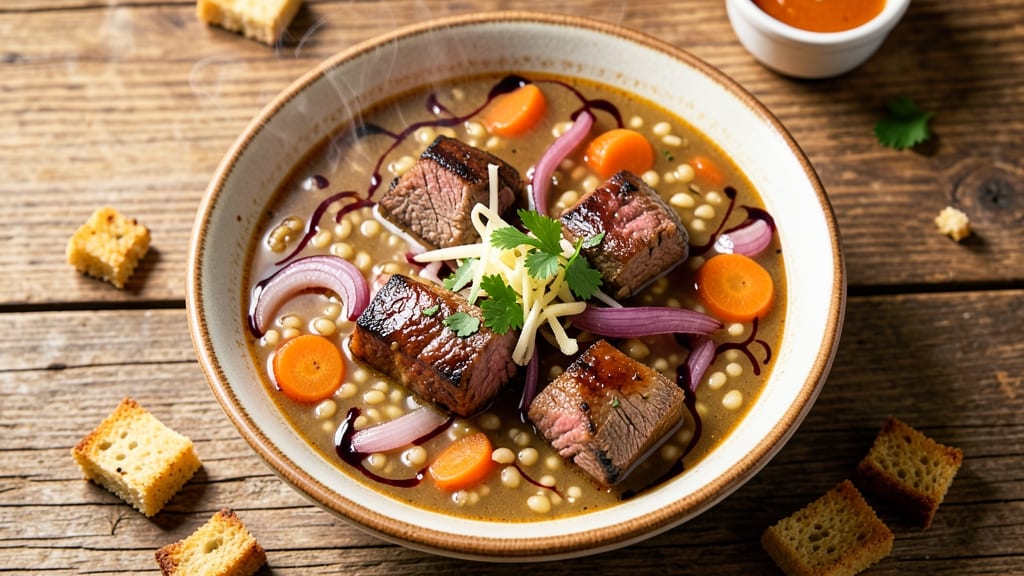
This beef barley soup recipe without tomatoes delivers hearty, slow-simmered comfort that warms the soul from the first spoonful. The secret lies in long cooking—3 to 4 hours—where tough beef and nutty barley transform into tender, flavorful perfection.
No tomatoes here, just deep umami from caramelized onions, rich broth, and aromatic herbs that build complexity layer by layer.
The beauty of this recipe is its foolproof simplicity: chuck a few ingredients into a pot, let the flavors meld, and end up with a soup that tastes like a hug.
The barley softens just enough to hold its shape while soaking up the savory broth, creating a satisfying bite. A touch of mustard and a splash of vinegar brighten the richness, ensuring every spoonful is balanced and bold.
By the time you’re done, you’ll have a steaming bowl of restaurant-quality soup—golden broth, tender beef, and barley with just enough chew. The aroma alone will have everyone gathering around the table, and the leftovers?
Even better the next day. This is the kind of soup that becomes a weekly staple, especially when temperatures drop.
Perfect for meal prep or a cozy weekend project, this recipe scales effortlessly. Whether you’re feeding a crowd or saving portions for later, the flavors only deepen with time. Let’s get simmering—your taste buds will thank you.
Ingredients for beef barley soup recipe without tomatoes
Pantry staples plus a few fresh ingredients for restaurant-quality beef barley soup.
| Ingredient | Amount | Notes |
|---|---|---|
| Chuck Roast Beef 🥩 | 2 lb | Cut into 1-inch cubes |
| Yellow Onions 🧅 | 2 whole | Chopped into half-moons |
| Carrots 🥕 | 4 medium | Peeled and chopped into chunks |
| Pearl Barley 🌾 | 1 cup | Rinsed before cooking |
| Beef Broth 💧 | 6 cups | Low-sodium preferred |
| Red Wine 🍷 | 1 cup | Dry variety like Cabernet |
| Fresh Thyme 🌿 | 2 tbsp | Leaves only, chopped |
| Fresh Parsley 🌿 | ¼ cup | Chopped for garnish |
| Garlic Cloves 🧄 | 4 cloves | Minced for depth |
| Dijon Mustard 🍯 | 1 tbsp | For bright tang |
| Apple Cider Vinegar 🍎 | 1 tbsp | Balances richness |
| Bay Leaves 🌿 | 2 whole | Removed before serving |
| Olive Oil 🫒 | 2 tbsp | For caramelizing onions |
| Salt 🧂 | 1 ½ tsp | Adjust to taste |
| Black Pepper 🌶️ | ½ tsp | Freshly ground |
The beef is everything here—chuck roast holds up perfectly to the long simmer, giving you that melt-in-your-mouth texture. Grab it from the butcher counter if you can, or the pre-cut beef section at Costco saves time. Look for good marbling—it means more flavor. The onions? Yellow onions caramelize best, but red onions add color if you're feeling fancy. Carrots can be baby carrots if that's what you've got, but the regular kind works just fine. Pearl barley is the star—it's chewy but softens just enough to soak up all that broth.
No red wine? Beef broth with a splash of balsamic vinegar does the trick. Fresh thyme is ideal, but dried thyme at one-third the amount works in a pinch. The mustard and vinegar might sound odd, but trust me—Dijon mustard and apple cider vinegar brighten the whole thing up. The bay leaves are non-negotiable for that classic soup flavor, but remove them before serving. Olive oil is just for cooking the onions—use whatever's in your pantry, but don't skip it. The salt and pepper are simple, but freshly ground black pepper makes a difference.
This soup tastes even better the next day—flavors meld overnight. Keeps for 5 days in the fridge or 3 months frozen. I double the recipe and freeze half—perfect for lazy weeknights. Store in airtight containers, and if freezing, leave room at the top since it expands. The barley gets softer when reheated, so add a splash of water or broth if it's too thick.
Why You'll Love This Recipe
- One-Pot Magic: I swear by this recipe because it’s actually one-pot—no extra bowls, no mess. Just dump the chuck roast, onions, and carrots into a pot, cover with broth, and let it simmer. The barley softens right in the broth, so you’re not juggling multiple pans or timers.
- Rich Without Tomatoes: Honestly, the depth here comes from slow-cooked beef and caramelized onions—no tomatoes needed. The beef broth reduces into a velvety base, and the barley soaks up all that savory goodness. It’s hearty, warm, and actually beef-forward, not hiding behind acidity.
- Lunchbox Hero: Between us, this soup is my go-to for meal prep. Cook a big batch on Sunday, and you’ve got flavorful lunches all week. The barley holds up perfectly, and the beef stays tender—no sad, mushy leftovers here. Just reheat and enjoy, whether you’re at your desk or packing for the kids.
- Budget Beef Boost: A chuck roast is cheap, and it turns into something ridiculously satisfying. You’re not wasting money on fancy cuts or add-ons—just simple, honest ingredients that taste like you put in effort. Plus, the barley stretches the meal, so you’re feeding a crowd without breaking the bank.
Step-by-step instructions for hearty beef barley soup
This slow-simmered soup builds rich, layered flavors—start with caramelized onions and finish with nutty barley.
Sear the Beef for Deep Flavor
Heat the 2 tablespoons olive oil in a large Dutch oven over medium-high heat. Working in batches, add the 2 lb chuck roast beef cut into 1-inch cubes, letting them sear undisturbed for 3-4 minutes until deeply browned on all sides. This step develops the meat's flavor through the Maillard reaction—don't rush it or the beef will steam instead of develop color.
Once all the beef is browned, transfer it to a plate and set aside. You'll want to keep those rich browned bits in the pot—they'll form the base of your soup's flavor. If the oil looks too dark or smoky, wipe out the pot with a paper towel before proceeding.
Build the Flavor Base with Onions and Carrots
In the same Dutch oven, add the 2 whole yellow onions chopped into half-moons and the 4 medium carrots chopped into chunks. Cook over medium heat for 8-10 minutes, stirring occasionally, until the onions soften and turn a beautiful golden brown. This caramelization adds sweet depth to the soup—don't walk away, as onions burn quickly.
After the onions caramelize, stir in the 4 minced garlic cloves and cook for another 30 seconds until fragrant. The garlic should smell pungent and toasty, not burnt. If it starts to darken too quickly, reduce the heat to medium-low to prevent burning.
Deglaze and Simmer the Broth
Pour in the 1 cup red wine and scrape up all the browned bits from the bottom of the pot with a wooden spoon. This deglazing step captures all the flavor you worked so hard to create. Let the wine simmer for 3-4 minutes until it reduces by half and the alcohol cooks off.
Add the 6 cups beef broth, 1 tablespoon Dijon mustard, 1 tablespoon apple cider vinegar, 2 whole bay leaves, 1.5 teaspoons salt, and 0.5 teaspoon black pepper. Stir well to combine, then return the beef to the pot. Bring the mixture to a gentle boil, then reduce the heat to low and let it simmer uncovered for 1 hour. This slow simmer allows the beef to tenderize and the flavors to meld.
Add Barley and Herbs for Nutty Richness
After the initial 1 hour of simmering, stir in the 1 cup rinsed pearl barley and the 2 tablespoons chopped fresh thyme. The barley should be fully submerged in the broth—if it's not, add a splash of water. Simmer uncovered for another 30-40 minutes, stirring occasionally, until the barley is tender and the beef is fork-tender.
Here's the thing—barley can vary in cooking time, so check it at the 30-minute mark. It's done when it's soft but still holds its shape. If the soup reduces too much, add a little water to maintain the right consistency. The soup should be thick enough to coat the back of a spoon but still easy to ladle.
Finish and Serve with Fresh Herbs
Remove the 2 whole bay leaves and discard them. Taste the soup and adjust the seasoning if needed—you might need a little more salt or a splash of vinegar to balance the flavors. Ladle the soup into bowls and garnish each serving with 0.25 cup chopped fresh parsley. The parsley adds a bright, fresh contrast to the rich, herbed broth.
Serve immediately while the barley is warm and the flavors are at their peak. This soup tastes even better the next day as the flavors continue to develop, but it's hard to resist enjoying it fresh off the stove. Pair it with crusty bread to soak up every last drop of that nutty, herbed goodness.
Pro Tips For Making Beef Barley Soup Recipe Without Tomatoes
- SEAR THE CHUCK ROAST: After burning three batches, I finally figured out that a proper sear on chuck roast is non-negotiable—it’s what builds flavor in this soup. Pat the meat dry first, then hit it with high heat in a heavy pot until deep brown crusts form all over. (Yes, even if you’re impatient like me, don’t rush this part.)
- SIMMER LOW AND SLOW: I used to crank the heat to speed things up, but that turns the broth cloudy and makes the barley mushy. Once the meat is tender (about 2.5 hours), drop the heat to a bare simmer—just enough to keep bubbles gentle. This keeps the broth clear and the barley firm.
- SOAK THE BARLEY FIRST: Pearl barley absorbs liquid like a sponge, and skipping the soak means it’ll turn to mush while the meat cooks. Toss it in cold water for 30 minutes before adding to the pot—this guarantees it stays chewy and not gluey. (Your future self will thank you.)
- SAVOR THE ONIONS: I was skeptical until I tried it: caramelizing the onions before adding broth makes a real difference. Slice them thin, cook them in the same pot where you seared the meat (no extra oil needed), and let them turn golden-brown. The deeper flavor carries through the whole soup.
Health benefits of these flavors
Protein Powerhouse
This soup delivers a whopping 35 grams of protein per serving—thanks to the 2 lbs of chuck roast beef—making it a perfect meal for muscle repair and satiety.
The slow cooking process ensures maximum protein absorption, while the barley adds 4 grams of fiber per serving to support digestion and keep you full for hours. It's a complete protein source with all nine essential amino acids, ideal for post-workout recovery or a hearty lunch. 💪
Barley Benefits
The 1 cup of pearl barley in this recipe isn't just for texture—it's packed with selenium, magnesium, and B vitamins that support immune function and energy metabolism. Barley's low glycemic index helps stabilize blood sugar, making this soup a smart choice for blood sugar management.
Plus, its chewy texture adds satisfying substance without overpowering the broth. I find the nutty flavor pairs beautifully with the beef's richness.
Heart-Healthy Fats
The red wine and olive oil in this recipe contribute monounsaturated fats that support cardiovascular health by reducing LDL cholesterol. The wine also adds resveratrol, an antioxidant linked to heart benefits.
Unlike tomato-based soups, this version avoids the acidity that can sometimes irritate stomachs, making it gentler on digestion while still delivering flavor. The Dijon mustard adds a tangy kick that enhances circulation without adding calories.
Vitamin Boost
You'll get a vitamin C boost from the carrots and fresh parsley garnish, which supports collagen production and immune function. The thyme and bay leaves contribute volatile oils that have been shown to have antimicrobial properties.
Even the garlic in this recipe provides allicin, a compound with potential cardiovascular benefits. It's one of those rare soups where every ingredient works together for both flavor and nutrition.
Low-Calorie Comfort
Despite its rich flavor, this soup clocks in at just around 350 calories per serving, making it a guilt-free indulgence. The beef broth keeps it light while delivering electrolytes for hydration, and the apple cider vinegar adds acidity that may help with mineral absorption.
It's the perfect balance of comfort and nutrition—warm, satisfying, and packed with benefits that go beyond just taste. The slow cooking process actually enhances the nutrient availability in the ingredients. ✨
Nutrition facts
Frequently asked questions
Can I substitute pearl barley for another grain? If you don't have pearl barley, try wheat berries (simmer 45-50 minutes) or farro (30-35 minutes). For a quicker option, use small pasta shapes like ditalini, but reduce cooking time to 12-15 minutes. The texture will differ, but the soup will still be delicious. Just
How can I make this soup in a slow cooker?
Transfer all ingredients to your slow cooker after searing the beef and caramelizing the onions. Cook on low for 7-8 hours or high for 4-5 hours, then stir in the barley and cook an additional 30-40 minutes until tender. The slow cooker's gentle heat enhances the beef's tenderness and lets flavors meld beautifully. Just add 1 cup extra broth to account for evaporation.
What's the best way to reheat leftovers?
Reheat gently on the stove over low heat for 5-10 minutes, stirring occasionally and adding a splash of water or broth if needed. Avoid microwaving—it can make the barley mushy. For best results, reheat only what you'll eat immediately. The soup actually tastes better the next day as flavors deepen, so plan to make extra!
Can I make this soup vegetarian?
Yes! Replace the beef with mushrooms (cremini or portobello) and use vegetable broth. Add 1 cup cooked lentils or chickpeas for protein. The umami comes from mushrooms, soy sauce (1 tbsp), and miso paste (1 tsp). Keep all other ingredients the same, and the barley will still provide that satisfying texture.
Why does my barley taste bitter?
Bitter barley usually means it's overcooked or the broth is too acidic. Try reducing the apple cider vinegar to ½ tbsp or adding a pinch of sugar to balance. For future batches, check the barley at 30 minutes—it's done when tender but still holds its shape. If using store-bought broth, check for high sodium content, which can also contribute to bitterness.