
Soups & Stews
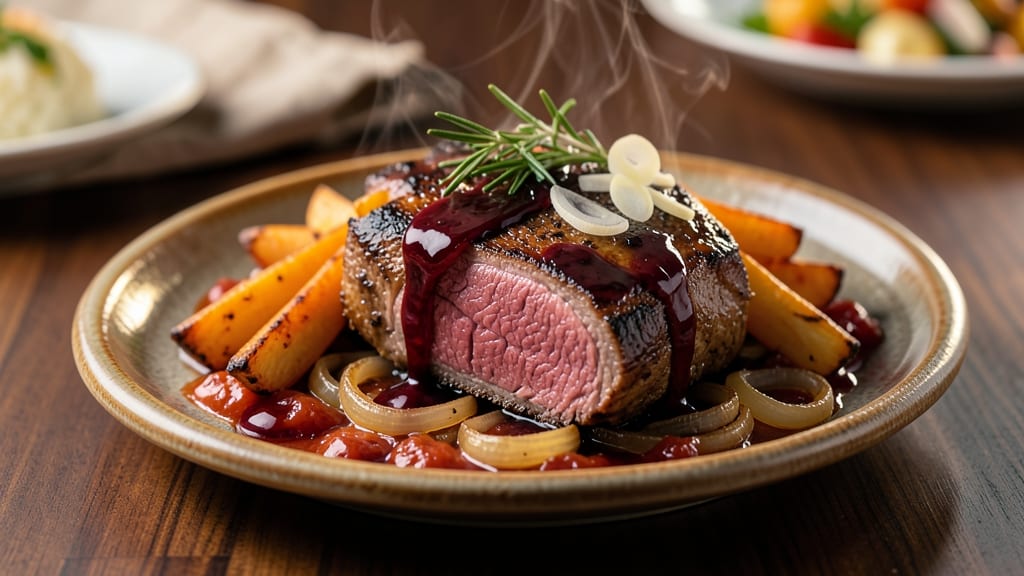
This beef Barolo recipe transforms tough cuts into melt-in-your-mouth tenderness through slow braising with rich Italian wine. The Barolo’s acidity and depth cut through the beef, creating a sauce that’s both elegant and deeply flavorful—perfect for a restaurant-quality dinner at home.
Professional chefs swear by this technique, and now you can master it too.
The secret lies in searing the beef first to develop a flavorful crust, then braising it low and slow in Barolo wine until fork-tender. The wine reduces into a velvety sauce that clings to every bite, balancing richness with bright acidity.
This method works best with chuck roast or short ribs, though you can adapt it for steaks or even mushrooms for a vegetarian twist.
By the end, you’ll have perfectly tender beef swimming in a glossy, wine-infused sauce that’s far more complex than store-bought versions. The aroma alone—warm spices, caramelized edges, and the deep notes of Barolo—will have everyone at the table asking for seconds.
Serve with polenta or crusty bread to soak up every last drop.
What makes this recipe stand out is how it elevates simple ingredients into something extraordinary. The wine isn’t just a liquid; it’s the star, transforming a humble pot roast into a dish worthy of a fine-dining menu. Let’s get started on creating this Italian-inspired masterpiece.
Ingredients for beef barolo
The right ingredients transform humble beef into a restaurant-worthy Barolo masterpiece.
| Ingredient | Amount | Notes |
|---|---|---|
| Chuck Roast 🥩 | 2 ½ lb | Well-marbled, cut into 2-inch chunks |
| Barolo Wine 🍷 | 2 cups | Dry red, 750ml bottle preferred |
| Yellow Onion 🧅 | 1 whole | Medium, sliced into half-moons |
| Carrot 🥕 | 4 whole | Medium, peeled and chopped |
| Garlic Cloves 🧄 | 6 cloves | Fresh, smashed but not minced |
| Tomato Paste 🍅 | 2 tbsp | Smooth, not chunky |
| Fresh Thyme 🌿 | 2 sprigs | Stems removed, leaves only |
| Fresh Rosemary 🌿 | 1 sprig | Needles only, chopped |
| Olive Oil 🫒 | 2 tbsp | Extra-virgin for searing |
| Beef Broth 💧 | 1 cup | Low-sodium preferred |
| All-Purpose Flour 🌾 | 1 tbsp | For dusting beef chunks |
| Salt 🧂 | 1 ½ tsp | Kosher or sea salt |
| Black Pepper 🌶️ | 1 tsp | Freshly cracked |
| Fresh Parsley 🌿 | ¼ cup | Chopped, for garnish |
The chuck roast is non-negotiable here—its marbling melts into the wine, creating unmatched richness. Trader Joe's and Whole Foods carry excellent cuts, but any well-marbled roast works. Look for deep red color with visible fat flecks. If using short ribs, trim excess fat to 1/4-inch thickness—it renders beautifully during searing. For the Barolo, skip the cheap bottles—Italian imports from Total Wine or local wine shops deliver the depth this dish demands. Fresh herbs like thyme and rosemary should smell vibrant, not dried out.
No Barolo? Cabernet Sauvignon or Merlot work in a pinch, but reduce the liquid by 1/4 cup since they're less acidic. Fresh thyme unavailable? Dried at 1/3 the amount suffices, but toast it first in a dry pan for 30 seconds to wake up the flavor. The tomato paste can be substituted with 1/2 cup crushed tomatoes if you prefer, though paste delivers a deeper concentration. For the beef broth, low-sodium is key—you'll be adding salt later. If you're using pre-chopped veggies, pat them dry before adding to prevent excess moisture in the braise.
This dish tastes even better the next day, so make extra. Store in an airtight container in the fridge for up to 5 days, or freeze portions for 3 months. The wine sauce thickens as it cools—add a splash of water or broth when reheating. For serving, keep the beef and sauce separate until ready to plate. The fresh parsley should be added last to preserve its bright color and aroma. If prepping ahead, chop all vegetables and measure spices the night before for a stress-free cooking day.
Why You'll Love This Recipe
- One-Pot Magic: The chuck roast and Barolo wine practically braise themselves—just toss everything in one pot, set it, and forget it. I swear, the only chopping is the onions, and even that’s forgivable.
- Rich, Deep Umami Bomb: That Barolo wine? It’s not just cooking the beef—it’s transforming it into something luxurious, with layers of savory, caramelized sweetness from the onions and carrots. The garlic cloves? They melt into the sauce like a secret weapon.
- Weeknight to Dinner Party: Same recipe, different vibes—serve it with crusty bread for a lazy Sunday or plate it with mashed potatoes and roasted veggies for company. Honestly, it’s my go-to when I don’t want to think too hard but still want to impress.
- Budget Luxury Leftovers: A chuck roast stretches for days, and the Barolo-infused sauce only gets better after a night in the fridge. Between us, this is how I feed my family fancy meals without breaking the bank—or spending hours in the kitchen.
Step-by-step instructions for beef Barolo with rich wine braising
This method transforms tough chuck roast into melt-in-your-mouth beef with deep Barolo flavor and tender texture.
Sear the Chuck Roast for Maximum Flavor
Pat the 2.5 lb chuck roast dry with paper towels—this ensures a proper sear. Heat 2 tablespoons olive oil in a Dutch oven over medium-high heat until shimmering. Add the beef in a single layer and sear undisturbed for 3-4 minutes per side until deeply browned. I press down gently during the first minute to prevent curling.
Remove the beef and set aside. The browning creates the Maillard reaction, which forms complex flavors that dissolve into the braising liquid. If your pan isn't hot enough, the beef will steam instead of sear—wait for the oil to ripple before adding the meat.
Build the Aromatic Base with Vegetables and Herbs
In the same Dutch oven, add 1 whole yellow onion and 4 whole carrots chopped into even pieces. Cook for 5 minutes until softened but not browned. Add the 6 smashed garlic cloves, 2 tablespoons tomato paste, 2 sprigs fresh thyme, and 1 sprig fresh rosemary. Stir for 1 minute until fragrant.
This step develops the foundational flavors. The tomato paste adds depth while the herbs infuse their aroma into the oil. If your vegetables start to brown too quickly, reduce heat slightly—you want them tender, not crispy.
Deglaze and Combine All Ingredients
Pour in the 2 cups Barolo wine, scraping up all the browned bits from the bottom with a wooden spoon. Let it simmer for 3 minutes until reduced by half. Return the beef to the pot, then add 1 cup beef broth, 1 tablespoon all-purpose flour, 1.5 teaspoons salt, and 1 teaspoon black pepper. Stir gently to coat everything.
The wine reduction concentrates the flavors while the flour helps thicken the braising liquid. This creates a silky sauce that clings perfectly to the beef. If your wine reduces too quickly, cover the pot and let it simmer gently—rushing this step leads to a thin, watery sauce.
Braise Until Fork-Tender
Cover the Dutch oven and transfer to a 325°F oven. Braise for 2.5-3 hours until the beef is fork-tender and easily pulls apart. I check doneness by piercing with a fork—if it slides in with minimal resistance, it's ready. The liquid should reduce to a rich, glossy sauce.
Don't lift the lid during cooking—each time you do, you lose heat and moisture. If the liquid evaporates too quickly, add a splash of water or broth. The beef should finish at an internal temperature of 200-205°F for maximum tenderness.
Rest and Garnish for Presentation
Remove the beef and let it rest for 10 minutes before slicing. This resting period allows the juices to redistribute throughout the meat. Skim any excess fat from the braising liquid, then spoon the sauce over the sliced beef. Garnish with 0.25 cup chopped fresh parsley for freshness.
Serve immediately with crusty bread or roasted potatoes to soak up every last bit of that luxurious Barolo sauce. The beef should be incredibly tender with a deep, wine-infused flavor that balances perfectly with the herbaceous notes from the braising process.
Pro Tips For Making Beef Barolo
- SEAR THE ROAST FIRST: I used to skip this step and wondered why my Barolo beef tasted bland—high heat for 3-4 minutes per side builds a crust that locks in flavor. Use a heavy pan (cast iron if you have it) and don’t move it until it’s deep brown, even if it looks messy. The wine reduction later will cling to that crust like glue.
- USE A HALF-AND-HALF WINE MIX: Barolo alone can taste too tannic or harsh if you’re not used to it. Split the bottle with a lighter red like Chianti or even a splash of beef stock—just ¼ cup—and your sauce will stay balanced and silky. I learned this the hard way after serving a glass of undrinkably bitter wine with dinner.
- DON’T SKIP THE CARROT CHUNKS: Yes, they’re small, but those carrot pieces (cut into ½-inch chunks) add natural sweetness that cuts through the richness of the chuck roast and wine. If you’re lazy and peel them, you’re missing out—leave the skins on for extra texture and a subtle earthiness that rounds out the dish.
- LOW AND SLOW IS NON-NEGOTIABLE: After browning, drop the heat to a simmer (180°F/82°C) and cover the pot for the first hour—this keeps the meat tender and the wine from evaporating too fast. I was skeptical until I tried it: rushed cooking turns the chuck tough, but this method guarantees melt-in-your-mouth results. (Yes, even if you’re impatient like me.)
Common mistakes when making this recipe
Over-Searing the Beef
One of the biggest mistakes is over-searing the beef, which burns the exterior before the interior cooks through.
I’ve seen home cooks leave the beef in the pan for too long, turning it dark and bitter. 3-4 minutes per side is plenty—use a timer and watch for deep golden-brown color, not blackened edges.
If your pan isn’t hot enough, the beef will steam instead of sear, ruining the flavor foundation. 🔥
Skipping the Wine Reduction
Rushing the wine reduction step is a common error that leads to a thin, watery sauce. The 3-minute reduction of Barolo is critical—it concentrates the wine’s flavors and thickens the sauce.
If you rush this, you’ll end up with a diluted, bland liquid. Cover the pot and let it simmer gently if it reduces too quickly.
Lifting the Lid Too Often
Every time you lift the lid during braising, you lose heat and moisture, extending cook time and potentially drying out the beef. I’ve made this mistake myself—resist the urge to check on the beef!
Only lift the lid if you absolutely need to stir or add liquid. The beef should cook undisturbed for 2.5-3 hours at 325°F.
Using Low-Quality Wine
Cheap wine will make your dish taste flat and one-dimensional. Barolo is a dry, full-bodied red with deep tannins and acidity—it’s non-negotiable for this recipe. If you’re using a substitute like Cabernet or Merlot, reduce the liquid by ¼ cup since these wines are less acidic.
Skip the $5 bottles from the grocery store and invest in a $15-$20 Italian import for the best results.
Not Resting the Beef
Skipping the 10-minute rest after braising causes juices to spill out when you slice, leaving your beef dry. I can’t stress this enough—resting is non-negotiable. Let the beef sit covered while you skim the sauce and prepare your sides. This simple step ensures every bite is juicy and tender.
Overcrowding the Dutch Oven
If you don’t sear the beef in batches, the temperature drops, and you’ll end up with steamed beef instead of properly browned meat. A 2.5 lb chuck roast should be seared in one layer—if your Dutch oven is too small, use a larger pot or work in two batches.
The same goes for the vegetables: don’t overcrowd them, or they’ll steam instead of caramelize.
Nutrition facts
Frequently asked questions
Can I substitute Barolo with another red wine?
Yes, but choose carefully! A dry, full-bodied red like Cabernet Sauvignon or Merlot works best. Reduce the liquid by ¼ cup since these wines are less acidic. Avoid sweet wines or Zinfandel—they’ll make the sauce cloying. For the authentic experience, Barolo’s tannins and acidity are non-negotiable for that signature depth.
How do I know when the beef is tender enough?
Use the fork test: Pierce the beef—if it slides in with minimal resistance (around 200-205°F internal temp), it’s ready. The edges should pull apart easily. For extra assurance, cut into a small piece after 2 hours—if it’s still slightly tough, return it to the oven for another 30 minutes. Pro tip: Chuck roast should be fork-tender, not falling-apart tender.
Can I make this recipe in a slow cooker?
Sear the beef first, then transfer everything to a slow cooker on low for 6-8 hours or high for 4-5 hours. The wine will reduce more slowly, so add ½ cup extra beef broth to prevent drying. The texture will be slightly different (more saucy), but the flavors remain rich. Just avoid lifting the lid during cooking!
What’s the best way to reheat leftovers?
Reheat gently in a skillet with a splash of beef broth over low heat to prevent drying. Or cover and warm in a 300°F oven for 20-30 minutes. Never microwave—it turns the sauce rubbery. Add a little water or wine to loosen the sauce if needed. Leftovers taste even better the next day as flavors meld!
Why does my sauce turn bitter?
Over-reducing the wine or burning the herbs causes bitterness. Simmer the wine gently for 3 minutes max—don’t let it boil dry. Remove thyme/rosemary sprigs before they darken. If the sauce tastes off, balance it with a splash of beef broth or a pinch of sugar (just ½ teaspoon). Fresh herbs added at the end also brighten the flavor.