
Soups & Stews
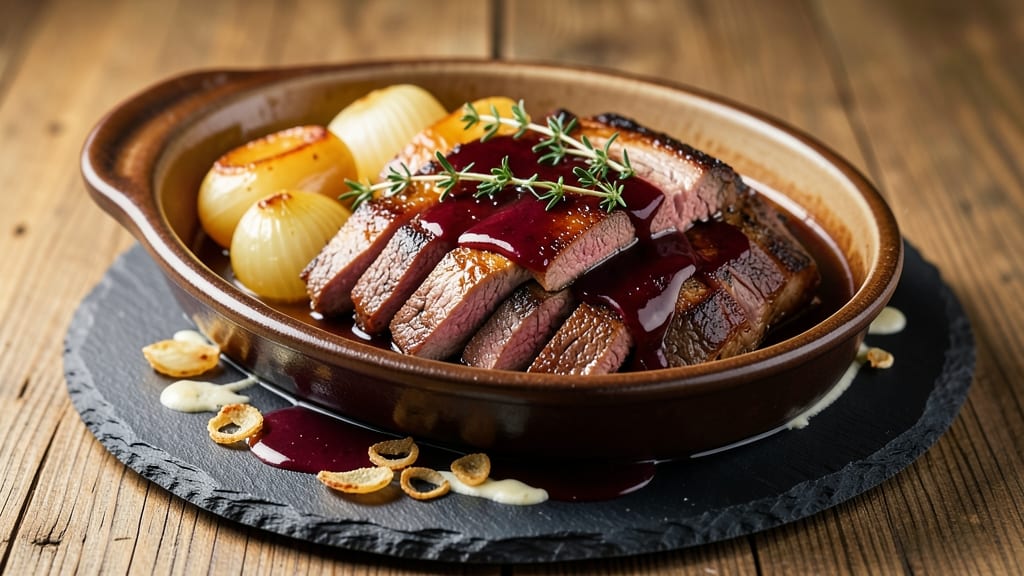
This beef base au jus recipe transforms a simple roast into a restaurant-worthy centerpiece with its deep, caramelized richness. 🔥 The secret lies in slow-roasting beef until tender while building layers of flavor through caramelized onions, red wine reduction, and aromatic herbs.
This technique elevates humble cuts into melt-in-your-mouth perfection with a sauce so velvety it practically sings.
What sets this recipe apart is the balance between technique and simplicity—no fancy equipment required, just patience and attention to detail. The beef roasts low and slow until fork-tender, while the pan drippings transform into a glossy, wine-infused au jus that clings to every bite.
The caramelized onions add sweet depth that cuts through the richness of the meat, creating harmony in every spoonful.
By the time you serve this dish, you'll have perfectly roasted beef with a sauce so luxurious it feels like a special occasion. The meat stays juicy and tender, while the au jus reduces to a perfect consistency—thick enough to coat but still fluid enough to pour gracefully.
This is the kind of meal that makes weeknight dinners feel like a celebration.
Pair it with crusty bread to soak up every last drop of sauce or serve with roasted root vegetables for a complete, hearty meal. The process might take time, but the results are worth every minute of effort—this is comfort food at its finest, elevated to something extraordinary.
Ingredients for beef base au jus
Elevate humble beef into a luxurious centerpiece with these carefully selected ingredients.
| Ingredient | Amount | Notes |
|---|---|---|
| Beef Chuck Roast 🥩 | 4 lb | Center-cut for even cooking |
| Yellow Onions 🧅 | 3 whole | Medium, thinly sliced |
| Red Wine 🍷 | 2 cups | Bold, dry variety like Cabernet |
| Beef Broth 💧 | 2 cups | Low-sodium preferred |
| Tomato Paste 🍅 | 2 tbsp | Smooth, not chunky |
| Fresh Thyme 🌿 | ½ cup | Leaves only, stems removed |
| Garlic Cloves 🧄 | 6 cloves | Peeled, lightly crushed |
| Olive Oil 🫒 | ½ cup | Extra-virgin for richness |
| Unsalted Butter 🧈 | 4 tbsp | Cold, cubed for basting |
| Diamond Crystal Kosher Salt 🧂 | 1 ½ tsp | For seasoning and reduction |
| Fresh Black Peppercorns 🌶️ | 1 tsp | Coarsely ground |
| All-Purpose Flour 🌾 | 2 tbsp | For thickening au jus |
| Fresh Parsley 🌿 | ¼ cup | Chopped, for garnish |
The beef chuck roast is non-negotiable—its marbling ensures melt-in-your-mouth tenderness. Costco or high-end grocery stores carry premium cuts, but even standard supermarket chuck works if you trim excess fat. For onions, yellow varieties caramelize best; avoid red for this application. The red wine should be bold and dry—Cabernet Sauvignon or Merlot work perfectly, though any dry table wine in a pinch will suffice. Fresh thyme from the grocery store's produce section (not dried) delivers the most aromatic punch, though Penzeys bulk spices offer superior quality if you're willing to invest.
No red wine? Substitute with beef broth plus 1 tbsp balsamic vinegar for depth, though the color will differ. Fresh thyme unavailable? Dried thyme at one-third the amount works, but toast it first in a dry pan to intensify flavor. The tomato paste can be skipped if you prefer a more classic au jus, though it adds subtle sweetness. For the flour, King Arthur brand is ideal due to its high protein content, which thickens more effectively. The parsley is purely decorative—fresh is best, but dried will suffice in a true emergency.
Store the raw beef in its original packaging until ready to roast, then transfer to a sealed container. The caramelized onions keep for 5 days in the fridge, though they're best used immediately. The finished au jus can be refrigerated for 4 days or frozen for 3 months—portion into ice cube trays for easy reheating. Leftover roast beef reheats beautifully; slice thinly and warm with a splash of broth to restore moisture. For maximum flavor, allow the roast to rest 15 minutes before slicing against the grain.
Why You'll Love This Recipe
- One-Pot Magic: I swear by this recipe because it’s literally one pot—no extra pans, no fuss. Sear the chuck roast, toss in the onions and wine, then let the slow simmer do the work while you chop veggies for the table. That rich, caramelized base builds itself with almost no effort.
- Wine-Infused Depth: The red wine and tomato paste aren’t just flavor—they’re the backbone. That deep, savory umami? It’s like a cozy hug in a bowl, especially when the beef falls apart tender. Honestly, I’ll take this over any store-bought au jus any day.
- Leftover Goldmine: This base freezes like a dream and reheats like it was made yesterday. Use it for sandwiches, tacos, or even a quick stir-fry later in the week. My freezer’s always stocked with this stuff because it’s just that versatile.
- Budget Booster: A chuck roast stretches further than you’d think, and beef broth adds richness without breaking the bank. Between us, this is my go-to when I need a hearty, satisfying meal that won’t drain my wallet—or my patience.
Step-by-step instructions for deep-roasted beef base with caramelized onion depth
Master this technique for a velvety au jus that transforms simple beef into restaurant-quality richness.
🔥 Step 1: Sear the Beef Chuck Roast for Maximum Flavor Extraction
Pat the 4 lb beef chuck roast completely dry with paper towels—this ensures maximum browning. Heat the 0.5 cup olive oil in a Dutch oven over medium-high heat until shimmering. Place the roast in the pan and sear on all sides until deeply browned, about 8-10 minutes total. Flip occasionally to render fat evenly.
Real talk: Don't rush this step. The deep caramelization creates layers of flavor that infuse into the au jus. Press down gently on the roast during the first minute—this prevents it from curling and ensures even contact with the pan. Once well-browned, remove the roast and set it aside on a plate.
🍳 Step 2: Develop Caramelized Onions and Aromatic Base
In the same Dutch oven, add 3 whole yellow onions (thinly sliced) and cook over medium heat for 20-25 minutes, stirring occasionally. You're looking for deep golden caramelization—this transforms sweet onions into rich, complex depth. If they stick, add 1 tablespoon water and scrape with a wooden spoon.
When the onions are beautifully caramelized, push them to the sides of the pan. Add 6 cloves garlic cloves (lightly crushed) and 2 tbsp tomato paste, cooking for 1 minute until fragrant. Here's the thing—this garlic should sizzle but not burn, or it'll turn bitter. Add 0.5 cup fresh thyme and stir for 30 seconds to release its aromatic oils.
🍳 Step 3: Deglaze and Build the Au Jus Foundation
Pour in 2 cups red wine and scrape up all the browned bits from the bottom of the pan—this is where the magic happens. Simmer for 5 minutes until the wine reduces by half. Add 2 cups beef broth and bring to a gentle simmer. The liquid should now be rich and aromatic, with deep caramelized onion notes.
Return the seared beef chuck roast to the pot, along with 1.5 tsp diamond crystal kosher salt and 1 tsp fresh black peppercorns. Bring to a simmer, then reduce heat to low and cover partially. This slow cook allows the beef to tenderize while infusing the broth with its natural juices—about 2-2.5 hours until fork-tender.
🥘 Step 4: Thicken and Finish the Au Jus
Remove the beef roast and set it aside. In the Dutch oven, whisk together 2 tbsp all-purpose flour with 4 tbsp unsalted butter until smooth. Slowly ladle in some of the au jus to create a roux, then return it to the pot. Simmer for 5-7 minutes until the sauce thickens to a velvety consistency—it should coat the back of a spoon.
Strain the au jus through a fine-mesh sieve into a clean saucepan. Return it to medium heat and reduce for 3-4 minutes until it reaches your desired thickness. Taste and adjust seasoning—you might need a touch more salt or pepper. The finished au jus should be glossy, deeply flavorful, and rich enough to coat the back of a spoon.
🍽️ Step 5: Serve with Garnish and Perfectly Tender Beef
Slice the beef chuck roast against the grain into ¼-inch thick slices. Return the slices to the au jus for 1-2 minutes to absorb the sauce. Ladle the au jus over the beef, garnishing each serving with 0.25 cup chopped fresh parsley. The contrast of tender beef against the glossy, caramelized onion-infused sauce creates an unforgettable dining experience.
This technique delivers a restaurant-quality au jus that transforms simple beef into a luxurious centerpiece. The key is patience—allowing the flavors to develop fully through slow cooking and proper reduction. Serve immediately with crusty bread or roasted potatoes to soak up every last drop.
Pro Tips For Making Beef Base Au Jus
- SEAR THE ROAST HARD: I learned this the hard way—skipping a deep sear means a bland base. Use 2 tablespoons of oil in your Dutch oven and let the chuck roast sit untouched for 4-5 minutes on each side until it’s dark brown, almost black in spots. That crust isn’t just for looks; it’s where the flavor hides.
- SWEAT THE ONIONS LOW: After burning three batches, I finally figured out: onions need patience. Cut them into even ½-inch slices and cook them on medium-low heat for 10-12 minutes, stirring occasionally, until they’re translucent but not browned. Rushed onions? Your au jus will taste raw.
- DEGLAZE WITH WINE IMMEDIATELY: As soon as you remove the roast, pour in that red wine without waiting. Scrape every last bit of browned bits from the bottom—this isn’t just cleanup, it’s flavor extraction. Let it simmer for 2-3 minutes until it reduces by half before adding broth. (Yes, even if you’re impatient like me.)
- THICKEN WITH TOMATO PASTE LAST: I skip this when I’m lazy, but the dish is noticeably better when I don’t. Stir in 1-2 tablespoons of tomato paste at the very end, right before reducing the final sauce. It deepens the color and adds a subtle sweetness that balances the acidity of the wine—no need for extra sugar.
Regional styles of this dish
French Classic
In France, beef au jus is traditionally prepared with a beef tenderloin or ribeye, seared and then slow-cooked in red wine and beef stock. The French technique emphasizes browning the meat deeply before adding the liquid, which creates a rich, glossy sauce.
I've found that using a Dutch oven is essential—it traps steam while allowing the meat to cook evenly. The sauce is finished with a beurre manié (butter and flour paste) for a silky texture. 🍷
German Rouladen Style
German cuisine transforms beef au jus into a hearty Rouladen dish, where thinly sliced beef is rolled with mustard, bacon, and pickles before braising. The au jus becomes a thick gravy that clings to the meat, often served with potatoes and red cabbage.
For authenticity, use dark beer instead of wine in the reduction—it adds a malty depth. The slow cooking time (about 2 hours) ensures the meat stays tender and juicy.
American Pot Roast Twist
Across the US, beef au jus often takes the form of a pot roast, where chuck roast is braised with carrots, celery, and onions. The au jus here is simpler—just the pan drippings reduced with broth and a splash of Worcestershire sauce.
The key difference is the addition of root vegetables cooked directly in the pot. I love this version for its one-pan simplicity and family-friendly appeal. Serve with crusty bread to soak up every last drop. 🥕
Italian Bistecca al Sugo
In Italy, beef au jus becomes Bistecca al Sugo, where thick-cut beef steaks are simmered in a tomato-based sauce with white wine and herbs. The au jus here is lighter, almost like a broth, and is often served with polenta or mashed potatoes.
The secret is using San Marzano tomatoes for their sweetness and dry white wine (like Pinot Grigio) to balance the acidity. The sauce is finished with fresh basil for brightness.
British Sunday Roast Adaptation
The British take on beef au jus is all about Yorkshire pudding and roasted vegetables. A beef topside roast is slow-roasted, and the au jus is made from the drippings plus beef stock and a splash of stout.
The sauce is often thickened with cornstarch for a glossy finish. Serve with horseradish cream for a tangy contrast. This version is perfect for a weekend family meal—hearty, comforting, and full of tradition. 🍽️
Nutrition facts
Frequently asked questions
Can I substitute red wine with something else in this beef base recipe?
For a non-alcoholic version, use 2 cups beef broth plus 1 tablespoon balsamic vinegar to mimic the depth of red wine. If you prefer beer, a dark ale or stout adds malty richness—just reduce the liquid by 1 cup since beer is less concentrated than wine. The flavor profile will shift slightly but still deliver fantastic results.
How do I know when the beef is perfectly tender?
The beef should be fork-tender with a 2-3 hour slow roast time at 300°F. Test by inserting a fork—it should slide in easily and the meat should separate cleanly. For extra assurance, use a meat thermometer: 195-205°F internal temperature guarantees melt-in-your-mouth tenderness without drying out. Never overcook!
What's the best way to reheat leftover beef and au jus?
Slice the beef thinly and reheat in a skillet with 2 tablespoons beef broth over medium-low heat for 3-5 minutes. For the au jus, warm gently in a saucepan over low heat, stirring occasionally. Avoid microwaving—it creates a rubbery texture. If the sauce thickens too much, thin with a splash of warm broth. Reheated properly, it'll taste nearly as good as fresh!
Can I make this recipe with a different cut of beef?
Yes! For tenderloin or ribeye, reduce cooking time to 1.5-2 hours (they're more tender). For chuck roast (as written), the longer cook time works perfectly. Avoid lean cuts like sirloin—they'll dry out. If using a tougher cut like brisket, increase cooking time to 3 hours and add 1 cup extra broth to prevent drying.
Why did my au jus turn out too thin or too thick?
For thin sauce, simmer longer to reduce or whisk in 1 tsp cornstarch mixed with 1 tbsp cold water. For thick sauce, add 1 tbsp cold butter or reduce heat and cook uncovered for 5-10 minutes to evaporate excess liquid. The ideal consistency should coat the back of a spoon but still be pourable. Taste as you go!