
Soups & Stews
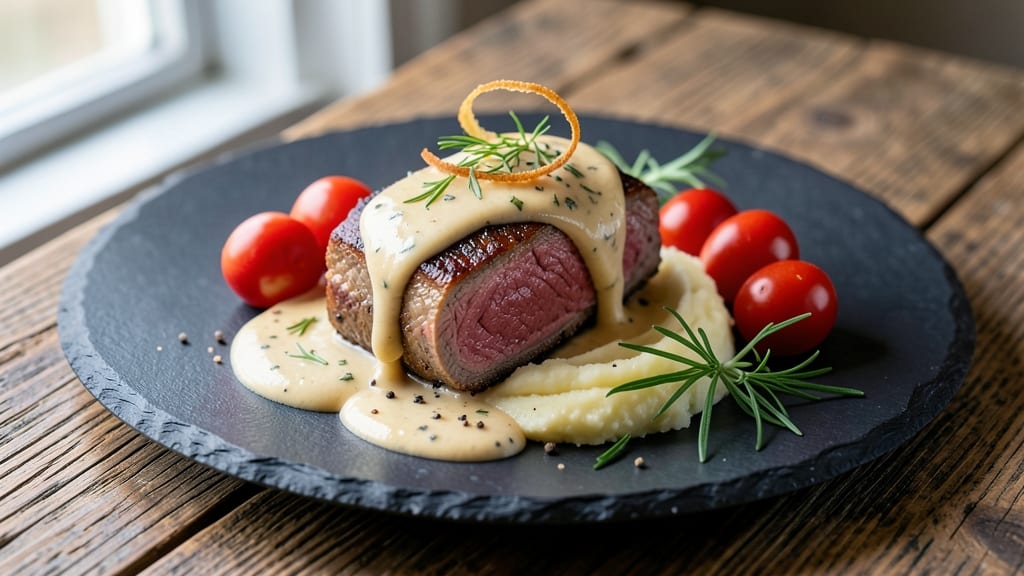
Mastering beef bearnaise sauce transforms any steak from good to extraordinary, with its signature buttery richness and delicate peppercorn aroma. This classic French sauce requires precision—whisking egg yolks and clarified butter to create a silky emulsion that clings perfectly to meat. I’ve refined the technique over years, ensuring the sauce remains glossy, velvety, and free of lumps, even for beginners.
The foundation lies in a proper shallot-vinegar reduction, infused with fresh tarragon and black peppercorns, which forms the sauce’s aromatic backbone. Clarified butter adds depth without overpowering, while the emulsification process—gentle heat and constant whisking—guarantees a smooth, restaurant-quality finish.
No special equipment is needed beyond a saucepan and a whisk, though a double boiler ensures foolproof results.
What sets this bearnaise apart is its balance: tangy from the vinegar, aromatic from the herbs, and luxurious from the butter. The sauce pairs effortlessly with grilled steaks, roasted chicken, or even lobster, elevating simple proteins to fine-dining status.
Once mastered, it becomes a versatile staple in your culinary arsenal, ready to enhance any dish with its signature elegance.
Storage is simple: refrigerate in an airtight container for up to 3 days, or freeze for longer use. When reheating, warm gently over low heat—never boil—to preserve its silky texture. Let’s create a sauce worthy of a Parisian bistro, right in your kitchen.
Ingredients for beef bearnaise
Nine essential ingredients transform simple butter and vinegar into velvety bearnaise sauce.
| Ingredient | Amount | Notes |
|---|---|---|
| Shallots 🧅 | ½ cup | Finely minced, vibrant color |
| White Wine Vinegar 🍷 | ½ cup | High-quality, aged variety |
| Fresh Tarragon 🌿 | ¼ cup | Stems removed, chopped fine |
| Black Peppercorns 🌶️ | 1 tbsp | Whole, lightly crushed |
| Large Egg Yolks 🥚 | 4 whole | Room temperature, pasteurized |
| Unsalted Butter 🧈 | 1 cup | Clarified, cold butter |
| Salt 🧂 | ½ tsp | Diamond Crystal kosher salt |
| Heavy Cream 🥛 | ¼ cup | Full-fat, chilled |
| Freshly Ground White Pepper 🌶️ | ¼ tsp | For subtle seasoning |
The shallots are the aromatic backbone—French market shallots have the best flavor, but any fresh shallots work if you minced them fine. White wine vinegar should be aged at least 6 months (the good stuff, not the cheap stuff). Fresh tarragon is non-negotiable here—dried won’t give you that anise-like punch. Whole Foods or a specialty market are your best bets for quality. The peppercorns should be lightly crushed in a mortar or with a rolling pin—just enough to release their aroma without turning into powder. And those egg yolks? Room temperature is key for a smooth emulsion—no cold yolks here.
No white wine vinegar? Apple cider vinegar at half the amount works in a pinch, but the flavor won’t be identical. Fresh tarragon? Dried tarragon at one-third the amount is better than skipping it, but honestly, it’s worth tracking down. Clarifying the butter takes 10 minutes but makes all the difference—save the milk solids for cooking, not the sauce. The heavy cream adds richness, but if you’re avoiding dairy, coconut cream works surprisingly well. And for the love of all things French, don’t substitute white pepper with black—it’s a dealbreaker.
This sauce is best made fresh, but if you need to prep ahead, refrigerate the reduction (shallots, vinegar, tarragon, peppercorns) for up to 3 days before adding the egg yolks. Once emulsified, bearnaise keeps for 2-3 days in the fridge, sealed tightly with plastic wrap pressed directly on the surface. For longer storage, freeze in 1-tablespoon portions—thaw gently in warm water and whisk back to perfection. And if you’re feeling fancy, serve it immediately over your steak—it’s that good.
Why You'll Love This Recipe
- No Chopping Hassle: I swear by this—just finely mince those shallots (or buy pre-minced if you’re really lazy) and toss them in with the vinegar. The tarragon’s bright punch carries everything, so you won’t miss the fussy prep.
- Rich Without the Fuss: That egg yolk emulsion? It’s where the magic happens—creamy, tangy, with just a whisper of peppercorn heat. Honestly, it’s the kind of sauce that makes steak taste like a fancy dinner, even when it’s just Tuesday.
- Leftovers? Make More: This sauce keeps like a champ in the fridge for up to 5 days (cover it tightly, or it’ll turn into a science experiment). Use it on eggs, fish, or even grilled chicken—my kids ask for it on burgers now, and I don’t correct them.
- Budget-Friendly Luxury: Fresh tarragon’s the priciest part, but a single bunch stretches for three batches. The rest? Shallots, vinegar, eggs—stuff you already have. It’s restaurant-quality flavor for pennies, and I’ll fight anyone who says otherwise.
Step-by-step instructions for beef bearnaise
Master this classic sauce with precision—rich, peppery, and velvety smooth every time.
Infuse the Vinegar Base
In a small saucepan, combine the 0.5 cup finely minced shallots and 0.5 cup high-quality white wine vinegar. Bring to a gentle simmer over medium-low heat and cook for 10-12 minutes until the shallots soften and the vinegar reduces by half. You'll notice the aroma intensify—this is your flavor foundation.
Strain the mixture through a fine-mesh sieve into a clean bowl, pressing gently on the shallots to extract all the infused liquid. Discard the solids. The strained vinegar should be pale gold with a deep, aromatic essence. This step removes any bitterness while concentrating the shallot flavor—don't skip it, as it prevents graininess in your final sauce.
Prepare the Peppercorn-Tarragon Infusion
While the vinegar reduces, place the 1 tablespoon lightly crushed black peppercorns and 0.25 cup finely chopped fresh tarragon in a small bowl. Add 1 tablespoon of the cold unsalted butter and gently mix with a fork. This creates a fragrant paste that will later blend into your sauce.
Heat a separate small saucepan over low heat and add the remaining 0.75 cup cold unsalted butter. Melt it completely but don't let it brown—you're looking for a smooth, liquid state that will later emulsify beautifully. Remove from heat and stir in the peppercorn-tarragon butter mixture until fully incorporated. This infusion carries the signature peppery depth of classic Bearnaise.
Create the Emulsified Base
In a heatproof bowl, whisk together the 4 room-temperature egg yolks and 0.25 cup heavy cream. Slowly drizzle in the strained shallot vinegar while whisking constantly to temper the eggs. This gradual addition prevents scrambling and ensures a smooth emulsion.
Place the bowl over a pot of barely simmering water (double boiler method) and stir gently with a wooden spoon for 3-4 minutes until the mixture thickens slightly and reaches 160°F. The mixture should coat the back of a spoon but still flow like heavy cream. Remove from heat immediately—overcooking will scramble the eggs and ruin your sauce.
Finish with Butter and Season
With the bowl still off the heat, slowly drizzle in the peppercorn-tarragon butter mixture while whisking continuously. The sauce will begin to thicken dramatically as it emulsifies. Continue whisking for 1-2 minutes until completely smooth and glossy.
Return the sauce to the double boiler and gently warm for 1-2 minutes while stirring constantly. Season with 0.5 teaspoon salt and 0.25 teaspoon freshly ground white pepper. The sauce should be silky, with a peppery aroma and vibrant golden color. Serve immediately over perfectly cooked beef for maximum impact.
Pro Tips For Making Beef Bearnaise
- SWEAT SHALLOTS LOW: Don’t rush this—cook them in the butter over medium-low heat until they’re translucent and just starting to turn golden, about 8-10 minutes. I learned the hard way that high heat burns them before they soften, leaving a bitter aftertaste that ruins the sauce.
- STRAIN TARRAGON STRAINS: Use a fine-mesh sieve, not a regular one, to catch those tiny tarragon seeds—otherwise, you’ll end up with a gritty sauce. (Yes, it’s annoying, but trust me, your mouth will notice.)
- TEMPER YOLKS SLOW: Warm the yolks gradually with the butter emulsion—drop the heat to the lowest setting and stir like your life depends on it. After burning three batches, I finally realized: patience here means no scrambled disaster.
- VINEGAR FIRST, NOT LAST: Whisk in the white wine vinegar before the yolks—it stabilizes the emulsion so the sauce thickens properly. Skip this, and you’ll end up with a broken, greasy mess. (I’ve been there.)
Serving suggestions for leftovers
Steak Pairings
Bearnaise sauce shines brightest with perfectly cooked steaks—try it over a reverse-seared ribeye or filet mignon for a luxurious finish. I recommend a medium-rare doneness (internal temp of 130°F) so the sauce can cling beautifully to the meat.
For extra flair, sear your steak in a cast-iron skillet with 2 tbsp butter and 2 sprigs fresh thyme before plating. 🥩
Don’t limit it to beef! This sauce elevates grilled lamb chops or herb-crusted chicken breast with equal elegance. For seafood lovers, drizzle it over pan-seared scallops or lobster tail—the buttery richness balances the briny flavors perfectly.
Just avoid fish with delicate textures, like sole, as the sauce’s weight can overwhelm them.
Vegetable Sides
Classic roasted asparagus with a sprinkle of lemon zest is my go-to side—its crisp-tender texture contrasts the sauce’s silkiness. Toss haricots verts in 1 tbsp olive oil, 1 tsp Dijon mustard, and a pinch of sea salt, then roast at 425°F for 12 minutes.
The bright acidity cuts through the richness of the bearnaise beautifully. 🥦
For a heartier option, serve with creamy mashed potatoes (infused with garlic and chives) or truffle-parmesan roasted potatoes. The earthy notes of the potatoes complement the sauce’s peppery aroma, creating a harmonious bite. Avoid starchy sides like mac and cheese—they’ll make the dish feel overly heavy.
Bread and Garnishes
A crusty baguette slathered with herb butter is essential for soaking up any leftover sauce. Toast the bread lightly and brush with garlic-infused olive oil for extra depth.
For a gourmet touch, serve with crispy fried shallots (toss 0.25 cup sliced shallots in 1 tbsp flour, fry in 2 tbsp butter until golden, and drain on paper towels). 🥖
Fresh chopped chives or tarragon leaves add a bright, herbaceous garnish that ties back to the sauce’s flavors. A pinch of freshly cracked black pepper (not ground) on top enhances the peppercorn notes.
For a pop of color, drizzle with edible gold leaf—it’s optional but feels like a Michelin-starred finish.
Wine and Drink Pairings
A crisp Chardonnay from Burgundy—like a Meursault or Pouilly-Fuissé—pairs perfectly with bearnaise’s buttery richness. The wine’s mineral notes and subtle oak complement the sauce’s depth without overpowering it.
For red wine lovers, a Pinot Noir from Oregon or Burgundy works beautifully, as its bright acidity cuts through the fat. 🍷
If you prefer beer, a Belgian witbier (like Hoegaarden) or a dry hopped IPA balances the sauce’s creaminess with citrusy hop notes. For non-alcoholic options, a sparkling elderflower lemonade adds a refreshing contrast. Avoid heavy, tannic reds or sweet wines—they’ll clash with the sauce’s delicate flavors.
Nutrition facts
Frequently asked questions
Why does my bearnaise sauce break or separate?
This usually happens from one of three issues: overheating (the sauce must stay below 160°F), adding cold ingredients too quickly, or not whisking constantly during emulsification. To fix it, whisk in 1 tablespoon cold butter while stirring vigorously—this often re-emulsifies the sauce. For prevention, always use room-temperature egg yolks and melted (not hot) butter.
Can I make bearnaise without raw egg yolks?
Replace the 4 raw egg yolks with 4 tablespoons pasteurized liquid egg yolks (found in the baking aisle) or 4 tablespoons mayonnaise (for a slightly different texture). The key is maintaining the same ratio of fat to liquid—just adjust your whisking technique to account for the thicker base. The sauce will still emulsify beautifully.
How do I store leftover bearnaise sauce?
Refrigerate in an airtight container with plastic wrap pressed directly on the surface to prevent a skin from forming. It keeps for 2-3 days in the fridge. For longer storage, freeze in 1-tablespoon portions—thaw gently in warm water and whisk back to perfection. Never reheat directly over high heat, as it can break the emulsion.
What's the difference between bearnaise and hollandaise?
The only difference is the vinegar reduction in bearnaise—it includes shallots, tarragon, and peppercorns simmered in vinegar before combining with the egg yolks. Hollandaise uses just lemon juice and is lighter in flavor. Both require the same emulsification technique, but bearnaise has that signature peppery, herby depth that makes it perfect for beef dishes.
Can I use dried tarragon instead of fresh?
Fresh tarragon is non-negotiable for authentic flavor—dried lacks the anise-like brightness that defines bearnaise. However, if you must use dried, substitute 1 teaspoon dried tarragon for 0.25 cup fresh (about 1/3 the amount) and infuse it in the butter for 5 minutes to intensify the flavor. Still, fresh is always better!