
Main Courses
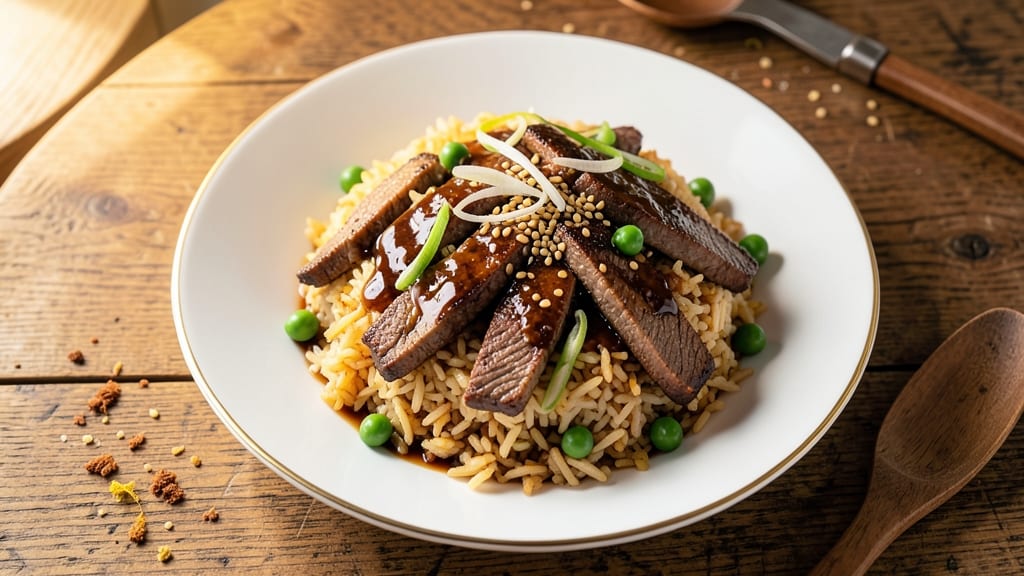
This authentic beef fried rice recipe delivers the smoky, savory depth of a Cantonese wok hei—where perfectly toasted grains meet tender beef and aromatic seasonings.
The secret lies in high-heat stir-frying over a hot wok, transforming day-old rice into crispy, separate grains that soak up the umami-rich sauce without turning mushy. I’ve refined this technique over years of testing, ensuring every bite captures that restaurant-quality crunch and balance of salty, sweet, and garlicky notes.
The foundation starts with day-old rice—cold, dry grains that develop a slight chewiness when wok-toasted, creating the signature texture. Thinly sliced beef marinated in soy sauce and cornstarch renders into tender, flavorful bites, while garlic, ginger, and scallions add layers of aroma.
The sauce, a simple blend of light soy, dark soy, and a touch of sugar, caramelizes just enough to coat the rice without overpowering its natural taste. This isn’t just fried rice—it’s a symphony of textures and flavors that transport you to a bustling Hong Kong street stall.
What sets this recipe apart is the wok hei, or "breath of the wok"—that elusive smoky aroma created by high heat and rapid movement.
Achieving it at home requires a cast-iron skillet or wok (or even a heavy stainless steel pan) and a focus on technique: high heat, constant stirring, and patience. The result? Crispy-edged rice, tender beef, and a sauce that clings perfectly, with each grain bursting with flavor.
Garnish with toasted sesame seeds and sliced green onions for freshness, and serve immediately for that restaurant-fresh experience.
This dish is versatile enough for weeknight dinners but impressive enough for guests—pair it with a simple cucumber salad or steamed bok choy to round out the meal.
The beauty of fried rice lies in its adaptability: swap the beef for shrimp or chicken, or add frozen peas and carrots for extra veggies. Once you master this technique, you’ll never buy takeout again. Let’s get cooking—your taste buds will thank you.
Ingredients for authentic beef fried rice
Day-old rice, tender beef, and aromatic wok hei—this is your Cantonese street stall in a home pan.
| Ingredient | Amount | Notes |
|---|---|---|
| Day-Old Jasmine Rice 🍚 | 4 cups | Cold, dry, separated grains preferred |
| Flank Steak 🥩 | 1 lb | Thinly sliced against grain |
| Light Soy Sauce 🥄 | ¼ cup | Kikkoman preferred for balance |
| Dark Soy Sauce 🥄 | 1 tbsp | For deep color and richness |
| Cornstarch 🌾 | 1 tbsp | For tender beef coating |
| Garlic Cloves 🧄 | 6 cloves | Minced for aromatic punch |
| Fresh Ginger 🌿 | 1 tbsp | Finely grated, aromatic kick |
| Scallions 🧅 | 4 whole | White and green parts, sliced |
| Sesame Oil 🫒 | 1 tbsp | Toasted for nutty aroma |
| Granulated Sugar 🍯 | 1 tbsp | Balances salty-sweet profile |
| Vegetable Oil 🫒 | ½ cup | High smoke point for wok hei |
| Toasted Sesame Seeds 🥜 | 1 tbsp | For garnish and texture |
| Green Onions 🧅 | 3 whole | Sliced for fresh finish |
| Salt 🧂 | ½ tsp | Adjust to taste |
| Black Pepper 🌶️ | ¼ tsp | Freshly ground for heat |
The rice is non-negotiable—day-old and cold for that signature chewy texture. Jasmine rice is ideal, but any long-grain variety works. If you're short on time, spread freshly cooked rice on a tray and refrigerate for 2 hours. The beef? Flank steak is my go-to—thinly sliced against the grain for tender bites. Costco or Trader Joe's usually have pre-sliced packages, but if not, grab a whole steak and slice it yourself with a sharp knife. For the soy sauces, Kikkoman light and Lee Kum Kee dark are my staples—they're balanced and widely available. Pro tip: Keep them in the fridge once opened to maintain freshness.
No flank steak? Sirloin or ribeye work too—just slice it paper-thin. Short on sesame oil? Toasted peanut oil gives a similar nutty depth. The ginger and garlic can be swapped for one tablespoon of fresh ginger paste if you're in a rush, but fresh is always better. For the sugar, brown sugar or coconut sugar add subtle molasses notes. If you're feeling adventurous, add 1/4 cup frozen peas and carrots for extra veggies—they'll soften perfectly during cooking. And if you're missing the dark soy sauce, a teaspoon of molasses plus extra light soy mimics that caramelized depth.
Rice reheats beautifully—just spread it on a tray and microwave for 2 minutes before using. The beef marinade keeps for 2 days in the fridge, so prep ahead. For the sesame seeds, toast them in a dry pan for 30 seconds until fragrant—that aroma is everything. Store any leftovers in an airtight container for 3 days, though I find this dish tastes best fresh. Freeze portions for up to 3 months if you're planning ahead. The key to wok hei is high heat, so don't skimp on the oil—your pan should be smoking when you start cooking.
Why You'll Love This Recipe
- No Leftover Waste: I swear by using day-old rice—it’s the secret to that perfect texture. No soggy bits, just fluffy, separate grains that soak up all the savory goodness.
- One-Pan Magic: Flank steak sliced thin, tossed in cornstarch, and seared in the same pan? Minimal cleanup, maximum flavor. Honestly, I’ve never missed a sink full of dishes for this.
- Umami Bomb: That combo of light and dark soy sauce? It’s where the magic happens—deep, caramelized richness with just the right tang. The dark soy gives it that irresistible charred edge.
- Budget Crowd-Pleaser: A single flank steak stretches to feed four, and the rice? You’re using what’s already in your fridge. My college roommates and I lived on this—cheap, filling, and always a hit.
Step-by-step instructions for authentic beef fried rice
Here's how to achieve that perfect wok hei and umami-packed balance every time.
Prepare the Flank Steak for Maximum Tenderness
Slice the 1 lb flank steak thinly against the grain using a sharp knife—this ensures each bite will be tender rather than chewy. Place the sliced steak in a bowl and toss with the 1 tbsp cornstarch until evenly coated. This creates a light barrier that keeps the meat juicy during cooking.
Next, add the 0.25 cup light soy sauce, 1 tbsp dark soy sauce, and 1 tbsp granulated sugar to the bowl. Mix well to distribute the marinade evenly. Let the steak sit for 15 minutes at room temperature—this allows the flavors to penetrate and prevents cold spots when cooking. I like to press down gently on the steak with my palm to help the marinade absorb.
Build the Flavor Base with Aromatics
Heat the 0.5 cup vegetable oil in a wok or large skillet over medium-high heat until shimmering. Add the 6 cloves minced garlic and 1 tbsp finely grated fresh ginger, cooking for 30 seconds until fragrant but not browned—this prevents bitterness. The oil should be hot enough to sizzle gently when the aromatics hit the pan.
Push the aromatics to one side of the wok and add the marinated steak in a single layer. Cook undisturbed for 1-2 minutes until the edges brown slightly. Here's the thing—don't flip too early. The steak should release easily from the pan when it's ready to flip. Once browned on both sides, remove the steak and set aside temporarily.
Wok-Toast the Day-Old Jasmine Rice
In the same wok (don't wipe it clean—those flavorful browned bits are essential), add the 4 cups day-old jasmine rice. Stir-fry vigorously for 2-3 minutes, breaking up any clumps and letting the rice absorb the residual oil and flavor. You'll hear a satisfying sizzle as the rice toasts—this creates that signature wok hei flavor.
Add the 4 whole sliced scallions and stir for another 30 seconds until the whites soften slightly. The rice should look dry and slightly crispy around the edges at this point. If it sticks too much, add a splash of water—just enough to loosen it without making it soggy. This is where the authenticity comes through—the rice needs to be dry to achieve that perfect chewy texture.
Combine Everything for Umami Harmony
Return the cooked steak to the wok along with any accumulated juices. Add the 1 tbsp toasted sesame oil and toss everything together for 1-2 minutes. The sesame oil will infuse throughout, adding that nutty depth that makes this dish sing. Taste and adjust seasoning with the 0.5 tsp salt and 0.25 tsp black pepper—you might not need all of it, but have it ready for fine-tuning.
Finish with the 3 whole sliced green onions and 1 tbsp toasted sesame seeds. Give it one final toss to distribute everything evenly. The dish should be vibrant with deep umami flavors from the soy sauces, sweetness from the sugar, and that satisfying chew from the wok-toasted rice. Real talk: this is where all the hard work pays off.
Serve Immediately with Confidence
Transfer the fried rice to serving plates right away—this dish doesn't wait. The residual heat will continue cooking it slightly, but you want to serve it while it's hot and the wok hei flavor is at its peak. Garnish with extra sesame seeds and green onions if you're feeling fancy.
Each bite should deliver perfectly tender steak, chewy yet separate rice grains, and that complex umami-sweet balance. The texture is what makes this dish authentic—the rice should be slightly sticky but still distinct, with each grain separate. Serve with a side of steamed greens or a simple cucumber salad to balance the richness.
Pro Tips For Making Authentic Beef Fried Rice
- STIR-FRY THE RICE FAST: High heat is your friend—get that wok or pan screaming hot before adding the rice, or you’ll end up with mushy grains instead of chewy, separate bites. I used to linger here, and the rice turned into paste. Now I blast the heat, toss the rice for 30 seconds, then pull it off to cool slightly before finishing.
- VELVETIZE THE BEEF: Slice the flank steak thinly against the grain, then toss the strips in a mix of cornstarch and a splash of light soy sauce before searing. This double-coating keeps the beef tender and adds a subtle crunch—no more chewy surprises in your fried rice.
- USE DARK SOY FOR COLOR: Skip the light soy for browning—dark soy sauce gives that signature deep, glossy color without overpowering the flavor. A teaspoon mixed into the oil at the start of cooking does the trick. (Yes, even if it looks like you’re making a mess.)
- BREAK THE RICE GRAINS: After stir-frying, mash about 20% of the rice with the back of your spatula to release starch—this makes the dish stick together just enough to hold its shape. It’s not about turning it into glue; just enough to bind the flavors. I learned this after watching my first batch fall apart when plating.
Dietary considerations for this authentic beef fried rice
Gluten-Free Adaptations
For a gluten-free version, replace the light and dark soy sauces with tamari or a gluten-free soy sauce alternative like San-J Tamari. I’ve tested this swap and found that Kikkoman Gluten-Free Soy Sauce works beautifully—just use the same amounts.
The flavor profile stays rich, though the color will be slightly lighter without dark soy. For extra umami, add 1 tbsp gluten-free oyster sauce (like Lee Kum Kee Gluten-Free) to compensate for lost depth. 🌱
Low-Carb Options
Transform this into a low-carb keto-friendly dish by swapping the rice for cauliflower rice (fresh or frozen). Use 2 cups riced cauliflower instead of jasmine rice, but reduce the vegetable oil to 0.25 cup—cauliflower releases more moisture.
Stir-fry for 3-4 minutes until tender, then proceed with the same beef and sauce. The texture will be different (more tender than chewy), but the umami flavors shine. Garnish with extra sesame seeds and green onions for freshness.
Dairy-Free Notes
This recipe is naturally dairy-free, but always double-check your soy sauces and sesame oil for hidden dairy additives. Some brands add whey or casein—Kikkoman and Lee Kum Kee are typically safe, but verify labels if you're sensitive.
For extra richness, stir in 1 tbsp coconut aminos (a gluten-free alternative) alongside the soy sauces. The dish remains vibrant and savory without any dairy components. ✨
Allergen-Friendly Swaps
If you’re avoiding sesame, skip the sesame oil and seeds—replace with 1 tbsp avocado oil and garnish with toasted pumpkin seeds for crunch. For nut-free versions, ensure your sesame seeds are processed in a nut-free facility (or omit entirely).
The dish still delivers bold flavors without these common allergens. I’ve made this for friends with allergies by using certified gluten-free, nut-free soy sauces like Annie Chun’s Tamari—it’s a game-changer for inclusive cooking.
Protein Swaps
Need a vegetarian or vegan option? Swap the beef for extra-firm tofu (pressed and cubed) or mushrooms (shiitake or oyster). Marinate the tofu in the same soy sauce mixture, then pan-fry until crispy.
For mushrooms, sauté 1 cup sliced shiitake with the aromatics until deeply browned. The umami remains intact—just adjust the cooking time to ensure everything finishes together. 💚
Nutrition facts
Frequently asked questions
Why does the recipe call for day-old rice instead of freshly cooked?
Day-old rice is crucial for that signature chewy texture in authentic fried rice. Freshly cooked rice contains too much moisture and turns mushy when stir-fried. The cold, dry grains toast perfectly in the wok, creating crispy edges while maintaining a slight chewiness. If you're short on time, spread freshly cooked rice on a tray and refrigerate for 2 hours to mimic day-old texture.
Can I use ground beef instead of flank steak?
While you can use ground beef, it won't achieve the same tender texture or restaurant-quality result. Flank steak's lean fibers break down beautifully when sliced thinly against the grain, creating tender bites. If you must use ground beef, opt for lean ground chuck (not extra-lean) and cook it until fully browned to develop deep flavor. The dish will be more meaty than authentic, but still delicious.
What's the secret to getting that smoky "wok hei" flavor at home?
The key is using a heavy-bottomed wok or cast-iron skillet and maintaining high heat. Start with a hot pan until oil shimmers, then work quickly—constant stirring prevents sticking and builds that smoky aroma. A gas stove works best, but electric burners can achieve it too. If your pan isn't hot enough, the rice will steam instead of toast. Patience is key: let the rice sizzle for 2-3 minutes before adding other ingredients.
How do I prevent the fried rice from turning out soggy?
Sogginess happens when rice absorbs too much liquid. Always use cold day-old rice and stir-fry over high heat to toast the grains first. Avoid adding more than 1-2 tablespoons of water if needed—just enough to loosen clumps. The beef's marinade should provide all necessary moisture. If your rice seems dry, finish with a splash of 1 teaspoon chicken stock instead of water to maintain flavor balance.
Can I make this ahead of time for meal prep?
While fried rice tastes best fresh, you can prep components ahead: marinate the beef for 2 days in the fridge, and store cooked rice separately. When ready to serve, reheat rice in a dry pan over medium heat for 3-4 minutes, then stir-fry with the beef and aromatics. The texture won't be identical, but it's still flavorful. For best results, cook and serve immediately for that authentic wok hei experience.