
Main Courses
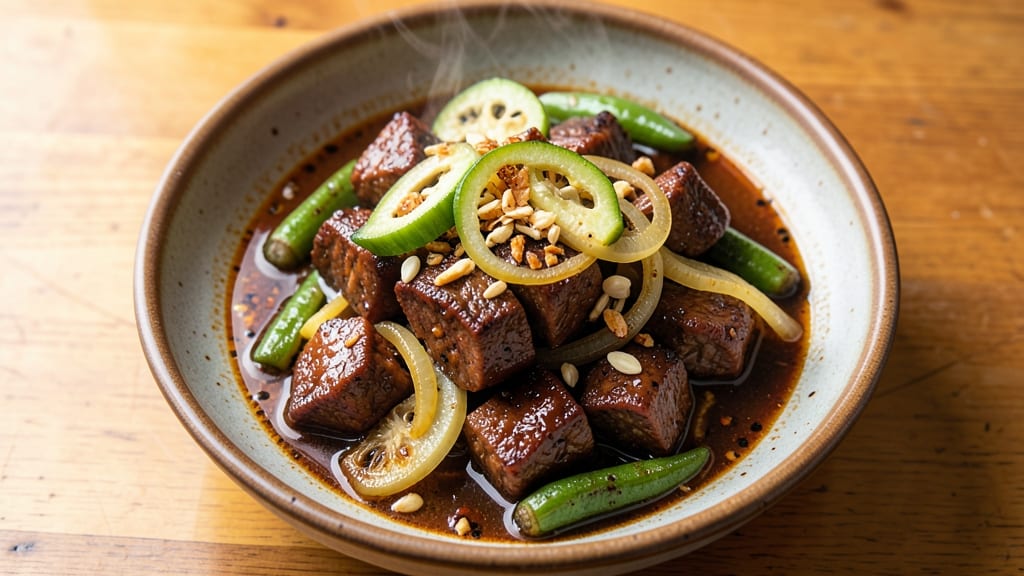
This ampalaya with beef Pinoy recipe delivers the comforting, hearty flavors of Filipino home cooking, where tender beef and crisp-tender okra balance the natural bitterness of bitter gourd.
The secret lies in marinating the beef with soy sauce and calamansi, while sautéing garlic, ginger, and chili creates the aromatic base that ties everything together.
Every bite offers that perfect harmony of savory, slightly sweet, and just the right amount of spice—exactly what makes this dish a staple in Filipino tables.
The beauty of this recipe is in its simplicity: no fancy techniques, just a slow simmer that transforms tough beef into fork-tender pieces while preserving the okra's satisfying crunch.
The ampalaya (bitter gourd) softens just enough to blend seamlessly into the rich, flavorful broth, creating a dish that's both nourishing and deeply satisfying.
What makes it truly special is how the bitterness of the gourd is perfectly countered by the umami depth of the beef and the bright tang of calamansi.
What you'll end up with is a steaming bowl of tender beef swimming in a velvety sauce, where each spoonful delivers layers of flavor—savory from the soy and garlic, slightly sweet from the tomatoes, and a subtle heat from the chili.
The okra adds a delightful texture contrast, while the ampalaya brings that authentic Filipino touch that makes this dish so beloved. Serve it with steamed white rice to soak up every last drop of that delicious broth.
Perfect for family dinners or special gatherings, this recipe captures the warmth and heart of Filipino cuisine. The leftovers reheat beautifully, making it an ideal meal prep option for busy weeks.
Whether you're a seasoned home cook or new to Filipino flavors, this dish is sure to become a favorite in your rotation.
Ingredients for ampalaya with beef pinoy
These Filipino pantry staples and market finds create a dish packed with tender beef and vibrant vegetables.
| Ingredient | Amount | Notes |
|---|---|---|
| Beef Chuck Roast 🥩 | 1 ½ lb | Cut into 1-inch cubes |
| Ampalaya (Bitter Gourd) 🥬 | 1 lb | Peeled, sliced into rounds |
| Okra 🌿 | 1 lb | Trimmed, sliced diagonally |
| Yellow Onions 🧅 | 2 whole | Thinly sliced |
| Garlic Cloves 🧄 | 6 cloves | Minced |
| Fresh Ginger 🌿 | 1 inch | Thinly sliced |
| Green Chili Peppers 🌶️ | 2 whole | Sliced, seeds removed |
| Tomatoes 🍅 | 2 medium | Diced |
| Soy Sauce 🥄 | ½ cup | Filipino preferred |
| Calamansi Juice 🍋 | ¼ cup | Or substitute lime juice |
| Fish Sauce 🐟 | 2 tbsp | For umami depth |
| Sugar 🍚 | 1 tbsp | White granulated |
| Salt 🧂 | 1 tsp | Kosher or sea salt |
| Black Peppercorns 🌶️ | ½ tsp | Freshly ground |
| Cooking Oil 🫒 | 2 tbsp | Vegetable or canola |
The beef is the star—chuck roast gives you that melt-in-your-mouth texture after slow cooking. Look for well-marbled cuts at Asian markets or your local butcher section. Ampalaya (bitter gourd) can be tricky to find fresh, but Filipino grocery stores usually stock it. If you can't find it, sub with a mix of zucchini and eggplant (though the flavor won't be identical). Okra? Most grocery stores carry it year-round, but check the produce section for firm, straight pods. The onions and garlic? Yellow onions work best for this dish—they add natural sweetness as they cook. For the ginger, peel it fresh and slice thinly for maximum flavor.
No calamansi? Lime juice works perfectly—just double the amount. Short on fish sauce? Soy sauce with a pinch of sugar mimics the umami, though it won't be exactly the same. The green chili peppers add heat, but you can skip them if you prefer mild flavors. For the tomatoes, San Marzano if you can find them, but regular vine-ripened work fine. The soy sauce matters here—Filipino brands like Silver Swan have that perfect balance of saltiness and depth. If you can't find it, any good-quality soy sauce will do, but you might need to adjust the salt at the end. The sugar? Just a touch—it balances the bitterness of the ampalaya beautifully.
This stew tastes even better the next day as flavors meld. Keeps in the fridge for 4-5 days—portion into containers for easy lunches. Freezes beautifully for 3 months, though the okra might get a bit softer after thawing. For serving, I always pair it with steamed jasmine rice—it soaks up all that delicious broth. Make a double batch if you can—the leftovers disappear fast!
Why You'll Love This Recipe
- One-Pot Magic: The beef and veggies all simmer together—no extra pans, no extra stress. Just slice, stir, and let the garlic and onions build that rich, savory base while the bitter gourd softens into something almost sweet.
- Deep Umami Bomb: That slow-cooked beef chuck? It melts into the sauce, turning the ampalaya’s natural bitterness into something warm and satisfying. Honestly, the first time I tasted it, I thought, "Wait, this is actually good?"—and then I went back for thirds.
- Leftovers That Don’t Suck: This dish begs to be made in bulk—reheats like a dream, and the flavors only get better the next day. My freezer’s always stocked with portions because it’s the kind of meal that tastes just as good cold as it does hot.
- Budget Stretch Star: Beef chuck roast is affordable, and ampalaya and okra turn a simple stew into a hearty, filling meal. Between us, this is how I feed my whole family without breaking the bank—every bite feels like a victory.
Step-by-step instructions for ampalaya with beef Pinoy recipe
Here's how to create a rich, flavorful Filipino stew where tender beef and vibrant vegetables melt together.
Prepare the Beef and Vegetables
Begin by cutting the 1.5 lb beef chuck roast into 1-inch cubes—this size ensures even cooking and tender results. Pat each piece dry with paper towels to help them brown nicely in the oil. Set aside in a bowl.
Next, peel the 1 lb ampalaya (bitter gourd) and slice it into ¼-inch rounds, discarding any fibrous ends. Trim the 1 lb okra and slice it diagonally into ½-inch pieces. Thinly slice the 2 whole yellow onions and separate the 6 cloves garlic into individual cloves. Thinly slice the 1-inch fresh ginger and remove the seeds from the 2 whole green chili peppers before slicing them into rings.
Dice the 2 medium tomatoes and set all prepared ingredients aside. The key here is to have everything ready before you start cooking—this keeps the process smooth and ensures nothing burns while you're prepping.
Sauté the Aromatics and Brown the Beef
Heat the 2 tbsp cooking oil in a large pot or deep skillet over medium-high heat until shimmering. Add the sliced yellow onions and cook for 3-4 minutes until they soften and begin to caramelize slightly. Add the minced garlic cloves and sliced ginger, stirring for 30 seconds until fragrant.
Push the aromatics to one side of the pot and add the beef cubes in a single layer. Let them sear undisturbed for 2-3 minutes until they develop a deep golden-brown crust. Stir and repeat until all beef pieces are browned. This step builds rich, meaty flavor that forms the stew's foundation.
Simmer the Vegetables and Season the Stew
Add the sliced ampalaya (bitter gourd), okra, green chili peppers, and diced tomatoes to the pot. Stir gently to combine with the beef and aromatics. Pour in the 0.5 cup soy sauce, 0.25 cup calamansi juice, 2 tbsp fish sauce, and 1 tbsp sugar. Sprinkle with 1 tsp salt and 0.5 tsp freshly ground black peppercorns. The calamansi juice adds a bright, tangy contrast to the hearty beef and vegetables.
Bring the mixture to a gentle boil, then reduce heat to low-medium and cover partially. Let it simmer for 45-50 minutes, stirring occasionally, until the beef is fork-tender and the vegetables are soft but still hold their shape. The stew should have a thick, velvety consistency with the flavors melding together beautifully.
Adjust and Serve
Once the stew is done, taste and adjust the seasoning if needed. If it's too thick, add a splash of water or broth to reach your desired consistency. If it needs more tang, add a little more calamansi juice. Let the stew sit off the heat for 5 minutes to allow the flavors to settle.
Serve the ampalaya with beef hot, garnished with extra green chili peppers if desired. The tender beef and slightly bitter yet sweet ampalaya make this dish a true comfort food staple. Pair it with steamed rice to soak up every last drop of that rich, savory broth.
Pro Tips For Making Ampalaya With Beef Pinoy
- Sear the Beef First: Ampalaya dishes need rich flavor, and skipping the sear means missing out on that deep, caramelized base. Slice the beef chuck thinly (about ¼-inch thick) and cook it in a hot pan with oil until it’s deeply browned—no rushing, or you’ll end up with bland, gray meat. This step makes the difference between a simple stew and a restaurant-worthy dish.
- Peel and Deseed Ampalaya: Ampalaya’s bitterness is the star, but the seeds and tough skin can ruin the texture. After slicing, peel it like you would a cucumber—strip off the skin first, then scoop out the seeds with a spoon. If you leave the seeds in, they’ll turn mushy and bitter, overpowering the dish. (Yes, even if it feels like overkill.)
- Don’t Overcrowd the Pot: I used to dump everything in at once, thinking it’d cook faster. Wrong. Overcrowding the pot steams the beef instead of browning it, and the veggies turn soggy. Cook the beef in batches if needed, then add the ampalaya and okra in stages—this keeps the flavors balanced and the texture perfect.
- Simmer Low and Slow: Ampalaya with beef isn’t a quick meal—it’s a labor of love. Once everything’s in the pot, reduce the heat to a gentle simmer. Too high, and the beef toughens; too low, and it never gets tender. Aim for a steady bubble where you can hear the liquid moving but not boiling violently. Patience here guarantees fork-tender beef.
Pro cooking tips for ampalaya with beef pinoy
Marinate for Maximum Flavor
For extra-tender beef with deep flavor, marinate the cubes in ¼ cup soy sauce, 1 tbsp calamansi juice, and 1 tsp fish sauce for at least 30 minutes before cooking.
I like to add ½ tsp black pepper and 1 tsp sugar to the marinade—this helps tenderize the meat while building complex flavors. Pat the beef dry before searing to ensure a perfect crust. 💫
Balance the Bitterness
The key to taming ampalaya's bitterness is balancing it with sweetness and acidity. After adding the bitter gourd, stir in 1 extra tablespoon of sugar and 1 tablespoon more calamansi juice while simmering.
For an extra touch, add ½ cup coconut milk during the last 10 minutes of cooking—it rounds out the flavors beautifully. Trust me, this makes all the difference!
Low and Slow Simmering
Never rush the simmering process! Cooking at low-medium heat for 45-50 minutes ensures the beef becomes fork-tender without drying out. I use a heavy-bottomed pot to prevent burning, and I stir every 10 minutes to distribute heat evenly.
If the liquid reduces too quickly, add ¼ cup water to maintain the right consistency. 🔥
Okra Texture Secrets
To keep okra crisp-tender, add it to the pot 10 minutes before serving. The high heat at the end prevents it from turning mushy. For extra crunch, blanch the okra in boiling water for 2 minutes before adding it to the stew.
This technique works especially well if you're prepping ahead—just store blanched okra in cold water until ready to use.
Garnish Like a Pro
Finish your dish with fresh green chili slices and a sprinkle of toasted garlic chips for texture and visual appeal. I also like adding a few cilantro leaves for brightness.
For a restaurant-style touch, drizzle with a little chili oil made from Filipino siling labuyo peppers sautéed in neutral oil. The contrast of heat and freshness elevates every bite!
Nutrition facts
Frequently asked questions
Why does my ampalaya taste too bitter?
The natural bitterness of ampalaya is normal, but you can reduce it by soaking the sliced gourd in cold water for 15-20 minutes before cooking. The key is balancing flavors: add 1 extra tablespoon of sugar and 1 tablespoon more calamansi juice while simmering. Coconut milk also helps round out the bitterness beautifully.
Can I substitute beef with another protein?
Yes! For a lighter option, use chicken thighs (boneless, skin-on) or pork shoulder. If you prefer seafood, shrimp or firm white fish like cod work well—just reduce cooking time to 15-20 minutes once added. The dish will still taste delicious, though the texture will differ slightly.
How do I prevent the okra from turning mushy?
Add okra only 10 minutes before serving to maintain its crisp-tender texture. For extra crunch, blanch the okra in boiling water for 2 minutes first, then store in cold water until ready to use. Avoid overcrowding the pot—cook in batches if needed to ensure even heat distribution.
Can I make this dish in a slow cooker?
Brown the beef first, then transfer everything to a 6-quart slow cooker. Cook on low for 6-7 hours or high for 3-4 hours. The slow cooking enhances tenderness, and the flavors meld beautifully. Just add the okra in the last 30 minutes to preserve its texture.
What’s the best way to store leftovers?
Store in an airtight container in the fridge for 4-5 days or freeze for 3 months. Reheat gently on low heat with a splash of water or broth to restore moisture. The beef and vegetables reheat beautifully, making this a great meal prep option.