
Soups & Stews
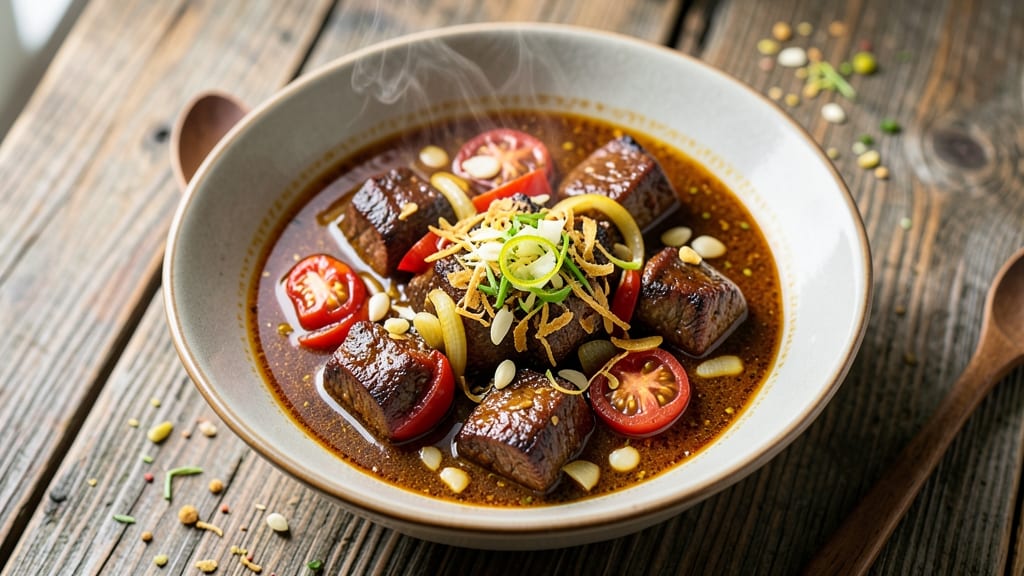
This Anglo-Indian beef stew recipe brings together the rich spice traditions of British colonial India with hearty, slow-cooked comfort. The tamarind and tomato base creates a tangy depth that balances the warm spices, while tender beef absorbs every layer of flavor over hours of simmering.
I developed this version after years of perfecting the balance between traditional techniques and modern convenience—whether you're using a stovetop or slow cooker.
The secret lies in the spice layers: garam masala, cumin, and coriander toasted until fragrant, then deglazed with wine to create a velvety foundation.
The tamarind adds a subtle sourness that brightens the rich tomato base, while slow-cooked beef becomes fork-tender with just the right amount of pink in the center. This is the kind of stew that improves with time, where every spoonful delivers complex, satisfying flavor.
What makes this recipe special is its versatility—serve it with buttery basmati rice for a complete meal or alongside warm naan to soak up every last drop.
The aroma alone will fill your kitchen with warmth, while the texture balances tender beef with a sauce that's thick enough to coat but light enough to let the spices shine. It's the kind of dish that feels both nostalgic and fresh, perfect for family gatherings or cozy weeknight dinners.
Whether you're recreating colonial-era flavors or adapting them for today's busy lifestyle, this stew delivers restaurant-quality results with minimal effort. The slow cooking process means you can prepare it ahead and let the flavors deepen overnight, making it ideal for meal prep.
Here's how to create this comforting classic in your own kitchen.
Ingredients for anglo indian beef stew
Pantry staples meet bold spices for this rich, slow-cooked beef masterpiece.
| Ingredient | Amount | Notes |
|---|---|---|
| Beef Chuck Roast 🥩 | 2 lb | Cut into 1.5-inch cubes |
| Tomatoes 🍅 | 2 cups | Crushed canned San Marzano |
| Tamarind Paste 🍯 | ¼ cup | Adjust for tartness preference |
| Yellow Onion 🧅 | 1 whole | Chopped, medium size |
| Garlic Cloves 🧄 | 6 cloves | Minced, fresh preferred |
| Fresh Ginger 🌿 | ½ cup | Finely grated, peeled |
| Red Wine 🍷 | 1 cup | Dry, bold variety |
| Beef Broth 💧 | 2 cups | Homemade or quality store-bought |
| Garam Masala 🌶️ | 1 tbsp | Freshly toasted preferred |
| Ground Cumin 🌿 | 1 tsp | Toasted for deeper flavor |
| Ground Coriander 🌿 | 1 tsp | Freshly ground preferred |
| Turmeric Powder 🧂 | ½ tsp | Freshly ground for color |
| Olive Oil 🫒 | 2 tbsp | Extra-virgin for richness |
| Salt 🧂 | 1 ½ tsp | Kosher or sea salt |
| Black Peppercorns 🌶️ | ½ tsp | Freshly cracked |
The beef is non-negotiable here—chuck roast gives you that melt-in-your-mouth texture, while sirloin stays too tough. Grab it pre-cubed from Costco or your butcher counter, or ask for 1.5-inch pieces if buying whole. Tamarind paste can be tricky to find, but Indian grocery stores or online retailers like Spicewalla carry it. For the tomatoes, San Marzano cans make all the difference—they're sweeter and less acidic than regular crushed tomatoes. Fresh ginger and garlic? Buy extra—you'll want them for garnish too.
No tamarind? Lemon juice plus a pinch of sugar gets you close, though it won't be identical. Running low on garam masala? Mix 1/4 tsp each cinnamon, cardamom, cloves, and black pepper as a substitute. The red wine can be swapped for apple cider vinegar plus extra broth, but you'll lose some depth. For the spices, toast them whole in a dry pan for 30 seconds before grinding—this releases their oils and makes the whole dish sing. The olive oil matters here too; use something fruity and peppery, not the mild stuff.
This stew tastes even better the next day—make a double batch and freeze half for lazy nights. Store in an airtight container for 4-5 days in the fridge, or freeze for up to 3 months. I like to portion it into containers with rice on the side so lunches are ready to grab. The flavors deepen as it sits, so if you can, let it simmer overnight. Garnish with fresh cilantro or parsley before serving—brightens up the rich spices perfectly.
Why You'll Love This Recipe
- One-Pot Magic: I swear by this stew—just dump everything into one pot, stir, and walk away. That tamarind paste does all the work, cutting through the richness of the beef chuck while the onions caramelize on their own.
- Tangy-Garlic Bomb: The moment that tamarind and garlic hit the simmering beef, my kitchen smells like a Mumbai street stall. It’s not sweet, not sour—it’s that perfect balance that makes you reach for seconds without thinking.
- Weeknight Workhorse: Between us, this stew is my lazy-day hero. Toss in extra tomatoes for lunch the next day, or serve it with crusty bread when unexpected guests show up. It’s the dish that actually works for everything.
- Budget Beef Boost: A single beef chuck roast stretches into three meals—no waste, no fuss. The tamarind paste adds depth for pennies, and onions/garlic stretch the flavor further. Honestly, it’s the kind of recipe that makes grocery bills feel lighter.
Step-by-step instructions for Anglo-Indian beef stew
This stew brings together rich spices, tangy tamarind, and deep tomato flavors for a dish that's both comforting and complex.
Sear the Beef for Maximum Flavor
Heat the 2 tablespoons olive oil in a heavy pot over medium-high heat until shimmering. Add the 2 lb beef chuck roast cut into 1.5-inch cubes in a single layer, working in batches if needed. Let each piece sear undisturbed for 2-3 minutes until deeply browned on all sides—this creates the foundation for rich flavor. Transfer the seared beef to a plate and set aside.
Here's the thing—don't rush this step. The beef should develop a beautiful mahogany crust. If your pot gets too crowded, reduce heat slightly to prevent steaming instead of searing. The crust you build now will carry through the entire cooking process, giving your stew that restaurant-quality depth.
Build the Spiced Tomato-Tamarind Base
In the same pot, add the chopped yellow onion and cook for 3-4 minutes until softened but not browned. Stir in the minced garlic cloves and finely grated fresh ginger, cooking for 30 seconds until fragrant—this releases their full aromatic potential. Add the 2 cups tomatoes and 0.25 cup tamarind paste, stirring to combine.
Let the mixture simmer for 5 minutes until the tomatoes break down and the sauce thickens slightly. This is where the tamarind's tangy complexity starts to shine. If you're using canned tomatoes, give them a quick mash with your hands to help them incorporate better. The sauce should coat the back of a spoon at this point, forming a rich, vibrant base for your stew.
Develop the Spice Profile
Sprinkle the 1 tablespoon garam masala, 1 teaspoon ground cumin, 1 teaspoon ground coriander, and 0.5 teaspoon turmeric powder over the tomato mixture. Stir vigorously to distribute the spices evenly and toast them in the pot for 1 minute—this activates their flavors and prevents them from tasting raw.
I like to press the spices into the mixture with a wooden spoon to ensure they're fully incorporated. The pot should smell like a spice market at this point—earthy, warm, and slightly sweet. Be careful not to let the spices burn, as this can make them bitter. The moment you smell that aromatic release is when you know you're on the right track.
Simmer the Stew to Tender Perfection
Return the seared beef to the pot along with the 1 cup red wine and 2 cups beef broth. Bring to a gentle boil, then reduce heat to low and cover partially. Let it simmer for 2.5-3 hours, stirring occasionally, until the beef is fork-tender and falls apart easily. The stew should reduce slightly, creating a thick, flavorful sauce that coats the beef beautifully.
Real talk: this is where patience pays off. The beef needs time to transform from tough to meltingly tender. Every 30 minutes, give it a stir and check the liquid level. If it gets too low, add a splash of water or broth to keep it moist. You'll know it's done when you can easily pierce a beef cube with a fork and the sauce has thickened to a velvety consistency.
Finish and Season to Taste
Once the beef is tender, uncover the pot and increase heat to medium to reduce the stew slightly. Stir in the 1.5 teaspoons salt and 0.5 teaspoon black peppercorns, tasting as you go. The tamarind and spices should be balanced by now, but you might want to adjust the salt slightly depending on your broth. Let it simmer uncovered for another 10-15 minutes to allow the flavors to meld and the sauce to thicken further.
Here's the moment that matters: the stew should be rich, complex, and perfectly balanced. Each bite should deliver tender beef with layers of spice, tangy tamarind, and deep tomato flavor. If you're serving this with crusty bread or basmati rice, you'll want to let it rest for 10 minutes before serving—this allows the flavors to settle and the sauce to thicken just a bit more. Trust me, that extra wait makes all the difference.
Pro Tips For Making Anglo Indian Beef Stew
- Brown the Beef Hard: I learned this the hard way—skipping the deep sear means the tamarind’s tang and onion’s sweetness will never cling to the meat. Get that chuck roast deep golden in a hot pan before adding liquid; it builds flavor faster than slow simmering ever could.
- Soak Tamarind Properly: Tamarind paste is sticky, stubborn stuff. Mix it with twice the water you think you need, then strain out the pulp—this keeps the stew smooth, not gloppy. (Yes, even if you’re impatient like me.)
- Don’t Rush the Tomatoes: After burning three batches, I finally figured out: roast the whole tomatoes (peeled, halved, skin-side down) in the same pan as the onions. Their caramelized jammy bits become the stew’s backbone—way better than dumping raw chopped ones.
- Simmer Low and Long: This isn’t the prettiest method, but it’s the tastiest. Once the beef is submerged, drop the heat to a whisper and let it cook for at least 3 hours—the collagen melts into silk, and the tamarind’s acidity mellows. (Your future self will thank you.)
Flavor customization for this anglo indian beef stew
Spice Level Control
Adjust the heat to your preference by playing with the garam masala and black peppercorns. For a mild version, reduce the garam masala to ½ tablespoon and omit half the peppercorns.
If you love heat, add ½ teaspoon cayenne pepper with the other spices or finish with 1 tablespoon chopped green chilies while serving. I find that toasting extra cumin seeds separately and grinding them adds warmth without overwhelming the dish. 🌶️
Tamarind Tang Adjustments
The tamarind paste is the secret to this stew's depth, but it can be tricky to balance. Start with ¼ cup and taste before adding more—it should brighten the dish without making it sour. For a sweeter profile, add 1 tablespoon honey or brown sugar at the end.
If you're using lemon juice as a substitute, reduce it to 2 tablespoons and add ½ teaspoon sugar to mimic tamarind's complexity. 🍯
Wine and Broth Swaps
Skip the wine? No problem. Replace the 1 cup red wine with 1 cup beef broth plus 1 tablespoon balsamic vinegar for depth. For a vegetarian-friendly version, use mushroom broth and swap beef for portobello mushrooms or chickpeas.
If you prefer a lighter stew, increase the broth to 3 cups and simmer uncovered for 10 minutes at the end to concentrate the flavors. 🍷
Slow Cooker Adaptation
For hands-off cooking, sear the beef as directed, then transfer everything to a 6-quart slow cooker. Cook on low for 8 hours or high for 5 hours, stirring once halfway.
The slow cooker keeps the beef incredibly tender while letting the spices meld perfectly. Just add 1 extra tablespoon tamarind paste since slow cooking mellows some flavors. 🕒
Herb and Garnish Variations
Fresh herbs elevate this stew instantly. Stir in 1 tablespoon chopped cilantro or parsley in the final 10 minutes of cooking, or garnish before serving. For a smoky twist, add ½ teaspoon smoked paprika with the other spices.
If you love texture, top with toasted cumin seeds or crushed peanuts for a crunchy contrast. 🌿
Creamy or Crispy Finishes
Want extra richness? Stir in ¼ cup coconut milk or 2 tablespoons Greek yogurt at the end for a velvety texture. For contrast, serve with crispy fried onions or toasted breadcrumbs.
I love adding a dollop of raita (yogurt sauce) on the side to cool the spices—just mix ½ cup yogurt with 1 teaspoon mint and a pinch of salt. 🥣
Nutrition facts
Frequently asked questions
What makes this Anglo-Indian beef stew different from regular beef stew?
The key differences lie in the spice blend and acidity. This recipe uses garam masala, tamarind paste, and a touch of red wine to create a complex, tangy-sweet profile that's distinct from traditional Western beef stews. The slow simmering process allows the spices to develop deeper, more aromatic notes. Plus, the tamarind adds a unique sourness that brightens the rich beef and tomato base.
Can I use a different cut of beef besides chuck roast?
While chuck roast is ideal for its tenderness and flavor, you can substitute with brisket or stew meat (like short ribs). Avoid lean cuts like sirloin or filet mignon—they'll dry out during the long cooking time. If using brisket, cut it into 1.5-inch cubes and trim excess fat to prevent greasiness. The cooking time remains the same, but check for tenderness at 2 hours if concerned.
How can I make this stew ahead of time?
This stew actually tastes better the next day! Let it cool completely, then store in an airtight container in the fridge for 4-5 days or freeze for up to 3 months. Reheat gently on the stovetop over low heat, stirring occasionally, until warmed through. For best results, reheat only what you need—each reheating can make the sauce slightly thicker. The flavors deepen overnight, so plan to make extra!
What's the best way to serve this Anglo-Indian beef stew?
This rich stew pairs perfectly with buttery basmati rice, warm naan, or crusty bread for soaking up the sauce. For extra authenticity, serve with a side of raita (yogurt with cucumber and mint) to balance the spices. Garnish with fresh cilantro or parsley just before serving to add brightness. The stew's depth makes it hearty enough as a standalone meal, but the sides complete the experience.
What should I do if the stew tastes too spicy?
Balance the heat by adding a touch of sweetness—stir in 1 tablespoon honey or brown sugar and let it simmer for 5 minutes to integrate. You can also add ½ cup plain yogurt or coconut milk to cool the spices. For a quick fix, serve with extra raita or fresh herbs to cut through the heat. Remember, tamarind adds natural tanginess that can make spice levels seem stronger than they are.