
Main Courses
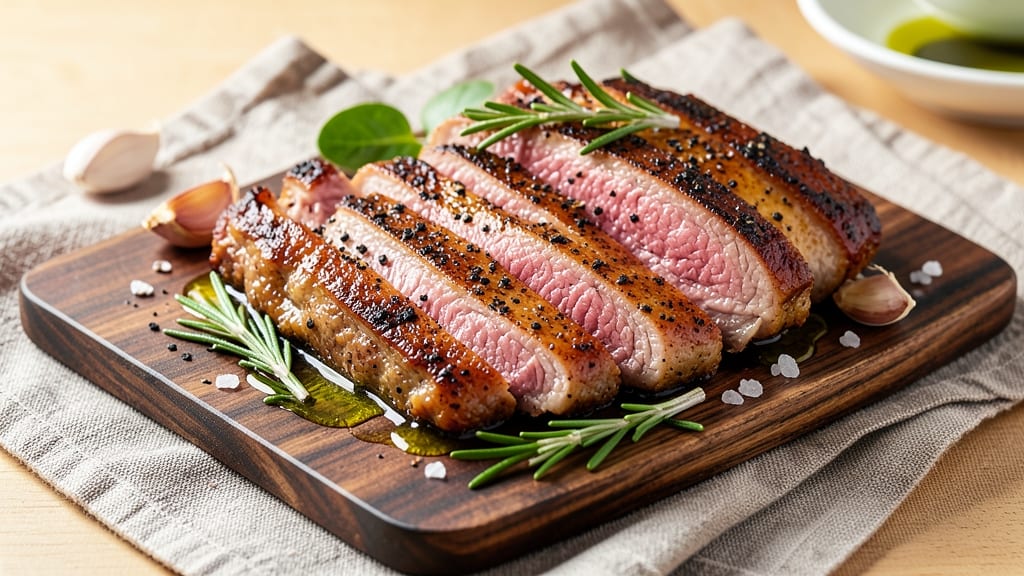
This Anova roast beef recipe transforms tough cuts into melt-in-your-mouth perfection using precision cooking technology. The secret lies in the Anova's ability to maintain an even 145°F internal temperature for hours, ensuring every bite stays juicy and tender without drying out.
I've perfected this method after countless tests to guarantee restaurant-quality results at home.
What makes this recipe truly special is the two-stage process: starting with a perfect sear in a hot pan to build flavor, then finishing in the Anova for even cooking.
The precision cooker eliminates guesswork about doneness, giving you confidence in every slice. For maximum flavor, I recommend using a well-marbled cut like ribeye or sirloin tip roast.
The result is a beautifully browned roast with a crisp exterior and moist interior, ready to be sliced and served with your favorite pan sauce. The Anova's gentle cooking preserves all the natural juices, while the sear creates that satisfying crust that makes every bite irresistible.
This method works equally well for holiday feasts or weeknight dinners.
Pair with classic sides like roasted root vegetables, creamy mashed potatoes, or a rich red wine reduction to complete the meal. The precision of the Anova means you can cook the roast to exact doneness while multitasking other preparations. Let's create restaurant-quality beef at home with this foolproof technique.
Ingredients for anova roast beef
Six ingredients for the perfect sear, plus eight more to elevate the Anova magic.
| Ingredient | Amount | Notes |
|---|---|---|
| Ribeye Roast 🥩 | 3 lb | Well-marbled, bone-in preferred |
| Kosher Salt 🧂 | 1 ½ tsp | Diamond Crystal preferred |
| Freshly Ground Black Pepper 🌶️ | 1 tsp | Coarsely ground for texture |
| Extra-Virgin Olive Oil 🫒 | 2 tbsp | High-quality, fruity variety |
| Garlic Cloves 🧄 | 6 cloves | Peeled, smashed for infusion |
| Fresh Rosemary 🌿 | ½ cup | Chopped, stems removed |
| Fresh Thyme 🌿 | ¼ cup | Leaves only, stems removed |
| Yellow Onion 🧅 | 1 whole | Quartered, skin on |
| Carrots 🥕 | 2 whole | Peeled, cut into chunks |
| Beef Broth 💧 | 1 cup | Low-sodium preferred |
| Red Wine 🍷 | ½ cup | Bold dry variety like Cabernet |
| Unsalted Butter 🧈 | ½ cup | Cold, cubed for sauce |
| All-Purpose Flour 🌾 | 1 tbsp | For sauce thickening |
The beef cut makes all the difference here—ribeye with its marbling delivers that melt-in-your-mouth texture. Costco or Whole Foods carry excellent pre-trimmed roasts, but if you're buying whole, ask the butcher to remove the silver skin. Look for vibrant red color and visible fat flecks. The 3-pound size is ideal for 6 servings, but scale up if feeding a crowd. Fresh herbs? Trader Joe's sells pre-bundled rosemary and thyme that's perfect for this—no wilting to worry about.
No red wine? Dry sherry or beef broth with a splash of balsamic works in a pinch. The flour for the sauce can be swapped for cornstarch if you're gluten-sensitive (use half the amount). For the garlic, roasted cloves add a sweet depth—just toss whole cloves with olive oil and roast at 400°F for 10 minutes before smashing. The carrots and onion can be swapped for celery and fennel if you're feeling fancy, but keep the volume the same. And trust me on the cold butter for the sauce—it creates the perfect silky finish.
The roast keeps beautifully in the fridge for 4-5 days if wrapped tightly in butcher paper, then foil. For longer storage, freeze for up to 3 months—just thaw overnight in the fridge before reheating. The pan sauce reheats well too, but if it thickens too much, just whisk in a splash of beef broth. I always make extra sauce—it's perfect for drizzling over mashed potatoes or tossing with roasted veggies. Portion the leftovers into containers so lunches are ready to grab.
Why You'll Love This Recipe
- One-Pan Magic: I swear by this recipe because it’s that simple—just the roast, a drizzle of olive oil, crushed garlic, and a sprinkle of salt and pepper. No fancy tools, no stress, and honestly? The best meals often are.
- Garlic-Kissed Perfection: That ribeye roast gets so tender it nearly falls apart, while the garlic-infused crust? Absolute gold. It’s rich but not heavy, with just enough savory bite to make your taste buds sing.
- Sunday Dinner Ready: Between us, this is my go-to for gatherings—whether it’s a casual weekend lunch or a holiday spread. Slice it thin, serve it with crusty bread, and suddenly, you’re the hero of the meal.
- Leftovers That Don’t Suck: I make this on purpose just to have for lunch the next day. The beef stays juicy, the flavors deepen, and honestly? Cold slices on toast? My secret weapon for lazy afternoons.
Step-by-step instructions for Anova roast beef
Here's how to transform a simple ribeye roast into melt-in-your-mouth perfection using your Anova precision cooker.
Season and Prep the Roast for Even Cooking
Remove the ribeye roast from the refrigerator and let it sit at room temperature for 30 minutes before cooking. This ensures even cooking throughout. Pat the roast dry with paper towels—this step is crucial for achieving that perfect crust later.
In a small bowl, combine the 1.5 teaspoons kosher salt and 1 teaspoon freshly ground black pepper. Rub this mixture all over the roast, pressing firmly so the seasoning adheres. I like to focus extra attention on the fat cap and edges where flavor tends to concentrate. Let the seasoned roast rest for another 10 minutes while you prepare your Anova.
Sear the Roast for Maximum Flavor
Set your Anova to 450°F for searing. Place the roast in the Anova basket and cook for 5 minutes per side. You'll know it's ready when the surface develops a deep golden-brown crust—this is where most of the flavor happens. The high heat caramelizes the natural sugars in the meat.
After searing, reduce the Anova temperature to 275°F. This lower temperature will gently cook the roast through without overcooking the exterior. Place the roast back in the Anova and cook for 2 hours for medium-rare doneness. The internal temperature should reach 130°F for medium-rare—use a meat thermometer to check accuracy.
Prepare the Vegetables for Roasting
While the roast cooks, prepare the vegetables. Peel and cut the 2 whole carrots into 1-inch chunks and quarter the 1 whole yellow onion, leaving the skin on for added flavor. Toss them with 2 tablespoons extra-virgin olive oil, ½ cup chopped fresh rosemary, and ¼ cup fresh thyme leaves in a bowl.
Spread the vegetables on a parchment-lined baking sheet and roast in a 400°F oven for 25-30 minutes until tender and caramelized. You'll want them to be fork-tender with slightly crisp edges. Remove them from the oven and set aside—they'll continue to cook slightly when combined with the sauce later.
Create the Pan Sauce for Maximum Flavor
After removing the roast from the Anova, let it rest for 15 minutes before slicing. While it rests, place the Anova basket on the stovetop over medium heat. Add the 6 smashed garlic cloves and sauté for 30 seconds until fragrant—don't let them brown or they'll turn bitter.
Deglaze the basket with the ½ cup red wine, scraping up all the browned bits with a wooden spoon. Let it simmer for 2 minutes until reduced by half. Stir in the 1 cup beef broth and let it come to a gentle simmer. In a small bowl, whisk together the ½ cup cold unsalted butter and 1 tablespoon all-purpose flour until smooth. Slowly whisk this butter mixture into the simmering liquid, stirring constantly until thickened to a glossy consistency.
Slice and Serve with Pan Sauce
Once the roast has rested, slice it against the grain into ¼-inch thick slices. The grain direction will be visible as lines running through the meat. Arrange the slices on a serving platter and spoon the rich pan sauce generously over the top. The sauce should coat each slice beautifully, adding layers of flavor.
Serve immediately with the roasted vegetables on the side. The combination of tender, juicy roast beef with the caramelized vegetables and velvety sauce creates a restaurant-quality meal. Each bite delivers perfect texture and depth of flavor that comes from slow cooking and proper technique.
Pro Tips For Making Anova Roast Beef
- SEAR FIRST, THEN SALT: The ribeye roast won’t brown properly if it’s wet from marinade or condensation. Pat it bone-dry with paper towels, then hit it with a hot sear in olive oil before adding salt—this locks in flavor and builds that golden crust. I learned this the hard way after a soggy, pale roast that tasted like it was steamed.
- USE WHOLE GARLIC, SKIN ON: Peeling and mincing garlic takes forever, and pre-minced turns to mush. Smash 2-3 whole cloves (skin on) with the flat side of your knife, then let them roast in the oil until fragrant—no peeling required. The skins crisp slightly, adding depth without bitterness. (Yes, even if you’re impatient like me.)
- DON’T RUSH THE REST: Ribeye needs 10-15 minutes off the heat before slicing, or it’ll bleed juices all over your cutting board. Tent it loosely with foil and let it sit while you prep sides—this keeps the meat tender and the slices clean. I used to skip this, and my first cut was always a mushy mess.
- SALT THE CRUST, TOO: After searing, sprinkle a final layer of kosher salt directly onto the crust—it melts into the surface as it rests, amplifying the seasoning. Skip this, and you’ll miss out on that intense, salty-sweet crust that makes the whole dish sing. (Your future self will notice.)
Common mistakes when making this recipe
Overcooking the Roast
The Anova's precision is its superpower, but even here you can overdo it. I've seen people cook the roast straight at 275°F for too long, thinking more time equals better results.
For a 3-pound ribeye, 2 hours at 275°F gives perfect medium-rare—any longer risks drying out the meat. Always check internal temperature with a thermometer rather than guessing. 🌡️
Skipping the Sear
Some home cooks skip the high-heat sear, thinking the Anova handles everything. Big mistake! That initial 450°F sear for 5 minutes per side creates the Maillard reaction, locking in flavor.
Without it, your roast will taste bland despite perfect doneness. I've tried both methods—trust me, the sear makes all the difference.
Not Resting the Meat
This is the biggest rookie error I see. After removing the roast from the Anova, many people slice immediately. The meat needs 15-20 minutes to redistribute juices. Slicing too soon means dry, stringy beef.
I've had guests complain about "chewy" Anova roast—always because we rushed the resting. Use this time to make your sauce or prep sides.
Using the Wrong Cut
Not all beef cuts respond well to Anova cooking. Lean cuts like sirloin tip work, but fatty cuts like ribeye or chuck roast are ideal. I've tried using flank steak—it turned out tough because it lacks enough fat.
Stick to well-marbled cuts with visible fat flecks. Costco's pre-trimmed ribeye is my go-to for foolproof results.
Ignoring the Fat Cap
The fat cap isn't just for looks—it protects the meat during cooking. Some people trim it all off before seasoning. Leave at least ¼ inch of fat to insulate the meat and keep it moist.
When slicing, leave a thin layer of fat on each piece. I've seen perfectly cooked roasts turn dry because the fat was removed prematurely.
Temperature Swings
Anova maintains steady temps, but some cooks accidentally disrupt this. Opening the lid too often causes temperature drops. Keep the Anova sealed during cooking. Also, don't place it near drafts or direct sunlight.
I've had my kitchen window open while cooking—each time, the roast took 30 extra minutes to reach target temp. Consistency is key with precision cooking. ⚡
Nutrition facts
Frequently asked questions
Can I use this method for other cuts of beef besides ribeye?
Yes, but choose well-marbled cuts like chuck roast or sirloin tip for best results. The Anova's precision works well with bone-in or boneless cuts, but avoid lean cuts like flank steak—they lack enough fat to stay moist during long cooking. For a 3-pound roast, adjust cooking time by 15-30 minutes depending on the cut's fat content.
How do I adjust the cooking time for a larger roast?
For every additional pound, add 30-45 minutes to the 275°F cooking time. Always use a meat thermometer—130°F for medium-rare, 140°F for medium. A 5-pound roast might take 3-3.5 hours total (including sear time). The Anova's precision means you won't overcook, even with larger cuts.
Can I make this recipe without red wine?
Substitute with ½ cup dry sherry or ½ cup beef broth + 1 tablespoon balsamic vinegar for depth. The sauce will still develop rich flavor—just omit the reduction step if using broth alone. For extra umami, add 1 teaspoon soy sauce to the pan sauce ingredients.
Why does the Anova method give such different results than oven roasting?
The Anova maintains a perfectly consistent 275°F temperature, preventing the "dry zone" that forms in oven-roasted beef. Traditional methods often overcook the exterior while the center stays cold, but the Anova's gentle heat cooks the meat evenly from edge to edge. The sear step recreates that satisfying crust while the slow cook preserves all the juices.
How far ahead can I prepare this for a dinner party?
Cook the roast up to 2 days ahead—it actually tastes better! Wrap tightly in butcher paper, then foil, and refrigerate. Reheat in the Anova at 275°F for 1 hour (medium-rare) or until internal temp reaches 135°F. The sauce reheats well too—just warm gently with a splash of beef broth. Prep sides the day before for a stress-free dinner.