
Main Courses
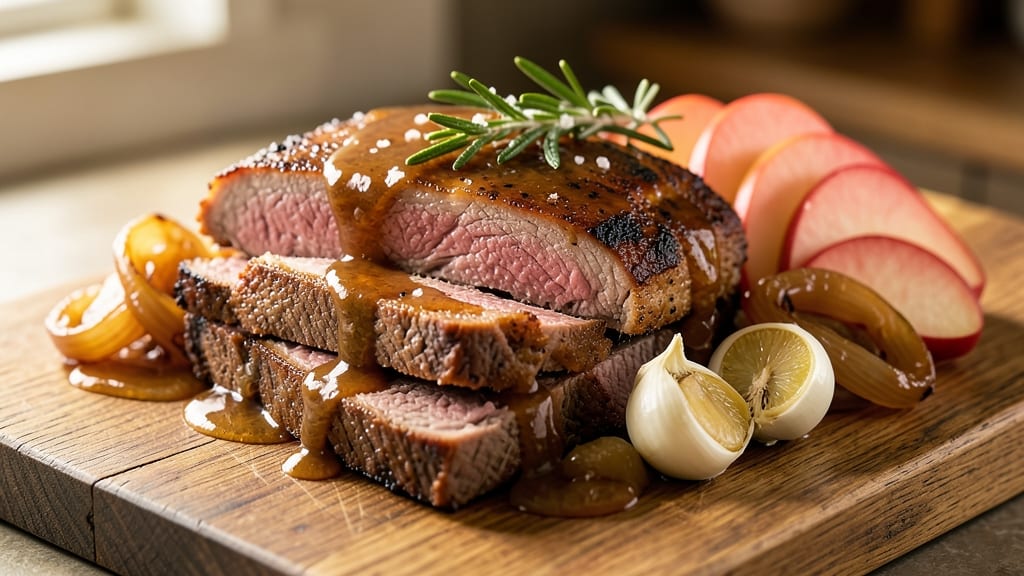
This apple cider beef brisket recipe transforms tough cuts into melt-in-your-mouth perfection through slow braising and aromatic spices. The key lies in simmering the brisket with apple cider, creating a rich, caramelized sauce that tenderizes the meat while infusing deep, fruity-sweet notes.
I developed this method after years of perfecting slow-cooked beef, ensuring every bite delivers that perfect balance of smoky depth and tender richness.
The process begins with a dry rub of warm spices—cinnamon, cloves, and black pepper—that form a flavorful crust on the brisket before it's submerged in apple cider.
As it slow-cooks for hours, the cider reduces into a velvety glaze that clings to the meat, while the apples caramelize into sweet, jammy pockets. This technique ensures the brisket stays juicy and flavorful, even when sliced thin.
By the time you're ready to serve, you'll have a brisket so tender it practically falls apart, all coated in a glossy, apple-infused sauce that's perfect for drizzling over each slice.
The aroma alone will have everyone gathering at the table, and the first bite delivers that perfect harmony of sweet, smoky, and savory flavors that define great comfort food.
Pair with classic sides like creamy mashed potatoes, roasted root vegetables, or crusty bread to soak up every last drop of that delicious sauce. This recipe is designed to impress, whether you're feeding a crowd or treating yourself to a special meal. Let's get started on creating this showstopping centerpiece.
Ingredients for apple cider beef brisket
Six ingredients transform tough brisket into melt-in-your-mouth perfection with apple cider's sweet-savory magic.
| Ingredient | Amount | Notes |
|---|---|---|
| Beef Brisket 🥩 | 4 lb | Flat cut preferred, trimmed of excess fat |
| Apple Cider 🍎 | 2 cups | Unfiltered, cloudy preferred for depth |
| Fresh Apples 🍎 | 2 medium | Honeycrisp or Braeburn, peeled and quartered |
| Yellow Onion 🧅 | 1 whole | Large, sliced into half-moons |
| Garlic Cloves 🧄 | 6 cloves | Smash but don't mince |
| Ground Black Pepper 🌶️ | 1 tbsp | Freshly cracked for best flavor |
| Ground Cinnamon 🌿 | 1 tbsp | Ceylon preferred for subtle warmth |
| Whole Cloves 🌿 | 4 whole | Lightly crushed |
| Bay Leaves 🌿 | 2 whole | Fresh if available |
| Beef Broth 💧 | 1 cup | Low-sodium preferred |
| Brown Sugar 🍚 | 2 tbsp | Light or dark, packed |
| Olive Oil 🫒 | 2 tbsp | For searing brisket |
| Salt 🧂 | 1 ½ tbsp | Kosher salt, coarse grind |
The brisket is the star—look for a 4-pound flat cut with good marbling at Costco or your butcher shop. Trim any thick fat caps but leave some for flavor. Honeycrisp apples are your best bet for that perfect caramelized texture, but any firm apple works. I always grab extra because they disappear fast in this recipe. The apple cider should be the unfiltered kind—Mott's or Woodchuck are solid choices. If you can't find either, any cider with sediment works better than clear, filtered versions.
No apple cider? Apple juice plus 1 tbsp apple cider vinegar gets you close. Fresh apples unavailable? Dried apples soaked in warm water (1 cup water to 1 cup dried) work in a pinch. Swap brown sugar for maple syrup at half the amount if you're avoiding refined sugar. The bay leaves? Skip them if you're short—this dish is forgiving. For extra depth, add a 1-inch piece of orange peel to the pot with the apples. And trust me on the whole cloves—they add a subtle warmth that takes this from good to showstopping.
This brisket tastes even better the next day—3-4 days in the fridge, wrapped tightly in foil. Freezes beautifully for up to 3 months if you want to prep ahead. I always make double batches because it disappears so fast. Store the sauce separately if you're reheating—it reheats better alone and you can just pour it back over the brisket at serving. The brisket itself? Slice against the grain and serve with that glorious sauce drizzled over every bite.
Why You'll Love This Recipe
- One-Pan Magic: I swear by this recipe because it’s that kind of effortless—just brisket, cider, and a handful of chopped veggies in one pot. No flipping pans, no stressing over timelines, and honestly? The cleanup is just rinsing a sheet pan.
- Sweet-Savory Balance: That first bite where the caramelized apples meet the tender beef? It’s like autumn in a forkful. The cider keeps it rich but bright, and the onions add this deep, almost smoky sweetness that makes you reach for seconds without thinking.
- Leftovers That Shine: Between us, this dish begs to be made extra. The brisket gets even more fall-apart tender the next day, and I’ve turned it into sandwiches, tacos, or even a hearty soup. (Yes, even on a Tuesday night.)
- Budget-Friendly Feast: A whole brisket feeds my family for days, and the apples and cider stretch the flavor without breaking the bank. I’ll be real: it’s my go-to for gatherings because it’s reliable, filling, and costs less than takeout.
Step-by-step instructions for apple cider beef brisket
Here's how to transform tough brisket into tender, caramelized perfection with deep apple cider flavors.
Sear the Brisket for Maximum Flavor
Heat a Dutch oven over medium-high heat and add the 2 tablespoons olive oil. Once the oil shimmers, place the 4 lb beef brisket fat-side down and sear for 8-10 minutes until deeply browned. Press down gently on the brisket during the first minute—this prevents it from curling and ensures even contact with the pan.
Flip the brisket and continue searing for another 6-8 minutes until the second side is also deeply browned. Remove the brisket from the pot and set it aside on a plate. You want that rich, caramelized crust—it's the foundation of all that flavor we're building. The pan should have beautiful browned bits stuck to the bottom, so don't scrape them out yet.
Build the Apple Cider Base
In the same Dutch oven, add the 1 whole yellow onion sliced into half-moons and cook for 3-4 minutes until softened. Add the 6 cloves garlic cloves (smash but don't mince) and cook for 30 seconds until fragrant—don't let the garlic burn, or it'll turn bitter.
Pour in the 2 cups apple cider and scrape up all those browned bits from the bottom of the pan with a wooden spoon. This deglazing step captures all that concentrated flavor from the searing. Add the 2 medium fresh apples (peeled and quartered), 2 tablespoons brown sugar, and 1.5 tablespoons salt. Stir everything together and bring to a gentle simmer over medium heat.
Layer in Spices and Braise
Return the brisket to the pot, fat-side up, and add the 1 cup beef broth, 1 tablespoon ground black pepper, 1 tablespoon ground cinnamon, 4 whole cloves (lightly crushed), and 2 whole bay leaves. The spices should be distributed evenly around the brisket, not all clustered in one spot.
Bring the liquid to a boil, then immediately reduce heat to low and cover the pot with a tight-fitting lid. This is where the magic happens—braising at 300°F (or the lowest heat setting that maintains a gentle simmer) for 3-4 hours. You'll know it's working when you see bubbles forming around the edges and the apple cider reduces to a rich, syrupy consistency.
Check for Tenderness and Finish
After 3 hours, check the brisket's doneness by inserting a meat thermometer into the thickest part. It should read between 195-205°F—this is the "probe-tender" stage where the meat fibers break down completely. If it's not there yet, continue cooking for another 30-60 minutes, adding a splash of water if needed to prevent burning.
Once tender, carefully remove the brisket and transfer it to a cutting board. Tent loosely with aluminum foil and let it rest for 15-20 minutes. This resting period allows the juices to redistribute throughout the meat, ensuring every slice is moist and flavorful. While it rests, skim any excess fat from the braising liquid and reduce it by half over medium-high heat to create a rich, concentrated sauce.
Slice and Serve
Uncover the brisket and locate the grain direction—you'll see lines running through the meat. Using a sharp carving knife, slice the brisket against the grain into ¼-inch thick slices. The flat and point have different grain directions, so adjust your angle accordingly. Arrange the slices on a warm platter and spoon the reduced apple cider sauce over the top.
Serve immediately while still warm. The brisket should have a beautiful mahogany color with caramelized apple pieces scattered throughout. Each slice should be fork-tender with juices flowing freely. Pair with roasted root vegetables or crusty bread to soak up that delicious sauce. Real talk: this brisket is so tender it practically melts in your mouth, and the apple cider adds a perfect sweet-tangy balance that makes every bite unforgettable.
Pro Tips For Making Apple Cider Beef Brisket
- Sear the Brisket First: High heat for 3-4 minutes per side until deep brown—this isn’t just for looks. A good crust locks in the apple cider’s sweetness and keeps the meat from drying out later. (Yes, even if you’re impatient like me, resist the urge to rush this.)
- Deglaze with Apple Cider: After searing, pour in that apple cider immediately—don’t let the fond stick. Scrape the browned bits off the pan while they’re hot; this adds depth to the sauce and makes the brisket taste like it simmered in its own juices all day.
- Use Tart Apples: Granny Smiths or Honeycrisp—something firm and tangy. Soft apples (like Fuji) turn to mush and make the sauce watery. Peel and chop them into ½-inch chunks so they soften but don’t disappear.
- Skip the Crowding: If you’re braising, don’t pile everything in at once. Layer onions and garlic in the bottom first, then place the brisket on top—this keeps the veggies from burning and lets the cider work its magic evenly. (Your future self will thank you.)
Perfect pairings for apple cider beef brisket
Classic Side Dishes
Creamy mashed potatoes are the ultimate partner—toss them with 2 tablespoons butter and ¼ cup whole milk per 2 cups potatoes for a velvety texture that contrasts beautifully with the brisket's richness. I like adding ½ teaspoon nutmeg and a pinch of salt to elevate them further. 🥔
Roasted root vegetables bring earthy sweetness to the plate. Toss 2 cups cubed carrots, 2 cups parsnips, and 1 cup sweet potatoes with 2 tablespoons olive oil, 1 teaspoon thyme, and ½ teaspoon smoked paprika. Roast at 400°F for 35 minutes until caramelized.
Bread Pairings
A warm, crusty baguette is perfect for soaking up sauce—slice it into ½-inch thick pieces and toast in the oven at 375°F for 5 minutes until golden. For extra flavor, brush slices with garlic butter before toasting. 🍞
Cornbread adds a Southern twist. Use a 1-box mix with 1 cup apple cider instead of water and ½ cup corn kernels mixed in. Bake at 375°F for 20 minutes—the slight sweetness complements the brisket perfectly.
Sauce Enhancements
Thicken the apple cider sauce with 1 tablespoon cornstarch mixed with 2 tablespoons cold water. Stir into the reduced sauce off the heat and return to the pot for 2 minutes until thickened. For extra depth, add 1 tablespoon apple cider vinegar at the end for brightness. 🍏
Garnish with chopped fresh parsley or thinly sliced scallions for freshness. A sprinkle of crushed red pepper flakes adds a subtle kick if you want heat. The sauce should coat the back of a spoon—this ensures every bite is flavorful.
Beverage Pairings
A bold red wine like Cabernet Sauvignon or Syrah stands up to the brisket's richness. The tannins cut through the fat, while the fruit notes complement the apple cider. I love Louis Martini Cabernet for its balance. 🍷
For beer lovers, a dark ale or stout like Guinness or Samuel Smith's Nut Brown Ale enhances the caramelized flavors. The roasted malt notes mirror the brisket's depth beautifully. Avoid light lagers—they won't complement the dish's complexity.
Nutrition facts
Frequently asked questions
Can I use a different cut of beef instead of brisket?
While brisket is ideal for this recipe, you can substitute with a chuck roast or beef short ribs for similar results. The cooking time may vary slightly—chuck roast typically needs 4-5 hours while short ribs can go 3-4 hours. Just ensure your meat reaches 195-205°F for that perfect tender texture.
How do I know when the brisket is fully tender?
Use a meat thermometer to check the internal temperature—it should read between 195-205°F in the thickest part. The "probe-tender" stage is when the meat fibers break down completely. You'll also notice the brisket becomes very soft and almost jiggly when shaken gently. If it's not there yet, add ½ cup water and continue cooking for 30-60 minutes.
Can I make this recipe in a slow cooker?
Sear the brisket first in a skillet, then transfer it to your slow cooker with all the other ingredients. Cook on low for 8-10 hours or high for 5-6 hours. The slow cooker method is even more forgiving—just check the temperature at the end to ensure it reaches 200°F. The sauce will be slightly thinner but still delicious.
What if I don't have fresh apples?
No problem! Use 2 cups apple cider plus ½ cup apple cider vinegar for the same tangy-sweet flavor. For extra depth, add 1 tablespoon dried apple pieces or 1 teaspoon apple pie spice to the braising liquid. The recipe will still turn out rich and flavorful—just skip the fresh apple pieces in the sauce.
How far ahead can I prepare this brisket?
This brisket tastes even better the next day! Store it wrapped tightly in the fridge for 3-4 days or freeze for up to 3 months. Reheat in a skillet with a splash of apple cider or water until warmed through. The flavors meld beautifully overnight, making it perfect for meal prep. Just reheat the sauce separately for the best texture.