
Main Courses
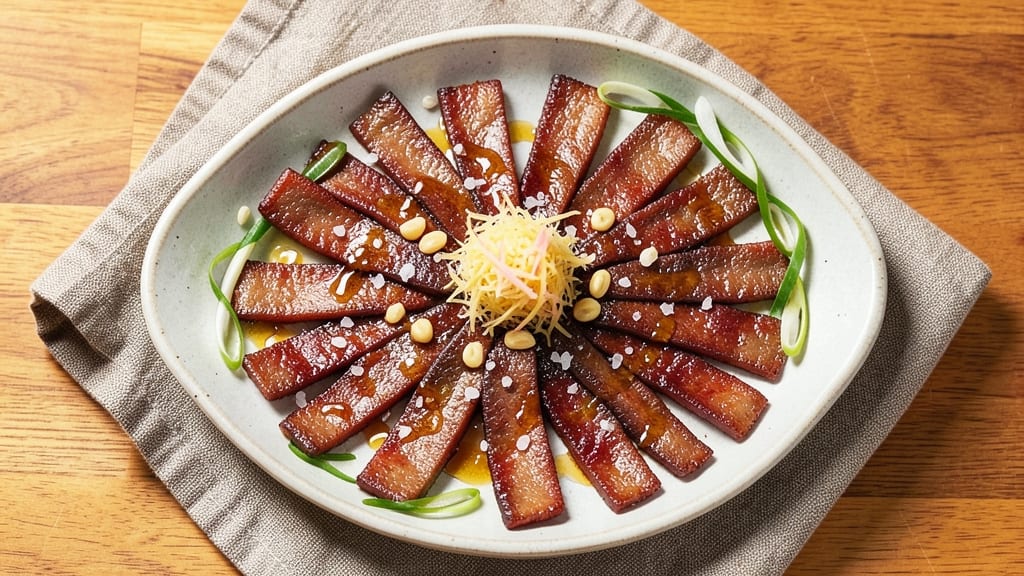
This Asian beef jerky recipe transforms tough cuts into tender, spice-infused chews using your dehydrator—perfect for snacking or gifting. The marinade blends soy sauce, ginger, garlic, and brown sugar to create a savory-sweet flavor profile inspired by Korean and Japanese traditions.
Thinly sliced beef absorbs the marinade deeply, ensuring every bite delivers bold umami and a satisfying crunch.
The key to success lies in proper slicing—against the grain for tenderness—and dehydrating at 160°F (71°C) for even drying without overcooking. This method preserves natural flavors while creating a shelf-stable snack that lasts for weeks.
Whether you're prepping for outdoor adventures or stocking your pantry, this recipe delivers restaurant-quality results at home.
What sets this jerky apart is its balanced seasoning: sweet from the brown sugar, tangy from the soy, and aromatic from fresh ginger and garlic. The dehydrator ensures consistent airflow, preventing soggy spots while locking in flavor.
Store in an airtight container to maintain crispness, and enjoy as a protein-packed snack or trail mix addition.
For variations, swap soy sauce for coconut aminos (for gluten-free) or add chili flakes for heat. This recipe is foolproof for beginners but refined enough for seasoned dehydrators. Let’s get started!
Ingredients for asian beef jerky recipe dehydrator
Transform tough beef into restaurant-quality jerky using these precise ingredients and dehydrator technique.
| Ingredient | Amount | Notes |
|---|---|---|
| Top-Round Beef Roast 🥩 | 1 ½ lb | Thinly sliced against grain |
| Soy Sauce 🍶 | ½ cup | Low-sodium preferred |
| Brown Sugar 🍚 | ¼ cup | Light or dark variety |
| Fresh Ginger 🌿 | 2 tbsp | Finely grated, aromatic |
| Garlic Cloves 🧄 | 6 cloves | Minced for deep flavor |
| Sesame Oil 🫒 | 1 tbsp | For nutty aroma |
| Rice Vinegar 🍶 | 1 tbsp | Adds tangy brightness |
| Ground Black Pepper 🌶️ | 1 tbsp | Freshly cracked |
| Kosher Salt 🧂 | 1 tbsp | Diamond Crystal preferred |
| Honey 🍯 | 1 tbsp | For subtle sweetness |
| Cornstarch 🌾 | 1 tbsp | For tenderizing |
| Sesame Seeds 🥜 | 1 tbsp | Toasted for garnish |
The top-round roast is essential here—its lean texture becomes tender when sliced thinly against the grain, a critical step for jerky texture. Look for well-marbled cuts at your butcher shop or the meat department of Whole Foods or Costco, where you can often find pre-cut options. If buying a whole roast, ask for it to be sliced ¼-inch thick—this ensures even drying. The soy sauce should be low-sodium (like Kikkoman) to avoid over-salting, while the brown sugar adds that signature caramelized depth that sets Asian jerky apart. Fresh ginger and garlic are non-negotiable for authentic flavor—avoid powdered versions, as they lack the aromatic complexity.
No soy sauce? Coconut aminos work perfectly for a gluten-free alternative, though the flavor will be slightly less umami-rich. Substituting maple syrup for brown sugar keeps it vegan but may alter the caramelization slightly. The sesame oil is what gives this jerky its signature nutty aroma—don’t skip it, but use sparingly to avoid overpowering. For heat lovers, add 1 tsp of chili flakes or ½ tsp of cayenne to the marinade. The cornstarch isn’t just for tenderizing; it also helps create that satisfying crunch when dehydrated. If you’re prepping ahead, marinate the beef for at least 12 hours (overnight is ideal) to ensure maximum flavor penetration—this is where the magic happens.
Dehydrated jerky keeps remarkably well when stored properly. Once fully dried (about 6-8 hours at 160°F), let it cool completely before storing in an airtight container with a silica gel packet to absorb moisture. In a cool, dark place, it’ll stay crisp and flavorful for up to 3 months. For longer storage, vacuum-seal portions—this extends shelf life to 6-12 months while preserving texture. The sesame seeds should be toasted lightly in a dry pan before sprinkling on top for extra crunch. Portion into resealable bags for easy snacking on hikes or road trips, and label with the date to track freshness. Freezing isn’t recommended, as it can make the jerky soggy when thawed.
Why You'll Love This Recipe
- No Marbling Required: I slice that top-round roast thin—like a lazy Sunday morning—then toss it in a bowl with soy sauce, brown sugar, and grated ginger. No fancy cuts, no stress, just a knife, a cutting board, and a dehydrator doing all the heavy lifting.
- Sweet-Savory Magic: That combo of soy and brown sugar caramelizes into something ridiculously addictive, while the garlic and ginger add this bright, zesty kick. It’s the kind of flavor that makes you reach for seconds without even thinking—trust me, I’ve tested it.
- Snack Attack Ready: Stash these in your gym bag, toss them in lunchboxes, or keep a bag in your desk drawer. They’re perfect for road trips, camping, or just when you’re too tired to cook but still crave something satisfying. (Yes, even on a Tuesday night.)
- Budget Stretch: A single roast feeds me for weeks—way cheaper than pre-packaged jerky, and way tastier. Plus, the dehydrator uses almost no energy, so it’s like getting free snacks while you sleep. My wallet and I both approve.
Step-by-step instructions for Asian beef jerky in the dehydrator
Transform lean top-round beef into restaurant-quality jerky with this precise dehydrator method.
Prepare the Marinade with Exact Measurements
In a medium bowl, combine the 0.5 cup soy sauce, 0.25 cup brown sugar, 2 tbsp freshly grated ginger, 6 minced garlic cloves, 1 tbsp sesame oil, 1 tbsp rice vinegar, 1 tbsp ground black pepper, 1 tbsp kosher salt, and 1 tbsp honey. Whisk vigorously until the brown sugar dissolves completely—this ensures even flavor distribution throughout the beef.
Add the 1 tbsp cornstarch last and stir well. The cornstarch acts as a natural tenderizer that helps prevent the beef from becoming too tough during dehydration. Let the marinade sit at room temperature for 15 minutes to allow the flavors to meld and the cornstarch to fully hydrate.
Slice and Marinate the Beef Precisely
Using a sharp boning knife, slice the 1.5 lb top-round beef roast against the grain into ¼-inch thick strips. The grain direction is crucial—you'll see the muscle fibers running parallel, and cutting perpendicular ensures tender jerky. Trim any large fat deposits as they can create uneven drying.
Place the beef strips in a large resealable plastic bag and pour the marinade over them. Seal the bag and massage the marinade into the beef, ensuring every strip is thoroughly coated. Refrigerate for at least 4 hours (overnight yields best results) to allow the beef to absorb maximum flavor and tenderize properly.
Arrange Beef for Optimal Dehydration
Preheat your dehydrator to 160°F—this temperature is critical for safe dehydration while preserving texture. Line the dehydrator trays with parchment paper and arrange the marinated beef strips in a single layer, ensuring they don't overlap. Overlapping creates uneven drying and potential spoilage.
Leave ¼-inch space between each strip for proper air circulation. The beef should fit snugly but not be crowded. If your dehydrator has multiple trays, distribute the beef evenly to ensure consistent drying throughout.
Dehydrate with Precision Timing
Place the trays in the dehydrator and run for 6-8 hours, checking periodically after the first 4 hours. The jerky is ready when it's dry to the touch but still slightly pliable—it should snap when bent but not feel rubbery. Over-drying makes jerky brittle and tough.
For extra flavor, lightly brush the dried jerky with 1 tbsp toasted sesame seeds while still warm. This adds both visual appeal and nutty depth. Store in an airtight container in a cool, dark place for up to 2 weeks or freeze for longer storage.
Verify Doneness with Safety Checks
Before consuming, perform the finger test: press a piece of jerky between your fingers—it should feel firm but not hard, and there should be no visible moisture. The internal temperature should reach 165°F when checked with a meat thermometer for food safety.
This method guarantees jerky that's perfectly tender with deep umami flavor from the soy sauce, sweetness from the brown sugar and honey, and aromatic complexity from the ginger and garlic. The dehydrator ensures even drying without the need for smoke or additional equipment.
Pro Tips For Making Asian Beef Jerky Recipe Dehydrator
- Slice Thin—Like Your Patience: I used to rush this step, thinking thinner meant faster drying, but ⅛-inch slices are the sweet spot—thin enough to dehydrate evenly, thick enough to hold flavor. Use a sharp knife and a cutting board, or freeze the meat for 30 minutes first if you’re nervous about control.
- Marinate Overnight—Or Risk Dry Jerky: The soy sauce and brown sugar need time to work their magic into those beef fibers. Skip the overnight soak, and you’ll end up with jerky that’s more like tough, flavorless leather. Cover the meat and let it sit in the fridge for at least 8 hours—12 is even better.
- Dehydrate Hot First, Cool Last: Start your dehydrator at 160°F (71°C) for the first 2 hours to kill bacteria and jumpstart the drying process. After that, drop it to 145°F (63°C) to prevent over-browning and ensure even drying—this is where most jerky ends up rubbery or burnt.
- Grate, Don’t Mince, the Ginger: Fresh ginger adds depth, but mincing it just makes the jerky taste like you’re chewing on a spice bomb. Use a fine grater or microplane and mix it into the marinade—this way, the flavor infuses smoothly without overpowering the beef. (Yes, even if you’re impatient like me.)
Wine and beer pairings for this recipe
Sake Pairings
For this Asian-inspired jerky, a crisp dry junmai sake like Dassai 23 or Gekkeikan Sake complements the savory-sweet profile beautifully. The subtle acidity cuts through the soy and brown sugar, while the clean finish enhances the ginger and garlic notes.
Serve slightly chilled—around 45°F—to balance the jerky's bold flavors without overwhelming them. 🍶
Light Japanese Beer
A light lagers like Asahi Super Dry or Kirin Ichiban works wonders with this jerky. The crisp, slightly citrusy notes mirror the rice vinegar in the marinade, while the effervescence cleanses your palate between bites. Opt for a 4% ABV or lower to avoid competing with the jerky's intensity. 🍺
Spiced Rum Cocktails
For a festive twist, pair your jerky with a spiced rum cocktail like a Dark 'n' Stormy (rum, ginger beer, lime) or a Sazerac (rye whiskey, bitters, sugar).
The ginger beer echoes the fresh ginger in the marinade, while the whiskey's caramel notes harmonize with the brown sugar. Serve over ice for a refreshing contrast. 🍹
Green Tea Infusions
For a non-alcoholic option, try sencha or gyokuro green tea chilled with a splash of lemon. The tea's vegetal notes and umami depth complement the soy and sesame, while the lemon brightens the dish. Brew to a light golden color and serve over ice for a refreshing pairing. 🍵
Asian-Inspired Hard Seltzers
For a modern twist, lychee or yuzu-infused hard seltzers like Sipsmith or Craft Brewed add a playful contrast. The effervescence and fruity notes balance the jerky's richness, while the Asian flavors tie the pairing together seamlessly. Aim for 5% ABV or less to keep it light. 🥤
Nutrition facts
Frequently asked questions
Can I use a different cut of beef for this recipe?
Yes, but choose lean cuts like top sirloin or flank steak for best results. Avoid fatty cuts like ribeye, as excess fat can make the jerky greasy. If using sirloin, slice it ⅛-inch thick for faster drying at 160°F (71°C). The key is thin, even slices that dehydrate uniformly.
How do I know when the jerky is fully dehydrated?
Test for doneness after 6 hours by checking for three signs: no moisture, brittle texture (snaps when bent), and 165°F internal temp. If it feels rubbery, continue dehydrating for 1-2 more hours. Over-drying makes jerky tough, while under-drying risks spoilage.
What's the best way to store homemade Asian beef jerky?
Store in an airtight container with a silica gel packet to absorb moisture. Keep in a cool, dark place for 2 weeks or freeze for 3-6 months. For longer shelf life, vacuum-seal portions—this preserves texture and prevents freezer burn. Label with dates to track freshness.
Can I make this jerky without a dehydrator?
Yes! Use an oven at 175°F (80°C) with the door slightly open for airflow. Place beef on a wire rack over a baking sheet and dehydrate for 3-4 hours, checking frequently. Alternatively, use a smoker at 165°F (74°C) for 4-6 hours—this adds subtle smoky notes.
Why did my jerky turn out too salty?
This usually happens from over-marinating or using high-sodium soy sauce. For next time, reduce salt to ½ tbsp and marinate for 4-6 hours max. If already made, balance the flavor by serving with sweet chili sauce or pickled vegetables. Always taste the marinade before applying!