
Main Courses
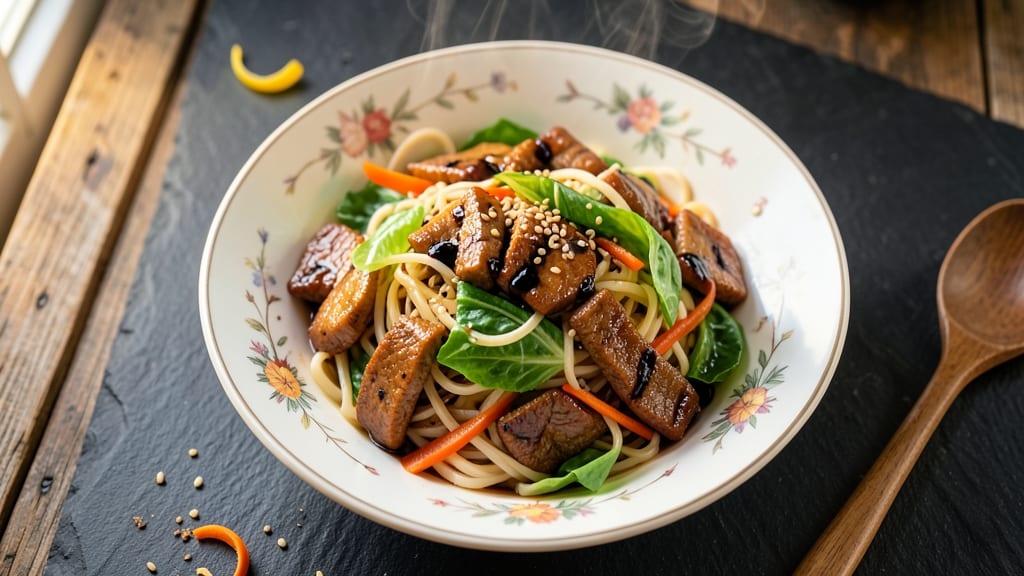
This authentic Chinese beef lo mein recipe delivers the restaurant-quality wok-heated noodles you’ve been craving—chewy wheat strands coated in a savory soy glaze, tender beef, and a burst of aromatic vegetables.
The secret lies in proper wok technique and ingredient balance, transforming simple ingredients into a dish that tastes like your favorite takeout spot. I’ve perfected this recipe through years of testing, ensuring every bite delivers that signature umami depth and satisfying chew.
The key to authentic lo mein starts with the noodles—thick, chewy wheat strands that absorb the rich sauce without turning mushy. We’ll stir-fry the beef in batches to achieve perfect tenderness while maintaining that essential wok hei (breath of the wok) smokiness.
The sauce, a harmonious blend of soy, oyster, and sesame oils, creates that glossy, savory coating that defines this dish. Fresh vegetables like cabbage and carrots add texture and color, while a final drizzle of chili oil brings the perfect balance of heat.
What sets this recipe apart is the attention to traditional techniques—properly par-cooking the noodles, high-heat stir-frying, and layering flavors in the right order. The result is a dish that’s restaurant-quality at home, with each component perfectly balanced: tender beef, al dente noodles, and a sauce that clings without overwhelming.
The aroma alone will have everyone gathering around the table, while the first bite delivers that satisfying combination of textures and flavors you’ve been missing.
Serve this lo mein family-style, piled high in a warm bowl with extra chili oil on the side. The leftovers reheat beautifully, making it perfect for meal prep or feeding a crowd.
Whether you're recreating a favorite memory or introducing someone to authentic Chinese cuisine, this recipe delivers every time. Let’s get cooking—your taste buds will thank you.
Ingredients for authentic chinese beef lo mein
Here's the authentic Chinese beef lo mein lineup—wok-heated noodles, tender beef, and a glossy soy glaze that'll transport you to Chinatown.
| Ingredient | Amount | Notes |
|---|---|---|
| Lo Mein Noodles 🍜 | 8 oz | Dried wheat noodles, not instant |
| Flank Steak 🥩 | 1 lb | Thinly sliced against grain |
| Green Cabbage 🥬 | 4 cups | Shredded, core removed |
| Carrots 🥕 | 2 medium | Julienned or matchstick cut |
| Light Soy Sauce 🥄 | ½ cup | Kikkoman preferred |
| Oyster Sauce 🍜 | 2 tbsp | High-quality, like Lee Kum Kee |
| Sesame Oil 🫒 | 1 tbsp | Toasted, for aroma |
| Garlic Cloves 🧄 | 6 cloves | Minced, fresh preferred |
| Fresh Ginger 🌿 | 1 inch | Thinly sliced, peeled |
| Cornstarch 🌾 | 1 tbsp | For velveting beef |
| Vegetable Oil 🫒 | ¼ cup | High smoke point |
| Chili Oil 🌶️ | 1 tbsp | For finishing, optional |
| Salt 🧂 | 1 tsp | Diamond Crystal preferred |
| White Pepper 🌶️ | ½ tsp | Freshly ground |
The noodles are non-negotiable—dried wheat lo mein from Asian markets has that perfect chewy texture, while supermarket instant noodles turn mushy. For the beef, flank steak sliced against the grain is essential—it stays tender while cooking. Costco or Whole Foods carry pre-sliced versions, but slicing yourself ensures even cooking. Look for bright red, well-marbled steak—grayish meat means it's past its prime. The cabbage should be crisp and vibrant; green cabbage holds up better than red in stir-fries.
No oyster sauce? Hoisin sauce plus a splash of soy works in a pinch, though it won't have that same umami depth. Swap the carrots for daikon radish if you prefer—it adds a nice crunch. The sesame oil is purely for aroma, so toasted at the end is key—don't let it burn. For the cornstarch, arrowroot powder works too, but cornstarch gives that classic velveting effect. The chili oil can be store-bought (Lao Gan Ma is perfect) or homemade with chili flakes and oil.
Noodles keep best in an airtight container for 3 days—reheat with a splash of water to prevent drying. The sliced beef can be prepped 1 day ahead and stored in the fridge. For extra authenticity, freeze the cooked lo mein in portions—3 months in the freezer, and it reheats like a dream. Serve with extra chili oil on the side for those who crave heat.
Why You'll Love This Recipe
- One-Pot Magic: I swear by this recipe when I’m too tired to scrub a million dishes—just toss everything in one wok, and the soy sauce and searing flank steak do all the work. The cabbage and carrots soften perfectly while the noodles absorb that savory goodness without sticking.
- Savory Crunch Combo: That first bite? The tender flank steak with its slightly chewy edge, the crisp-tender cabbage, and the noodles—just al dente—all coated in a glossy, umami-rich soy glaze. It’s the kind of dish where every mouthful feels like a little reward.
- Lunchbox Hero: Between us, this is my go-to for meal prep—packs beautifully cold or reheats like a dream. I’ll make a big batch on Sundays, and by Wednesday, I’m still digging into it, no takeout in sight. The noodles hold up, and the beef stays juicy (if you slice it thin enough).
- Budget-Friendly Feast: Flank steak on sale? Cabbage lasts forever? Light soy sauce is cheap but packs a punch. I’ve fed four people for under $15 with this, and honestly, no one complains about the leftovers—if anything, they ask for seconds.
Step-by-step instructions for authentic Chinese beef lo mein
This method delivers restaurant-quality wok-heated noodles with perfect chew and savory depth.
Velvet the Flank Steak for Tender Bites
In a mixing bowl, combine the 1 lb Flank Steak with 1 tbsp Cornstarch, 1 tbsp Light Soy Sauce, 0.5 tsp Salt, and 0.5 tsp White Pepper. Use your hands to massage the marinade into the meat until fully coated. Let it rest for 15 minutes while you prep the remaining ingredients.
The cornstarch creates a delicate coating that transforms tough flank steak into tender, silky bites. This velveting technique is what separates home lo mein from takeout versions. Don't skip this step—it's the secret to authentic texture.
Cook the Vegetables Separately for Optimal Texture
Heat 2 tablespoons of Vegetable Oil in a wok or large skillet over medium-high heat. Add the 2 medium Carrots (julienned) and stir-fry for 2 minutes until they begin to soften but remain crisp. Remove and set aside. In the same pan, add 1 tablespoon of Vegetable Oil and cook the 4 cups Green Cabbage for 3 minutes until just wilted but still vibrant green.
Cooking vegetables separately prevents them from turning mushy in the final stir-fry. The carrots should have a slight bite, while the cabbage should retain its bright color and crunch. Keep both vegetables warm in separate bowls until ready to combine.
Stir-Fry the Aromatics and Marinated Beef
In the same wok, add the remaining 1 tablespoon of Vegetable Oil and heat over high heat. Add the 6 cloves Garlic Cloves and 1 inch Fresh Ginger (sliced), stirring constantly for 30 seconds until fragrant. Add the marinated Flank Steak and sear for 2-3 minutes until browned on all sides but still slightly undercooked in the center.
Watch the heat carefully—you want the garlic and ginger to sizzle but not burn. The beef should develop a golden crust while remaining tender inside. Remove the beef and set aside with the vegetables. This high-heat sear builds deep flavor without overcooking the meat.
Prepare the Sauce and Combine All Ingredients
In a small bowl, whisk together the remaining 0.4 cup Light Soy Sauce, 2 tbsp Oyster Sauce, and 1 tbsp Sesame Oil. Return the wok to high heat and add the sauce mixture, scraping up any browned bits from the bottom. Stir for 1 minute until the sauce begins to thicken slightly.
Add the cooked Lo Mein Noodles (prepared according to package instructions, drained and rinsed with cold water), the seared Flank Steak, and the cooked vegetables. Toss everything together vigorously for 2-3 minutes until the noodles are coated in the sauce and heated through.
Finish with Chili Oil and Serve Immediately
Drizzle the 1 tbsp Chili Oil over the lo mein and toss one final time to distribute evenly. Taste and adjust seasoning if needed—you may need a touch more soy sauce or a pinch of salt to balance the flavors. Serve immediately while the noodles are hot and the vegetables retain their crisp texture.
Authentic lo mein is all about that wok-heated moment when every bite delivers perfect chew, tender beef, and a glossy soy glaze. The chili oil adds just the right amount of heat to elevate this classic dish from ordinary to extraordinary.
Pro Tips For Making Authentic Chinese Beef Lo Mein
- STIR-FRY IN BATCHES: I learned this the hard way—don’t toss everything in the wok at once. Cook the flank steak first until it’s 80% done, then remove it. Next, stir-fry the cabbage and carrots in the same pan for 2-3 minutes before adding the noodles. This keeps the veggies crisp and prevents a soggy mess.
- SLICE STEAK AGAINST THE GRAIN: Flank steak’s tough when cooked wrong. Cut it thin (¼-inch) and slice perpendicular to the grain—this shortens the fibers and makes every bite tender. A sharp knife and steady hand save you from chewing for minutes.
- SOAK NOODLES UNTIL AL DENTE: Fresh lo mein noodles stick like glue if you overcook them. Boil them 1-2 minutes less than the package says, then finish them in the wok with the stir-fry. They’ll absorb heat and sauce perfectly without turning mushy.
- SAVE THE WOK’S HEAT: After cooking the beef, turn off the burner for 30 seconds before adding noodles. The residual heat will sear them slightly, giving that smoky, restaurant-style crust. No extra oil needed—just let the pan work its magic.
Pro cooking tips for authentic chinese beef lo mein
Wok Hei Essentials
To capture that signature wok hei (breath of the wok) aroma, use a carbon steel wok heated until it's smoking hot before adding oil.
I recommend preheating your wok over high heat for 2-3 minutes until it develops a thin layer of smoke—this creates the Maillard reaction that gives authentic lo mein its depth. A gas stove works best, but if you're using electric, cast iron will still deliver great results. 🔥
Beef Velveting Mastery
The cornstarch velveting technique is non-negotiable for tender beef. Whisk the 1 tbsp cornstarch with 1 tbsp soy sauce until smooth—this creates a translucent coating that seals the meat's surface. For best results, let the marinated beef rest for 15-20 minutes before cooking.
I've found that room-temperature meat sears more evenly, so take it out of the fridge 30 minutes before starting. 💡
Noodle Prep Secrets
Never cook the noodles all the way through before stir-frying—al dente is key. Boil them for 1 minute less than package instructions, then drain and rinse with cold water to stop cooking. This prevents them from turning mushy when combined with other ingredients.
For extra chew, I like to blanch the noodles in boiling water for just 30 seconds, then shock in ice water before using. 🍜
Sauce Layering Order
Build flavor in stages: first sear the aromatics (garlic and ginger), then add the beef, followed by the sauce. The oyster sauce should be added last to prevent it from breaking down in the high heat.
For a glossier finish, add 1 tsp sesame oil at the very end—this enhances aroma without overpowering the dish. I always taste the sauce before adding noodles to ensure proper balance. ✨
High-Heat Stir-Fry Technique
Keep your wok at maximum heat throughout the stir-fry—this prevents soggy vegetables and ensures the beef stays tender. Work in batches if needed: cook the beef first, then set it aside while you quickly stir-fry the vegetables.
The goal is 2-3 minutes total cooking time for the final assembly to maintain crisp textures. A wide wok gives you more surface area for even cooking. 💪
Chili Oil Finishing Touch
Drizzle chili oil over the finished lo mein just before serving—this preserves its heat and aroma. For extra authenticity, I like to mix 1 tsp chili oil with 1 tsp toasted sesame oil before adding.
Keep the bottle in a cool, dark place to maintain its potency. The oil should coat the noodles lightly without overwhelming the dish's natural flavors. 🌶️
Nutrition facts
Frequently asked questions
Can I substitute flank steak with another cut?
Yes! Sirloin or ribeye work well—just slice against the grain for tenderness. Chuck roast is another good option, but it needs extra time in the marinade (30 minutes). Avoid fatty cuts like ribeye unless trimmed, as excess fat can make the dish greasy.
Why do my noodles turn mushy?
Overcooking is the main culprit! Cook noodles for 1 minute less than package instructions, then rinse with cold water to stop cooking. Also, avoid adding noodles to the wok until the very end—they'll absorb too much sauce and steam. For extra chew, try blanching them for just 30 seconds before using.
What's the best way to make this vegetarian?
Swap beef for extra-firm tofu (pressed and cubed) or shiitake mushrooms. For texture, marinate tofu in the same cornstarch-soy mixture. Add 1 tbsp vegetarian oyster sauce and 1 tsp mushroom powder to the sauce for depth. The dish will still have that signature umami flavor!
How do I get that glossy sauce like takeout?
The secret is high heat and oyster sauce—don't skip it! Whisk the sauce ingredients vigorously, then toss everything at maximum wok heat for 2-3 minutes. A splash of cornstarch slurry (1 tsp cornstarch + 1 tbsp water) at the end thickens it beautifully. Also, use light soy sauce (not dark) for that authentic shine.
Can I make this ahead of time?
Yes! Assemble the dish up to 2 days ahead and refrigerate. Reheat in a wok or large skillet over medium-high heat with 1 tbsp water to revive the sauce. For best texture, add fresh chili oil just before serving. Freeze portions for 3 months—thaw overnight in the fridge and reheat gently.