
Soups & Stews
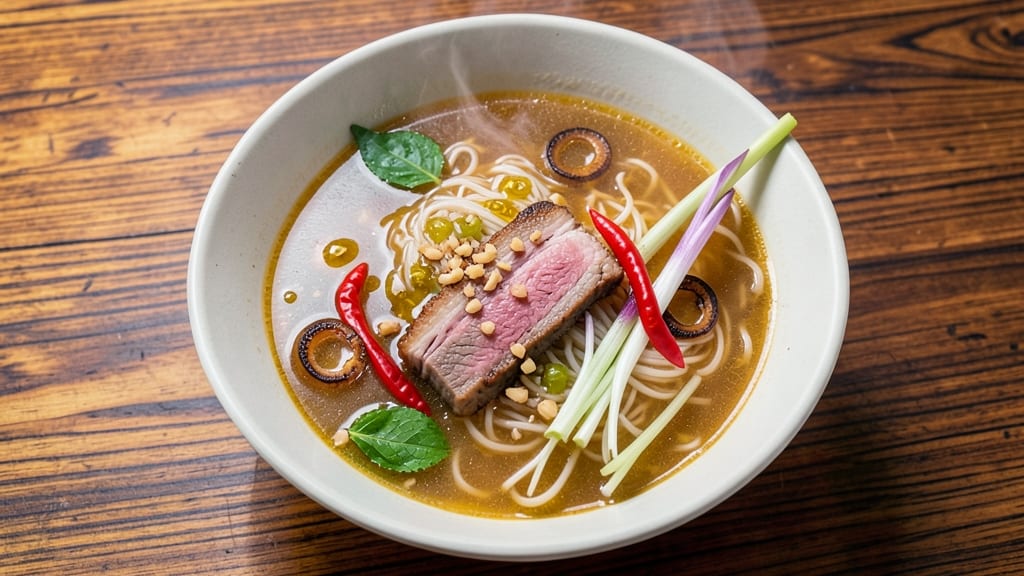
This authentic Thai beef noodle soup recipe brings the aromatic streets of Bangkok to your kitchen with its fragrant lemongrass broth and perfectly balanced flavors. The secret lies in slow-simmering beef bones and aromatic herbs, creating a rich, umami-packed foundation that transforms simple ingredients into something extraordinary. I've perfected this recipe over years of testing, ensuring each spoonful delivers the perfect harmony of salty, sour, sweet, and spicy notes.
The broth is where the magic happens—simmered for hours with lemongrass, galangal, kaffir lime leaves, and chili, it develops a deep, complex flavor that's impossible to replicate with shortcuts. Thinly sliced beef tenderizes beautifully in this aromatic liquid, while flat rice noodles cook just until they're slippery and tender.
This isn't just soup; it's a complete meal in one bowl, designed to transport you to Thailand with every bite.
What makes this recipe truly authentic is the careful balance of flavors—salty from the fish sauce, sour from lime, sweet from palm sugar, and spicy from fresh chili.
The assembly is simple but crucial: assemble the bowl with hot broth, tender beef, and noodles, then let diners customize their own perfect bowl with fresh herbs, bean sprouts, and extra chili. The result is a restaurant-quality dish that's surprisingly easy to recreate at home.
Perfect for weeknight dinners or special occasions, this soup reheats beautifully and tastes even better the next day as the flavors meld. The key is patience—letting the broth develop its depth and the beef become fork-tender.
Once you taste the difference between this homemade version and takeout, you'll never go back to the bottled stuff again.
Ingredients for authentic thai beef noodle soup
The aromatic heart of this soup—lemongrass, galangal, and kaffir lime—transforms simple ingredients into something extraordinary.
| Ingredient | Amount | Notes |
|---|---|---|
| Beef Bones 🦴 | 2 lb | Knuckle or marrow bones preferred |
| Lemongrass Stalks 🌿 | 4 whole | Bruised and cut into 2-inch pieces |
| Galangal 🍃 | 1 piece | About 3 inches, peeled and sliced |
| Kaffir Lime Leaves 🍋 | 4 leaves | Torn into quarters |
| Fresh Thai Chilies 🌶️ | 3 whole | Seeds removed for less heat |
| Shallots 🧅 | 6 whole | Peeled and thinly sliced |
| Garlic Cloves 🧄 | 8 cloves | Peeled and smashed |
| Beef Sirloin 🥩 | 1 lb | Thinly sliced against grain |
| Fish Sauce 🍶 | 3 tbsp | Red Boat preferred |
| Palm Sugar 🍯 | 2 tbsp | Or substitute brown sugar |
| Fresh Lime Juice 🍋 | ½ cup | Freshly squeezed |
| Flat Rice Noodles 🍜 | 8 oz | Fresh or dried, soaked first |
| Fresh Thai Basil 🌿 | ½ cup | Chopped, for garnish |
| Bean Sprouts 🌱 | 1 cup | Fresh or frozen, thawed |
| Vegetable Oil 🫒 | 2 tbsp | For searing beef |
The bones are non-negotiable for that deep, umami-rich broth. Look for knuckle or marrow bones at your local Asian market—they've got more flavor than regular beef bones. If you can't find them, substitute beef chuck roast and simmer it separately. Lemongrass should be vibrant and fragrant; if it smells musty, toss it. Galangal is the ginger-like root—find it in the produce section of Asian grocery stores, or use ginger in a pinch (though it won't be exactly the same). Kaffir lime leaves are worth hunting down—they're the secret behind that authentic Thai aroma. For the chilies, Thai bird's eye chilies from the international aisle pack the most heat, but any fresh chili will work.
No fish sauce? Soy sauce plus a splash of Worcestershire gets you close, though it won't be identical. Palm sugar is the golden touch—Trader Joe's carries it, or use brown sugar if needed. The rice noodles must be flat and wide; look for 'sen lek' or 'banh pho' noodles at Asian markets. If using dried noodles, soak them in warm water for 15-20 minutes until pliable. For the beef, sirloin or flank steak slices beautifully against the grain. If you can't find fresh Thai basil, regular basil plus a pinch of cinnamon mimics the flavor profile. Bean sprouts add that perfect crunch—frozen works fine if fresh isn't available.
Broth keeps for 5 days in the fridge, and freezes beautifully for 3 months. Make a double batch—leftovers taste even better the next day as flavors meld. Store noodles in an airtight container with a damp paper towel to keep them fresh. The fresh herbs and bean sprouts should be added just before serving, so keep them separate until the final moment. This soup reheats like a dream—just warm gently on the stove and adjust seasoning with a splash of lime or fish sauce.
Why You'll Love This Recipe
- I swear by this trick: just bruise the lemongrass and galangal with the side of a knife—no slicing, no fuss. The beef bones simmer down to melt-in-your-mouth richness while you prep the rest, and honestly? That’s the magic of a proper broth.
- No-Chop Simplicity: I swear by this trick: just bruise the lemongrass and galangal with the side of a knife—no slicing, no fuss. The beef bones simmer down to melt-in-your-mouth richness while you prep the rest, and honestly? That’s the magic of a proper broth.
- Umami Bomb: Between the slow-rendered marrow from the bones and the citrusy heat of Thai chilies, this soup hits every flavor note. The kaffir lime leaves add that bright, herbal lift—like a Thai street vendor’s secret in your kitchen.
- Weeknight Flex: Make a double batch on Sundays and freeze half for those nights when you’re too tired to cook. It’s the ultimate lazy-day meal: reheats beautifully, and the noodles soak up all that brothy goodness.
Step-by-step instructions for authentic Thai beef noodle soup
Here's how to craft this aromatic, restaurant-quality Thai beef noodle soup at home.
Build the Fragrant Broth Base
Heat a large stockpot over medium-high heat and add the 2 tablespoons vegetable oil. Once shimmering, add the 6 whole shallots and 8 cloves garlic cloves, cooking for 2 minutes until fragrant but not browned. This is your flavor foundation—don't rush this step or the aromatics will burn.
Add the 2 lb beef bones and sear for 5 minutes until they develop a light crust. Pour in 8 cups cold water (enough to cover bones by 2 inches) and bring to a boil. Immediately reduce heat to low and skim off any foam that rises to the surface during the first 10 minutes of cooking.
Infuse with Thai Aromatics
Add the 4 whole lemongrass stalks (cut into 2-inch pieces), 1 piece galangal (peeled and sliced), 4 leaves kaffir lime leaves (torn into quarters), and 3 whole fresh Thai chilies (seeds removed). Simmer uncovered for 45 minutes—you'll notice the broth develops a beautiful golden hue and intense aroma as the aromatics release their oils.
After 45 minutes, add the 3 tablespoons fish sauce and 2 tablespoons palm sugar. Stir gently and continue simmering for another 30 minutes. The broth should reduce slightly and develop a rich, complex flavor. Taste and adjust seasoning—you want a balance of salty, sweet, and umami without being overpowering.
Prepare the Beef and Noodles
While the broth simmers, heat a separate skillet over high heat with 1 tablespoon vegetable oil. Add the 1 lb beef sirloin (thinly sliced against the grain) and sear for 1-2 minutes per side until just cooked through—it should remain tender, not tough. Remove from heat and set aside.
Soak the 8 oz flat rice noodles in warm water for 15-20 minutes until pliable but still slightly firm. Drain and rinse briefly under cold water to stop the cooking process. The noodles should be slippery to the touch but not mushy when you press between your fingers.
Assemble the Soup
Strain the broth through a fine-mesh sieve to remove all solids, pressing gently on the aromatics to extract maximum flavor. Return the broth to the pot and bring to a gentle simmer over low heat. Add the cooked beef and let it warm through for 2 minutes.
Divide the 8 oz flat rice noodles among four bowls. Ladle the hot broth over the noodles, then top each serving with ¼ cup bean sprouts and 2 tablespoons fresh Thai basil. Finish with a generous splash of ½ cup fresh lime juice—this brightens the flavors and cuts through the richness of the broth.
Serve Immediately with Garnishes
Serve the soup piping hot, with each bowl garnished with additional fresh Thai basil and a sprinkle of bean sprouts. The contrast between the slippery noodles, tender beef, and fragrant broth creates the perfect texture experience. For extra authenticity, serve with small bowls of fish sauce and palm sugar on the side for individual taste adjustment.
This soup tastes even better the next day as the flavors continue to meld. Store leftovers in the refrigerator for up to 3 days, or freeze for 3 months. When reheating, add a splash of water or broth to maintain the perfect consistency.
Pro Tips For Making Authentic Thai Beef Noodle Soup
- CHAR THE BONES HARD: Start with a screaming-hot pot—no half-measures—and let those beef bones sear until they’re deep mahogany brown, not just pink. I learned this the hard way: rushing the char means your broth will taste like weak tea instead of rich, umami gold. The crust locks in flavor, so don’t skimp on the heat.
- SLICE GALANGAL THIN: Galangal’s tough—slice it paper-thin (about 1/8-inch) and pound it with the flat side of your knife before adding it to the pot. My grandmother swore by this, and she was right: it releases its citrusy punch instead of sitting like a stubborn lump. No, it won’t dissolve, but it’ll work its magic.
- STRAIN THE BROTH TWICE: After simmering, strain the broth through a fine-mesh sieve then a cheesecloth-lined colander. The first pass catches big bits; the second removes the cloudy starch that makes broth look murky. I was skeptical until I tried it—clear broth equals a soup that sings, not one that muddles.
- TOAST THE CHILIES WHOLE: Dry-toast the whole Thai chilies in a pan for 30 seconds until fragrant—no oil needed. This deepens their heat and aroma before crushing them into the broth. Sounds weird, but it works: the flavor hits harder, and you’ll use half as many. (Yes, even if you’re impatient like me.)
Perfect pairings for this dish
Side Dish Harmony
Fresh Thai cucumber salad (yoom mam) adds a crisp, cooling contrast to the rich soup. Toss 2 cups sliced cucumbers with 2 tbsp rice vinegar, 1 tbsp palm sugar, 1 tsp fish sauce, and ½ tsp crushed Thai chilies.
The tangy-sweet balance cuts through the soup's depth perfectly. 🥒
For a heartier option, serve with Thai-style grilled pork skewers (moo ping). Marinate 1 lb pork shoulder in 2 tbsp soy sauce, 1 tbsp palm sugar, and 1 minced garlic clove for 30 minutes before grilling. The smoky char complements the soup's aromatic broth beautifully.
Beverage Pairings
A crisp Thai iced tea (cha yen) is the classic choice—its sweet, floral notes mirror the soup's complexity without overpowering it. Look for Thai Tea brand from Asian markets for authentic flavor. Serve chilled over ice with a slice of lime. 🍹
For beer lovers, a Thai lager like Singha or Leo provides a clean, refreshing contrast. The light maltiness balances the soup's bold spices, while a Thai craft IPA from breweries like Bangkok Beerworks adds a hoppy brightness that enhances the dish's herbal notes.
Garnish Essentials
Don't skip the fresh herbs—Thai basil, cilantro, and mint should be within reach for customization. I keep small bowls of each on the table so diners can adjust their bowls to taste. A sprinkle of crushed roasted peanuts adds crunch and a nutty depth that elevates the dish. 🌿
For heat lovers, offer Thai chili crisp (prik nam pla) on the side. This fermented chili sauce delivers concentrated spice without overwhelming the soup's delicate balance. A single teaspoon lets each diner control their level of heat.
Dessert Complements
End the meal with mango sticky rice (khao niew mamuang), where sweet, creamy coconut rice pairs with ripe mango. The tropical sweetness cleanses the palate after the soup's savory depth. I use Thai jasmine rice cooked with coconut milk and palm sugar. 🍈
For a lighter option, serve Thai coconut ice cream (thaen thao) with toasted sesame seeds. The cool, creamy texture contrasts perfectly with the warm soup, while the toasty sesame adds an unexpected savory note that ties back to the dish's aromatic profile.
Nutrition facts
Frequently asked questions
Can I substitute regular ginger for galangal?
You can use ginger in a pinch, but galangal adds a unique citrusy, peppery depth that's essential for authentic flavor. For best results, find galangal at Asian markets—it's worth the hunt! If unavailable, use 1 teaspoon ginger powder plus ½ teaspoon lemon zest per piece of galangal called for.
How do I make the broth less spicy?
Remove the seeds from the Thai chilies before adding them to the broth, and reduce the number from 3 to 1-2 whole chilies. For extra mildness, strain the broth after simmering and add just a pinch of chili flakes later if needed. The key is controlling heat at the source!
Can I use dried rice noodles instead of fresh?
Soak dried flat rice noodles in warm water for 15-20 minutes until pliable but still slightly firm. Drain and rinse briefly under cold water to stop cooking. The texture will be slightly different but still delicious—just avoid over-soaking or they'll turn mushy.
Why does my beef turn out tough?
Overcooking is the most common mistake. Sear beef for only 1-2 minutes per side until just cooked through—it should be tender, not tough. Also, ensure you're slicing against the grain before cooking. For extra tenderness, marinate the beef in 1 tbsp fish sauce and 1 tsp palm sugar for 30 minutes before cooking.
How can I make this soup vegetarian?
Replace beef bones with mushroom stems or soy sauce-infused water for umami depth. Use tofu or seitan instead of beef, and add 1 tbsp soy sauce to the broth. For extra richness, stir in 1 tbsp miso paste when simmering. The aromatic base remains the same—just adjust the protein!